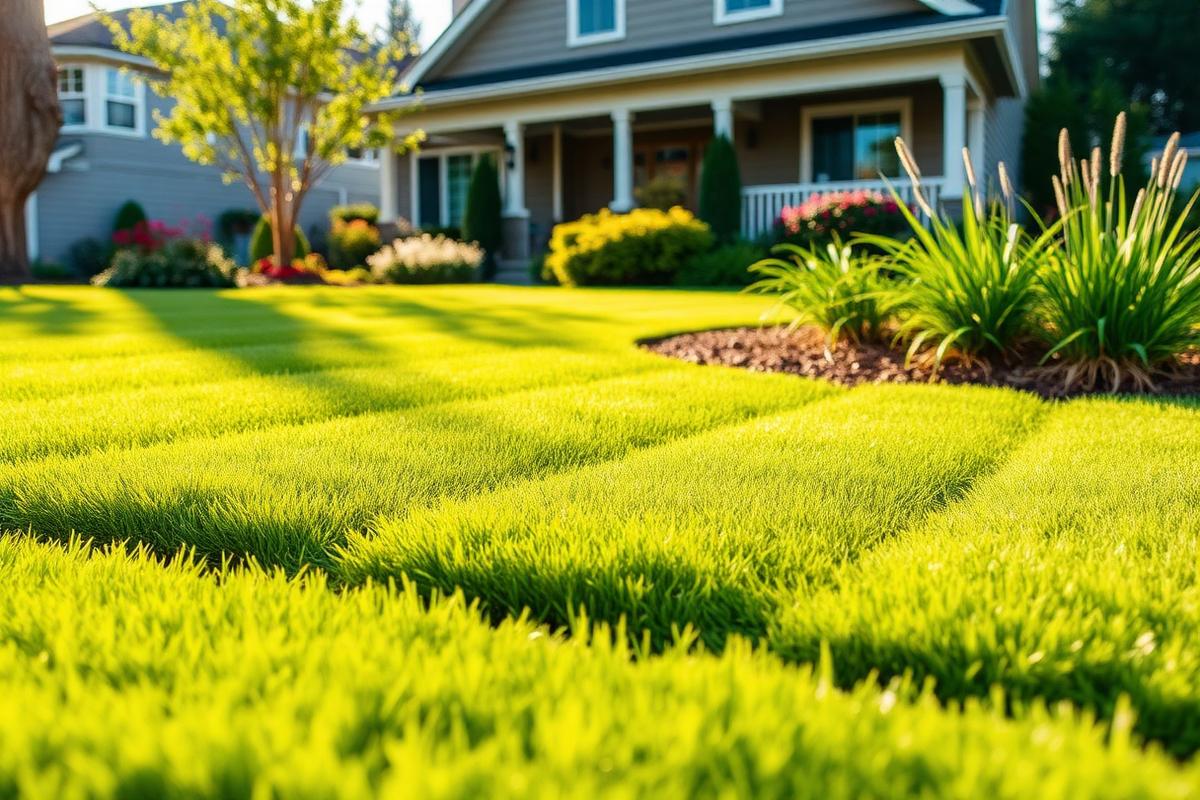
Achieving a healthy, resilient lawn requires a systematic approach that balances soil biology, precise irrigation, seasonal mowing practices, and targeted nutrient management. By aligning maintenance tasks with the physiological needs of your specific turfgrass species throughout the growing season, you can effectively manage weed pressure, prevent thatch accumulation, and ensure consistent color and vigor across your landscape.
Understanding Turfgrass Physiology
Before implementing any maintenance regimen, it is essential to identify the type of grass in your landscape. Lawns are generally categorized into two physiological groups: cool-season grasses and warm-season grasses.
Cool-season grasses, such as Kentucky bluegrass, tall fescue, and perennial ryegrass, thrive in regions with distinct temperature fluctuations and generally perform best in the northern United States and parts of Canada. They exhibit a dual-growth pattern, peaking in the spring and autumn when soil temperatures range between 60°F and 75°F.
Warm-season grasses, including Bermuda grass, St. Augustine, and zoysia, prefer tropical or subtropical climates. These grasses enter dormancy when temperatures drop and reach peak growth during the high heat of summer. Applying a "one-size-fits-all" maintenance schedule—such as fertilizing or aerating at the wrong time of year—can stress the turf, invite weed colonization, and lead to long-term decline.
Soil Health as the Foundation
The health of your lawn begins beneath the surface. Soil is a complex ecosystem containing minerals, organic matter, water, and air, all of which must be balanced to support root development.
Soil Testing
A soil test is the only scientific method to determine the specific nutrient requirements of your lawn. As of 2026, most university extension services offer affordable soil analysis that provides data on pH levels and essential nutrients like phosphorus, potassium, and magnesium.
- pH Balance: Most turfgrasses prefer a slightly acidic to neutral soil (pH 6.0 to 7.0). If your soil is too acidic, lime is typically added; if it is too alkaline, sulfur is used to lower the pH.
- Nutrient Ratios: The N-P-K (nitrogen, phosphorus, potassium) ratio on fertilizer bags represents the percentage of each nutrient. A soil test prevents the common mistake of over-applying phosphorus, which can lead to environmental runoff and unnecessary expense.
Compaction and Aeration
Soil compaction restricts root growth by limiting the air spaces in the soil matrix. Core aeration, which involves removing small plugs of soil from the lawn, is the industry-standard solution for high-traffic areas or heavy clay soils. By relieving compaction, you improve the movement of oxygen, water, and nutrients into the root zone.
Strategic Mowing Practices
Mowing is the most frequent maintenance task, and its impact on lawn health is often underestimated. The "one-third rule" is the primary guideline for healthy mowing: never remove more than one-third of the grass blade length in a single cutting.
Removing too much leaf tissue at once triggers a shock response, forcing the plant to redirect energy from root production to leaf regeneration. This leaves the lawn susceptible to drought and disease. Furthermore, maintaining a higher mowing height—typically between 3 and 4 inches for most residential lawns—provides several benefits:
- Shading the Soil: A taller canopy shades the soil surface, reducing the germination of sunlight-dependent weed seeds like crabgrass.
- Deep Root Growth: Longer blades allow for increased photosynthesis, which supports a more extensive root system capable of accessing water deeper in the soil profile.
- Moisture Retention: A thicker stand of grass reduces evaporation, keeping the lawn cooler during mid-summer heat.
Ensure your mower blades are sharpened at least once per season. A dull blade tears the grass leaf rather than slicing it, creating ragged edges that provide entry points for pathogens and cause the lawn to take on a brown, weathered appearance.
Irrigation and Hydration Efficiency
Water management is critical, particularly in regions prone to summer water restrictions. The goal is to encourage deep, infrequent watering rather than light, daily sprinkling.
Light, frequent watering results in a shallow root system that is highly vulnerable to heat stress. Instead, aim to provide the lawn with approximately 1 to 1.5 inches of water per week, including rainfall, delivered in one or two deep soakings. This forces the roots to grow downward in search of moisture, creating a more drought-tolerant turf.
The best time to irrigate is between 4:00 AM and 8:00 AM. Watering during the heat of the day leads to high evaporative loss, while nighttime irrigation keeps the leaf blades wet for too long, significantly increasing the risk of fungal infections such as dollar spot or brown patch.
Comparison of Common Maintenance Practices
| Practice | Frequency | Primary Benefit | Best Timing |
|---|---|---|---|
| Core Aeration | 1–2 times/year | Relieves compaction | Spring or Fall |
| Dethatching | As needed | Improves air/water flow | Early growing season |
| Over-seeding | Annual/Biennial | Thickens thin stands | Fall (Cool-season) |
| Fertilization | 2–4 times/year | Provides steady nutrients | During active growth |
| Liming | Based on test | Corrects soil pH | Late Autumn/Winter |
Managing Weeds and Pests
Weed control is most effective when integrated into a healthy cultural program. A thick, well-maintained lawn is naturally resistant to weed encroachment because it leaves no space or sunlight for weeds to establish.
Pre-Emergent vs. Post-Emergent
- Pre-emergent herbicides are applied before weed seeds germinate (typically in early spring for crabgrass). They create a chemical barrier in the top layer of soil.
- Post-emergent herbicides target weeds that are already visible. These should be used with caution and only on the specific areas requiring treatment to minimize chemical exposure to the broader environment.
Integrated Pest Management (IPM)
Pest management should follow the principles of IPM, which prioritizes biological and cultural solutions over broad-spectrum pesticides. For example, rather than applying systemic insecticides, identify if the damage is truly caused by grubs or simply a lack of water. Always verify the presence of a pest before applying control agents, as many insects are beneficial to the garden ecosystem.
Troubleshooting Common Issues
If your lawn shows signs of stress, perform a "troubleshooting triage" before assuming a product application is necessary:
- Check Mowing Height: If the lawn looks thin and weeds are prevalent, are you cutting too short?
- Evaluate Watering: If sections are browning in the heat, are they receiving uniform coverage from your irrigation system?
- Inspect for Disease: Are the brown spots irregular or circular? Fungal diseases often present with specific patterns or "mycelium" (white, web-like growth) in the morning hours.
- Assess Traffic: Are there paths where the soil is hard-packed, preventing water infiltration?
Professional Assistance vs. DIY
Many homeowners choose to outsource lawn care to professional services to ensure consistent, specialized care. If you choose to hire a service, ensure they provide an itemized plan that reflects the specific needs of your region's grass type. A reputable provider should be willing to explain the timing of their applications and show how their schedule aligns with local weather patterns.
If you are managing the lawn yourself, focus on consistency. A modest but consistent program of proper mowing, strategic watering, and annual fertilization will outperform an erratic program involving expensive "miracle" products.
Frequently Asked Questions
How can I tell if my grass is suffering from drought or disease? Drought stress usually appears as a uniform gray-green or brown color across the entire lawn, and the grass blades will curl or wilt. Disease typically presents in localized, distinct patches, sometimes with visible lesions on the leaves or a white mold-like fuzz in the early morning.
Is it necessary to remove grass clippings after mowing? No, in fact, "grasscycling"—leaving the clippings on the lawn—is recommended. Grass clippings are high in nitrogen and break down quickly, returning essential nutrients to the soil and reducing the need for synthetic fertilizer by up to 25%.
When is the best time to aerate and over-seed a lawn? For cool-season grasses, the late summer or early autumn is ideal, as the soil is still warm and the cooler air temperatures allow the new seedlings to establish without the stress of summer heat. For warm-season grasses, this should be done in the late spring as the grass enters its peak growing phase.
Can I use a "weed and feed" product? While convenient, "weed and feed" products apply herbicide across the entire lawn, even in areas where weeds may not be present. It is often more environmentally responsible and effective to spot-treat weeds with a localized herbicide and fertilize only the areas that require nutrients based on a soil test.
Why does my lawn have a thick layer of thatch? Thatch is a layer of organic debris between the grass blades and the soil surface. It usually builds up when grass grows faster than it can decompose. Excessive thatch is often a sign of over-fertilization, infrequent mowing, or soil that is too acidic, which inhibits the microbial activity responsible for breaking down organic matter.
Final Action Plan
Start your lawn care journey in 2026 by taking a soil sample and sending it to a local university extension office. This single step provides the empirical data required to stop guessing and start treating your lawn according to its actual biological needs. Once you have the results, draft a simple seasonal calendar that prioritizes mowing height, deep watering, and precisely timed nutrient applications. Consistency is the most potent tool in lawn maintenance; commit to the process, and the results will be reflected in the health and appearance of your turf.