The year 2025 served as a pivotal twelve-month period for astronomy, defined by significant deep-space discoveries, the operational maturity of next-generation observatories, and the successful execution of critical planetary science missions. These developments expanded our understanding of stellar evolution, exoplanet atmospheres, and the structural composition of our solar system, providing the foundational data that remains central to ongoing research in 2026.
The Operational Maturity of Flagship Observatories
The primary driver of 2025 astronomical progress was the increased efficiency of the James Webb Space Telescope (JWST) and the continued integration of data from the Euclid mission. By 2025, these instruments moved beyond their initial calibration phases, entering a period of consistent, high-cadence science operations that yielded unprecedented insights into the early universe.
James Webb Space Telescope (JWST) Impact
Throughout 2025, the JWST focused heavily on the "Cosmic Dawn," the era immediately following the Big Bang. Researchers leveraged the telescope’s Near-Infrared Camera (NIRCam) and Mid-Infrared Instrument (MIRI) to detect some of the most distant and earliest galaxy candidates ever recorded. The data collected in 2025 settled several debates regarding the rate of star formation in the early universe, confirming that massive, well-structured galaxies formed significantly earlier than standard cosmological models previously predicted.
The Euclid Mission and Dark Sector Research
The European Space Agency’s Euclid space telescope reached full operational status in 2025. Designed specifically to map the geometry of the dark universe, Euclid began its six-year survey of the sky. By the end of 2025, the mission had successfully cataloged billions of galaxies, providing a three-dimensional map that allows astronomers to measure the effects of dark matter and dark energy on the distribution of matter across the cosmos. This data is the standard reference point for all large-scale structure studies conducted in 2026.
Planetary Science and Mission Milestones
In addition to deep-space observation, 2025 was a year of tangible contact with solar system bodies. Mission profiles that were in transit or approach phases in 2024 achieved their primary objectives, providing high-resolution imagery and chemical data that changed our view of planetary formation.
Return of Asteroid Samples
One of the most significant events of 2025 was the ongoing laboratory analysis of samples retrieved from primitive asteroids. The scientific community spent much of the year categorizing the volatile organic compounds found within these samples. These results are critical for testing the hypothesis that the building blocks of life were delivered to Earth via carbonaceous chondrite impacts billions of years ago.
Jupiter and Saturn System Observations
The planetary science community focused significant resources on the Jovian and Saturnian moons in 2025. Utilizing both ground-based arrays and space-based platforms, astronomers monitored the plumes on Enceladus and the magnetospheric interactions of Europa. The 2025 data sets provided the most comprehensive look at the subsurface oceans of these icy moons, confirming the presence of complex organic molecules that warrant further exploration by dedicated probes later in the decade.
Standardized Observational Data and Coordination
The 2025 astronomical landscape was also marked by a shift toward "multi-messenger" astronomy. This involves coordinating observations across different types of signals—electromagnetic waves (light), gravitational waves, and neutrinos.
Multi-Messenger Coordination
In 2025, the global network of observatories, including LIGO, Virgo, and various ground-based optical telescopes, established more robust automated alert systems. When a gravitational wave event was detected, automated triggers allowed ground-based telescopes to pivot and capture the transient light of the event in real-time. This coordination proved essential for verifying the origins of kilonovae—the violent collisions of neutron stars—which are responsible for the synthesis of heavy elements in the universe.
Data Accessibility and Open Science
The shift toward open-source data policies reached a milestone in 2025. Major space agencies mandated that all raw data collected by taxpayer-funded missions be made available to the global research community with minimal latency. This policy democratized astronomical research, allowing independent researchers and university laboratories to contribute to the analysis of the 2025 datasets, leading to a surge in peer-reviewed publications.
Comparison of Major Astronomical Instruments (2025 Status)
The following table summarizes the technical focus and primary operational status of key assets as they concluded their activities in 2025.
| Instrument | Type | Primary 2025 Focus | Key Contribution |
|---|---|---|---|
| JWST | Space Infrared Telescope | High-redshift galaxies | Early galaxy formation data |
| Euclid | Space Survey Telescope | Dark matter/energy mapping | Largest 3D cosmic map |
| LIGO/Virgo | Gravitational Wave Obs. | Binary merger detection | Multi-messenger transients |
| Vera Rubin Obs. | Ground-based Survey | Time-domain astronomy | Deep survey of the southern sky |
| Ground Arrays | Radio Interferometers | Exoplanet habitability | Atmospheric characterization |
Challenges and Future Considerations
While 2025 was a year of success, it also highlighted significant operational challenges that continue to persist in 2026.
- Light Pollution and Satellite Megaconstellations: The proliferation of low-Earth-orbit satellites continued to impede ground-based observations throughout 2025. The astronomical community spent a significant portion of the year negotiating with private space companies to mitigate the impact of satellite streaks on deep-space imaging.
- Data Processing Bottlenecks: The sheer volume of data generated by the Vera Rubin Observatory and the Euclid mission created a challenge for existing archival infrastructure. In 2025, the focus shifted toward developing advanced AI-driven algorithms capable of automated feature extraction to handle the petabyte-scale data flow.
- Ground-Based Maintenance: Several legacy ground-based observatories faced funding hurdles in 2025. Maintaining high-altitude sites while managing the transition to remote, automated operations remained a logistical priority.
Frequently Asked Questions
What were the biggest discoveries in astronomy during 2025? The most significant findings centered on the composition of early-universe galaxies and the detailed mapping of dark matter distribution. Specifically, the data confirmed that galaxies were more mature and massive shortly after the Big Bang than models predicted, fundamentally shifting our understanding of cosmic evolution.
How does 2025 data impact astronomical research in 2026? Data collected throughout 2025 serves as the baseline for all current studies. Researchers currently analyzing data in 2026 are using the 2025 records to calibrate new models, perform cross-reference studies, and isolate transient events that occurred during that period.
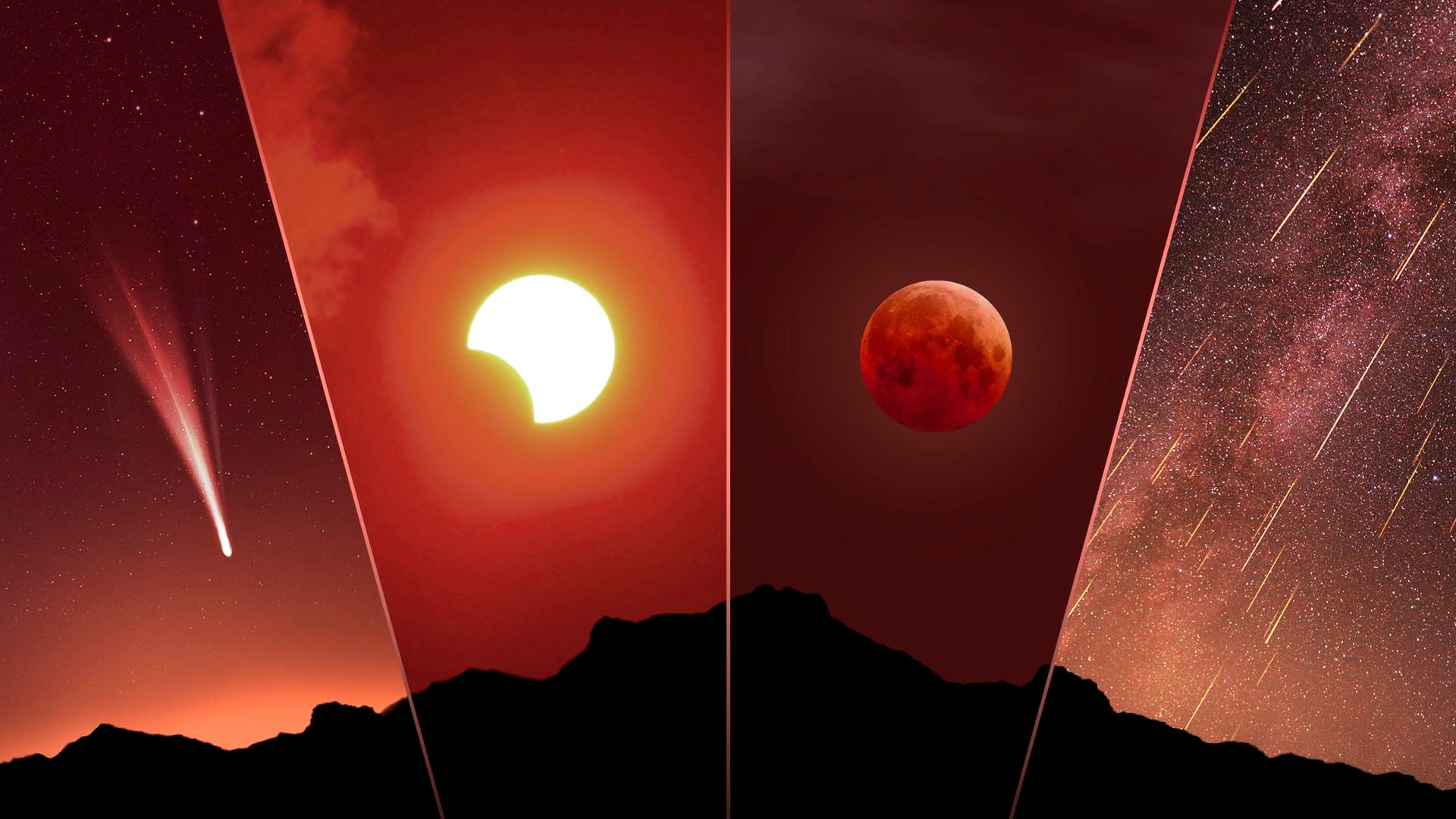
Were there any major celestial events in 2025? 2025 featured several planetary alignments and minor asteroid flybys that were monitored by planetary defense networks. These events were used to refine the orbital mechanics of Near-Earth Objects (NEOs) and test the efficacy of early-warning detection software.
Is it still possible to access data from the 2025 mission cycles? Yes. Under current open-science mandates, all public data captured by major space agencies in 2025 remains hosted on official agency archives. Access is provided through institutional portals that allow for the download of raw spectra, imagery, and processed data cubes.
Why is multi-messenger astronomy important? Multi-messenger astronomy is critical because it allows scientists to observe the same phenomenon through different "senses." While light tells us about the surface and chemical composition of an object, gravitational waves provide information about the underlying physics of mass and energy density. Combining these data sets provides a complete picture that neither method could achieve alone.
Strategic Recommendations for Researchers
For those engaging with the astronomy of 2025 in 2026, the priority should be the integration of archival data. When conducting new observations, ensure your comparison benchmarks are aligned with the processed data releases from the 2025 JWST and Euclid cycles. Utilize official agency-provided processing pipelines to ensure that your findings are consistent with the established record. If you are a student or independent researcher, prioritize utilizing the official mission archives rather than third-party summaries to ensure maximum precision in your analysis.