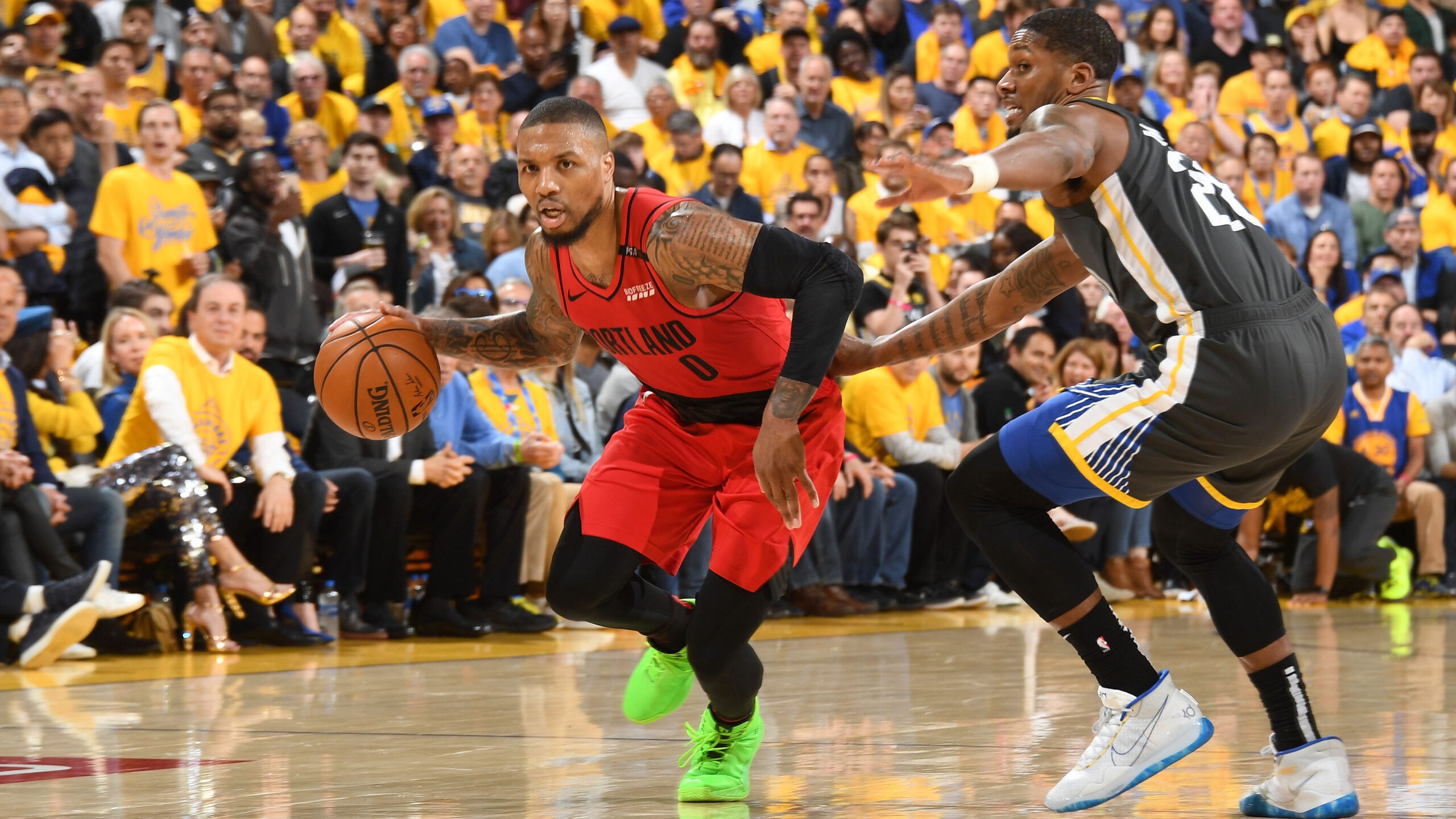
In the 2019 NBA Finals, the Toronto Raptors defeated the Golden State Warriors four games to two to capture their first championship in franchise history. This series marked the first time a team based outside the United States won the NBA title. Kawhi Leonard was named Finals MVP after averaging 28.5 points per game, ending the Warriors' quest for a three-peat.
The 2019 NBA Finals remains one of the most culturally and competitively significant series in modern basketball history. It represented the culmination of a high-stakes gamble by the Toronto Raptors front office and the end of an era for the Golden State Warriors' initial dynasty run. As we look back from the perspective of 2026, the ripple effects of this series—from player movement to defensive innovations—continue to influence how the game is played and managed at the professional level.
The Architectural Shift: Building the 2019 Raptors
The path to the 2019 Finals for Toronto was paved with a series of aggressive, often controversial decisions led by President of Basketball Operations Masai Ujiri. For years, the Raptors were a perennial playoff team that consistently fell short against LeBron James and the Cleveland Cavaliers. The "LeBronto" era necessitated a radical change.
The Kawhi Leonard Gamble
In the summer of 2018, the Raptors traded franchise icon DeMar DeRozan, Jakob Poeltl, and a protected first-round pick to the San Antonio Spurs for Kawhi Leonard and Danny Green. At the time, Leonard was coming off a mysterious quad injury that had sidelined him for most of the previous season and had only one year remaining on his contract. It was a "championship or bust" move that prioritized a high-ceiling superstar over long-term stability.
The Marc Gasol Acquisition
While the Leonard trade was the headline, the mid-season acquisition of Marc Gasol from the Memphis Grizzlies in February 2019 provided the tactical floor general the Raptors needed. Gasol’s elite passing, high basketball IQ, and interior defense allowed Toronto to transition into a more sophisticated half-court offense and a versatile, switching defense that could frustrate elite scoring guards.
The Warriors’ Pursuit of Immortality
The Golden State Warriors entered the 2019 Finals seeking their third consecutive championship and their fourth in five years. They were widely considered one of the greatest assemblies of talent in sports history, featuring Stephen Curry, Kevin Durant, Klay Thompson, and Draymond Green.
However, the Warriors were physically and emotionally spent. Kevin Durant had suffered a calf strain in the Western Conference Semifinals against the Houston Rockets and was sidelined for the start of the Finals. DeMarcus Cousins, who had signed a one-year deal to chase a ring, was returning from a torn quad. Despite these setbacks, the Warriors swept the Portland Trail Blazers in the Western Conference Finals, entering the championship round with a sense of invincibility that would soon be tested.
Game-by-Game Analysis: A Strategic Breakdown
The 2019 Finals was a chess match between rookie head coach Nick Nurse and the veteran Steve Kerr. Nurse’s willingness to experiment with "janky" defenses and Kerr’s reliance on the Warriors' "Motion" offense created a fascinating tactical contrast.
Game 1: The Pascal Siakam Breakout
Score: Raptors 118, Warriors 109 The series opener in Toronto set the tone. While the Warriors focused their defensive attention on Kawhi Leonard, Pascal Siakam exploded for 32 points on 14-of-17 shooting. Siakam’s ability to run the floor and finish in transition exposed the Warriors' lack of lateral speed in their second unit. This game proved that Toronto was not merely a one-man show.
Game 2: The Warriors’ Third-Quarter Surge
Score: Warriors 109, Raptors 104 The Warriors reminded the world of their championship pedigree with a signature 18-0 run to start the third quarter. Despite losing Klay Thompson to a hamstring injury late in the game, Golden State relied on Andre Iguodala’s clutch three-pointer in the closing seconds to tie the series. This game also saw Nick Nurse debut the "Box-and-One" defense against Stephen Curry, a high-school level tactic that surprised the NBA world and limited Curry’s effectiveness in the final minutes.
Game 3: Toronto Capitalizes on Injuries
Score: Raptors 123, Warriors 109 With Kevin Durant still out and Klay Thompson sidelined by his hamstring injury, Stephen Curry was forced to carry a massive offensive burden. Curry responded with a heroic 47-point performance, but the Raptors’ balanced attack—featuring six players in double figures—was too much. Danny Green found his rhythm, hitting six three-pointers, and the Raptors regained home-court advantage.
Game 4: Kawhi Takes Oracle Arena
Score: Raptors 105, Warriors 92 In the final Friday night game ever played at Oracle Arena, Kawhi Leonard delivered a masterclass. After a slow start, Leonard scored 17 points in the third quarter alone, silencing the Oakland crowd. The Raptors’ defense held the Warriors to just 3s on 21% shooting from deep, putting Toronto one win away from the title.
Game 5: The Tragedy of Triumph
Score: Warriors 106, Raptors 105 Game 5 is remembered as one of the most emotional nights in NBA history. Kevin Durant returned to the lineup, scoring 11 points in 12 minutes before suffering a devastating Achilles tendon tear. The injury cast a pall over the arena, but the Warriors rallied behind Curry and Thompson to erase a late lead by the Raptors. Kyle Lowry had a chance to win the series at the buzzer, but his shot was blocked by Draymond Green.
Game 6: The Final Stand at Oracle
Score: Raptors 114, Warriors 110 The series finale was a gritty, back-and-forth affair. Kyle Lowry started the game with a personal 8-0 run, finishing with 26 points and 10 assists. Disaster struck the Warriors again when Klay Thompson tore his ACL on a fast-break dunk attempt in the third quarter. Despite the loss of Thompson, the Warriors fought to the final possession. A missed three-pointer by Curry and a technical foul during a chaotic final sequence allowed the Raptors to clinch the championship on the road.
Statistical Comparison and Series Leaders
The following table highlights the statistical leaders from both teams across the six-game series, illustrating the depth of the Raptors versus the top-heavy production of the Warriors.
| Category | Toronto Raptors Leader | Stat | Golden State Warriors Leader | Stat |
|---|---|---|---|---|
| Points Per Game | Kawhi Leonard | 28.5 | Stephen Curry | 30.5 |
| Rebounds Per Game | Kawhi Leonard | 9.8 | Draymond Green | 10.8 |
| Assists Per Game | Kyle Lowry | 7.2 | Draymond Green | 9.3 |
| Blocks Per Game | Serge Ibaka | 1.7 | Draymond Green | 1.0 |
| Steals Per Game | Kawhi Leonard | 2.0 | Stephen Curry | 1.5 |
| 3PT Percentage | Fred VanVleet | 39.3% | Klay Thompson | 58.5% |
Data Source: Basketball-Reference 2019 NBA Finals Statistics
Tactical Innovations: The "Box-and-One" and Defensive Versatility
One of the most discussed aspects of the 2019 Finals was Nick Nurse's defensive creativity. Faced with the greatest shooter of all time in Stephen Curry, Nurse deployed a "Box-and-One" defense—a strategy where four defenders play a zone "box" while one defender follows the star player man-to-man.
This was considered a bold and somewhat desperate move for the professional level, where players are generally expected to be talented enough to beat zone schemes. However, given the Warriors' lack of secondary shooting due to injuries to Durant and Thompson, the tactic was highly effective. It forced the Warriors' role players—such as Quinn Cook and Alfonzo McKinnie—to take high-pressure shots, effectively neutralizing Curry’s "gravity."
Furthermore, the Raptors utilized their length. With a lineup featuring Leonard, Siakam, Gasol, and Serge Ibaka, Toronto could switch almost every screen. This defensive versatility is now a standard requirement for championship-level teams in the 2020s, but the 2019 Raptors were among the first to execute it with such high-level personnel.
The Kawhi Leonard Legacy
Kawhi Leonard’s 2019 run is frequently compared to the all-time great post-season performances of Michael Jordan and LeBron James. Throughout the entire 2019 playoffs, Leonard scored 732 total points, the third-highest mark in a single postseason behind Jordan (1992) and James (2018).
His Finals MVP award made him only the third player to win the trophy with two different franchises (joining Kareem Abdul-Jabbar and LeBron James). Leonard’s ability to dominate on both ends of the floor—averaging nearly 10 rebounds and 2 steals alongside his scoring—cemented his status as the best player in the world at that moment. His subsequent departure to the LA Clippers in free agency just weeks after the parade remains one of the most unique "mic drop" moments in sports history.
The Injuries That Changed the League
It is impossible to discuss the 2019 NBA Finals without addressing the catastrophic injuries to Kevin Durant and Klay Thompson. These injuries did more than just decide the 2019 title; they altered the trajectory of the entire league for the next several years.
- Kevin Durant: His Achilles injury led to his departure from the Warriors to the Brooklyn Nets. This effectively ended the most dominant version of the Warriors dynasty and shifted the power balance to the Eastern Conference.
- Klay Thompson: The ACL tear, followed by an Achilles injury a year later, sidelined Thompson for over 900 days. While he eventually returned to help the Warriors win another title in 2022, his absence during his prime years was a significant loss for the game.
- The "Asterisk" Debate: Some critics argue the Raptors only won because of these injuries. However, proponents point out that the Raptors were already leading the series and had won all three regular-season matchups against a healthy Warriors squad. Injuries are an inherent part of the grueling NBA postseason.
Long-term Impact on Canadian Basketball
The 2019 Finals catalyzed a basketball explosion in Canada. The "Jurassic Park" viewing parties, which spread from Toronto to cities across the country, demonstrated a level of national enthusiasm previously reserved for hockey.
Since 2019, the number of Canadian players in the NBA has continued to rise, and the Raptors' success proved that a "non-traditional" market could attract and retain talent through savvy management and a winning culture. The championship validated Masai Ujiri’s vision and established the Raptors as a model organization for the rest of the league.
Frequently Asked Questions
Who won the 2019 NBA Finals MVP?
Kawhi Leonard won the 2019 NBA Finals MVP. He averaged 28.5 points, 9.8 rebounds, and 4.2 assists throughout the six-game series. This was his second Finals MVP award, having won his first with the San Antonio Spurs in 2014.
How many games did the 2019 NBA Finals last?
The series lasted six games. The Toronto Raptors won Games 1, 3, 4, and 6, while the Golden State Warriors won Games 2 and 5. The Raptors clinched the title at Oracle Arena in Oakland, California.
What happened to Kevin Durant in Game 5 of the 2019 Finals?
Kevin Durant, who had missed the previous nine playoff games with a calf strain, returned for Game 5. Early in the second quarter, he suffered a ruptured right Achilles tendon while attempting to dribble past Serge Ibaka. The injury required surgery and caused him to miss the entire 2019-2020 season.
Why was the 2019 NBA Finals historically significant?
It was the first NBA championship won by a team outside of the United States. Additionally, it marked the first time the Golden State Warriors lost a Finals series since 2016 and served as the final NBA games ever played at the historic Oracle Arena before the Warriors moved to the Chase Center in San Francisco.
Who were the starting lineups for the 2019 NBA Finals?
For the Raptors, the primary starters were Kyle Lowry, Danny Green, Kawhi Leonard, Pascal Siakam, and Marc Gasol. The Warriors’ lineup fluctuated due to injuries but generally featured Stephen Curry, Klay Thompson, Andre Iguodala, Draymond Green, and Kevon Looney or DeMarcus Cousins.
Final Perspective: A Masterclass in Execution
As of 2026, the 2019 NBA Finals stands as a testament to the importance of "going all-in." The Toronto Raptors' championship was not a fluke, but the result of meticulous roster construction and a team that peaked at exactly the right moment. For the Warriors, it was a valiant end to a historic run, proving that even "super-teams" are vulnerable to the physical tolls of a long dynasty.
For fans or students of the game looking to understand modern NBA strategy, re-watching the 2019 Finals is highly recommended. It showcases the transition from the "Three-Point Revolution" to the "Versatility Era," where length, defensive switching, and mid-range mastery (personified by Leonard) proved to be the ultimate winning formula.