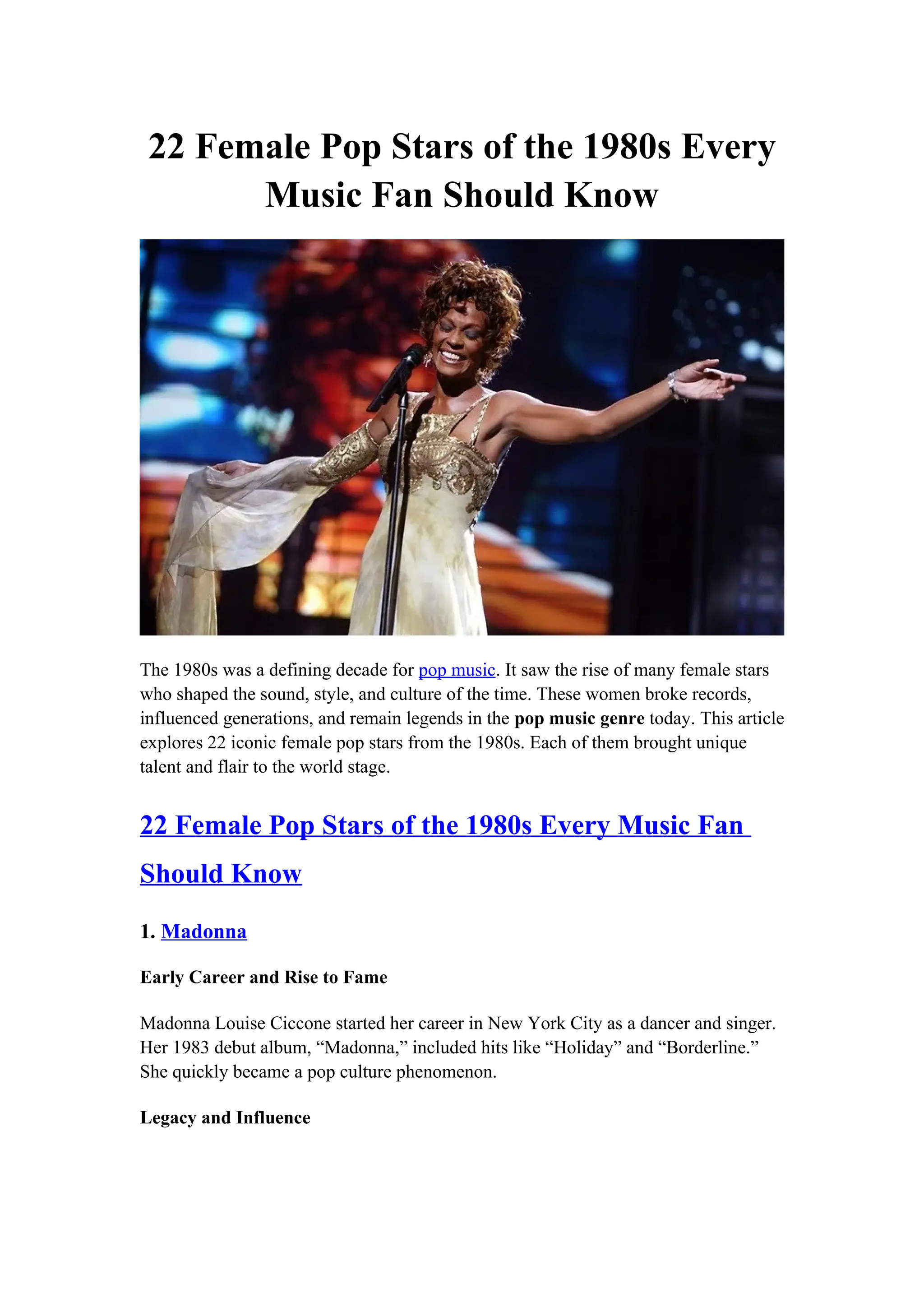
The 1980s pop music landscape represents a watershed era characterized by the commercial explosion of synthesizers, drum machines, and high-budget music videos. It bridged traditional analog recording techniques with cutting-edge digital production, creating an unprecedented global culture defined by MTV, charismatic pop icons, and enduring, highly polished melodies that continue to dominate contemporary radio, sampling culture, and nostalgia circuits.
The Technological Evolution: From Analog Warmth to Digital Synthesis
The sonic footprint of 1980s pop music cannot be separated from the rapid technological advancements that occurred during the decade. At the start of the 1980s, popular music was transitioning from the organic, band-oriented instrumentation of the 1970s disco and rock eras toward electronic soundscapes. The introduction of affordable, polyphonic synthesizers and programmable drum machines revolutionized how producers and artists composed tracks.
Key Instruments That Defined the Decade
Synthesizers such as the Yamaha DX7, released in 1983, became ubiquitous across nearly every genre of pop music. Utilizing frequency modulation (FM) synthesis, the DX7 produced bright, glassy electric piano tones, punchy brass stabs, and futuristic pads that cut through commercial radio mixes. Similarly, the Roland TR-808 and TR-909 drum machines provided the rhythmic foundation for countless dance-pop, synth-pop, and R&B tracks. Their distinctive clap, snare, and booming bass sounds gave rhythm tracks a mechanized precision that felt modern, sleek, and irresistibly danceable.
The Rise of Digital Production and MIDI
The standardization of Musical Instrument Digital Interface (MIDI) in the early 1980s allowed electronic instruments, computers, and studio gear to communicate seamlessly. This technological leap meant that producers could program intricate arrangements, sequence multi-layered tracks, and lock drum machines and synthesizers to a precise tempo with absolute sample accuracy. Consequently, 1980s pop production favored pristine clarity, heavy compression, and gated reverb—a distinctive drum production technique popularized by Phil Collins that added a massive, explosive acoustic tail to snare drums.
Primary Subgenres and Stylistic Diversity
While umbrella terms like "synth-pop" and "dance-pop" often encapsulate the decade, 1980s pop was a rich ecosystem of distinct, overlapping subgenres that evolved rapidly from 1980 to 1989.
Synth-Pop and New Wave
Originating in the late 1970s and exploding in the early 1980s, synth-pop placed electronic synthesizers at the absolute center of the composition. Acts like Depeche Mode, Human League, and Eurythmics championed moody, atmospheric, and catchy electronic arrangements. New Wave shared this affinity for synthesizers while retaining a quirky, guitar-driven edge, exemplified by bands like Blondie, Talking Heads, and Duran Duran, who fused danceable beats with fashion-forward aesthetics.
Arena Pop and Rock Crossover
The 1980s were the golden age of stadium-filling pop acts whose music appealed simultaneously to rock and pop audiences. Artists like Michael Jackson, Madonna, Prince, and George Michael blended funk, rock, soul, and dance elements into massive, hook-laden anthems. Prince, in particular, defied genre boundaries by fusing Minneapolis funk with soaring guitar solos and explicit pop hooks, creating a template for modern multi-genre production.
Quiet Storm and Adult Contemporary Pop
Running parallel to high-energy dance tracks was a sophisticated style of smooth pop and R&B known as "Quiet Storm." Pioneered by artists like Luther Vandross, Anita Baker, and Whitney Houston, this style relied on lush string arrangements, smooth electric pianos, and soaring vocal acrobatics. Whitney Houston’s powerhouse vocals defined the late 1980s ballad standard, setting a high bar for pop vocal performance.
The MTV Phenomenon and the Visual Revolution
In August 1981, Music Television (MTV) launched with the prophetic words, "Ladies and gentlemen, rock and roll." The network fundamentally transformed popular music from an auditory medium into an audiovisual experience. A song's commercial success was suddenly tied directly to the narrative, style, and cinematic quality of its accompanying music video.
[Audio Recording] ---> [Music Video Production] ---> [MTV Broadcast] ---> [Global Visual & Commercial Phenomenon]
Directorial Innovation and Cinematic Scope
Directors such as John Landis, David Fincher, and Steve Barron treated pop music videos like mini-movies. Michael Jackson’s 14-minute mini-movie for "Thriller" (1983) permanently altered the music industry, proving that music videos could be cultural events that drove physical album sales and merchandise. Madonna used music videos as vehicles for social commentary, fashion experimentation, and boundary-pushing performance art, masterfully controlling her public image and setting trends worldwide.
Fashion, Hair, and Youth Subculture
The visual dominance of 1980s pop spilled heavily into mainstream fashion. Neon colors, leather jackets, fingerless gloves, shoulder pads, and elaborate teased hairstyles became standard youth uniform staples. Pop stars served as walking billboards for avant-garde design, bridging high fashion and street culture in a manner that paved the way for modern influencer culture.
Comparative Analysis of 1980s Pop Subgenres
To understand the breadth of 1980s pop music, it helps to examine how different subgenres approached instrumentation, lyrical themes, and cultural impact.
| Subgenre | Primary Instruments | Lyrical Themes | Key Artists |
|---|---|---|---|
| Synth-Pop | Synthesizers, Drum Machines, Sequencers | Isolation, romance, futuristic nightlife | Depeche Mode, Human League, Pet Shop Boys |
| Dance-Pop | Synths, Electric Bass, Horns, Drum Machines | Celebration, dance, romance, independence | Madonna, Whitney Houston, Janet Jackson |
| New Wave | Guitars, Synths, Keyboards, Saxophone | Youth rebellion, irony, romance, existentialism | Duran Duran, Culture Club, Wham! |
| Soft Pop / Ballads | Acoustic Piano, Strings, Electric Guitar | Heartbreak, devotion, emotional vulnerability | Phil Collins, Lionel Richie, Richard Marx |
Global Superstars and Cultural Trailblazers
The 1980s pop landscape was anchored by a handful of titanic figures who broke racial, gender, and geographic barriers to achieve unprecedented global reach.
Michael Jackson and the Global Album Era
Michael Jackson’s Thriller (1982) remains the best-selling album of all time, with estimated global sales exceeding 70 million copies. Jackson dismantled racial barriers on MTV, successfully lobbied for crossover airplay, and perfected complex, synchronized choreography that transformed how pop stars performed live. His vocal hiccups, Moonwalk dance, and signature single white glove became universally recognized cultural touchstones.
Madonna and Creative Autonomy
Madonna emerged in the early 1980s out of the New York dance club scene, quickly proving herself to be a master of reinvention. With albums like Like a Virgin (1984) and Like a Prayer (1989), she challenged patriarchal structures, explored religious and sexual taboos, and exercised total creative control over her music, image, and business ventures. She established the modern blueprint for female pop superstardom.
Prince and Multi-Instrumental Virtuosity
Prince Rogers Nelson wrote, produced, arranged, and performed almost all of his own instrumental tracks on his landmark albums 1999 (1982) and Purple Rain (1984). Melding funk, rock, R&B, and pop, Prince pushed the boundaries of lyrical content and fashion, forcing the music industry to reconsider censorship and artistic independence.
Production Legacy and Modern Sampling Culture
Decades after its initial broadcast and vinyl release, 1980s pop continues to exert an enormous influence on 21st-century music production.
The Retrowave and Synthwave Movements
In the 2010s and 2020s, an entire subgenre known as "Synthwave" or "Retrowave" emerged, explicitly replicating the warm analog pads, gated drums, and neon-drenched aesthetics of 1980s pop and film scores. Modern producers utilize vintage hardware emulators and authentic 1980s synthesizers to capture the melancholic, nostalgic atmosphere of the decade.
Direct Sampling and Interpolation
Hip-hop, EDM, and modern pop frequently sample 1980s basslines, vocal hooks, and drum patterns. The heavy bass and punchy snares of 1980s R&B and dance-pop provide fertile ground for contemporary loop production, ensuring that the harmonic structures and rhythmic cadences of the Reagan era remain embedded in the contemporary charts.
Frequently Asked Questions
What defined the sound of 1980s pop music?
The sound of 1980s pop was defined by the widespread adoption of electronic instruments, specifically polyphonic synthesizers (like the Yamaha DX7) and programmable drum machines (like the Roland TR-808). This technology allowed for crisp production, danceable electronic beats, and bright, melodic hooks that dominated commercial radio.
How did MTV change the music industry in the 1980s?
MTV shifted the music industry from an exclusively audio-driven medium to a visual art form. Artists could no longer rely solely on radio airplay; they needed compelling, high-budget music videos to drive album sales, establish their personal brand, and connect with a global youth audience.
Which artists were considered the biggest pop stars of the 1980s?
Michael Jackson, Madonna, and Prince were the undisputed titans of 1980s pop. Other major chart-topping acts included George Michael, Whitney Houston, Phil Collins, Janet Jackson, Duran Duran, and Cyndi Lauper, each bringing unique style and crossover appeal to the decade.
What is gated reverb and why was it popular in the 1980s?
Gated reverb is an audio production technique where a heavy reverberation effect applied to a drum kit—especially the snare drum—is abruptly cut off by a noise gate. Popularized by producer Hugh Padgham and artist Phil Collins, it gave 1980s drum tracks a massive, explosive, yet controlled acoustic impact.
How can modern producers replicate 1980s pop production?
Modern producers replicate the 1980s pop aesthetic by using authentic hardware synthesizers or software plug-ins emulating units like the DX7, Juno-106, and Prophet-5. Additionally, utilizing MIDI sequencing, heavy sidechain compression, and vintage digital reverb units helps achieve the characteristic warmth and punch of the era.
Conclusion and Recommendations for Exploration
To truly appreciate the depth and craftsmanship of 1980s pop, music enthusiasts should look beyond greatest-hits compilations and explore full-length foundational albums such as Michael Jackson’s Thriller, Madonna’s Like a Prayer, and Prince’s Purple Rain. Studying the liner notes reveals a tight-knit community of elite session musicians and visionary producers who shaped the modern pop landscape. For listeners looking to dive deeper, exploring contemporary synthwave artists offers a fascinating look at how modern creators continue to honor and reinvent the sonic architecture of the 1980s.