1974 was a landmark year for cinema, defined by the "New Hollywood" movement’s creative peak. It produced enduring masterpieces like The Godfather Part II and Chinatown, while simultaneously birthing the modern slasher genre and the blockbuster comedy. This era prioritized director-driven narratives, cynical themes, and technical innovation, forever changing global film culture.
As of 2026, film historians and critics continue to point to 1974 as perhaps the most significant year in the history of American cinema. It was a period where the traditional studio system had fully yielded to the "Movie Brats"—a generation of film-school-educated directors who brought a gritty, European-influenced sensibility to domestic screens. The socio-political climate of the time, heavily influenced by the Watergate scandal and the tail end of the Vietnam War, permeated the scripts of the era, resulting in films characterized by paranoia, moral ambiguity, and institutional distrust.
The Francis Ford Coppola Dominance: A Tale of Two Masterpieces
In the history of the Academy Awards, few individuals have had a year quite like Francis Ford Coppola had in 1974. He released two films that are now considered among the greatest ever made: The Godfather Part II and The Conversation.
The Godfather Part II: Redefining the Sequel
Released in December 1974, The Godfather Part II achieved what many thought impossible: it equaled, and some argue surpassed, its predecessor. The film’s dual narrative structure, acting as both a sequel and a prequel, was a revolutionary storytelling device. By juxtaposing the rise of a young Vito Corleone (Robert De Niro) in early 20th-century New York with the moral disintegration of Michael Corleone (Al Pacino) in the 1950s, Coppola explored the American Dream's darker underside.
The film's technical achievements in 1974 set new standards for cinematography and production design. Gordon Willis, known as the "Prince of Darkness," used underexposed film and warm, sepia-toned palettes to distinguish the historical eras, a technique that remains a case study in visual storytelling.
The Conversation: The Cinema of Paranoia
While The Godfather Part II was a sprawling epic, The Conversation was a tightly wound, intimate character study. Released in April 1974, it starred Gene Hackman as Harry Caul, a surveillance expert who becomes obsessed with a recording he believes depicts a planned murder. The film captured the zeitgeist of the post-Watergate era perfectly. Its focus on privacy, technology, and the psychological toll of state-sponsored or corporate surveillance was remarkably prescient. Even in 2026, the film’s sound design, led by Walter Murch, is studied for its ability to create tension through auditory distortion and repetition.
The Birth of the Modern Slasher and Horror Innovations
While the high-brow dramas of 1974 were sweeping awards, the horror genre was undergoing a radical and visceral transformation. The year saw the release of two films that would provide the blueprint for the next four decades of horror.
The Texas Chain Saw Massacre
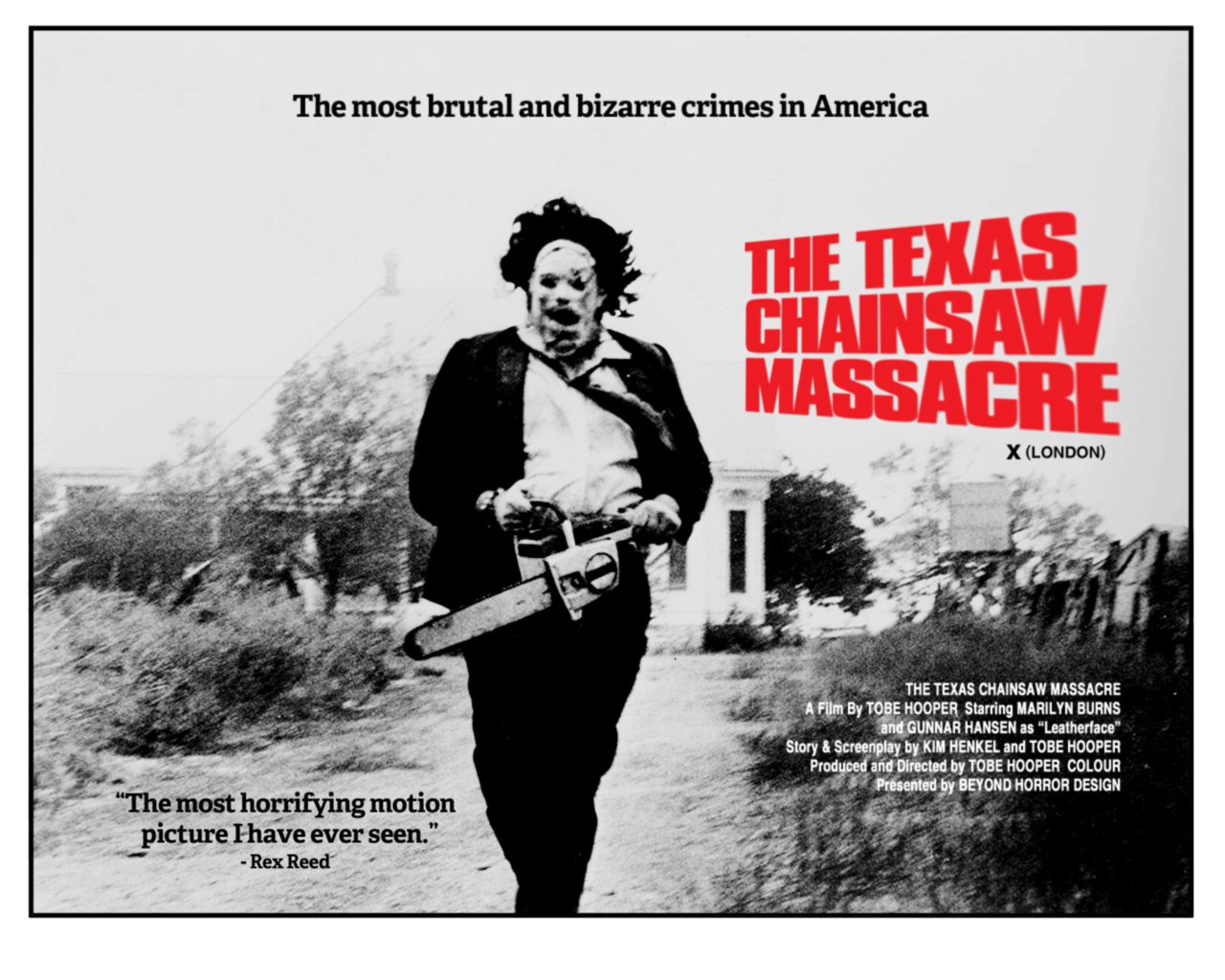
Tobe Hooper’s The Texas Chain Saw Massacre was released in October 1974. Despite its title, the film is surprisingly bloodless, relying instead on a relentless, claustrophobic atmosphere and documentary-style grit. It introduced "Leatherface," one of the most iconic figures in horror history. The film’s impact on 1974 audiences was profound; it was banned in several countries and faced significant censorship hurdles due to its perceived "intensity." In 2026, it is recognized not just as a horror film, but as a masterpiece of low-budget independent filmmaking that challenged the boundaries of what was permissible on screen.
Black Christmas
Often overlooked in the shadow of American productions, the Canadian film Black Christmas (1974) is credited with establishing several slasher tropes: the "final girl," the POV shot from the killer's perspective, and the "killer inside the house" plot twist. Directed by Bob Clark, it balanced suspense with a level of character development that was rare for the genre at the time.
Neo-Noir and the Deconstruction of the Hero
No discussion of 1974 film is complete without Chinatown. Directed by Roman Polanski and written by Robert Towne, Chinatown is the definitive neo-noir. It took the tropes of the 1940s private eye stories and transplanted them into a sun-drenched, corrupt 1937 Los Angeles.
The film’s screenplay is widely regarded as one of the most perfect ever written. It replaced the typical "hero saves the day" ending with a devastating conclusion that highlighted the futility of individual action against systemic corruption. Jack Nicholson’s portrayal of J.J. "Jake" Gittes became a career-defining role, personifying the cynical but ultimately outmatched investigator.
The Year of Mel Brooks: Comedy as Commentary
In a year dominated by heavy dramas and terrifying horror, Mel Brooks managed to release two of the most successful and culturally significant comedies of all time: Blazing Saddles and Young Frankenstein.
- Blazing Saddles (February 1974): This satirical Western broke nearly every taboo of its time. It used the Western genre to satirize racism, Hollywood tropes, and American mythology. Its meta-narrative and fourth-wall-breaking finale were decades ahead of their time.
- Young Frankenstein (December 1974): Released only months later, this was a loving parody of the Universal Monster movies of the 1930s. Brooks insisted on filming in black and white and using the original laboratory equipment from the 1931 Frankenstein film, showcasing a technical dedication rarely seen in comedy.
International Cinema in 1974
Beyond the United States, 1974 was a fruitful year for international auteurs. These films provided a counter-narrative to Hollywood's output, focusing on existentialism, memory, and political upheaval.
- Scenes from a Marriage (Sweden): Originally a television miniseries, Ingmar Bergman’s exploration of a crumbling relationship was edited into a feature film for international release in 1974. It remains one of the most honest and painful depictions of domestic life ever filmed.
- The Enigma of Kaspar Hauser (West Germany): Werner Herzog’s haunting story of a man who spent his first 17 years in a dark cellar was a standout in the New German Cinema movement.
- Celine and Julie Go Boating (France): Directed by Jacques Rivette, this film explored the boundaries between reality and fiction, becoming a foundational text for experimental and feminist cinema.
Technical Milestones and Industry Shifts
1974 was a year of transition for film technology and industry practices. The success of independent or "new-style" films proved to the major studios that audiences were hungry for more complex, mature content.
- Steadicam Development: Garrett Brown was actively refining the Steadicam in 1974. While its first major use wouldn't be seen until 1976 (Bound for Glory), the prototypes were being tested during the production cycles of 1974 films.
- Sound Design Revolution: With The Conversation, sound design became a primary storytelling tool rather than a secondary technical requirement.
- The Rating System: The MPAA rating system, established only six years prior in 1968, was heavily tested in 1974 by the violence in The Texas Chain Saw Massacre and the adult themes in Last Tango in Paris (which continued its controversial run into early 1974 in many markets).
1974 Film Performance and Recognition
The following table compares the top-tier films released in 1974 based on their genre, director, and primary award recognition.
| Film Title | Director | Primary Genre | Major Accolade (47th Oscars) |
|---|---|---|---|
| The Godfather Part II | Francis Ford Coppola | Crime/Drama | Best Picture (Winner) |
| Chinatown | Roman Polanski | Neo-Noir | Best Original Screenplay (Winner) |
| The Conversation | Francis Ford Coppola | Mystery/Thriller | Palme d'Or (Winner - Cannes) |
| Blazing Saddles | Mel Brooks | Comedy/Satire | Best Supporting Actress (Nominated) |
| Alice Doesn't Live Here Anymore | Martin Scorsese | Drama | Best Actress (Winner - Ellen Burstyn) |
| Murder on the Orient Express | Sidney Lumet | Mystery | Best Supporting Actress (Winner) |
| Young Frankenstein | Mel Brooks | Comedy/Horror | Best Adapted Screenplay (Nominated) |
| A Woman Under the Influence | John Cassavetes | Drama | Best Actress/Director (Nominated) |
The Legacy of 1974 in 2026
From the perspective of 2026, the 1974 film slate represents a "lost world" of mid-budget, adult-oriented filmmaking that has largely been replaced by high-budget franchise tentpoles. However, the influence of 1974 remains ubiquitous. Modern directors often cite the pacing and moral complexity of Chinatown or the immersive realism of The Godfather Part II as their primary inspirations.
Furthermore, the 1974 film year demonstrated that cinema could be both commercially successful and intellectually challenging. The Godfather Part II was one of the highest-grossing films of the year, proving that a three-hour, non-linear drama could captivate a mass audience. This balance of art and commerce is something the industry continues to strive for today.
The preservation of 1974 films has also become a priority. Thanks to the National Film Registry, many of these titles have been meticulously restored. By 2026, almost all major releases from this year are available in high-fidelity 4K and 8K formats, allowing new generations to experience the gritty texture of 1970s film stock as it was intended.
Frequently Asked Questions
Which 1974 film won the most Academy Awards?
The Godfather Part II was the dominant force at the 47th Academy Awards (held in April 1975). It won six Oscars, including Best Picture, Best Director (Francis Ford Coppola), and Best Supporting Actor (Robert De Niro). It was the first sequel in history to win the Academy Award for Best Picture.
Was 1974 the year that Jaws was released?
No, Jaws was released in June 1975. However, 1974 is often cited as the final year of the "pre-blockbuster" era. While 1974 had massive hits, they were generally grounded dramas or comedies. Jaws would change the industry's focus toward the summer event movie, a trend that accelerated with Star Wars in 1977.
Why is Chinatown considered a "Neo-Noir" and not just a Noir film?
Film Noir traditionally refers to the period between the early 1940s and late 1950s. Chinatown is "Neo-Noir" because it was made after this period (in 1974) and used the conventions of the genre (the detective, the femme fatale, the corrupt city) to comment on the genre itself, while also incorporating more explicit content and color cinematography.
Who was the highest-grossing actor of 1974?
Robert Redford was arguably the biggest star of 1974, appearing in The Great Gatsby. While that film received mixed critical reviews, it was a massive commercial success. Other major stars that year included Barbra Streisand (The Way We Were - released late '73, peak '74) and Paul Newman.
How did 1974 change horror movies?
1974 moved horror away from Gothic monsters (vampires, werewolves) and toward "human" monsters. The Texas Chain Saw Massacre showed that horror could be found in the backwoods of America, while Black Christmas brought the threat into the domestic sphere. This paved the way for the "Slasher Boom" of the late 1970s and 1980s.
Practical Recommendations for Viewers
If you are looking to explore the best of 1974 film, a structured approach is recommended to appreciate the diversity of the year.
- The Coppola Double Feature: Watch The Conversation followed by The Godfather Part II. This allows you to see the range of a director at his absolute zenith.
- The Mel Brooks Palette Cleanser: After watching the heavier dramas, view Blazing Saddles and Young Frankenstein to understand how 1974 also revolutionized screen comedy.
- Genre Origins: Watch The Texas Chain Saw Massacre to see the birth of modern horror tropes. Contrast this with Chinatown to see how the detective story was perfected.
- Check for Restorations: As of 2026, many of these films have "50th Anniversary" 4K restorations available. Always seek out the Criterion Collection or similar boutique labels for the best visual quality and historical context via bonus features.