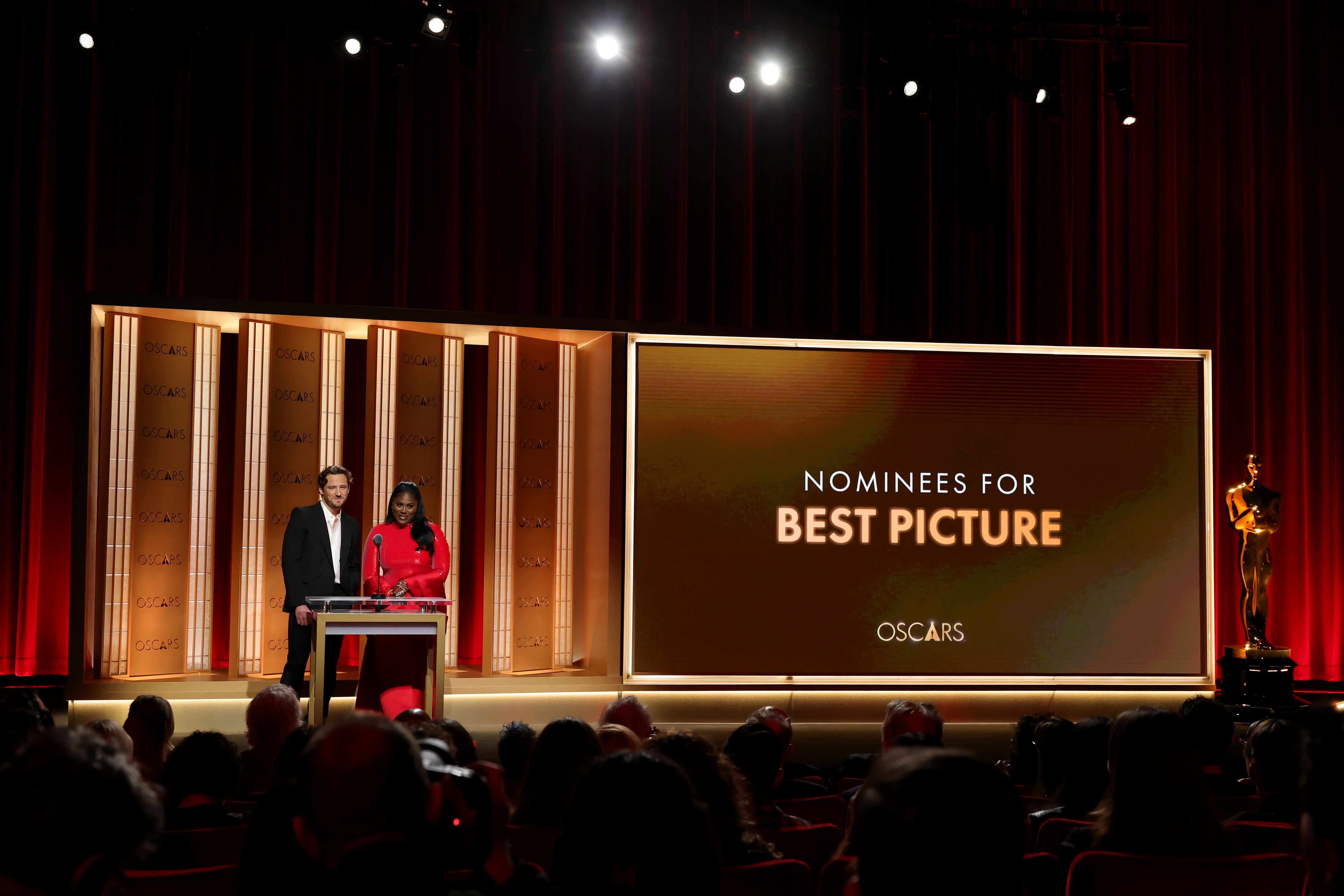
The 97th Academy Awards, held in early 2025, represented a watershed moment for the Best International Feature Film category. This guide provides a retrospective analysis of the five final nominees that defined the year in global cinema, detailing their narratives, technical mastery, and the cultural impact they continue to exert as we look back from 2026.
The Landscape of the 97th Academy Awards
By the time the 2025 Oscars ceremony concluded on March 2, 2025, it was clear that the "International Feature Film" category had transcended its former "Foreign Language Film" designation. The nominees for the 97th Oscars were not merely regional successes; they were global cinematic events that challenged traditional genre boundaries. From operatic crime musicals to stark black-and-white period dramas, the 2025 slate was characterized by high-concept storytelling and profound political urgency.
The selection process for the 2025 cycle followed the rigorous multi-stage system established by the Academy of Motion Picture Arts and Sciences (AMPAS). Each country submitted a single film to represent its national cinema. From a longlist of nearly 90 films, a dedicated committee narrowed the field to a 15-film "shortlist," before the general Academy membership voted to determine the final five nominees.
The 2025 nominees stood out for their ability to balance localized cultural specificity with universal human themes, a feat that has made them essential viewing for cinephiles in 2026.
Emilia Pérez (France)
Directed by the acclaimed Jacques Audiard, Emilia Pérez was arguably the most talked-about film of the 2025 awards season. A bold fusion of a gritty crime thriller and an operatic musical, the film tells the story of a Mexican cartel leader who enlists a high-powered lawyer to help her fake her death and undergo gender-affirming surgery, finally becoming the woman she has always dreamed of being.
Artistic and Technical Achievements
The film’s success rested on its fearless tonal shifts. Audiard, known for A Prophet and Rust and Bone, collaborated with singer-songwriter Camille and composer Clément Ducol to create a score that integrated seamlessly into the narrative. Unlike traditional musicals, the songs in Emilia Pérez served as internal monologues or visceral expressions of the characters' psychological states.
The ensemble cast—Karla Sofía Gascón, Zoe Saldaña, and Selena Gomez—shared the Best Actress prize at the Cannes Film Festival prior to the Oscar nomination. Gascón’s performance, in particular, was hailed as a landmark achievement, marking the first time an openly trans actress was a central figure in a major International Feature winner’s campaign.
Critical Legacy
In 2026, Emilia Pérez is remembered for its "maximalist" approach. It proved that international cinema could be as spectacular and high-budget as any Hollywood blockbuster while maintaining a deeply personal and subversive core. Its inclusion in the 2025 nominees signaled the Academy's growing appetite for films that defy easy categorization.
The Seed of the Sacred Fig (Germany)
While directed by Iranian filmmaker Mohammad Rasoulof, The Seed of the Sacred Fig was submitted by Germany, where Rasoulof sought asylum after fleeing a prison sentence in Iran. The film is a harrowing domestic drama that serves as a microcosm of the political unrest in modern Iran, specifically the "Woman, Life, Freedom" movement.
The Narrative Stakes
The story focuses on Iman, a recently promoted judge in the Revolutionary Court in Tehran, who finds himself consumed by paranoia as protests erupt across the city. When his gun goes missing, he suspects his own wife and daughters, leading to a claustrophobic and terrifying breakdown of family trust.
The film utilized real-world footage of the Iranian protests, blending documentary realism with a fictional psychological thriller. The technical bravery required to film portions of the movie in secret, combined with Rasoulof's real-life escape from judicial persecution, gave the film an unparalleled sense of urgency during the 2025 awards circuit.
Impact on Global Cinema
The Seed of the Sacred Fig highlighted the complex nature of "national" submissions. As a German submission created by an Iranian dissident about Iranian life, it forced the Academy and audiences to reconsider how we define regional cinema in an era of displacement and exile.
I'm Still Here (Brazil)
Walter Salles returned to the global stage with I'm Still Here (Ainda Estou Aqui), a poignant and devastating look at Brazil’s military dictatorship in the 1970s. Based on the memoir by Marcelo Rubens Paiva, the film centers on Eunice Paiva, a mother of five who becomes a human rights activist after her husband, a former congressman, is "disappeared" by the regime.
Performances and Direction
Fernanda Torres delivered what many critics in 2025 called the performance of her career. Her portrayal of Eunice was a study in quiet resilience, capturing the agonizing uncertainty of the desaparecidos era without resorting to melodrama. Salles, who previously directed the seminal Central Station, brought a documentary-like intimacy to the period piece, utilizing 16mm and 35mm film stock to replicate the visual texture of the 1970s.
Historical Resonance
The film’s nomination in 2025 was seen as a vital act of historical reclamation for Brazil. It resonated deeply with international audiences who were grappling with the rise of authoritarianism globally, proving that the most specific historical stories often have the widest reach.
The Girl with the Needle (Denmark)
Denmark’s entry, directed by Magnus von Horn, was perhaps the most visually striking and unsettling of the 2025 nominees. Set in post-WWI Copenhagen, The Girl with the Needle is a dark, expressionistic tale inspired by true events. It follows Karoline, a young pregnant woman who finds employment with a woman running a clandestine adoption agency that hides a horrific secret.
Visual and Tonal Style
Filmed in high-contrast black-and-white, the movie drew comparisons to the works of Carl Theodor Dreyer and the German Expressionists. The cinematography emphasized the grime and desperation of the era, creating an atmosphere of impending doom. It was a bold choice for Denmark, moving away from the contemporary social dramas often associated with the country’s submissions.
Thematic Depth
The film explored themes of poverty, female agency, and the moral compromises born of societal collapse. Its nomination solidified Magnus von Horn’s reputation as one of the most provocative voices in European cinema, willing to confront the darkest chapters of human history with uncompromising artistic vision.
Vermiglio (Italy)
Italy’s Vermiglio, directed by Maura Delpero, offered a serene yet profound contrast to its more explosive competitors. Set in a remote Alpine village during the final year of World War II, the film depicts the arrival of a deserting soldier and the subsequent disruption of the local community’s rigid social order.
Cinematic Language
Delpero utilized a largely non-professional cast to achieve a sense of hyper-realism. The film is structured around the changing seasons, with the landscape itself acting as a primary character. Its quiet, observational style allowed the tensions of war, religion, and family tradition to simmer beneath the surface.
Technical Precision
The sound design and cinematography of Vermiglio were particularly lauded. The film captured the echoes of the mountains and the tactile reality of rural life, creating an immersive experience that transported audiences to a time and place far removed from modern complexities. Its inclusion in the final five was a testament to the Academy's appreciation for "slow cinema" executed with absolute precision.
Comparison of the 2025 Nominees
The following table compares the key characteristics of the five films that competed for the Best International Feature Film Oscar in 2025.
| Film Title | Submitting Country | Director | Primary Language | Genre |
|---|---|---|---|---|
| Emilia Pérez | France | Jacques Audiard | Spanish | Musical / Crime |
| The Seed of the Sacred Fig | Germany | Mohammad Rasoulof | Persian | Political Drama |
| I'm Still Here | Brazil | Walter Salles | Portuguese | Historical Drama |
| The Girl with the Needle | Denmark | Magnus von Horn | Danish | Period Thriller |
| Vermiglio | Italy | Maura Delpero | Italian | Drama |
The 2025 Eligibility and Voting Rules
To understand the context of these nominations, it is essential to look at the rules that governed the 97th Oscars. The Academy maintained strict criteria for the Best International Feature category:
- Country-Specific Selection: Each country must submit only one film, chosen by a government-approved organization or a jury of film industry professionals.
- Language Requirement: The film must contain more than 50% non-English dialogue. This rule led to some notable exclusions in past years but was clearly met by all 2025 nominees.
- Theatrical Release: Films must have been released theatrically in their home country for at least seven consecutive days within the eligibility window (ending September 30, 2024, for the 2025 cycle).
- Creative Control: The Academy requires that the submitting country demonstrate that creative control of the film was largely in the hands of citizens or residents of that country, though this rule is interpreted with increasing flexibility for co-productions.
The voting process involved the "International Feature Film Preliminary Committee," which viewed all eligible submissions to create the shortlist. The final five nominees were then selected by the "International Feature Film Nominating Committee," which required members to view all 15 shortlisted films in a theater setting or via the official Academy screening platform.
Streaming and Access: Where to Watch in 2026
As of 2026, most of the 2025 nominees have found permanent homes on major streaming platforms, making global cinema more accessible than ever before.
- Emilia Pérez: Following its successful theatrical run and Oscar win, the film is primarily available on Netflix in most territories, including North America and Europe.
- The Seed of the Sacred Fig: This film is often found on boutique streaming services like MUBI or available for digital rental through platforms like Apple TV and Amazon.
- I'm Still Here: In 2026, this film is widely available on Sony Pictures Classics' digital partners and often features on Criterion Channel rotations.
- The Girl with the Needle and Vermiglio: These titles are frequently available through specialized distributors such as Sideshow and Janus Films, often appearing on curated streaming platforms like MUBI or Kanopy (accessible via many public libraries).
Frequently Asked Questions
Why was "Emilia Pérez" submitted by France if it is in Spanish and set in Mexico?
Under Academy rules, the submitting country is determined by where the production is based and who holds creative control, not necessarily the language spoken or the setting of the story. Jacques Audiard is a French director, and the film was a French-led production, making it eligible as France’s official entry.
How did "The Seed of the Sacred Fig" represent Germany?
Director Mohammad Rasoulof fled Iran and received support from the German film industry to complete and distribute his work. Germany submitted the film as an act of solidarity with the filmmaker and to recognize the film's significant German production backing.
What is the difference between "Foreign Film" and "International Feature"?
The Academy officially changed the name from "Best Foreign Language Film" to "Best International Feature Film" in 2019. The goal was to move away from the word "foreign" and better reflect the global nature of the industry, although the requirement for non-English dialogue remains in place.
Can an International Feature nominee also be nominated for Best Picture?
Yes. Recent history, including Parasite (2020) and All Quiet on the Western Front (2023), has shown that international films can compete in the general Best Picture category. In 2025, Emilia Pérez notably crossed over into several "general" categories, including acting and directing.
Were there any major snubs in the 2025 international category?
Every year sees "snubs" due to the one-film-per-country rule. In 2025, many critics lamented the exclusion of India’s All We Imagine as Light, which won the Grand Prix at Cannes but was not selected as India's official entry, a decision that sparked significant debate within the industry.
Recommendation for Cinema Lovers
If you are catching up on the 2025 nominees in 2026, the best approach is to start with Emilia Pérez for its sheer stylistic audacity, followed by The Seed of the Sacred Fig for its political weight. To truly appreciate the breadth of the category, do not overlook Vermiglio; its quiet power provides a necessary balance to the more high-octane nominees and represents the enduring tradition of European art-house cinema. For those interested in the history of cinema and the evolution of the Academy Awards, Oscars.org remains the primary resource for official records and historical context regarding the 97th Academy Awards.