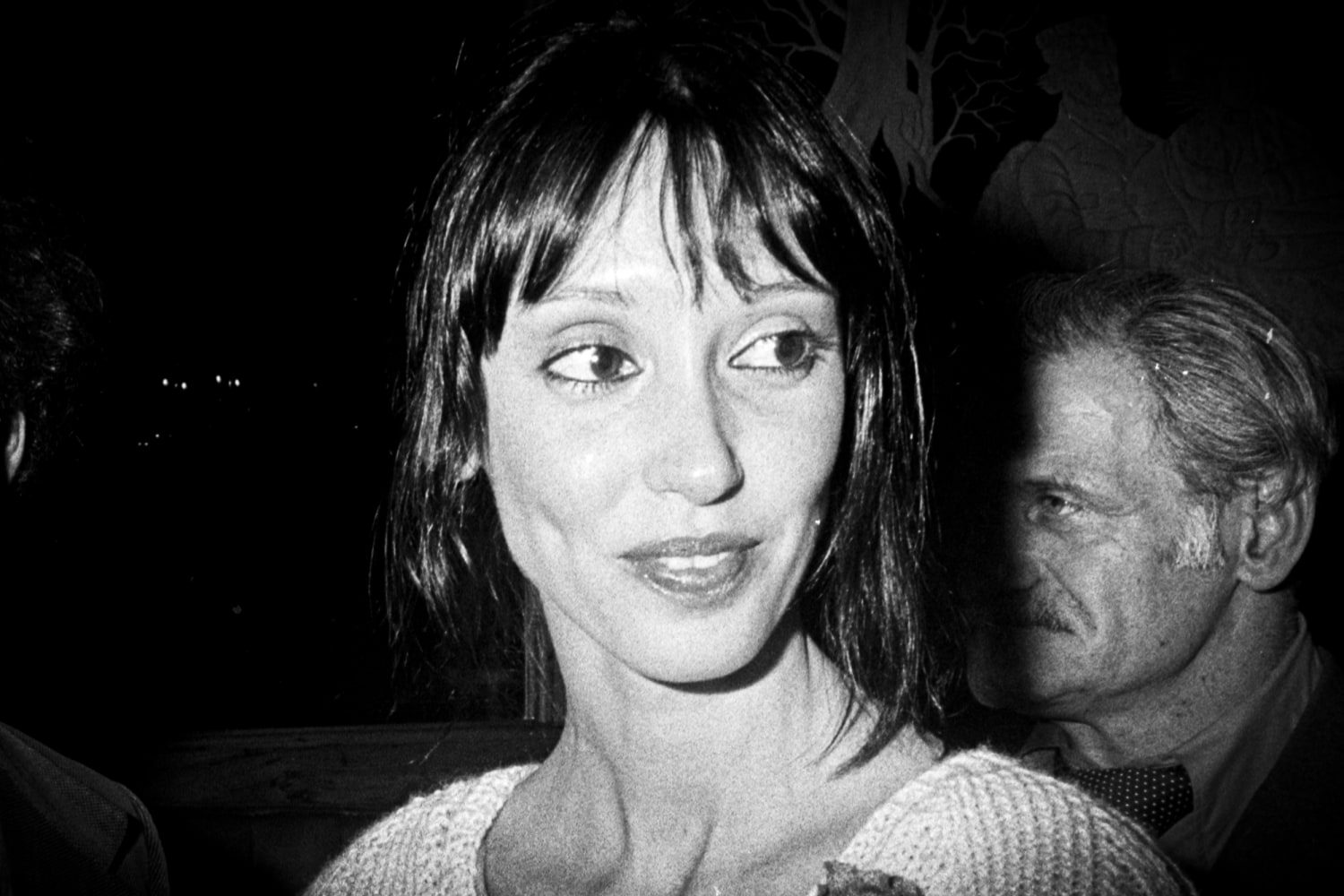
Shelley Duvall was an iconic American actress and producer celebrated for her idiosyncratic performances, distinct screen presence, and her pivotal role in some of the most influential films of the 1970s and 1980s. Her career spanned decades, evolving from a muse for auteur director Robert Altman to a respected television producer and an enduring symbol of psychological intensity in the horror genre.
Early Life and Discovery by Robert Altman
Born in 1949 in Fort Worth, Texas, Shelley Alexis Duvall did not set out to become a traditional Hollywood starlet. Her entry into the industry was serendipitous; she was discovered in the late 1960s by members of director Robert Altman’s production team while she was attending a party in Houston. Altman was struck by her unique look and naturalistic, unaffected demeanor, which stood in stark contrast to the polished glamour of contemporary starlets.
This initial encounter led to a prolific creative partnership that defined the first decade of her career. Duvall’s debut in the 1970 film Brewster McCloud showcased her ability to occupy space in a film with a quirky, unforced energy. Under Altman’s direction, she was encouraged to embrace improvisation and emotional vulnerability, traits that would become the hallmarks of her acting style.
The Altman Era: A Muse and Collaborator
The collaboration between Duvall and Altman remains one of the most significant director-actor pairings in American cinema. Over the 1970s, Duvall appeared in seven of Altman’s films, including McCabe & Mrs. Miller (1971), Thieves Like Us (1974), and Nashville (1975).
Her performance in 3 Women (1977) is widely considered the apex of her early career. Portraying Millie Lammoreaux, a woman obsessed with social graces and superficial appearances, Duvall delivered a performance characterized by layered insecurity and profound loneliness. Her work in this film earned her the Best Actress award at the Cannes Film Festival, cementing her status as a serious dramatic talent capable of carrying complex psychological narratives.
Transition to Horror and Mainstream Recognition
In 1980, Duvall took on the role that would define her legacy for mainstream audiences: Wendy Torrance in Stanley Kubrick’s adaptation of Stephen King’s The Shining. As the long-suffering wife of Jack Torrance, played by Jack Nicholson, Duvall was tasked with embodying a specific kind of terror—the terror of a woman trapped in a hostile environment, witnessing the psychological deterioration of her spouse while attempting to protect her child.
The production of The Shining is legendary for its rigor. Kubrick was notoriously demanding, requiring endless retakes to achieve his precise vision. For Duvall, this meant months of high-stress performance, particularly during the film’s climax. Despite the taxing nature of the production, her portrayal of Wendy Torrance remains one of the most analyzed performances in horror history. It showcased a raw, frantic, and deeply empathetic vulnerability that anchored the film’s surreal and supernatural elements.
Diversification: Producing and Children’s Television
Following her high-profile film work, Duvall pivoted toward creative control and production. In the 1980s, she founded Think Entertainment, an independent production company focused on bringing sophisticated literature and folklore to television. This era saw the creation of Faerie Tale Theatre, an anthology series that adapted classic fairy tales with high production values and notable guest stars.
Duvall’s work as a producer highlighted her intellectual curiosity and her desire to provide high-quality programming for children and families. She maintained her acting career throughout this time, appearing in films like Popeye (1980), where she starred as Olive Oyl, a role that saw her reunited with director Robert Altman and displayed her gift for physical comedy and character-driven performance.
Comparative Analysis of Major Roles
Duvall’s career was marked by a commitment to characters that were often misunderstood, socially isolated, or placed in extraordinary circumstances. The following table compares three of her most significant career milestones:
| Film Title | Character | Director | Key Characteristic |
|---|---|---|---|
| 3 Women | Millie Lammoreaux | Robert Altman | Emotional vulnerability and psychological depth |
| The Shining | Wendy Torrance | Stanley Kubrick | High-stakes endurance and visceral terror |
| Popeye | Olive Oyl | Robert Altman | Physical comedy and stylized character work |
Challenges and Later Life
Duvall’s later years were marked by a retreat from the public eye. After moving back to Texas in the 1990s, she largely stepped away from the film industry, citing a desire for a quieter life. Her occasional re-emergence into public discourse often centered on speculative narratives regarding her health and personal life.
However, within the industry and among cinephiles, her reputation remained intact. Her influence on independent film—specifically the "mumblecore" and indie-drama movements—is frequently cited by contemporary filmmakers. By maintaining a career that prioritized performance over celebrity, she paved the way for future generations of actors to pursue unconventional paths in Hollywood.
Legacy and Impact on Cinema
Shelley Duvall’s impact on cinema is defined by her resistance to conventional beauty standards and her rejection of the "leading lady" archetype of the era. She did not play characters who were traditionally "heroic" or "perfect"; instead, she played characters who were messy, anxious, and deeply human.
Her legacy is preserved in the archives of American film history through:
- The Auteur Muse Model: Her partnership with Altman provided a blueprint for how an actor can contribute to the creative vision of a director through improvisation.
- Psychological Realism: Her ability to convey internal distress without reliance on melodramatic tropes.
- Genre Versatility: Her seamless transition from grounded, naturalistic dramas to high-concept studio horror and family-oriented television.
Frequently Asked Questions
What was Shelley Duvall’s most iconic film role? Her most iconic role is widely considered to be Wendy Torrance in the 1980 film The Shining. Her performance is noted for its intensity and the physical and emotional demands placed upon her during the film's famously grueling production process.
How did Robert Altman influence Shelley Duvall’s career? Altman was the catalyst for Duvall’s career. He discovered her in Texas and cast her in several of his films throughout the 1970s. His directorial style, which favored improvisation and naturalistic dialogue, allowed Duvall to develop a unique acting technique that eschewed traditional Hollywood polish in favor of raw authenticity.
Did Shelley Duvall produce her own content? Yes. In the 1980s, she founded Think Entertainment. Through this company, she produced and hosted Faerie Tale Theatre, a critically acclaimed anthology series that brought classic stories to life with a star-studded cast and high production quality, showcasing her skills as an executive producer and creative visionary.
What was unique about Shelley Duvall’s acting style? Duvall was known for her unpretentious, idiosyncratic style. She excelled at playing characters who were quirky, vulnerable, or socially awkward. Rather than projecting power or glamour, she projected a fragile humanity that felt deeply real, even in the context of surreal or stylized films.
How is Shelley Duvall viewed by modern film historians? She is viewed as an essential figure in 1970s American cinema. Historians frequently highlight her influence on the development of independent film and her unique contribution to the horror genre. She is remembered as a performer who successfully carved out a niche that prioritized artistic integrity over mainstream commercial success.
Recommended Next Steps for Enthusiasts
If you are interested in exploring Shelley Duvall’s contributions to film, the best approach is to examine her collaboration with Robert Altman chronologically. Start with 3 Women (1977) to understand her range, then transition to The Shining (1980) to experience her work in a high-tension environment. For those interested in her creative production, individual episodes of Faerie Tale Theatre offer a glimpse into her vision for family-oriented, high-quality storytelling that was ahead of its time.