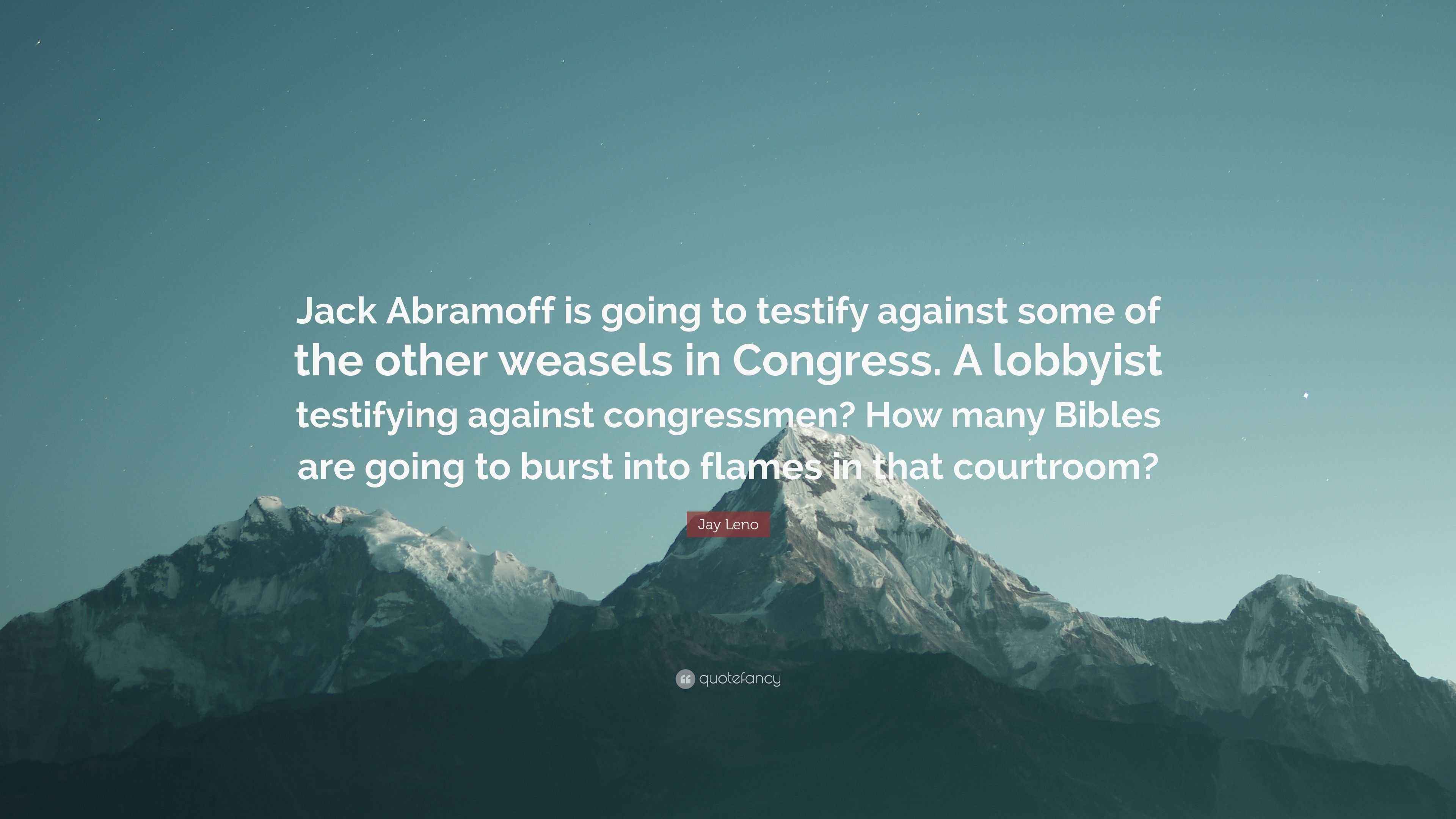
Jack Abramoff is a central figure in American political history, recognized primarily for his transformation from a high-powered Washington, D.C., lobbyist into the architect of one of the most significant corruption scandals of the early 21st century. His career serves as a primary case study for understanding the intersection of lobbying, campaign finance, and federal influence-peddling, culminating in his conviction on multiple felony charges in 2006.
The Trajectory of an Influential Lobbyist
Before his public downfall, Jack Abramoff was widely considered one of the most effective and aggressive lobbyists in Washington. Operating within the upper echelons of the Republican Party, he cultivated deep relationships with congressional staff and lawmakers. His methodology, often termed "influence peddling," involved leveraging these connections to secure legislative outcomes, government grants, and favorable treatment for his diverse client base.
Abramoff’s influence was not merely a matter of policy advocacy; it was built on a transactional model that tested the boundaries of federal ethics rules. By providing gifts, travel, and financial contributions, he gained access that transformed the legislative process into a vehicle for private gain. His operation was emblematic of a broader culture in the capital where the line between legitimate representation and bribery became increasingly blurred, eventually drawing the scrutiny of the Department of Justice and the Federal Bureau of Investigation.
The Mechanics of the Scandal
The scandal involving Abramoff was complex, involving several distinct streams of activity that eventually converged to destroy his career. The primary focus of the federal investigation centered on his relationship with his tribal gaming clients.
- Tribal Gaming Fees: Abramoff and his business associates charged Native American tribes millions of dollars in fees, promising to protect their gaming interests from competitors and legislative interference.
- The SunCruz Casinos Fraud: In 2000, Abramoff and his partner Adam Kidan purchased SunCruz Casinos. They were later indicted for orchestrating a fraudulent wire transfer to secure the purchase, a move that eventually led to fraud convictions.
- Lobbying Malpractice: Investigations revealed that Abramoff systematically defrauded his clients, using some of the funds to finance a lavish lifestyle and to bribe public officials.
These activities were not isolated; they relied on a network of associates, including lobbyists and congressional staffers, who facilitated the movement of money and political favors. The exposure of these schemes in 2004 and 2005 prompted a massive federal investigation that resulted in guilty pleas from dozens of individuals, including several members of Congress and their staff.
Legislative and Ethical Aftermath
The fallout from the Abramoff investigation was immediate and led to a significant shift in how Washington handles lobbying activities. In 2007, Congress passed the Honest Leadership and Open Government Act, which was designed to curb some of the abuses highlighted by the scandal.
This legislation introduced stricter rules regarding:
- Gifts and Travel: Limitations on what lobbyists could provide to members of Congress.
- Disclosure: More frequent and transparent reporting of lobbying activities and expenditures.
- Revolving Door Provisions: Mandatory cooling-off periods for former members of Congress before they can register as lobbyists.
While these reforms addressed specific mechanical issues of the era, they also underscored the inherent difficulty of regulating the relationship between private money and public service. The Abramoff case serves as a permanent reference point for federal oversight committees when drafting ethics-related amendments to the Lobbying Disclosure Act.
Comparative Analysis of Lobbying Risks
The following table outlines the key areas where the Abramoff scandal fundamentally changed the regulatory landscape of Washington D.C. lobbying.
| Feature | Pre-2006 Environment | Post-2007 Environment |
|---|---|---|
| Gift Policies | Loosely enforced; significant gray areas | Stricter bans on gifts/travel from lobbyists |
| Reporting Frequency | Bi-annual filings | Quarterly disclosures required |
| Revolving Door | Minimal restrictions on transition | Mandatory wait periods for ex-lawmakers |
| Enforcement | Minimal oversight | Enhanced investigative authority for Ethics committees |
Addressing Ambiguity: The Man vs. The Symbol
When examining Jack Abramoff, it is essential to distinguish between the individual’s personal life and his role as a political symbol. As an individual, he served time in federal prison for conspiracy, mail fraud, and tax evasion. As a symbol, his name is frequently invoked in political science and ethics studies to illustrate the dangers of unregulated campaign finance and the potential for "pay-to-play" schemes in the federal government.
Readers researching this topic should remain cognizant that discussions involving Abramoff are often framed by these two perspectives—the historical, documented record of his criminal conduct and the ongoing, broader debate regarding the structural integrity of the American legislative process.
Frequently Asked Questions
What were the primary charges for which Jack Abramoff was convicted? Abramoff pleaded guilty in 2006 to conspiracy to bribe public officials, fraud, and tax evasion. These charges stemmed from his lobbying operations, his fraudulent purchase of SunCruz Casinos, and his misappropriation of funds from tribal clients.
How did the Abramoff scandal affect the gaming industry? The scandal resulted in increased scrutiny of tribal gaming operations and the lobbyists who represent them. Many tribes reassessed their Washington representation, moving away from high-priced, "super-lobbyist" firms toward more transparent, policy-focused advocacy.
Is Jack Abramoff still involved in politics? Following his release from prison, Abramoff has remained in the public sphere, writing books and offering commentary on political reform. He has advocated for changes to the lobbying system, though he is permanently barred from certain types of lobbying activities.
Did the 2007 lobbying reforms effectively eliminate corruption? While the reforms introduced greater transparency, they primarily addressed the mechanisms of influence rather than the underlying role of money in politics. Most legal and political experts agree that while the reforms made certain types of overt bribery more difficult, influence remains a significant component of the Washington landscape.
Why is the Abramoff case still relevant in 2026? The scandal remains the gold standard for federal corruption inquiries. It provides a blueprint for how prosecutors trace complex financial webs and how legislative bodies respond to public pressure for ethics reform. Its lessons regarding conflict of interest and the duty of loyalty to clients remain standard curriculum in legal and professional ethics courses.
Next Steps for Research and Analysis
If you are analyzing the historical impact of the Abramoff scandal, the most reliable resources are the original findings of the Senate Committee on Indian Affairs, which conducted an extensive investigation between 2004 and 2006. These records provide the evidentiary basis for most subsequent academic and journalistic work on the topic.
For those seeking to understand the current legal framework surrounding lobbying, it is recommended to review the most recent handbooks published by the Senate Office of Public Records. These documents outline the compliance requirements that every professional lobbyist must adhere to, providing a clear contrast to the practices that characterized the era of the early 2000s. Understanding these regulations is critical for anyone studying the evolution of modern political influence in the United States.