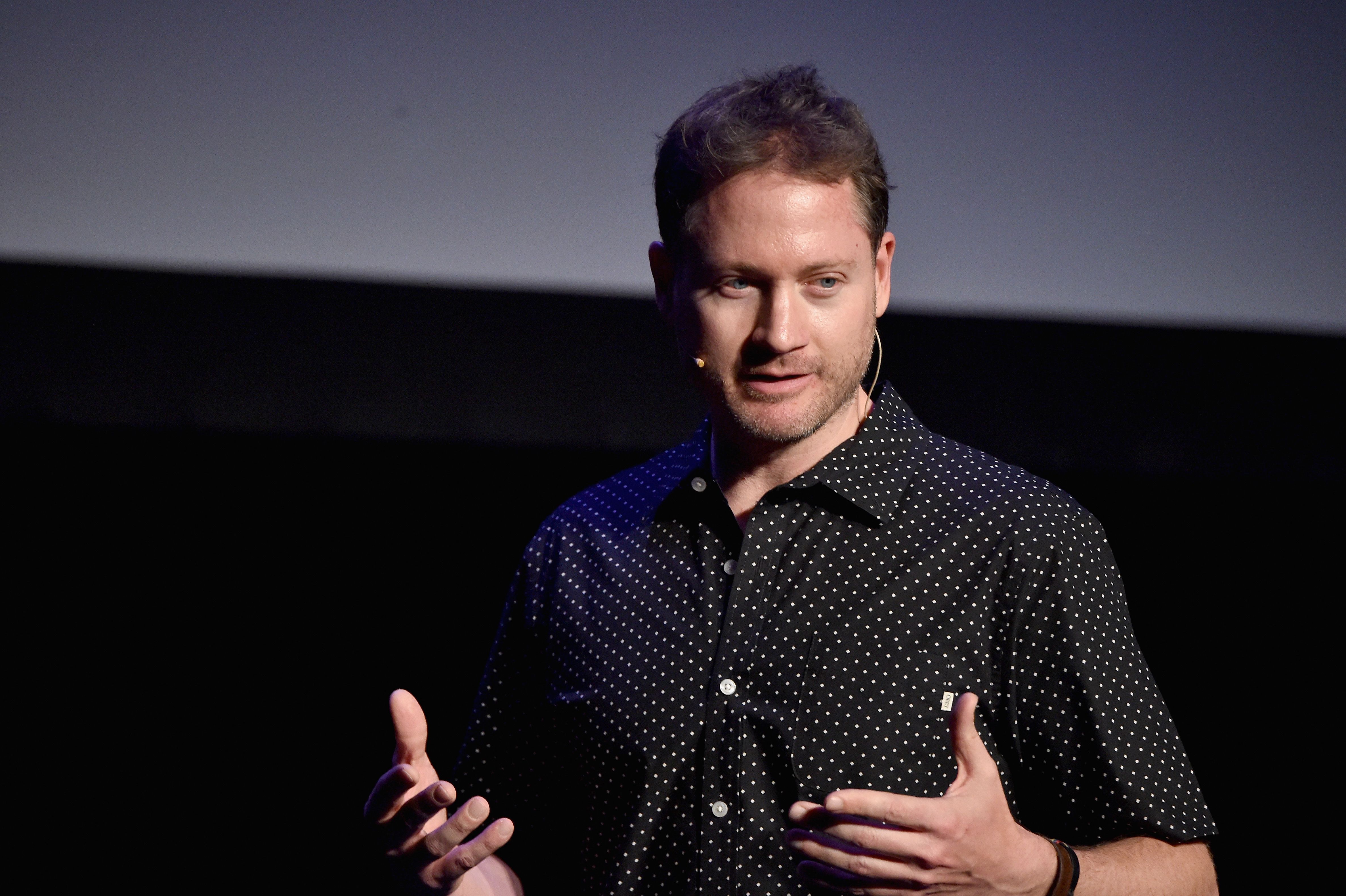
Bryan Johnson is an American entrepreneur and venture capitalist best known for founding the payment processor Braintree and the neurotechnology company Kernel. In 2026, he remains a central figure in the "human optimization" movement, having transitioned from a successful fintech career to pioneering radical longevity and brain-computer interface technologies.
The trajectory of Bryan Johnson represents a unique case study in modern entrepreneurship. Most successful founders retire or continue investing in familiar sectors; Johnson, however, liquidized his fintech success to tackle what he identifies as the "limitations of being human." His journey spans three distinct phases: the mastery of digital payments via Braintree, the exploration of the human mind through Kernel, and the biological quantification of aging through Project Blueprint. By 2026, his work has shifted from niche scientific experiments to a global cultural dialogue regarding the ethics and feasibility of radical life extension.
The Braintree Era: Building the Infrastructure of Modern Commerce
Founded in 2007, Braintree was born out of Johnson's frustration with the complexity of the legacy credit card processing industry. At the time, online merchants faced significant hurdles in securing stable, scalable payment gateways. Braintree’s primary innovation was not just the processing itself, but the developer-centric approach. It provided a clean, robust API that allowed burgeoning tech companies to integrate payments with minimal friction.
The timing of Braintree was pivotal. As the mobile app economy exploded in the early 2010s, Braintree became the invisible backbone for unicorns like Uber and Airbnb. By offering features like "one-click" buying and sophisticated recurring billing, Johnson’s platform solved the most significant pain point for mobile-first businesses: checkout abandonment.
In 2012, Braintree made a strategic acquisition that would change the social landscape of finance: Venmo. Purchased for $26.2 million, Venmo added a consumer-facing social layer to Braintree’s enterprise-facing infrastructure. Just a year later, in 2013, eBay (the then-owner of PayPal) acquired Braintree for $800 million in cash. This exit provided Johnson with the capital—and the existential realization—to pivot his focus toward the biological sciences.
The Shift to Hard Science: OS Fund and the "Programmable" World
After the sale of Braintree, Johnson founded OS Fund with $100 million of his own capital. The mission was distinct from traditional Silicon Valley venture capital: OS Fund sought to invest in "the building blocks of the world." This meant focusing on synthetic biology, genomics, and advanced materials.
Johnson argued that just as computers became programmable through code, the physical and biological worlds were becoming programmable through DNA and molecular engineering. This period marked his transition from a software entrepreneur to a deep-tech visionary. He began advocating for "Zero to One" leaps in human capability, specifically targeting areas where commercial investment was lacking due to high risk and long developmental timelines.
Kernel: Mapping the Human Brain with Neurotechnology
In 2016, Johnson announced the launch of Kernel, a company dedicated to building the world’s first commercial-grade, non-invasive brain-computer interface (BCI). Initially, the company explored invasive neural prosthetics to treat disorders like Alzheimer’s, but Johnson quickly pivoted to non-invasive technologies to ensure scalability and broader human application.
By 2026, Kernel’s technology has matured into two primary hardware platforms: Kernel Flow and Kernel Flux. These devices aim to bridge the gap between expensive, room-sized medical imaging and portable, usable data.
The Technology of Kernel Flow and Flux
- Kernel Flow (TD-fNIRS): This technology uses Time-Domain Functional Near-Infrared Spectroscopy. It works by pulsing laser light into the skull and measuring the "time of flight" of photons as they scatter through brain tissue. By analyzing how light is absorbed by oxygenated and deoxygenated hemoglobin, Kernel Flow maps brain activity with a precision previously only possible in clinical settings.
- Kernel Flux (OP-MEG): Using Optically Pumped Magnetometers, Flux measures the tiny magnetic fields generated by the brain’s electrical activity. Unlike traditional MEG machines that require liquid helium cooling and massive shielding, Flux is designed to be wearable, allowing for the study of the brain in natural, moving environments.
The objective of Kernel is "neuro-literacy." Johnson posits that humans are currently "blind" to their own cognitive states. By quantifying the brain's response to stimuli, stress, and aging, Kernel aims to provide a dashboard for the human mind, similar to how a heart rate monitor provides data for cardiovascular health.
Project Blueprint: The Radical Pursuit of Longevity
While Kernel focuses on the brain, Project Blueprint is Johnson's attempt to optimize every other organ in the human body. Launched publicly in 2021 and reaching a peak of cultural influence by 2026, Blueprint is a data-driven protocol designed to reverse the biological age of Johnson's 70+ organs.
Blueprint is not merely a diet or an exercise routine; it is a "biological autonomy" experiment. Johnson delegates his health decisions to a computer algorithm based on thousands of monthly data points, including blood panels, MRIs, ultrasounds, and stool samples.
The Core Pillars of the Protocol
- Nutritional Precision: Johnson consumes a strictly vegan diet of exactly 1,977 calories per day, concentrated into an early morning window. This includes "Super Veggie" and "Nutty Pudding" meals designed for maximum nutrient density and minimum glycemic impact.
- Supplementation: He takes over 100 supplements daily, tailored specifically to his blood markers. These range from common vitamins (D, B12) to more controversial longevity molecules like NMN (Nicotinamide Mononucleotide) and various senolytics.
- Measurement and Iteration: Every decision is validated by markers. If a specific supplement does not yield a measurable improvement in organ function or a reduction in inflammation (CRP), it is discarded.
By 2026, Johnson has claimed to have slowed his pace of aging by over 25% and possesses the lung capacity and fitness levels of a person decades younger. While critics argue that his results are an N-of-1 experiment that may not scale, his "Don't Die" movement has galvanized a community of followers who use his open-source data to craft their own longevity protocols.
Comparative Overview of Bryan Johnson's Major Ventures
The following table summarizes the evolution of Johnson's primary projects and their impact on their respective industries.
| Feature | Braintree | Kernel | Project Blueprint |
|---|---|---|---|
| Primary Industry | Fintech / Payments | Neurotechnology (BCI) | Longevity / Bio-optimization |
| Core Innovation | Developer-friendly APIs | Portable fNIRS/MEG hardware | Algorithmic health management |
| Success Metric | Transaction volume / Exit value | Neural signal-to-noise ratio | Biological age vs. Chronological age |
| Target Audience | E-commerce developers | Researchers / Healthcare | General public / Health optimizers |
| Current Status (2026) | Subsidiary of PayPal | Actively deployed in research | Global open-source movement |
| Key Legacy | Enabled the App Economy | Democratized brain data | Normalized "biological quantification" |
The "Don't Die" Philosophy and Ethical Considerations
In 2026, the discussion around Bryan Johnson often centers on his "Don't Die" philosophy. This is a shift away from traditional 20th-century thinking, which views death and decay as inevitable and perhaps even necessary. Johnson argues that we are currently in a "Protopian" state—where we have the tools to prevent our own extinction and biological decline, yet we lack the willpower to implement them.
Ethical and Societal Implications
The radical transparency of Johnson’s life raises significant questions. The primary critique is one of accessibility. The cost of Project Blueprint—estimated at roughly $2 million per year for the full suite of monitoring and clinical interventions—remains out of reach for the average person. However, Johnson contends that his role is to be "Patient Zero," and that costs will plummet as the technology scales, much like the sequencing of the human genome.
Furthermore, there is the question of identity. If a human delegates all biological decisions to an algorithm, to what extent are they still an autonomous individual? Johnson responds to this by suggesting that our current "autonomous" choices—often driven by dopamine loops and junk food cravings—are the true inhibitors of freedom. By automating health, he argues, one is freed to focus on higher-level intellectual and creative pursuits.
Technical Limitations and Future Challenges
Despite the progress seen by 2026, both Kernel and Project Blueprint face significant hurdles.
For Kernel, the primary challenge is the "inverse problem" in physics—reconstructing internal brain activity from surface measurements. While Flow and Flux are revolutionary, they still lack the spatial resolution of invasive electrodes. Improving the algorithms that filter out noise from the environment and the user's own movements remains a top priority for the engineering team.
For Project Blueprint, the challenge is long-term sustainability. The human body is a complex, non-linear system. While short-term markers might show improvement, the long-term effects of radical supplementation and extreme caloric restriction over decades are still unknown. The medical community continues to monitor Johnson's progress with a mixture of curiosity and caution, particularly regarding the potential for unforeseen side effects in organ systems that are not as easily monitored as blood or skin.
Frequently Asked Questions
What was Bryan Johnson's role at Braintree?
Johnson was the founder and CEO of Braintree. He bootstrapped the company for its first few years before taking venture capital. He was instrumental in the vision of creating a "one-stop shop" for payment processing, which eventually led to the strategic acquisition of Venmo and the subsequent sale to eBay/PayPal.
How does Kernel's technology differ from Elon Musk's Neuralink?
While both companies work on brain-computer interfaces, their approaches are fundamentally different. Neuralink is invasive, requiring a surgical robot to implant electrodes directly into the brain tissue. Kernel is non-invasive, using wearable helmets (Flow and Flux) that use light and magnetism to read brain activity from outside the skull. Kernel’s approach is easier to scale for general use but currently has lower signal resolution than Neuralink.
How much does it cost to follow Project Blueprint?
Following the full, monitored version of Project Blueprint as Bryan Johnson does costs approximately $2 million per year, including the full-time medical staff and daily testing. However, Johnson provides a "low-cost" version of the protocol on his website, which focuses on the core diet and basic supplementation, which can be implemented for roughly $1,000 to $1,500 per month depending on the region.
Is Bryan Johnson's anti-aging protocol scientifically proven?
Project Blueprint is based on "evidence-based" interventions, meaning each component (like caloric restriction or specific supplements) has been studied in peer-reviewed literature. However, the combination of all these interventions at once has not been clinically tested in a controlled trial. Johnson uses his own body as the evidence, publishing his data openly for public scrutiny.
What is the goal of the OS Fund?
The OS Fund aims to support entrepreneurs who are using applied science to solve global problems. It focuses on the "Operating System" level of life, investing in companies that work on DNA synthesis, atom-scale manufacturing, and computational biology. The goal is to move beyond the "app" layer of the internet and into the physical reality of human health and environmental sustainability.
Conclusion and Next Actions
Bryan Johnson’s transition from fintech mogul to longevity pioneer represents a broader shift in the tech industry toward "hard tech" and bio-engineering. His work with Kernel and Project Blueprint has moved the conversation of human enhancement from science fiction into a measurable, albeit expensive, reality.
For those interested in following Johnson's path, the most practical next action is to focus on quantification. You do not need a multi-million dollar budget to begin measuring basic health markers such as sleep quality, blood glucose, and VO2 max. By establishing a baseline of data, individuals can move toward the "biological literacy" that Johnson advocates. As we progress through 2026, the tools for this quantification are becoming increasingly accessible, potentially democratizing the radical health outcomes once reserved for the ultra-wealthy.