The Georgia Institute of Technology’s Online Master of Science in Computer Science (OMSCS) remains the gold standard for scalable, affordable graduate-level computer science education. For prospective graduate students evaluating remote learning options in 2026, understanding the curriculum, specialization tracks, admissions criteria, and real-world outcomes is vital for maximizing career ROI.
The Architectural Evolution of the Georgia Tech OMSCS Program
Launched in 2014, the OMSCS program disrupted higher education by proving that a top-tier institution could deliver a rigorous computer science master's degree online at a fraction of traditional costs. Operating under the College of Computing, the program shares the exact same curriculum, rigorous grading standards, and faculty oversight as its on-campus counterpart.
The structural integrity of the program relies on asynchronous video lectures, active discussion forums, and collaborative peer programming environments. Students navigate a credit requirement of 30 total hours, typically spread across 10 courses. Because the program accommodates working professionals, enrollment pacing is flexible, allowing students to take between one and two courses per semester while maintaining full-time employment in software engineering, data science, or IT leadership.
Specialization Tracks and Curriculum Design
Choosing a specialization dictates the sequence of electives and core requirements a student must fulfill. Each track is engineered to align with high-demand niches within the global technology sector.
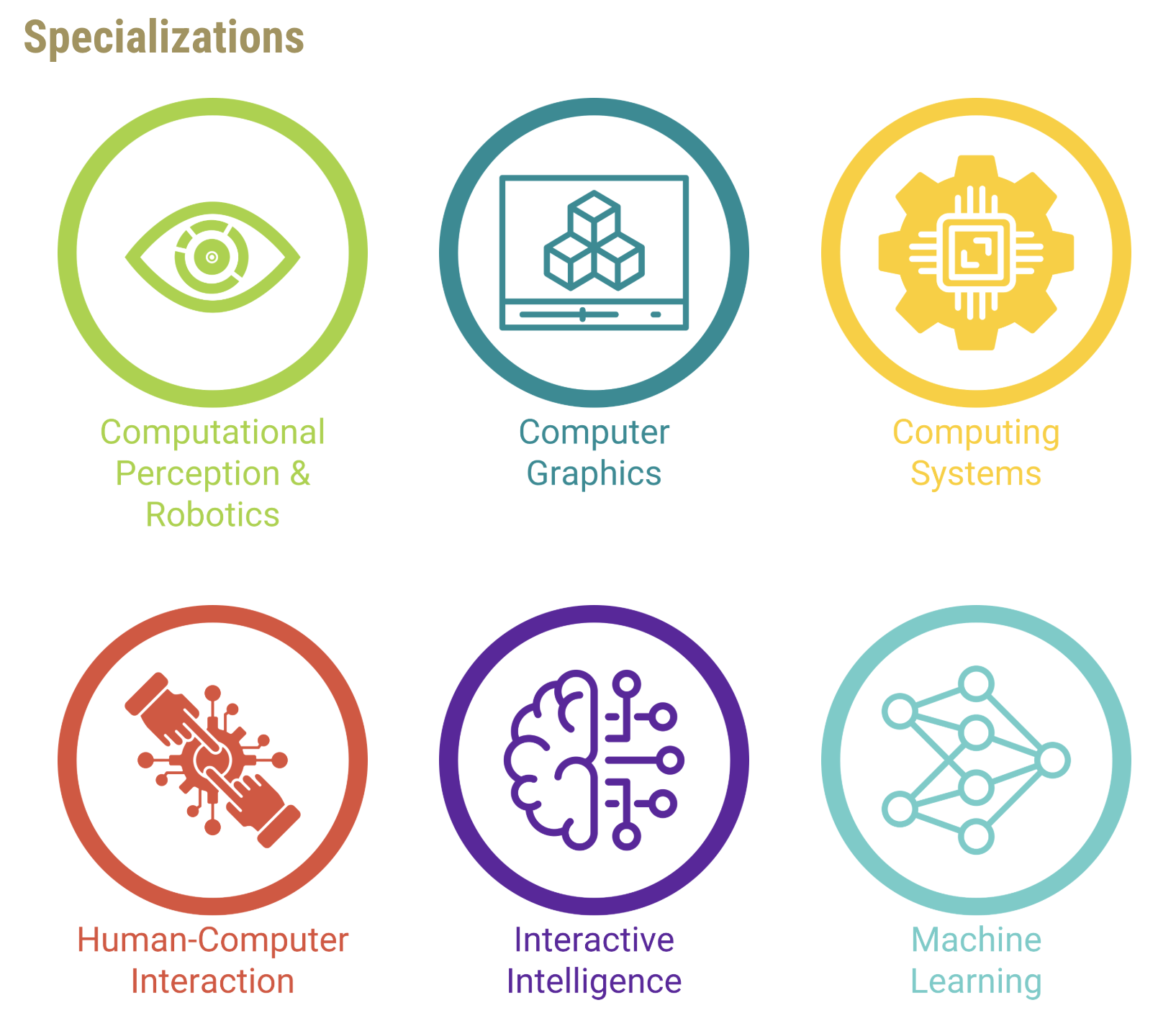
- Computational Perception and Robotics: Focuses on computer vision, artificial intelligence, robot kinematics, and cognitive systems, preparing graduates for careers in autonomous systems and advanced machine learning infrastructure.
- Computing Systems: Emphasizes operating systems, computer architecture, networking, and distributed systems, making it ideal for systems engineers and cloud infrastructure architects.
- Interactive Intelligence: Combines artificial intelligence with cognitive science, human-computer interaction, and educational technology to build adaptive systems that interact seamlessly with humans.
- Machine Learning: The most popular specialization, diving deep into supervised and unsupervised learning, deep learning, reinforcement learning, and probabilistic graphical models.
| Specialization Track | Core Focus Areas | Primary Career Outcome |
|---|---|---|
| Machine Learning | Deep Learning, Neural Networks, Statistical Modeling | Machine Learning Engineer, AI Research Scientist |
| Computing Systems | Distributed Systems, Cloud Infrastructure, Compilers | Senior Systems Architect, Cloud DevOps Engineer |
| Interactive Intelligence | Human-Computer Interaction, AI Ethics, Cognitive Science | UX Technologist, Conversational AI Developer |
| Computational Perception | Computer Vision, Robotics, Sensor Fusion | Autonomous Vehicle Engineer, Robotics Software Developer |
Admissions Criteria and Technical Prerequisites
Securing admission into the OMSCS program requires a strategic presentation of academic readiness and professional competence. While the program is designed to scale, admissions committees maintain strict threshold criteria to ensure student retention and academic success.
Minimum Academic Standards
Applicants must hold a regionally accredited bachelor's degree—preferably in computer science, computer engineering, electrical engineering, or a heavily quantitative STEM field such as mathematics or physics. Non-STEM majors must demonstrate foundational competency before applying.
Prerequisite Competencies Required
- Programming Proficiency: Demonstrated mastery in at least one modern object-oriented programming language, typically Java, C++, or Python, through formal coursework or verifiable professional output.
- Data Structures and Algorithms: Proof of rigorous study covering trees, graphs, sorting algorithms, and algorithmic complexity analysis (Big-O notation).
- Linear Algebra and Calculus: Strong mathematical foundation to support advanced machine learning and systems modeling coursework.
Financial Investment and Cost Breakdown
One of the most compelling aspects of the OMSCS program is its disruptive tuition model. Unlike traditional private or out-of-state public graduate programs that exceed sixty thousand dollars, the Georgia Tech OMSCS maintains an exceptionally low cost per credit hour.
Tuition Transparency Note: The total instructional cost for the entire 30-credit-hour degree hovers around seven thousand dollars USD, excluding nominal semester mandatory fees. This pay-as-you-go structure eliminates the need for high-interest private student loans, making advanced education accessible to a global demographic of engineers.
Balancing Rigor: Pros and Cons of Asynchronous Graduate Study
Evaluating an online program requires an honest appraisal of the personal and professional tradeoffs involved. The asynchronous nature of the OMSCS provides unmatched flexibility but demands intense personal accountability.
Advantages
- Unmatched Affordability: World-class instruction at a public-university price point.
- Career Continuity: Students can apply classroom theories directly to their day jobs in real-time.
- Global Peer Network: Cohorts comprise engineers and leaders from Fortune 500 companies, defense contractors, and high-growth startups worldwide.
Disadvantages
- High Attrition Risk: The lack of physical accountability causes some students to struggle with time management.
- Course Registration Bottlenecks: High demand for specific foundational and elective courses can occasionally delay graduation timelines.
- Limited In-Person Networking: While regional meetups occur, the lack of a physical campus experience reduces serendipitous networking opportunities.
Step-by-Step Guide to Applying for the OMSCS Program
Navigating the application lifecycle requires careful attention to institutional deadlines, recommendation letter procurement, and transcript verification.
- Audit Prerequisite Knowledge: Review your academic and professional history to ensure you possess documented credits in data structures, algorithms, and advanced mathematics.
- Prepare Recommendation Letters: Secure three professional or academic references who can explicitly speak to your technical capabilities, problem-solving skills, and readiness for graduate-level computer science.
- Draft the Statement of Purpose: Write a concise, compelling essay detailing your technical background, career trajectory, and why the Georgia Tech OMSCS aligns with your professional roadmap.
- Submit Official Transcripts: Request official transcripts from all post-secondary institutions attended, ensuring they meet Georgia Tech's rigorous evaluation standards.
- Monitor Application Status: Complete the online application portal submission well before the priority deadline to ensure timely review by the admissions committee.
Frequently Asked Questions
Does the OMSCS diploma specify that the degree was earned online?
No. The diploma awarded to OMSCS graduates is identical to the one earned by on-campus students, reading simply "Master of Science in Computer Science" with no distinction regarding delivery format.
Can international students enroll in the OMSCS program?
Yes. The program is available globally, allowing international students to complete the entire curriculum from their home countries without requiring an F-1 student visa.
What is the average time required to complete the degree?
Most working professionals complete the program in two and a half to three years by taking one or two courses per fall and spring semester, and occasionally summer terms.
Are there any proctored examinations required for courses?
Yes. Many courses utilize online proctoring software to administer midterms and final examinations securely, requiring a stable internet connection and a compatible webcam.
How do students interact with professors and teaching assistants?
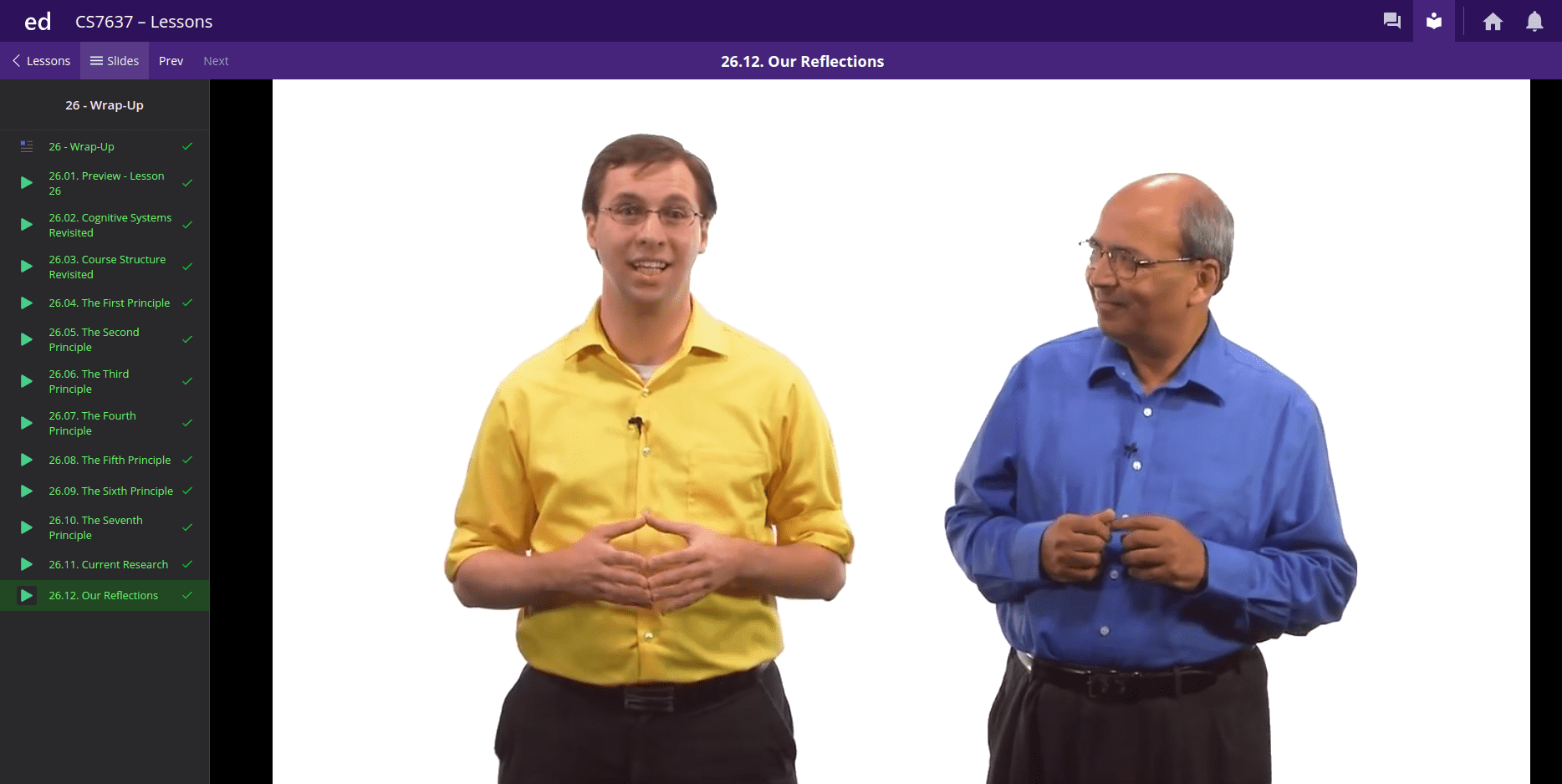
Communication occurs through robust digital platforms including Ed Discussion, Slack, office hours conducted via video conferencing, and direct messaging with a vast network of teaching assistants.
Accelerate Your Engineering Career Today
Earning a Master of Science in Computer Science from Georgia Tech through the OMSCS program provides the technical depth and institutional credentials necessary to accelerate into principal engineering, research, and technical leadership roles. Review the official admissions portal today, verify your prerequisite coursework, and take the definitive step toward mastering the future of computing.