The year 2019 serves as a critical historical benchmark, representing the final year of the "pre-pandemic" era. It was defined by massive geopolitical shifts including the climax of the Brexit negotiations, a surge in global climate activism led by the youth, and the commercial birth of 5G technology. Understanding 2019 is essential for analyzing the economic and social trajectories that have shaped the world leading into 2026.
Geopolitical Milestones: A World in Transition
As we look back from 2026, the geopolitical landscape of 2019 appears as a complex tapestry of old alliances fracturing and new movements gaining unprecedented momentum. It was a year where domestic policies in major powers had significant spillover effects on global stability and trade.
The Brexit Saga and European Realignment
In 2019, the United Kingdom was deeply embroiled in the complexities of withdrawing from the European Union. The year was characterized by repeated delays, intense parliamentary debates, and a change in leadership from Theresa May to Boris Johnson. The December 2019 general election provided a "mandate" that eventually cleared the path for the UK's departure. This period was crucial because it established the trade frameworks and regulatory boundaries that businesses are still navigating today in 2026. The uncertainty of 2019 led to significant fluctuations in the British Pound and forced many multinational corporations to restructure their European operations, moving headquarters to cities like Amsterdam or Frankfurt.
Hong Kong Protests and Civil Unrest
One of the most visually striking and politically significant events of 2019 was the pro-democracy protest movement in Hong Kong. Triggered by the Fugitive Offenders amendment bill, the protests evolved into a broader demand for democratic reforms and autonomy. At their peak, millions of citizens took to the streets. These events significantly strained relations between China and Western nations, particularly the United States and the UK. The legislative responses and the eventual implementation of the National Security Law (which followed in 2020) find their roots in the escalations of 2019, marking a turning point in how international markets view Hong Kong’s status as a financial hub.
The US-China Trade War
Economically, 2019 was defined by the "Trade War" between the world's two largest economies. The United States, under the Trump administration, imposed billions of dollars in tariffs on Chinese goods, prompting retaliatory measures from Beijing. The "Phase One" trade deal, which was largely negotiated throughout late 2019 and signed in early 2020, attempted to address issues such as intellectual property theft and forced technology transfer. For manufacturers and supply chain managers, 2019 was the year the "China Plus One" strategy moved from a theoretical concept to a logistical necessity, as companies began diversifying production into Southeast Asia and Mexico.
Technological Frontiers: The Birth of the 5G Era
Technologically, 2019 was not merely a year of incremental updates but a year of foundational shifts. It marked the transition from the 4G LTE dominance to the initial rollout of 5G networks, promising speeds that would eventually enable the sophisticated IoT (Internet of Things) and AI-integrated environments we experience in 2026.
The Commercial Launch of 5G
South Korea, the United States, and China led the charge in 2019 by launching the first commercial 5G services. While the initial coverage was limited to select metropolitan areas, the 2019 launch set the stage for the massive infrastructure overhauls of the early 2020s. For consumers, this meant the release of the first wave of 5G-capable handsets, such as the Samsung Galaxy S10 5G. From a technical perspective, 2019 was the year engineers proved that millimeter-wave (mmWave) technology could function in consumer devices, despite initial challenges with heat and signal obstruction.
The Streaming Wars Begin
November 2019 marked a paradigm shift in the entertainment industry with the launches of Disney+ and Apple TV+. This effectively ended the era of Netflix’s uncontested dominance and initiated the "Streaming Wars." By 2026, the fragmentation of content across dozens of platforms is a standard consumer frustration, but it all traces back to the aggressive library acquisitions and original content spending that peaked in late 2019. This year also saw the release of Avengers: Endgame, which briefly became the highest-grossing film of all time, signaling the absolute peak of the theatrical blockbuster model before the 2020 disruptions.
Scientific Breakthroughs: Imaging a Black Hole
On April 10, 2019, the Event Horizon Telescope collaboration released the first-ever image of a black hole’s shadow in the center of the M87 galaxy. This was a monumental achievement in astrophysics, confirming Einstein’s theories of general relativity in extreme conditions. The data processing involved—using petabytes of data from observatories around the globe—showcased the power of collaborative big-data analytics, a field that has since grown to underpin much of modern AI development. More details on this achievement can be found via NASA’s historical archives.
Environmental Awakening: Climate Activism and Disasters
The environmental narrative of 2019 was one of stark contrasts: record-breaking temperatures and devastating fires met with a global surge in grassroots activism.
The Rise of "Fridays for Future"
Led by Greta Thunberg, the "Fridays for Future" movement saw millions of students skip school to protest government inaction on climate change. This culminated in the Global Climate Strike in September 2019, one of the largest coordinated protests in human history. The movement successfully pushed "Climate Emergency" declarations into the mainstream of political discourse, influencing the European Green Deal and various corporate Net Zero pledges that are currently being measured for compliance in 2026.
Extreme Weather Events
2019 was one of the hottest years on record. It witnessed the devastating Australian "Black Summer" bushfires, which began in late 2019 and destroyed millions of hectares of forest. Additionally, the Amazon rainforest saw a dramatic increase in fire activity, drawing international condemnation and highlighting the tension between agricultural expansion and environmental preservation. These events accelerated the adoption of ESG (Environmental, Social, and Governance) criteria in the financial sector, as investors began to view climate change as a material risk to asset value.
Economic Landscape: The Peak Before the Pivot
In 2019, the global economy was in its tenth year of expansion following the 2008 financial crisis. To many analysts in 2026, 2019 represents the "last normal year" of traditional economic cycles before the era of massive stimulus and high inflation.
| Economic Indicator (2019) | Value/Status | Significance |
|---|---|---|
| Global GDP Growth | ~2.3% | Moderated growth due to trade tensions. |
| US Federal Funds Rate | 1.50% - 1.75% | The Fed cut rates three times in 2019 to sustain expansion. |
| S&P 500 Annual Return | ~28.9% | One of the best years for US equities in a decade. |
| Oil Price (WTI) | ~$57/barrel | Stable energy costs prior to the 2020 crash and 2022 surge. |
| Unemployment (US) | 3.5% | A 50-year low at the time. |
The International Monetary Fund (IMF) noted in its October 2019 report that the "global economy is in a synchronized slowdown," primarily due to rising trade barriers and geopolitical uncertainty. Despite this, consumer spending remained robust, and the labor market in developed economies was tighter than it had been in decades.
Cultural and Social Landmarks
Beyond politics and tech, 2019 was a year of profound cultural shifts that redefined how we interact with media and each other.
- The TikTok Explosion: While launched internationally in 2017, 2019 was the year TikTok truly broke into the Western mainstream. It fundamentally changed music discovery, with artists like Lil Nas X using the platform to propel "Old Town Road" to a record-breaking 19 weeks at Number 1 on the Billboard Hot 100.
- The Fire at Notre-Dame: On April 15, 2019, a massive fire severely damaged the Notre-Dame de Paris cathedral. The event prompted an outpouring of global support and nearly $1 billion in donation pledges. In 2026, we look back at this as a milestone in historical preservation and the use of digital modeling (like BIM) in reconstruction.
- The US Women’s National Team (USWNT) Victory: The 2019 FIFA Women's World Cup in France was a watershed moment for women's sports, achieving record viewership and sparking a global conversation about equal pay and investment in female athletes.
Identifying the "Patient Zero" Context
While 2019 was largely defined by the events listed above, the final weeks of the year introduced a variable that would change the world. In late December 2019, health authorities in Wuhan, China, began investigating a cluster of "pneumonia of unknown cause." While the global impact was not felt until 2020, the scientific and epidemiological work conducted in those final days of 2019 provided the genetic sequences that allowed for the rapid development of mRNA vaccines. In a 2026 context, the "2019 Review" is incomplete without acknowledging that the systems for global pandemic response were being tested in their infancy during those final two weeks of December.
Summary of Major 2019 Awards and Recognitions
The achievements of 2019 provided a glimpse into the intellectual and creative priorities of the era.
- Nobel Peace Prize: Awarded to Abiy Ahmed, Prime Minister of Ethiopia, for his efforts to achieve peace and international cooperation, specifically his initiative to resolve the border conflict with Eritrea.
- Academy Awards (Best Picture): Green Book (awarded in early 2019 for 2018), though Parasite (released in 2019) would go on to make history the following year as the first non-English language film to win Best Picture.
- Time Person of the Year: Greta Thunberg, becoming the youngest individual to receive the title.
Practical Guidance: Using 2019 Data in 2026
For researchers, financial planners, and historians, 2019 remains the most relevant "stable" year for comparative data. When modeling economic recovery or supply chain normalization, 2019 figures are often used as the "100%" baseline.
- Real Estate: 2019 prices are frequently used as the pre-appreciation benchmark for long-term equity calculations.
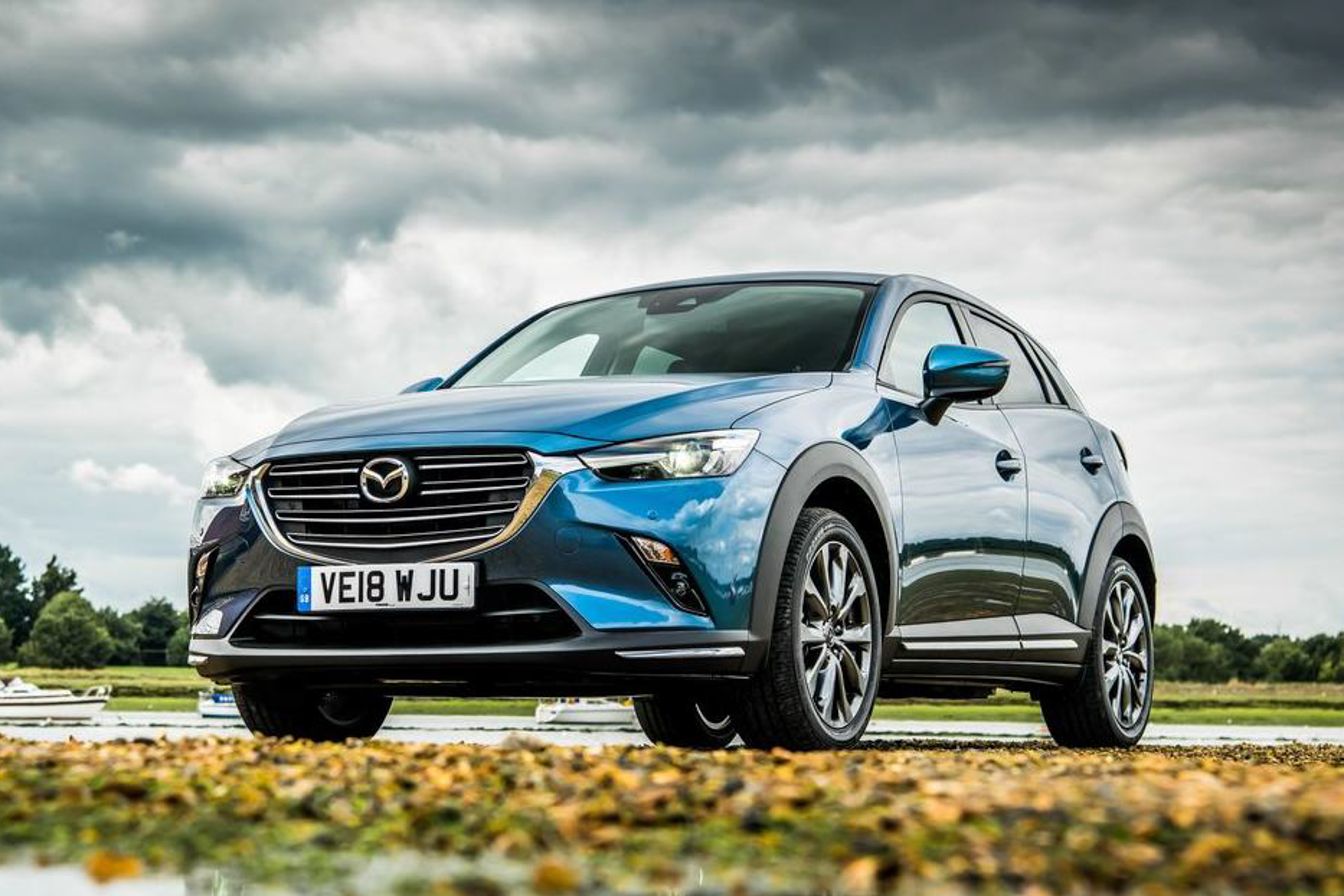
- Automotive: 2019 model-year vehicles are currently popular in the 2026 used market because they often feature modern infotainment and safety tech (like Apple CarPlay and Lane Assist) without the supply-chain-related "feature stripping" seen in 2021-2022 models.
- Travel: 2019 represents the peak of international flight volume, a metric the industry only fully returned to in the mid-2020s.
Frequently Asked Questions
Why is 2019 considered a "baseline" year in 2026?
Economists and statisticians use 2019 as a baseline because it was the last full year of economic activity unaffected by the global lockdowns of 2020-2021. It provides a "clean" look at market trends, consumer behavior, and industrial output before the massive disruptions and subsequent inflation of the early 2020s.
What were the top-selling tech products of 2019?
The iPhone 11 series, the AirPods Pro (released in October 2019), and the Nintendo Switch Lite were the dominant consumer electronics. The AirPods Pro, in particular, solidified the trend toward true wireless stereo (TWS) earbuds that is now the industry standard in 2026.
How did the 2019 bushfires change environmental policy?
The 2019-2020 Australian bushfires were a catalyst for global discussions on the "wildland-urban interface" and fire management. They led to more stringent building codes in fire-prone areas and a massive increase in funding for satellite-based fire detection systems that we now rely on in 2026.
Was 2019 a good year for the stock market?
Yes, it was an exceptional year for investors. Despite the trade war tensions, the S&P 500 grew by nearly 29%, driven by the Federal Reserve's "mid-cycle adjustment" (rate cuts) and strong earnings from big tech companies like Apple and Microsoft.
What major legal changes occurred in 2019?
Significant legal shifts included the continued rollout of the GDPR (General Data Protection Regulation) enforcement in Europe and the passage of several "Right to Repair" bills in various jurisdictions, which eventually led to the more comprehensive consumer protection laws we see in 2026.
Final Recommendation
When conducting a "2019 review" for professional or academic purposes in 2026, always distinguish between the first eleven months of the year and the final weeks of December. For financial modeling, use 2019 as your non-inflationary baseline, but ensure you adjust for the structural shifts in remote work and digital transformation that were accelerated immediately after this period. If you are evaluating a used product (like a car or laptop) from 2019, it generally represents the pinnacle of "v1" modern tech—highly reliable but often lacking the native AI-processing hardware that became standard in 2024 and beyond.