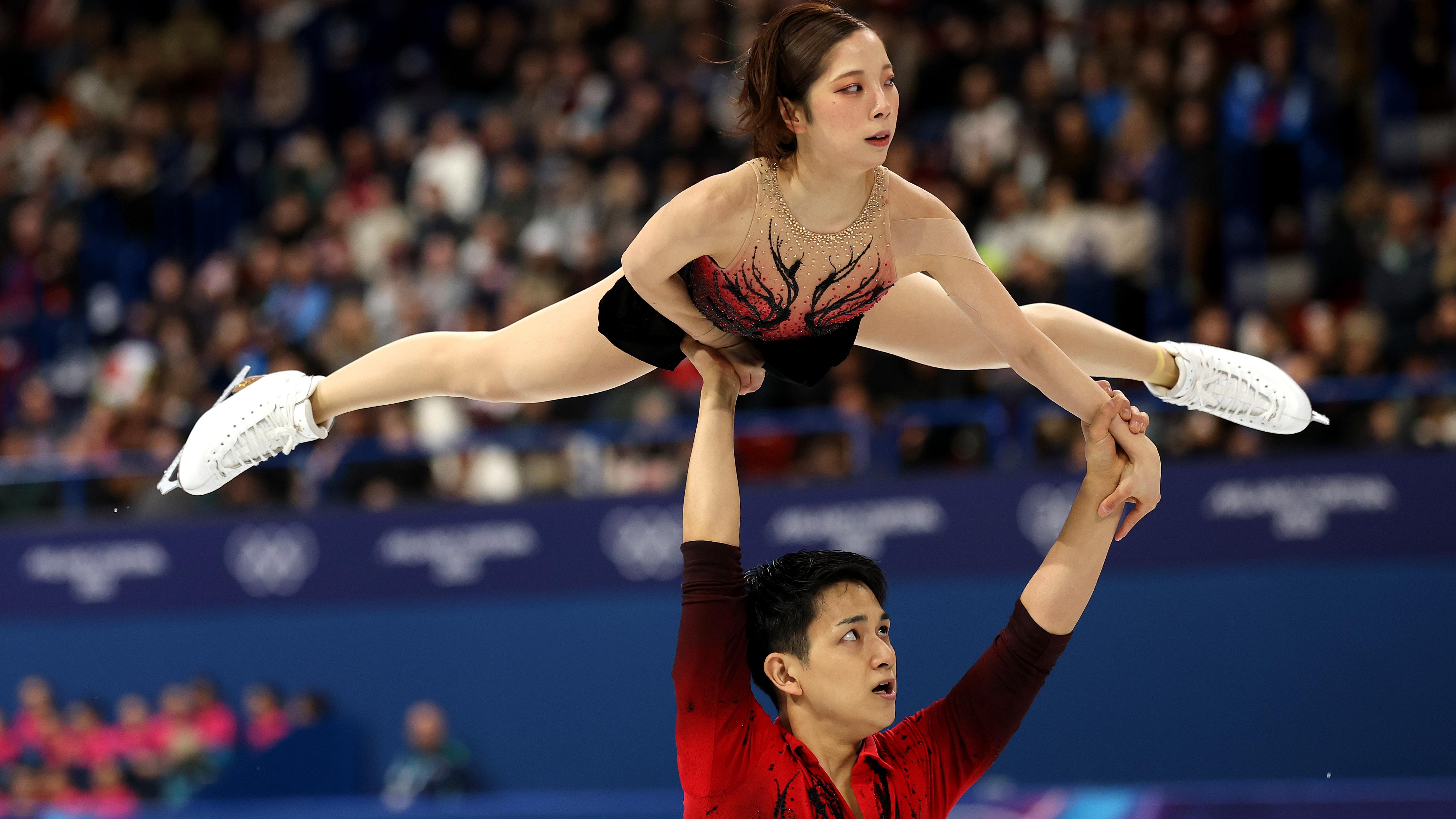
The gold medal for the pairs figure skating event at the 2018 PyeongChang Winter Olympics was won by Germany’s Aljona Savchenko and Bruno Massot. After a disappointing fourth-place finish in the short program, they delivered a world-record free skate score of 159.31, totaling 235.90 points to narrowly defeat China’s Sui Wenjing and Han Cong (235.47) and Canada’s Meagan Duhamel and Eric Radford (230.15).
The Path to PyeongChang: A Narrative of Persistence
As we look back from 2026, the 2018 pairs competition remains one of the most emotionally charged events in Olympic history. The primary storyline revolved around Aljona Savchenko, a veteran skater competing in her fifth Olympic Games. Having previously won two bronze medals with partner Robin Szolkowy, Savchenko teamed up with the French-born Bruno Massot in 2014. Their journey was fraught with bureaucratic hurdles, including a long wait for Massot’s German citizenship and a significant release fee paid to the French Federation.
By the time they arrived in PyeongChang, the pressure was immense. They were the reigning world silver medalists, but they faced stiff competition from the Chinese world champions, Sui Wenjing and Han Cong, and the powerful Canadian duo, Meagan Duhamel and Eric Radford. The technical depth of the field in 2018 was arguably at its peak, with multiple teams capable of landing quadruple throws and side-by-side triple jumps with high levels of execution.
The Short Program: A Dramatic Setback
The short program, held on February 14, 2018, at the Gangneung Ice Arena, did not go according to plan for the eventual gold medalists. Skating to "Caro Emerald," Savchenko and Massot suffered a critical error when Massot doubled a planned triple Salchow. In the International Judging System (IJS), a missed revolution in a required jump element results in a massive loss of base value and negative Grade of Execution (GOE) points.
They finished the short program in fourth place with a score of 76.59. At the top of the leaderboard were Sui Wenjing and Han Cong, who delivered a nearly flawless performance to "Hallelujah," earning an 82.39. They were followed closely by the Olympic Athletes from Russia (OAR) pair, Evgenia Tarasova and Vladimir Morozov (81.68), and the Canadians Duhamel and Radford (76.82).
The gap between first and fourth was over five points. In a sport where medals are often decided by fractions, many analysts at the time believed Savchenko’s quest for gold had ended. However, the technical difficulty of their planned free skate provided a mathematical pathway to the podium, provided they skated perfectly.
The "Miracle" Free Skate: "La Terre vue du ciel"
On February 15, 2018, Savchenko and Massot took the ice for a free skate that would redefine the limits of the sport. Their program, titled "La Terre vue du ciel" (The Earth Seen from the Sky), was a masterpiece of contemporary choreography and technical precision.
Technical Excellence and Base Value
The pair opened with a massive triple twist lift that received a Level 4 designation and near-maximum GOE. Their side-by-side jumps—a triple Salchow-double Toe-double Toe combination and a solo triple Toe—were executed with perfect synchronization. However, the highlights were the throw jumps. The throw triple Lutz and throw triple Salchow were landed with such flow and ice coverage that the judges rewarded them with high positive GOE.
The technical score (TES) for their free skate reached 82.07, while their program component scores (PCS) totaled 77.24. This culminated in a then-world record free skate score of 159.31.
Emotional Resonances and Artistry
Beyond the numbers, the performance was a rare instance of "the zone." The choreography utilized the full expanse of the Olympic-sized ice, with lifts that transitioned seamlessly into spins and footwork. The program's crescendo matched the soaring music, and by the final pose, Savchenko was in tears on the ice, sensing that they had achieved something historic.
Analyzing the Silver and Bronze Medalists
While the German victory was the headline, the performances of the Chinese and Canadian pairs were equally vital to the competition's high standard.
Sui Wenjing and Han Cong (China)
Sui and Han entered the free skate as the leaders. Their program to "Turandot" was technically ambitious, featuring a quad twist lift. However, Sui struggled with the landings of some side-by-side jumps, and a slight stumble on a throw jump cost them the crucial points needed to stay ahead of the Germans. Despite a strong free skate score of 153.08, their total of 235.47 left them just 0.43 points shy of the gold.
Meagan Duhamel and Eric Radford (Canada)
The Canadians were known as the technical "powerhouse" of the era. They were the only pair in the top three to attempt a throw quadruple Salchow. While the landing was not perfect, the high base value kept them in contention. Their bronze-medal-winning performance to "Adele" earned them a total score of 230.15. This medal was particularly significant as it was the final Olympic performance for the duo, who had been instrumental in Canada’s team event gold earlier in the week.
Detailed Scoring Breakdown: Top 3 Finishers
The following table outlines the specific scores that determined the podium placements at the 2018 PyeongChang Games.
| Rank | Athletes (Country) | Short Program | Free Skate | Total Score | Key Technical Element |
|---|---|---|---|---|---|
| Gold | Savchenko / Massot (GER) | 76.59 | 159.31 (WR) | 235.90 | Triple Twist (Level 4) |
| Silver | Sui / Han (CHN) | 82.39 | 153.08 | 235.47 | Quad Twist (Level 2) |
| Bronze | Duhamel / Radford (CAN) | 76.82 | 153.33 | 230.15 | Throw Quad Salchow |
Technical Depth: Understanding the IJS in 2018
To appreciate the 2018 scores, one must understand how the International Judging System functioned during that Olympic cycle. The score is composed of two primary parts: the Technical Element Score (TES) and the Program Component Score (PCS).
The Technical Element Score (TES)
The TES is based on the "Base Value" of each element performed (jumps, throws, lifts, spins, spirals). Judges then apply a Grade of Execution (GOE) ranging from -3 to +3 (in 2018). Savchenko and Massot’s victory was largely due to their ability to maximize GOE. Even though Sui and Han had a higher base value potential due to the quad twist, Savchenko and Massot’s "quality" points on their triple elements surpassed the Chinese pair's "difficulty" points.
The Program Component Score (PCS)
Often referred to as the "artistry" score, PCS evaluates five categories:
- Skating Skills: Overall cleanness and multidirectional flow.
- Transitions: The complexity of the footwork between elements.
- Performance: The physical and emotional involvement of the skaters.
- Composition: The intentional design of the program.
- Interpretation: How well the skating translates the music.
In the 2018 free skate, Savchenko and Massot received 9.8s and 10.0s in several PCS categories, reflecting a performance that was judged as nearly perfect in its artistic execution.
Historical Significance and Legacy
The 2018 pairs event is frequently cited as a turning point in the sport. It highlighted the shift away from "risk at all costs" (such as unstable quadruple throws) toward "unimpeachable quality." Savchenko’s victory at age 34 made her the oldest female figure skating gold medalist in nearly a century, proving that longevity and refined technique could triumph over younger, more acrobatic competitors.
Furthermore, the narrow margin of 0.43 points underscored the importance of the short program. Had Savchenko and Massot not made the mistake in the short, the victory would have been decisive. Instead, it became a legendary comeback, often compared to the greatest "clutch" performances in Olympic history.
Common Obstacles in Pair Skating Scoring
Understanding why certain scores are lower than expected requires looking at "hidden" deductions:
- Levels of Difficulty: Every lift, spin, and death spiral is rated from Level B (Base) to Level 4. A team might perform a beautiful lift, but if they miss a required change of position, it is downgraded to a Level 3, costing them points regardless of how it looked.
- The "Double" Penalty: In the short program, if a pair performs a double jump instead of a required triple, they lose the base value and receive a mandatory deduction, as happened to Massot.
- Under-rotations: If a jump is not fully rotated before the skater hits the ice, the technical panel "calls" it, and the score is slashed.
Frequently Asked Questions (FAQs)
Who won the gold medal in pairs figure skating at the 2018 Olympics?
Aljona Savchenko and Bruno Massot of Germany won the gold medal. They achieved this by setting a world record in the free skate to overcome a fourth-place standing after the short program.
What was the margin of victory in the 2018 pairs event?
The margin was extremely slim: only 0.43 points. Savchenko and Massot finished with 235.90, while the silver medalists, Sui Wenjing and Han Cong, finished with 235.47.
Why did Savchenko and Massot score so low in the short program?
Bruno Massot made a technical error on the side-by-side jumps, performing a double Salchow instead of the intended triple. This led to a significant loss in base value and negative grades of execution from the judges.
Did any pair perform a quadruple jump or throw in 2018?
Yes, several. The silver medalists Sui and Han performed a quadruple twist lift. The bronze medalists Meagan Duhamel and Eric Radford attempted a throw quadruple Salchow. While these elements carry high rewards, they also carry high risks of falls or technical downgrades.
Where did the Russian pairs finish in the 2018 Olympics?
The highest-placing Russian pair (competing as Olympic Athletes from Russia) was Evgenia Tarasova and Vladimir Morozov, who finished in fourth place. Despite being in second after the short program, they had several errors in their free skate that dropped them off the podium.
Final Practical Recommendation
For fans or students of the sport wishing to analyze these scores further, the official International Skating Union (ISU) "Protocol" sheets for the 2018 Winter Olympics are the gold standard for data. These documents provide a point-by-point breakdown of every element performed by every couple. Watching the performances of Savchenko/Massot and Sui/Han side-by-side while referencing these protocols offers the best educational insight into how technical precision and artistic components balance to create an Olympic champion.