The global agricultural sector stands at a critical technological and environmental crossroads, driven forward by innovators, scientists, entrepreneurs, and policymakers who are redefining how food is produced, distributed, and sustained. These ten influential figures are leading the transformation of modern agriculture through precision technology, sustainable practices, biotechnology, and agricultural policy reform.
Introduction to the Modern Agricultural Transformation
Modern agriculture is undergoing its most radical transformation since the advent of mechanized farming. Pressured by a growing global population, climate volatility, scarce water resources, and shifting economic landscapes, traditional farming models are rapidly evolving. Today’s agricultural leaders are not merely focused on maximizing seasonal yields; they are engineering resilient systems that leverage artificial intelligence, genetic innovation, robotics, and circular economy principles.
Understanding who drives these shifts offers valuable insight into the trajectory of global food security. The individuals shaping this ecosystem represent diverse disciplines—from molecular biology and software engineering to supply chain logistics and environmental advocacy. Examining their contributions clarifies how innovation moves from research laboratories into commercial fields, transforming agronomic practices worldwide.
1. Dr. Jason Clay: Championing Sustainable Supply Chains
Dr. Jason Clay, Senior Vice President of Markets at the World Wildlife Fund (WWF), has fundamentally altered how major global corporations approach agricultural sourcing. Rather than viewing conservation and commercial agriculture as mutually exclusive, Dr. Clay pioneered the concept of commodity roundtables, bringing together producers, processors, and retailers to establish baseline environmental and social standards for major crops like soy, palm oil, cotton, and sugarcane.
His work focuses on identifying the environmental impacts of the world's primary agricultural commodities and transforming production systems from the inside out. By engaging the top global food companies that control the vast majority of agricultural supply chains, Dr. Clay has redirected corporate procurement policies toward sustainable intensification—producing more food on existing farmland with significantly fewer chemical inputs, lower carbon emissions, and minimized water usage.
2. Catharine Watson: Advancing Climate-Smart Agronomy
As an influential researcher and institutional leader within agricultural science, Catharine Watson has been instrumental in bridging the gap between climate science and on-farm execution. Her research centers on quantifying greenhouse gas emissions from agricultural soils and developing nitrogen management strategies that reduce nitrous oxide runoff while maintaining crop productivity.
Watson’s work addresses one of modern agronomy’s most persistent challenges: balancing high crop yields with environmental protection. By helping design decision-support tools for agronomists and farmers, she translates complex biogeochemical models into actionable field-level recommendations. Her contributions support the broader adoption of regenerative agriculture, ensuring that soil health initiatives are backed by rigorous empirical science.
3. Jorge Heraud: Paving the Way for Computer Vision and Robotics
Jorge Heraud is co-founder and CEO of John Deere Intelligent Solutions Group (formerly Blue River Technology), a pioneer in applying artificial intelligence and computer vision to crop production. Heraud recognized early that traditional, blanket applications of herbicides and fertilizers were inefficient and environmentally taxing. Under his leadership, the company developed "See & Spray" technology, which utilizes high-speed cameras and machine learning algorithms to distinguish between cash crops and weeds in real-time, applying targeted chemical treatments to individual weeds.
This precision agriculture breakthrough drastically reduces herbicide usage—often by up to 80%—while improving weed management efficacy. Heraud’s work represents a paradigm shift in farm mechanization, moving the industry away from heavy, uniform field treatments toward intelligent, plant-by-plant management systems that optimize input costs and minimize ecological footprints.
4. Dr. Pamela Ronald: Genetic Innovation and Crop Resilience
Dr. Pamela Ronald, a distinguished professor at the University of California, Davis, is a global authority on plant genetics and genetic engineering. Her laboratory is renowned for isolating the submergence-tolerance gene (Sub1) in rice, a discovery that led to the development of flood-tolerant rice varieties now cultivated by millions of smallholder farmers across South and Southeast Asia.
Dr. Ronald’s work demonstrates how advanced biotechnology can directly address the vulnerabilities introduced by climate change. By combining rigorous molecular genetics with traditional breeding techniques, she has advanced crops capable of withstanding extreme weather events, such as prolonged flooding and drought. Furthermore, she is a vocal advocate for science communication in agriculture, working to bridge public perception gaps regarding the safety and necessity of genetic tools in sustainable farming systems.
5. Naveen Singpurwalla: Transforming Agricultural Finance and Risk Management
Naveen Singpurwalla has played a vital role in reshaping how agricultural insurance and financial risk management operate in developing and emerging markets. By integrating remote sensing, satellite data, and machine learning into parametric insurance models, Singpurwalla and his peers have enabled weather-index insurance products that protect smallholder farmers against climate shocks like drought and unseasonal rainfall.
Traditional agricultural insurance often suffers from high administrative costs and delayed payouts due to the need for manual farm inspections. Parametric insurance bypasses these hurdles by triggering automatic payouts based on objective, satellite-verified weather data. This financial innovation provides a vital safety net, encouraging farmers to invest in higher-yielding, resilient inputs without fearing total financial ruin if weather patterns fail.
6. Fiona Simson: Global Policy and Producer Advocacy
Fiona Simson, through her leadership roles in national and international agricultural organizations, has been a powerful voice for primary producers navigating policy shifts, trade agreements, and climate regulations. Representing farmers on global stages, Simson emphasizes the practical realities of implementing environmental mandates at the farm gate.
Her advocacy ensures that policymakers understand the economic and operational constraints faced by producers. Simson champions policies that reward farmers for ecosystem services—such as carbon sequestration and biodiversity preservation—transforming environmental stewardship from an uncompensated burden into a viable economic revenue stream for rural communities.
7. Dr. David Zilberman: Agricultural Economics and Technology Adoption
Dr. David Zilberman, a professor at the University of California, Berkeley, is one of the world's most influential agricultural economists. His extensive research explores the economics of water allocation, pest control, biotechnology adoption, and bioenergy. Dr. Zilberman’s framework analysis on how farmers adopt new technologies has guided public policy and private investment for decades.
His work demonstrates how economic incentives, regulatory frameworks, and market structures dictate whether a technological innovation—such as drip irrigation or genetically modified seeds—successfully scales across different agricultural sectors. By evaluating the trade-offs between productivity, safety, and environmental impact, Dr. Zilberman provides decision-makers with the economic rigor needed to design effective agricultural policies.
8. Robb Fraley: Pioneer of Agricultural Biotechnology
Dr. Robb Fraley is widely recognized as one of the founding fathers of agricultural biotechnology. During his long tenure as Chief Technology Officer at Monsanto, Fraley led the team that successfully developed the first genetically modified plant cells in the early 1980s, paving the way for commercialized insect-resistant (Bt) and herbicide-tolerant crops.
While agricultural biotechnology remains a subject of public debate, Fraley’s foundational work fundamentally transformed global agronomy. The widespread adoption of biotech crops has reduced insecticide applications, lowered greenhouse gas emissions through reduced tillage, and stabilized yields across millions of hectares globally. His ongoing advisory work focuses on the convergence of gene editing, digital tools, and data science to drive the next wave of agricultural productivity.
9. Maria Andrade: Biofortification and Nutritional Security
Dr. Maria Andrade, a plant breeder and World Food Prize laureate, has dedicated her career to combating hidden hunger and micronutrient deficiencies through agricultural biofortification. Working primarily in sub-Saharan Africa, Andrade led the development and dissemination of drought-tolerant, vitamin A-enriched orange-fleshed sweet potatoes.
Her work addresses a critical dimension of the future of farming: moving beyond mere caloric sufficiency to nutritional security. By breeding staple crops with enhanced micronutrient profiles, Andrade has improved the health and cognitive development of millions of children and families in developing regions, proving that agricultural research can directly combat public health crises.
10. Jeremy Allen: Scaling Controlled Environment Agriculture
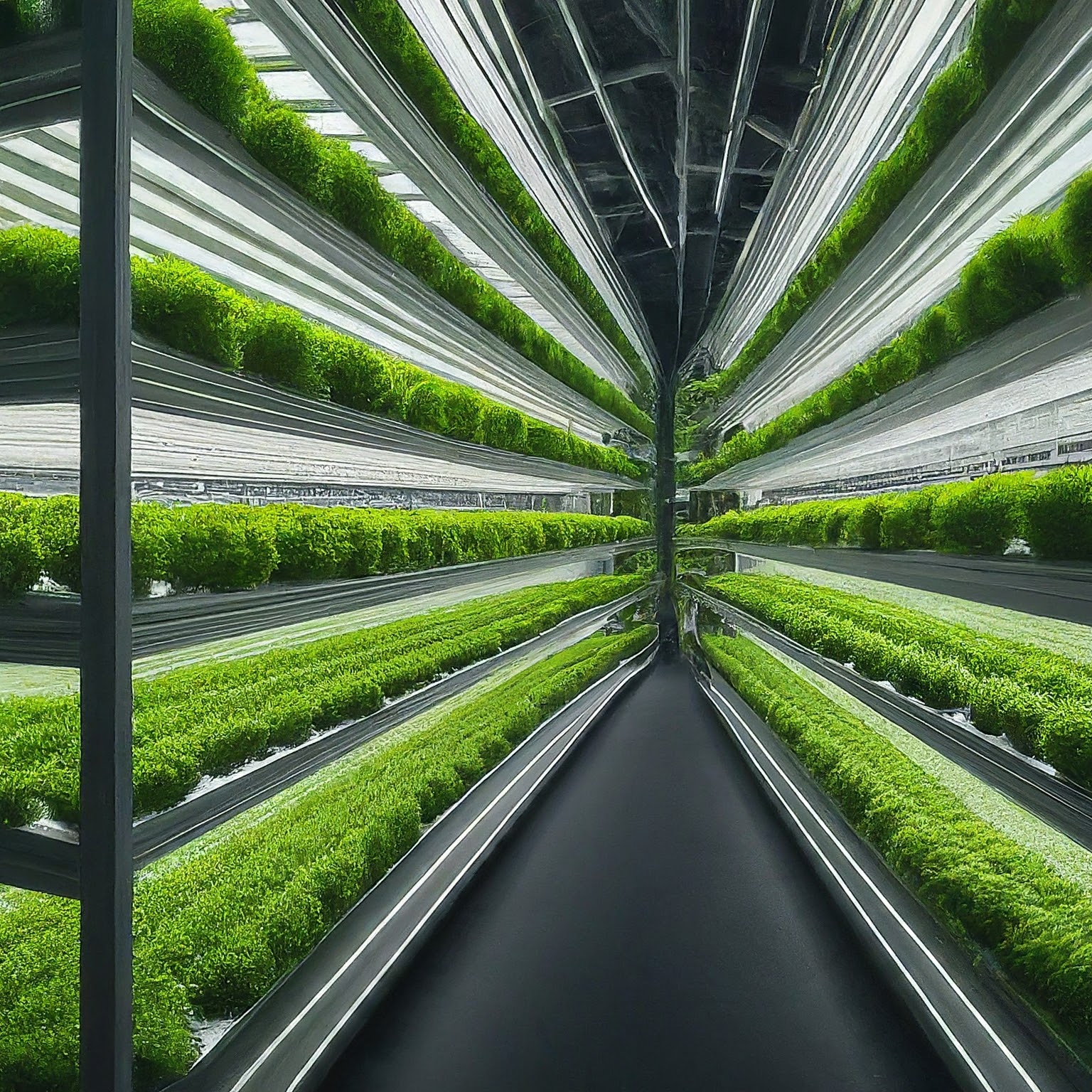
Jeremy Allen represents the vanguard of controlled environment agriculture (CEA), leading innovations in vertical farming, hydroponics, and urban food production systems. As indoor farming scales, leaders like Allen focus on solving the energy-efficiency and economic hurdles that have historically limited indoor agriculture to high-value leafy greens.
Allen’s work integrates advanced LED lighting spectra, automated climate control, and closed-loop water recycling to produce high-density crops with minimal land and water footprints. By reducing reliance on long-distance supply chains and unpredictable weather systems, controlled environment agriculture is securing local food production for urban centers and arid regions alike.
Comparative Overview of Agricultural Innovations
To understand how these influential figures and their respective fields intersect, the following table categorizes their primary focus areas, underlying technologies, and operational impacts on modern farming:
| Influencer / Leader | Primary Field | Core Technology / Method | Operational Impact |
|---|---|---|---|
| Dr. Jason Clay | Supply Chain Sustainability | Commodity Roundtables & Procurement Standards | Reduces deforestation and chemical runoff across global food supply chains. |
| Jorge Heraud | Precision Agriculture | Computer Vision & Machine Learning | Cuts herbicide usage by up to 80% via targeted weed spraying. |
| Dr. Pamela Ronald | Plant Genetics | Molecular Breeding & Transgenics | Creates flood- and disease-resistant crop varieties for vulnerable regions. |
| Naveen Singpurwalla | Agricultural Finance | Satellite Remote Sensing & Parametric Insurance | Accelerates financial payouts for climate-shocked smallholder farms. |
| Dr. Maria Andrade | Nutritional Agronomy | Biofortification & Conventional Breeding | Combats micronutrient deficiencies through vitamin-enriched staple crops. |
| Jeremy Allen | Controlled Environment | Hydroponics, LEDs, & Automation | Enables year-round urban food production with minimal water usage. |
Frequently Asked Questions
What role do these individuals play in shaping everyday farming practices?
These leaders develop, finance, regulate, or promote the foundational tools—ranging from AI-driven machinery and stress-tolerant seeds to financial risk models and sustainability standards—that commercial agronomists and farmers adopt to improve efficiency, yield, and environmental resilience.
How is precision agriculture changing traditional farming?
Precision agriculture shifts management practices from treating entire fields uniformly to addressing micro-variations plant by plant or foot by foot. Utilizing GPS, IoT sensors, and machine learning, farmers apply exact amounts of water, fertilizer, and crop protection products, reducing input costs and environmental runoff.
Why is climate resilience a primary focus for modern agronomists?
Shifting weather patterns, prolonged droughts, and erratic rainfall threaten global food security. Developing climate-resilient crops and adaptive farming systems ensures consistent food production despite environmental volatility.
Are genetically modified and gene-edited crops safe for consumption?
Extensive scientific consensus from organizations such as the National Academy of Sciences and the World Health Organization indicates that commercially available genetically engineered crops are as safe to consume as conventionally bred crops, while offering significant agronomic and environmental benefits.
What is the economic benefit of sustainable farming practices?
While initial transition costs can be high, sustainable practices—such as reduced tillage, cover cropping, and precision chemical application—lower long-term input costs, improve soil health, and increasingly open new revenue streams through carbon markets and premium supply chains.
Practical Recommendations for Engaging with Future Farming Trends
For agricultural producers, agronomists, and industry observers looking to align with the future of farming, adopting a proactive approach to technology and resource management is essential.
- Audit Input Efficiency: Evaluate current chemical, water, and fertilizer usage. Explore precision application tools or variable-rate technology to minimize waste and lower operational expenses.
- Invest in Soil Health: Implement regenerative practices such as cover cropping and reduced tillage to enhance organic matter, improve water retention, and build long-term soil resilience against weather extremes.
- Stay Informed on Regulatory and Market Shifts: Monitor emerging carbon crediting standards, ESG supply chain requirements, and international trade policies to position farm operations for new revenue opportunities.
- Leverage Data-Driven Decision Support: Utilize agronomic software and remote sensing tools to track field conditions, optimize irrigation schedules, and make evidence-based management decisions.