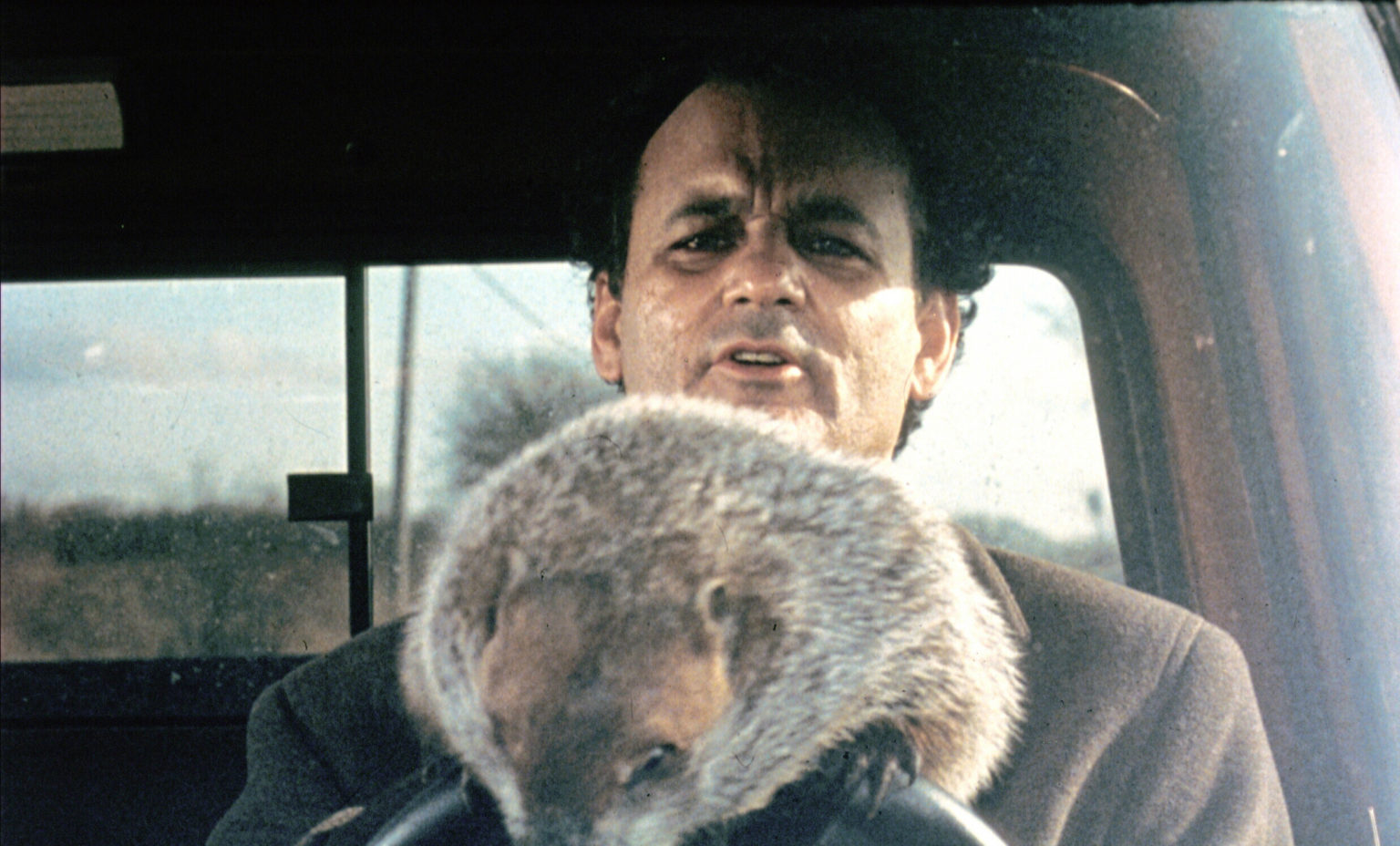
Released in 1993 and directed by Harold Ramis, Groundhog Day starring Bill Murray has evolved from a modest high-concept comedy into a beloved cultural touchstone and philosophical masterpiece. While most film fans know the basic premise of a cynical TV weather forecaster trapped in a temporal loop in Punxsutawney, Pennsylvania, the production history, script revisions, and on-set realities harbor numerous fascinating details that even dedicated cinephiles often overlook.
1. The Original Script Began Right in the Middle of the Loop
When screenwriter Danny Rubin first conceived the idea for Groundhog Day, his structural approach was entirely different from the final theatrical cut. Instead of introducing Phil Connors as a normal human experiencing linear time before the loop kicks in, Rubin's initial spec script dropped the audience directly into the time loop from the very first frame.
In this early version, Phil was already repeating the day hundreds or thousands of times, and the audience had to piece together his situation through context clues. When director Harold Ramis came on board to collaborate with Rubin, he insisted on a more conventional narrative structure. Ramis believed that establishing a clear "before" and "after" allowed the audience to better empathize with Phil’s psychological descent and ultimate redemption. This structural shift required inventing the journey to Punxsutawney, the arrogant television crew dynamic, and the initial introduction to Rita Hanson, played by Andie MacDowell.
2. Bill Murray and Harold Ramis Suffered a Creative Fallout During Filming
Behind the scenes of Groundhog Day, the production was marred by intense creative friction between star Bill Murray and director Harold Ramis, who had previously collaborated brilliantly on classics like Caddyshack, Ghostbusters, and Stripes. Their disagreements stemmed from differing visions of the film's tone. Murray, going through a tumultuous period in his personal life, wanted the film to lean much heavier into dark, philosophical, and absurd comedy. Ramis, conversely, preferred a more balanced, romantic, and audience-accessible mainstream comedy.
The tension grew so severe that Murray would reportedly refuse to speak directly to Ramis on set, communicating instead through a production assistant. Despite this intense collaboration breakdown—which resulted in a decades-long estrangement between the two lifelong friends, only reconciled shortly before Ramis's death in 2014—their combined stubbornness forced a refinement of every single scene, resulting in the seamless comedic tone on screen.
3. Bill Murray Was Bitten by the Groundhog Multiple Times
Playing the central antagonist of the time loop, Punxsutawney Phil (the animal, not the character) was not particularly cooperative with the film's leading man. During production, Bill Murray was bitten by the live groundhog on multiple occasions. The most severe incident occurred during the scene where Phil drives his truck off a quarry ledge with the animal trapped inside.
The groundhog clamped down hard on Murray's thumb, requiring the actor to receive rabies shots on set as a precautionary measure. Because real groundhogs are wild, unpredictable rodents with powerful incisors, the production used a combination of a trained animal for close-ups and a realistic stuffed prop for wider or more dangerous stunt sequences.
4. The Exact Duration of Phil Connors' Captivity Was Officially Calculated
One of the most enduring debates among film enthusiasts centers on a single question: How long was Phil Connors trapped in the time loop? While the film presents a compressed narrative, various clues hint at an immense passage of time. Harold Ramis initially stated in early interviews that Phil was trapped for roughly 10 years.
However, film analysts and fans have broken down every skill Phil acquires—including mastering the piano, learning fluent French, carving intricate ice sculptures, and memorizing the daily routines of every town resident—and concluded that the duration is significantly longer. According to a widely cited calculation published by website WhatCulture (which factored in the "10,000 hours" rule of mastery for multiple disciplines), Phil likely spent approximately 33 years and 350 days reliving February 2nd over and over again.
| Skill Acquired by Phil Connors | Estimated Time Required for Mastery |
|---|---|
| Fluent French Language | 1,500 to 2,000 hours of intensive study |
| Advanced Piano Performance | 7 to 10 years of daily practice |
| Professional Ice Sculpting | 3 to 5 years of artistic training |
| Memorizing Town Residents' Schedules | Months of meticulous trial and error |
5. The Town of Punxsutawney Was Actually Recreated in Woodstock, Illinois
Despite being set in the historic town of Punxsutawney, Pennsylvania, not a single frame of the movie was actually filmed there. Director Harold Ramis scouted the real Punxsutawney but decided its modern layout and infrastructure did not match the quaint, cinematic small-town aesthetic he envisioned for the story.
Instead, the production chose Woodstock, Illinois, a picturesque suburb northwest of Chicago. Woodstock's historic town square served as the primary set for the film. Today, the town embraces its cinematic legacy. Brass plaques are embedded in the sidewalks marking exact filming locations, such as the spot where Phil steps into a deep slush puddle ("Don't drive angry!"), and the local opera house still hosts annual groundhog-themed film festivals.
6. Tom Hanks Was Originally Considered for the Lead Role
Before Bill Murray signed on to play the jaded weatherman, studio executives at Columbia Pictures envisioned a different slate of actors for the lead role. The primary choice to play Phil Connors was Tom Hanks.
However, Hanks turned down the role because he felt audiences would instantly sympathize with him due to his inherent "everyman" charm. Hanks believed the character required someone who could play an unlikable, deeply cynical snob early in the film without alienating the audience completely. Other actors considered for the part included Chevy Chase, Steve Martin, and John Travolta, before the role ultimately landed on Murray, who specialized in playing lovable cynics.
7. The Film Inspired a Secular Philosophical Movement
While marketed strictly as a romantic comedy, Groundhog Day has been enthusiastically adopted by philosophers, theologians, and psychologists as a profound exploration of existentialism, Buddhism, Judaism, and Christian redemption.
Philosophers frequently analyze Phil Connors' journey using Friedrich Nietzsche's concept of eternal recurrence—the idea of living every moment of your life as if you were doomed to repeat it an infinite number of times. Religious scholars have noted parallels to Buddhist and Hindu cycles of reincarnation and karma, where a soul must clear its spiritual debts before breaking free from the wheel of suffering to reach enlightenment.
8. The Movie Features a Subtle Visual Motif Involving Color
Cinematographer John Bailey and director Harold Ramis employed a strict color-coding scheme to visually represent Phil Connors' psychological evolution throughout the narrative.
In the early segments of the film, when Phil is arrogant, cold, and miserable, he is dressed in drab, dark, and uninspired clothing—mostly charcoal grays, dark blues, and blacks. As Phil begins to change his outlook, help the townspeople, and learn empathy, his wardrobe shifts to warmer, brighter colors, culminating in a cheerful yellow sweater during the final sequence, symbolizing warmth, optimism, and his escape from the endless winter loop.
9. Harold Ramis Makes a Brief Cameo Appearance
Director Harold Ramis did not just work behind the camera; he also made an appearance in front of it. Ramis plays the minor role of a neurologist at the hospital where Phil briefly seeks medical assistance after experiencing his initial existential crisis regarding the time loop.
When Phil asks the doctor if he has ever experienced deja vu, Ramis's character deadpans, "I don't think so, but I can check with the kitchen," delivering one of the film's dry, understated comedic beats.
10. The Production Was Plagued by Brutal Winter Weather Conditions
Although Woodstock, Illinois, provided the ideal storybook aesthetic, it also brought punishing meteorological realities. Filming took place during the winter months of late 1992, and the cast and crew had to endure sub-zero temperatures, howling winds, and unpredictable snowstorms.
Bill Murray frequently noted that the physical discomfort on set was entirely genuine. The ice, the snow, and the freezing breath visible in outdoor scenes were not cinematic illusions or artificial props; the crew was legitimately battling freezing Midwest weather conditions while trying to shoot a comedy about a perpetual winter morning.
Frequently Asked Questions
Why does the time loop reset at exactly 6:00 AM?
The loop resets precisely at 6:00 AM because that is when the alarm radio in Phil Connors' bed and breakfast plays Sonny & Cher’s track "I Got You Babe." In-universe and structurally, the alarm acts as the narrative anchor point that jolts Phil back to the beginning of February 2nd, establishing the rules of his confinement.
Did Phil Connors remember everything after the loop finally broke?
Yes. When the loop breaks on the morning of February 3rd, Phil retains every single skill, memory, and piece of personal growth he accumulated over the decades spent inside the loop. This is demonstrated by his deep, intimate knowledge of Rita and his mastery of local community details.
Was a sequel or TV show ever considered for Groundhog Day?
Neither Harold Ramis nor Bill Murray had any interest in making a sequel, believing the narrative arc was completely resolved within the original film. However, the property was successfully adapted into a critically acclaimed Broadway musical in 2016 with a book by Danny Rubin and music by Tim Minchin.
How many days does Phil actually spend in the movie?
While only 38 specific days are actually shown on screen, implied montages and training periods account for thousands of iterations. As noted, film critics estimate his total time trapped in Punxsutawney spans approximately 33 years.
Practical Next Actions for Film Fans
If you want to deepen your appreciation of Groundhog Day, consider the following steps:
- Rewatch with Commentary: Watch the film using the director's commentary track featuring Harold Ramis to catch additional production insights.
- Read the Original Script: Seek out Danny Rubin's original spec script to compare the linear structure with the final theatrical version.
- Explore the Musical Adaptation: Listen to the original Broadway cast recording to experience how the story translates into musical theater.