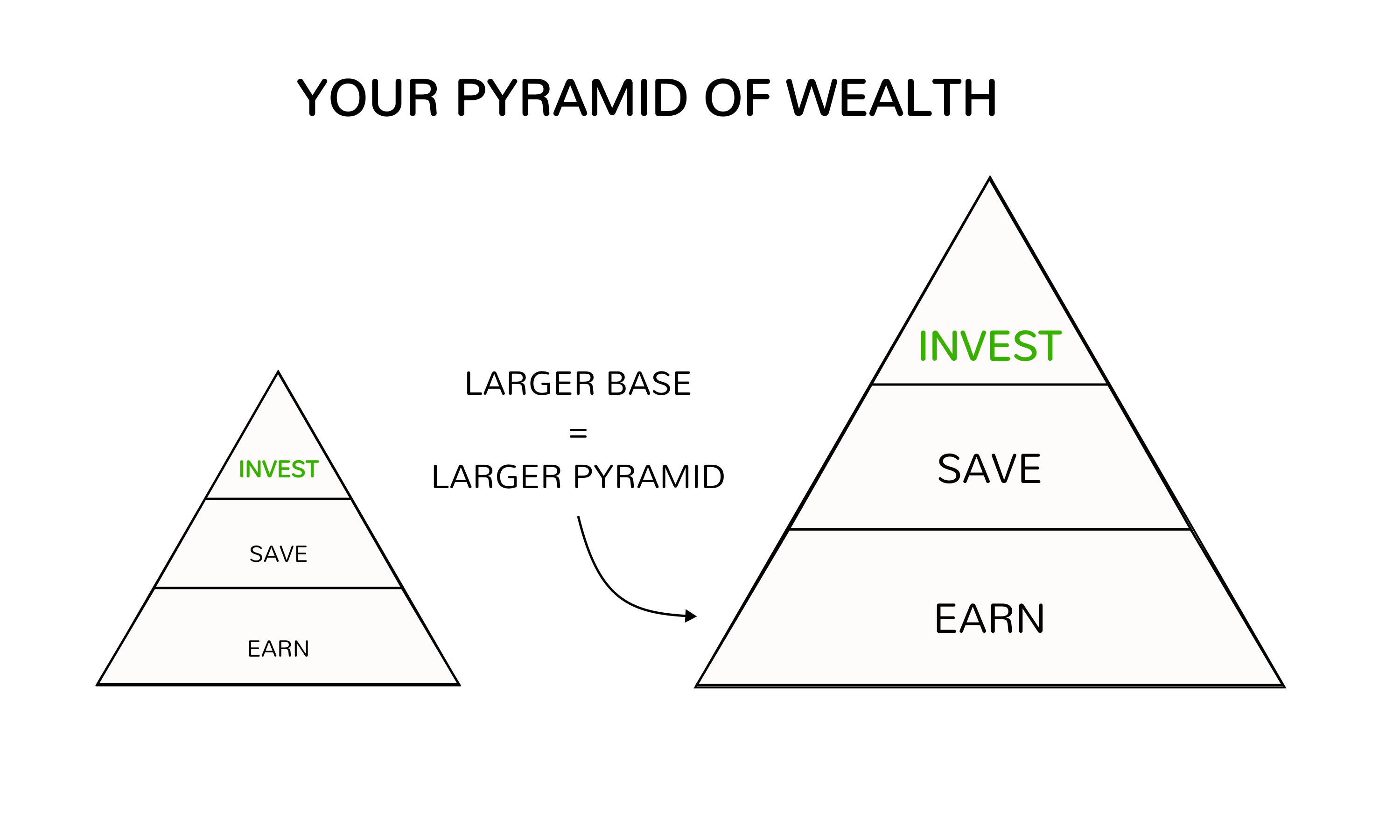
Committing to saving 100 dollars every week for one year is a structured, achievable pathway toward establishing a financial foundation. By consistently setting aside 5,200 dollars over 52 weeks, you move beyond mere budgeting into the realm of wealth accumulation, providing the capital necessary for high-yield savings, debt reduction, or entry-level investment accounts.
The Mechanics of Consistent Weekly Savings
Wealth building is rarely the result of a singular, heroic financial decision; it is the cumulative effect of small, repetitive actions. When you commit to a weekly savings cadence, you transform your financial behavior from sporadic saving—which often relies on "leftover" money—to a proactive, line-item priority.
The psychological benefit of a 100-dollar weekly goal is twofold. First, it is small enough to be integrated into most household budgets without requiring a lifestyle overhaul. Second, it is large enough to yield a meaningful impact by the end of the year. If you maintain this discipline for 52 weeks, you reach a balance of 5,200 dollars. In 2026, this sum is sufficient to fully fund an emergency reserve for many individuals, pay off high-interest revolving debt, or open an investment account that allows for tax-advantaged growth.
Step 1: Evaluating Your Baseline Financial Status
Before you set aside your first 100 dollars, you must assess your current cash flow. Wealth building is mathematically impossible if your outflows consistently meet or exceed your inflows.
- Review your last three months of bank and credit card statements: Categorize every expense into "Needs" (housing, utilities, food, transportation) and "Wants" (dining out, entertainment, subscriptions).
- Identify the "100-Dollar Leak": Look for recurring expenses that you no longer value. If you can identify 25 dollars in weekly subscriptions, unused memberships, or habitual retail purchases, you are 25 percent of the way to your goal without changing your income.
- Establish a dedicated savings vehicle: Use a high-yield savings account (HYSA) that is separate from your primary checking account. By decoupling your savings from your daily spending, you reduce the temptation to dip into your progress to cover impulsive purchases.
Step 2: Automation as a Foundation for Success
The greatest obstacle to consistent saving is human forgetfulness or the temptation to reallocate funds during a "tight" week. To ensure you hit your 5,200-dollar target by the end of the year, automation is your most effective tool.
Contact your financial institution to set up an automated transfer of 100 dollars from your checking account to your designated savings account. Schedule this transfer to occur on the same day you receive your primary income. By treating your savings goal like a mandatory bill—similar to rent or a mortgage payment—you remove the need for willpower. If the money is gone from your primary account before you have a chance to spend it, you will naturally adjust your spending habits to match your remaining balance.
Step 3: Managing the Weekly Commitment During Volatility
Not every week will be financially equal. You may face unexpected repairs, medical co-pays, or seasonal fluctuations in utility costs. A rigid 100-dollar-a-week plan can feel punishing if you are in a month with an expensive emergency.
If your budget faces an unexpected deficit, consider the following "Wealth Preservation" strategies:
- The Catch-up Method: If you can only save 50 dollars during a difficult week, aim to save 150 dollars the following week.
- The Surplus Buffer: If you receive a tax refund, a bonus, or a monetary gift, direct a portion of those funds into your savings account to "bank" future weeks. This creates a buffer that allows you to skip a week if a true emergency arises.
- Side-Hustle Integration: If your primary income cannot support the 100-dollar-a-week goal, focus on generating small, temporary income streams—such as selling unused household items or performing short-term gig work—specifically to satisfy your weekly saving quota.
Financial Comparison: Savings Vehicles
Where you store your 100 dollars matters. Over the course of a year, the vehicle you choose will dictate whether your money stays stagnant or begins to generate marginal returns.
| Savings Vehicle | Accessibility | Risk Level | 2026 Typical Yield |
|---|---|---|---|
| Standard Savings | High | Very Low | Minimal |
| High-Yield Savings (HYSA) | High | Very Low | Moderate |
| Money Market Account | Moderate | Low | Competitive |
| Certificates (CDs) | Low | Very Low | Fixed/Stable |
The Impact of 5,200 Dollars on Your Financial Future
By the end of the 52-week cycle, you will have 5,200 dollars plus whatever interest has accrued. What you do with this capital determines your transition from a "saver" to a "builder."
If you have high-interest debt (such as credit cards with APRs exceeding 20 percent), your most effective investment is to pay that debt off immediately. Paying off a 20 percent interest debt is mathematically equivalent to receiving a 20 percent guaranteed return on your money. Once the debt is cleared, you can restart your weekly savings cycle, this time using the 100 dollars to fund index funds or tax-advantaged retirement accounts, such as a Roth IRA, which allows for long-term compound growth.
Common Mistakes to Avoid
Many people who attempt a weekly savings plan fail because they treat it as an abstract goal rather than a concrete process.
- The Overdraft Trap: Do not force a 100-dollar transfer if it triggers an overdraft fee on your checking account. The cost of the fee will negate several weeks of progress. Always prioritize your primary living expenses.
- Inflation Neglect: While 100 dollars is a significant weekly sum, remember that inflation in 2026 continues to affect purchasing power. Your goal is not just to save money, but to eventually move that money into assets that historically outpace inflation.
- Lack of Milestone Tracking: Saving in a vacuum is difficult. Celebrate small wins at the 1,000-dollar and 2,500-dollar marks. Visualizing your progress on a chart or spreadsheet provides the dopamine reinforcement necessary to finish the year.
Frequently Asked Questions
Is it better to save 400 dollars once a month or 100 dollars every week? Saving 100 dollars weekly is generally superior for psychological and cash-flow reasons. It forces a tighter alignment with your weekly income frequency, making it harder to "overspend" during the month.
What should I do if I am already in debt? If you are carrying high-interest debt, consider splitting your 100 dollars. Use 50 dollars to build a "starter" emergency fund of 1,000 dollars, and apply the other 50 dollars toward your highest-interest debt. Once the emergency fund reaches 1,000 dollars, redirect the full 100 dollars toward debt repayment.
Does a 100-dollar-a-week plan keep up with inflation? By itself, a cash savings account does not keep up with inflation. Use this year-long plan to build your initial capital, then transition to interest-bearing or market-invested accounts once you reach your 5,200-dollar milestone.
Can I use this plan if my income fluctuates? Yes, but you must shift from a "weekly" mindset to a "monthly" average. If you have a high-income week, save 200 dollars. If you have a low-income week, save 50 dollars. The goal is to average 100 dollars per week by the end of the year.
Is it safe to keep 5,200 dollars in a savings account? In 2026, funds kept in FDIC-insured (for banks) or NCUA-insured (for credit unions) accounts are protected up to 250,000 dollars per depositor, per ownership category. Your 5,200 dollars is well within the safety limits of standard institutional banking.
Final Next Action
Your first step is to open a dedicated savings account today, if you do not already have one. Once the account is open, log into your primary checking account and set up an automated transfer for 100 dollars to begin on your next payday. Consistency is your only requirement; the math will handle the rest.