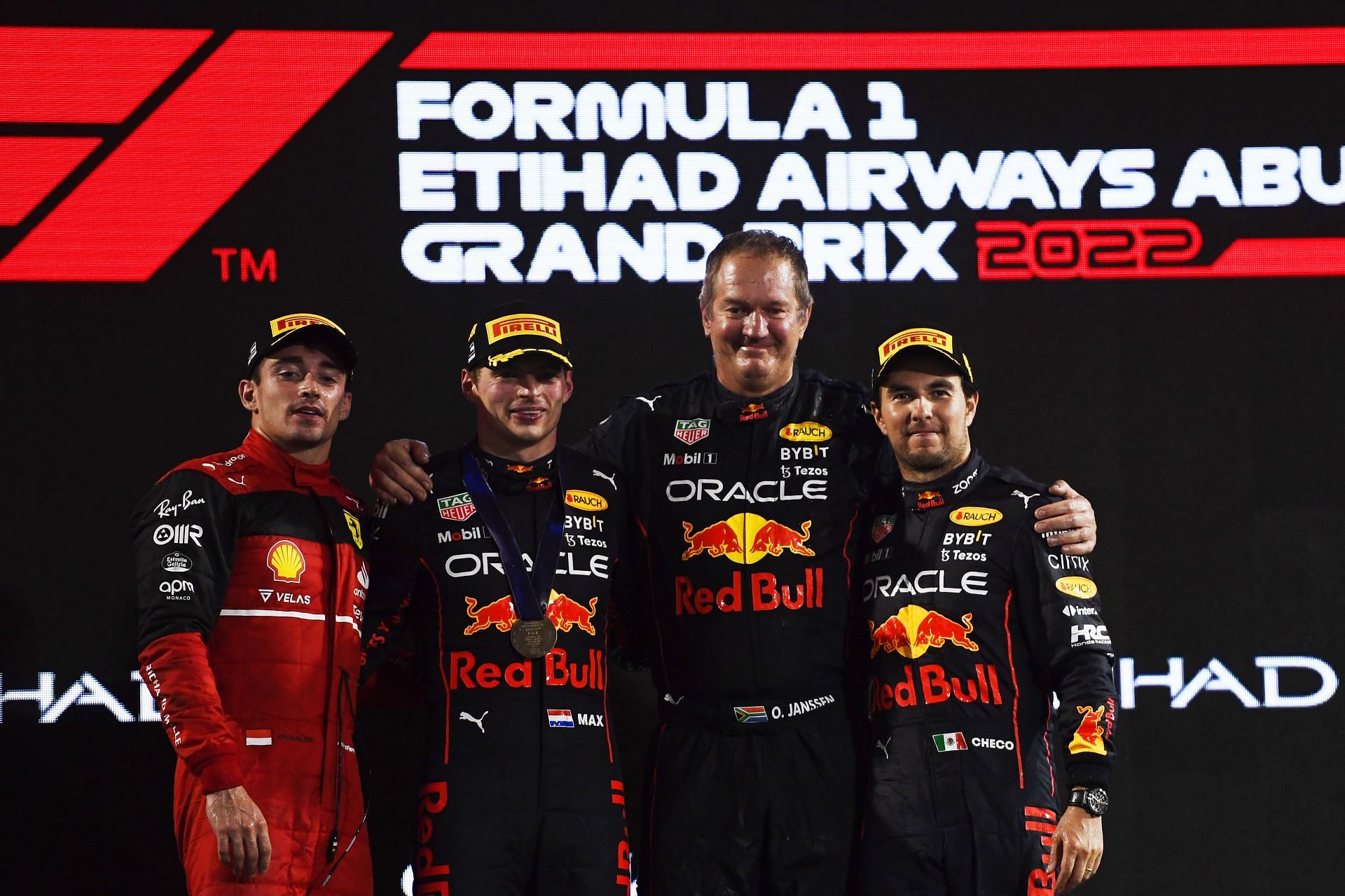
The 2022 Formula 1 season represented the most significant technical revolution in modern Grand Prix racing, marked by the return of ground-effect aerodynamics and 18-inch wheels. Max Verstappen secured his second World Championship with a record-breaking 15 wins, while Red Bull Racing ended Mercedes’ eight-year streak to claim the Constructors' title.
The 2022 season was a watershed moment for Formula 1, fundamentally altering the architectural philosophy of the cars and the competitive hierarchy of the grid. From the vantage point of 2026, we can identify 2022 as the foundation of the current aerodynamic era. It was a year defined by the "porpoising" phenomenon, a resurgence and subsequent strategic collapse from Ferrari, and the implementation of a tightened budget cap that forced teams to make unprecedented logistical compromises. This retrospective analyzes the technical shifts, the sporting drama, and the long-term impacts of a season that moved the sport away from complex over-body aero toward under-floor downforce.
The Technical Revolution: Ground Effect and Aero Overhaul
The primary objective of the 2022 technical regulations was to improve the "raceability" of the cars. For over a decade, F1 cars had become increasingly sensitive to "dirty air"—the turbulent wake left by a leading car—which made following closely through corners nearly impossible. The 2022 season saw the reintroduction of ground-effect tunnels (Venturi tunnels) under the car.
The Return of Venturi Tunnels
Unlike the previous era, which relied on complex front and rear wing elements to generate downforce, the 2022 cars generated the majority of their grip from the floor. By shaping the underside of the car to create a low-pressure zone, designers could achieve high levels of downforce with significantly less turbulent wake. This allowed following cars to retain approximately 86% of their downforce when one car-length behind, compared to just 55% under the 2021 regulations.
18-Inch Wheels and Low-Profile Tires
One of the most visual changes in the 2022 season was the shift from 13-inch wheels to 18-inch wheels. Pirelli developed entirely new tire compounds to match these larger rims. The goal was twofold: to reduce the overheating issues that plagued the previous high-sidewall tires and to align F1’s aesthetics more closely with modern high-performance road cars. These tires were heavier and changed the suspension geometry requirements for every team, contributing to a significant increase in the minimum car weight to 798kg.
The Porpoising Crisis: A Season-Defining Challenge
As teams began testing their 2022 designs in Barcelona and Bahrain, a forgotten aerodynamic byproduct emerged: porpoising. This high-speed oscillation caused cars to bounce violently on their suspensions as the underfloor sucked the car too close to the track, stalled, lost downforce, rose up, and then repeated the cycle.
Engineering Struggles at Mercedes
Perhaps the most shocking narrative of the 2022 season was the struggle of Mercedes. Having won eight consecutive Constructors' Championships, the team introduced a radical "zeropod" sidepod design. While theoretically fast in simulation, the W13 suffered from extreme porpoising that left Lewis Hamilton and George Russell unable to compete for wins during the first half of the season.
FIA Intervention and TD039
By the mid-point of the season at the Canadian Grand Prix, the FIA intervened on safety grounds. This led to the introduction of Technical Directive 039 (TD039), which mandated a metric for vertical oscillations. Teams that bounced too much were forced to raise their ride heights, which directly impacted performance. This directive, fully enforced by the Belgian Grand Prix, arguably played a role in shifting the competitive balance toward Red Bull, whose RB18 was naturally more stable.
The Championship Narrative: Ferrari’s Rise and Fall
The 2022 season began as a head-to-head battle between Max Verstappen and Ferrari’s Charles Leclerc. After the first three rounds, Leclerc held a 46-point lead over Verstappen, leading many to believe that the Scuderia had finally returned to their championship-winning ways with the F1-75.
Ferrari’s Reliability and Strategy Woes
The momentum shifted rapidly following the Spanish Grand Prix. Ferrari suffered a series of high-profile engine failures (notably in Baku and Austria) and catastrophic strategic errors. The most infamous occurred at the Hungarian Grand Prix, where a decision to put Leclerc on hard tires effectively ended his hopes of victory. These internal failures, combined with Leclerc’s own mistake while leading the French Grand Prix, allowed Red Bull to pull away in both standings.
Red Bull’s Dominance and the RB18
The Red Bull RB18, designed by Adrian Newey, began the season overweight but proved to be the most efficient aero package on the grid. As the team shed weight throughout the summer, Verstappen’s performance became untouchable. Between the Belgian Grand Prix and the season finale in Abu Dhabi, Verstappen displayed a level of dominance rarely seen in the sport, culminating in a then-record 15 wins in a single season.
Mid-Field Battles and the Cost Cap Controversy
While the fight at the front eventually settled, the 2022 mid-field was exceptionally tight. Alpine and McLaren fought a season-long battle for fourth place in the Constructors' standings, a fight that was mirrored off-track by the "Silly Season" legal battle over driver Oscar Piastri.
The Alpine-McLaren Legal Drama
In August 2022, Fernando Alonso stunned the paddock by announcing a move to Aston Martin for 2023. Alpine immediately announced Oscar Piastri as his replacement, only for Piastri to publicly deny he had signed a contract. The Contract Recognition Board eventually ruled in favor of McLaren, allowing Piastri to join the Woking-based team and leaving Alpine to recruit Pierre Gasly.
The Budget Cap Breach
The 2022 season was also the first year where the 2021 financial audits were made public. It was revealed that Red Bull Racing had committed a "minor overspend breach" of the $145 million budget cap. This resulted in a $7 million fine and a 10% reduction in their 2023 aerodynamic testing time. The controversy sparked intense debate about the fairness of the financial regulations and their long-term efficacy in leveling the playing field.
2022 Season Results: Final Standings
The following table summarizes the final results for the top performers of the 2022 season, highlighting the disparity between the top three teams and the rest of the field.
| Driver | Team | Points | Wins | Podiums |
|---|---|---|---|---|
| Max Verstappen | Red Bull Racing | 454 | 15 | 17 |
| Charles Leclerc | Ferrari | 308 | 3 | 11 |
| Sergio Perez | Red Bull Racing | 305 | 2 | 11 |
| George Russell | Mercedes | 275 | 1 | 8 |
| Carlos Sainz | Ferrari | 246 | 1 | 9 |
| Lewis Hamilton | Mercedes | 240 | 0 | 9 |
| Lando Norris | McLaren | 122 | 0 | 1 |
| Esteban Ocon | Alpine | 92 | 0 | 0 |
Legacy and Long-term Impact from a 2026 Perspective
Looking back from 2026, the 2022 season was the catalyst for the current "Red Bull Era." The technical foundations laid by the RB18 proved so robust that competitors spent the subsequent three years attempting to converge on Red Bull’s sidepod and floor philosophies.
The 2022 season also marked the end of an era for several iconic figures. Sebastian Vettel, a four-time World Champion, retired at the conclusion of the Abu Dhabi Grand Prix, leaving a massive void in the sport’s leadership and advocacy. Additionally, the season proved that the budget cap was a functional, if controversial, tool for maintaining the financial sustainability of the smaller teams like Haas and Williams, both of whom saw significant performance gains compared to the late-2010s.
The "ground effect" cars introduced in 2022 are now reaching the end of their lifecycle as we prepare for the 2026 engine and chassis regulation overhaul. However, the lessons learned in 2022 regarding tire management, floor stiffness, and the sensitivity of the Venturi tunnels remain the most critical components of modern Formula 1 engineering.
Frequently Asked Questions
Why were the 2022 F1 cars so much heavier than previous years?
The 2022 cars had a minimum weight of 798kg, an increase of 46kg from 2021. This was primarily due to the heavier 18-inch wheels and tires, increased safety structures in the chassis to handle side impacts, and the necessity of heavier, stiffer floors required for ground-effect aerodynamics.
Did the 2022 regulations actually improve overtaking?
Yes, data from the 2022 season showed a significant increase in "closely followed" laps. While the number of overtakes varied by track, drivers reported that they could follow within one second of a leading car through high-speed corners—something that was impossible in the 2017–2021 era without destroying the front tires.
What happened to the Mercedes "zeropod" design?
The zeropod design was Mercedes' attempt to maximize the surface area of the floor to generate downforce. While it was aerodynamically efficient in a wind tunnel, it made the car extremely sensitive to ride-height changes and porpoising. Mercedes eventually abandoned this concept early in the 2023 season in favor of a more traditional "downwash" sidepod design similar to Red Bull's.
Why was Max Verstappen's 2022 title considered record-breaking?
Verstappen set a new record for the most wins in a single season (15), surpassing the previous record of 13 held by Michael Schumacher and Sebastian Vettel. He also set a record for the most points scored in a single season (454), although this was aided by the increased number of races and the inclusion of Sprint events.
How did the 2022 cost cap affect car development?
The 2022 season was the first time teams had to be extremely selective about bringing updates. In previous years, top teams would bring new parts to almost every race. In 2022, teams like Ferrari and Red Bull had to group updates into 3 or 4 major packages throughout the year to stay within the $140 million limit (adjusted for inflation).
Final Recommendation for Enthusiasts
For those looking to understand the technical nuances of the current F1 era, a deep-dive into the 2022 season's technical documentation is essential. The transition from over-body to under-body aerodynamics changed the "physics" of Grand Prix racing. If you are analyzing team performance in 2026, look back at which teams mastered the floor-stiffness challenges of 2022; those engineering departments remain the ones to beat today.