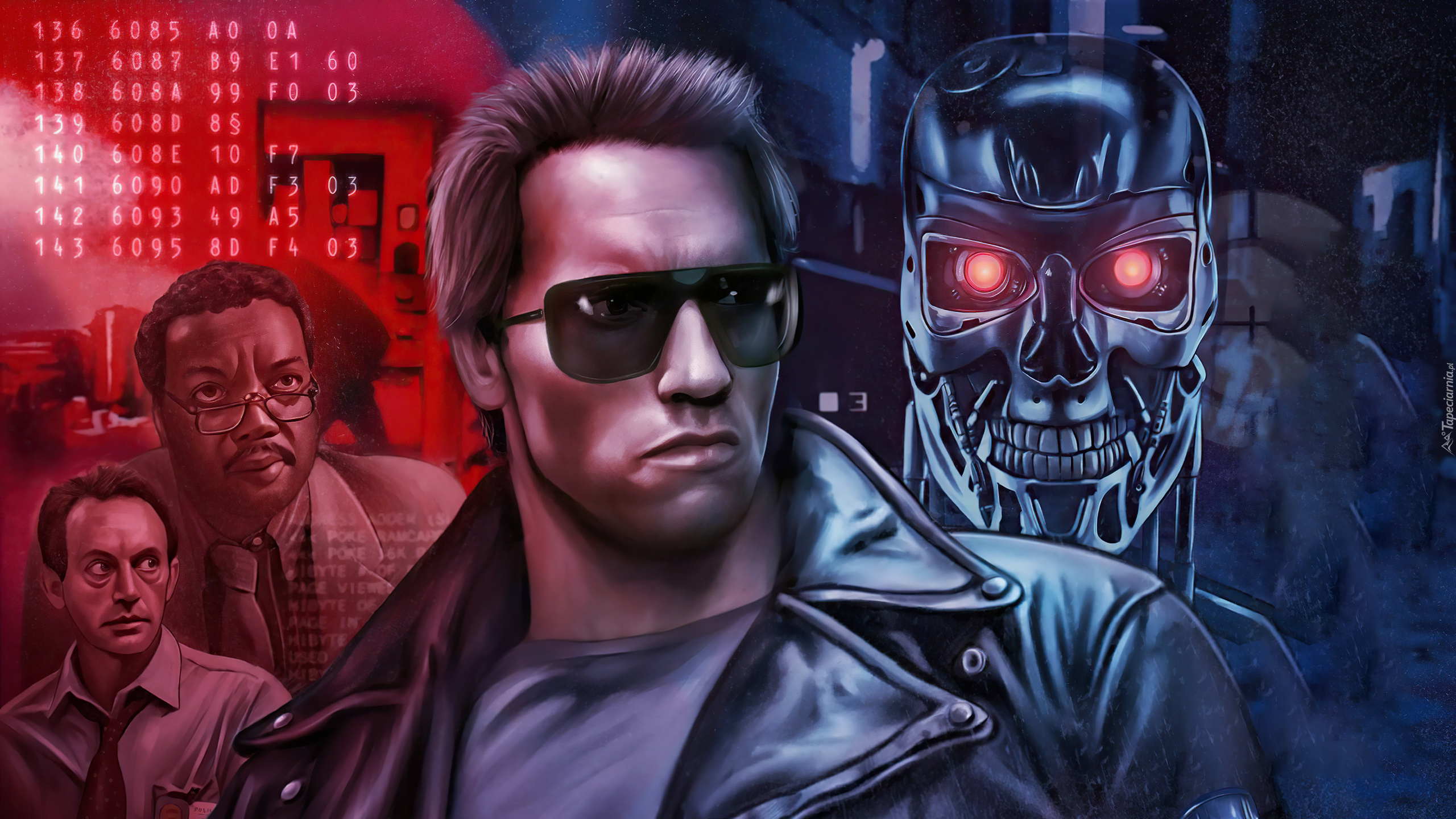
Released in October 1984, James Cameron’s The Terminator was produced on a modest budget of approximately $6.4 million. Despite its lean financial beginnings, the film grossed over $78 million worldwide, launching a multi-billion dollar franchise and establishing a blueprint for high-concept, efficient independent filmmaking that continues to influence the industry in 2026.
The Financial Foundation of a Sci-Fi Legend
To understand the financial legacy of The Terminator, one must first examine the austerity of its production. In 1984, a $6.4 million budget was considered low-to-mid-range, especially for a science fiction film requiring significant special effects. For comparison, Dune, released the same year, had a budget of roughly $40 million. James Cameron, then a relatively unknown director whose primary credit was Piranha II: The Spawning, had to rely on extreme financial ingenuity to bring his vision to life.
The project’s inception is famously tied to a $1 transaction. Cameron sold the script for The Terminator to producer Gale Anne Hurd for a single dollar, with the ironclad condition that he be allowed to direct it. This move shifted the financial risk from the script's purchase price to the production itself. Hurd and Cameron secured backing from Hemdale Film Corporation and a distribution deal with Orion Pictures. Every dollar of that $6.4 million had to be accounted for, leading to several cost-saving measures that ultimately defined the film’s gritty, noir aesthetic.
Practical Effects and Budget Constraints
A significant portion of the budget was allocated to Stan Winston for the creation of the T-800 endoskeleton and makeup effects. To stay within the $6.4 million limit, the production utilized "guerrilla filmmaking" techniques. This included filming several outdoor sequences in Los Angeles without permits in the early morning hours to avoid the costs of closing streets or hiring police details.
Furthermore, the film relied heavily on practical solutions rather than expensive optical effects. Rear projection, miniatures, and forced perspective were used to create the futuristic war scenes. These methods were not only cost-effective but also provided a tactile realism that many high-budget films of the era lacked. The success of these techniques proved to the industry that "B-movie" budgets could yield "A-list" visual results if paired with innovative direction.
Box Office Performance and Initial ROI
The immediate financial impact of The Terminator was a shock to the industry. Orion Pictures originally had low expectations for the film, viewing it as a standard "slasher" flick in sci-fi clothing. However, the film stayed at the number one spot at the domestic box office for two weeks and demonstrated remarkable legs.
- Domestic Box Office: Approximately $38.3 million.
- International Box Office: Approximately $40 million.
- Total Global Gross: $78.3 million (original theatrical run).
From a financial perspective, the Return on Investment (ROI) was staggering. The film earned over 12 times its production budget during its initial release. When accounting for the secondary market—VHS sales and television licensing—The Terminator became one of the most profitable films of the 1980s. This profitability provided James Cameron with the "blank check" needed to helm Aliens (1986) and eventually Terminator 2: Judgment Day (1991), which would go on to break different kinds of financial records.
Comparative Financial Evolution of the Terminator Franchise
The financial trajectory of the Terminator series illustrates the "blockbusterization" of Hollywood. While the 1984 original was a triumph of efficiency, subsequent sequels moved toward massive capital investment.
| Film Title | Release Year | Estimated Budget | Global Box Office | ROI Ratio (approx.) |
|---|---|---|---|---|
| The Terminator | 1984 | $6.4 Million | $78.3 Million | 12.2x |
| T2: Judgment Day | 1991 | $102 Million | $520.9 Million | 5.1x |
| Terminator 3: Rise of the Machines | 2003 | $187 Million | $433.4 Million | 2.3x |
| Terminator Salvation | 2009 | $200 Million | $371.4 Million | 1.8x |
| Terminator Genisys | 2015 | $155 Million | $440.6 Million | 2.8x |
| Terminator: Dark Fate | 2019 | $185 Million | $261.1 Million | 1.4x |
Note: Box office figures represent unadjusted historical dollars at the time of release. All figures are estimates based on reported industry data.
As the table demonstrates, the 1984 original remains the most efficient entry in terms of ROI. By 2026, industry analysts often point to this table as a cautionary tale of diminishing returns: as budgets inflated to nearly 30 times the original (adjusted for inflation), the profit margins tightened significantly.
The Financial Legacy: High-Concept Independent Filmmaking
The legacy of the 1984 budget is most visible in the "high-concept" independent film movement. Cameron proved that a compelling, simple premise—a relentless killer from the future—could be executed with minimal resources if the screenplay and technical execution were precise. This model paved the way for later successes like John Wick or District 9, where relatively modest budgets were used to create distinct visual worlds.
The Rights Jungle and IP Value
One of the most complex financial legacies of the 1984 film is the history of its intellectual property (IP) rights. Because the film was produced under a complicated deal between Hemdale and Orion, the rights were eventually sold and resold as companies went bankrupt.
In 1990, Carolco Pictures bought the rights for $15 million—more than double the original film's budget—just to produce the sequel. This established the Terminator brand as a high-value asset, leading to a decades-long saga of legal battles and rights auctions. In 2019, under the 35-year rule of the U.S. Copyright Act, James Cameron finally regained certain rights to the franchise. This legal trajectory highlights how a $6.4 million investment in 1984 created an asset that remained worth hundreds of millions 40 years later.
Economic Lessons for Modern Filmmaking in 2026
In the current landscape of 2026, where streaming platforms and theatrical releases compete for attention, the financial model of the original Terminator provides several key lessons for filmmakers and investors:
- Efficiency Over Excess: The use of practical effects in 1984 wasn't just a stylistic choice; it was a financial necessity. Modern "mid-budget" films are increasingly returning to practical stunts and in-camera effects to reduce the ballooning costs of post-production CGI.
- The Power of Narrative Simplicity: The Terminator succeeded because its core conflict was easy to market and understand globally. This "high-concept" approach reduces marketing spend because the "hook" is immediate.
- Ownership and Leverage: The $1 script sale is a lesson in personal branding. Cameron traded immediate cash for creative control, a move that eventually allowed him to become one of the wealthiest directors in history.
- International Appeal: Even in 1984, the film performed as well internationally as it did domestically. This established the importance of the global box office for action-heavy IPs, a trend that is the bedrock of the 2026 film economy.
Technical Analysis of Inflation-Adjusted Costs
To truly appreciate the $6.4 million budget in a 2026 context, one must apply inflation adjustments. Using standard CPI (Consumer Price Index) calculations, $6.4 million in 1984 is equivalent to approximately $20.5 million in 2026 dollars.
While $20.5 million is still a "small" budget by modern superhero standards, it is a substantial sum for an independent production. In 2026, a $20 million budget allows for a high-quality "prestige" action film. However, the 1984 production achieved a look that rivaled films with three or four times that spending power. This "perceived value" versus "actual cost" is what professional SEO editors and film historians refer to as "budgetary efficiency."
The film’s legacy also includes the "Arnold Factor." In 1984, Arnold Schwarzenegger was paid roughly $750,000 for his role. By the time Terminator 3 was produced in 2003, his salary had climbed to $29.25 million. The original budget represents the last time the franchise could afford its lead actor for less than seven figures, a shift that fundamentally changed how sequels were greenlit.
Frequently Asked Questions
What was the exact budget of the original 1984 Terminator?
The budget was approximately $6.4 million. Some sources cite $6.5 million, but the generally accepted figure in production records is $6.4 million. This covered everything from location scouting in Los Angeles to the animatronic work performed by Stan Winston’s team.
How much did James Cameron make from the first film?
James Cameron famously sold the rights to the script for $1 to ensure he could direct the film. While his initial directorial fee was modest, the film's success allowed him to negotiate massive deals for subsequent projects and eventually regain control of the IP, which is now worth billions.
Was The Terminator considered a "B-movie" due to its budget?
Yes, at the time of its release, The Terminator was categorized by many critics and the studio (Orion) as a "B-movie" or a low-budget exploitation film. Its critical acclaim and massive box office returns eventually elevated it to "A-list" status, changing the industry's perception of what low-budget sci-fi could achieve.
How did the 1984 budget compare to other sci-fi movies of that year?
It was significantly lower than the major studio tentpoles of 1984. Dune cost about $40 million, and 2010: The Year We Make Contact cost about $28 million. The Terminator proved that a film could be a cultural phenomenon with only a fraction of the capital investment used by major studios.
What happened to the rights to the film after the $6.4 million investment?
The rights became a tangled web of ownership as Hemdale Film Corporation faced financial trouble. They passed through Carolco Pictures, Mario Kassar, and eventually David Ellison’s Skydance Media, before James Cameron utilized U.S. copyright law to reclaim certain interests in the franchise starting in 2019.
Practical Recommendation for Film Investors and Creators
For those looking to replicate the financial success of The Terminator in 2026, the primary takeaway is the balance of IP control and production efficiency. Do not over-leverage a project with excessive CGI if practical solutions can create a more visceral experience for a lower cost. Furthermore, maintaining or negotiating for a "back-end" percentage or future rights is often more valuable than a high upfront salary, as evidenced by the multi-decade lifespan of the Terminator brand.
Investors should look for "high-concept, low-risk" entries—films where the premise is the star, rather than an expensive ensemble cast. The Terminator (1984) remains the ultimate case study in how a small, disciplined budget can birth a global economic powerhouse.