The cast of Netflix’s The Crown is renowned for its unique "triple-cast" strategy, which replaced the entire roster of actors every two seasons to reflect the aging of the British Royal Family. From Claire Foy’s portrayal of a young, ascending Elizabeth II to Imelda Staunton’s depiction of the late monarch’s twilight years, the series utilized world-class talent to navigate over half a century of history.
The Evolutionary Casting Philosophy of Peter Morgan
When The Crown debuted in 2016, creator Peter Morgan made a bold production decision that would define the series: rather than using prosthetic makeup or digital de-aging to show the passage of time, he would recast the principal roles every two seasons. This approach allowed the show to capture the psychological shifts that come with aging, rather than just the physical ones.
This methodology was a gamble. Most successful television dramas rely on the audience’s long-term attachment to specific faces. However, for The Crown, the "character" was often the institution of the Monarchy itself, and the actors were merely the temporary stewards of those roles. By the time the series concluded its six-season run, it had successfully cycled through three distinct generations of actors, each bringing a different nuance to the Windsor family.
Era One: The Young Royals (Seasons 1 and 2)
The first era of The Crown focuses on the years 1947 to 1964. It begins with the marriage of Princess Elizabeth and Philip Mountbatten and ends with the birth of Prince Edward. This period is defined by the sudden weight of the crown falling upon a young woman who expected decades more of relative freedom.
Claire Foy as Queen Elizabeth II
Claire Foy’s performance as the young Queen is widely credited with establishing the show's massive global success. Foy portrayed Elizabeth as a woman caught between her private identity and her public duty. Her performance emphasized the "bridle" of the monarchy—the way the crown forced a naturally reserved woman to become a symbol of stoicism. Foy won an Emmy and a Golden Globe for the role, capturing the transition from the sheltered Princess to the sovereign who had to stand her ground against powerful men like Winston Churchill.
Matt Smith as Prince Philip, Duke of Edinburgh
Matt Smith brought a sense of restless, masculine energy to the young Prince Philip. His portrayal focused on the Duke’s struggle to find a role within an institution that essentially rendered him a secondary figure to his wife. Smith highlighted Philip’s modernizing instincts and his frustration with the stuffy traditions of the Palace, providing a necessary foil to Elizabeth’s adherence to protocol.
Vanessa Kirby as Princess Margaret
Vanessa Kirby’s Princess Margaret was the emotional heartbeat of the first two seasons. While Elizabeth was the "static" center, Margaret was the "dynamic" rebel. Kirby portrayed Margaret’s tragic romance with Peter Townsend and her subsequent marriage to Antony Armstrong-Jones with a blend of vulnerability and aristocratic hauteur. She effectively showcased the pain of being the "spare" in a system that prioritized the "heir."
Era Two: The Middle Years (Seasons 3 and 4)
Spanning 1964 to 1990, the second era saw the show move into a more cynical, politically charged landscape. This period covered the decolonization of Africa, the moon landing, the rise of Margaret Thatcher, and the entry of Lady Diana Spencer into the royal fold.
Olivia Colman as Queen Elizabeth II
Taking over from Claire Foy, Olivia Colman portrayed the Queen during her middle years. Colman’s Elizabeth was more settled, perhaps even a bit hardened by the years of duty. This version of the Queen faced the challenge of staying relevant in a rapidly changing Britain. Colman excelled at showing the "human" behind the mask—a woman who loved her dogs and horses more than the complexities of parliamentary politics, yet remained unflinching in her commitment to the state.
Tobias Menzies as Prince Philip, Duke of Edinburgh
Tobias Menzies replaced Matt Smith, offering a more somber, reflective version of the Duke. Menzies captured Philip’s mid-life crisis (notably in the episode "Moondust") and his evolving relationship with his children, particularly Prince Charles. His performance was characterized by a stiff upper lip that occasionally cracked to reveal deep-seated insecurities about his place in history.
Helena Bonham Carter as Princess Margaret
Helena Bonham Carter took the mantle from Vanessa Kirby, depicting Margaret’s descent into loneliness and health struggles. Bonham Carter brought her signature wit to the role but balanced it with a profound sense of sadness as Margaret realized her influence was waning. Her chemistry with Colman’s Elizabeth perfectly illustrated the complicated bond between the two sisters.
The Arrival of the Next Generation: Josh O’Connor and Emma Corrin
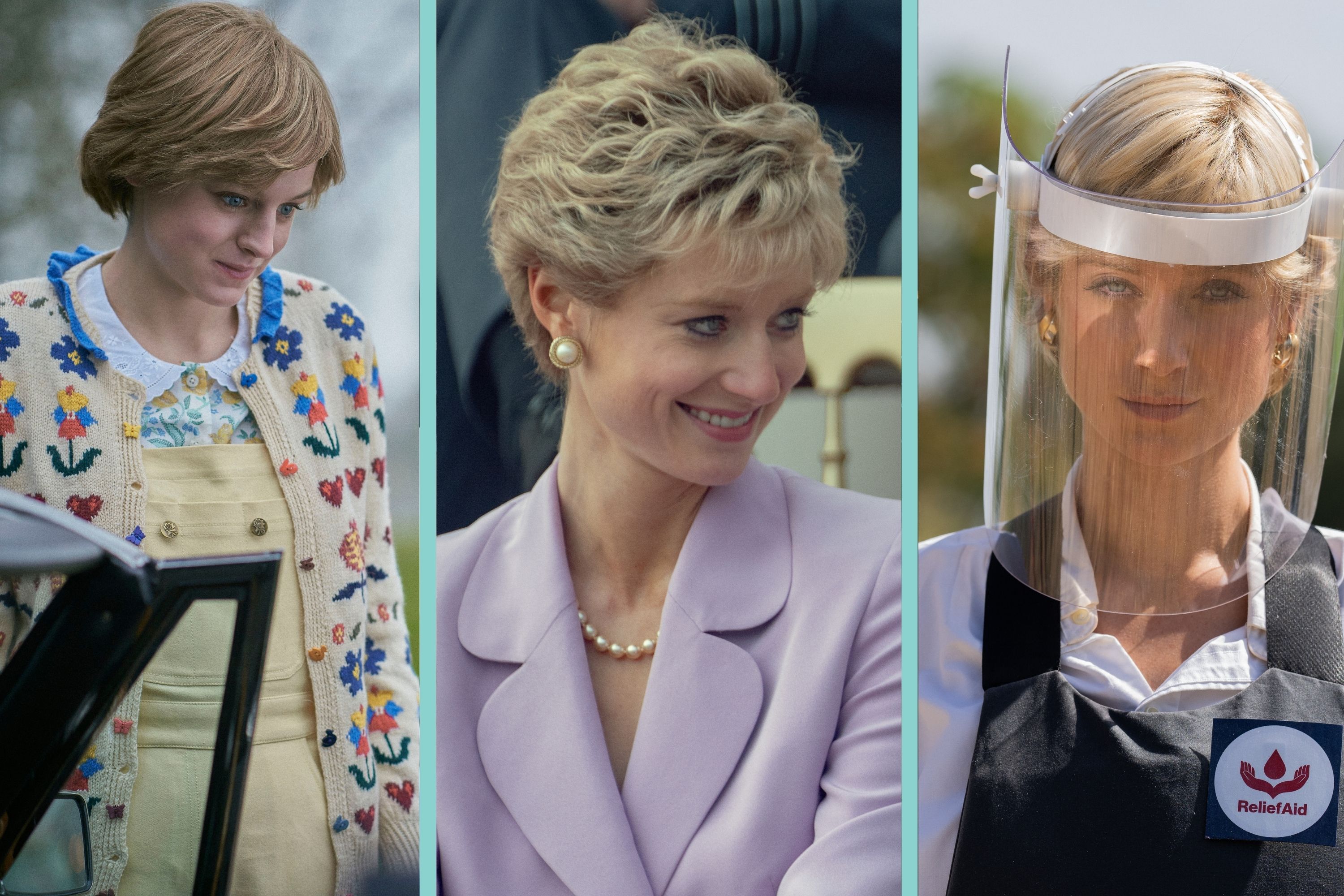
Season 4 introduced the most explosive element in the show’s history: the marriage of Prince Charles and Diana Spencer. Josh O’Connor portrayed Charles as a sensitive, misunderstood man who felt stifled by his parents' expectations. Emma Corrin, in a star-making turn, portrayed the teenage Diana. Corrin captured Diana’s transition from a shy nursery school teacher to a global icon, highlighting the isolation she felt within the cold walls of the Palace.
Era Three: The Modern Era (Seasons 5 and 6)
The final two seasons, covering 1991 to 2005, brought the story into the contemporary consciousness. This era dealt with the "Annus Horribilis," the divorce of Charles and Diana, the tragic death of the Princess of Wales, and the early relationship between Prince William and Kate Middleton.
Imelda Staunton as Queen Elizabeth II
Imelda Staunton had the difficult task of portraying the Queen during some of the monarchy’s lowest points in terms of public approval. Her portrayal was more grandmotherly but also more traditionalist. Staunton’s Queen was a woman who saw the world she knew disappearing and struggled to understand the modern obsession with emotional transparency.
Jonathan Pryce as Prince Philip, Duke of Edinburgh
Jonathan Pryce offered a gentler, more scholarly version of Prince Philip. In the final seasons, Philip became a mentor figure to the younger royals, and Pryce played him with a mixture of wisdom and the lingering sharp-tongued wit that the real Duke was known for.
Elizabeth Debicki as Princess Diana
Replacing Emma Corrin, Elizabeth Debicki’s portrayal of Diana in the 1990s was uncanny. Standing at 6'3", Debicki used her physicality to mirror Diana’s bashful head tilts and magnetic screen presence. She portrayed the "People’s Princess" as a woman who had finally found her voice but was still haunted by the paparazzi and the breakdown of her marriage. Her performance in Season 6, particularly the episodes leading up to the Paris crash, was widely praised for its sensitivity.
Dominic West as Prince Charles
Dominic West took over from Josh O’Connor to play an older, more confident, but still frustrated Prince Charles. West’s portrayal focused on Charles’s efforts to modernize the monarchy and his enduring love for Camilla Parker Bowles (played by Olivia Williams). West brought a certain "leading man" energy to the role that sparked debate over whether he was "too handsome" for the part, but his vocal mannerisms and physical tics were meticulously researched.
Summary of Main Cast Transitions
The following table outlines the actors who played the primary members of the Royal Family across the three casting cycles of the series.
| Character | Seasons 1–2 (1947–1964) | Seasons 3–4 (1964–1990) | Seasons 5–6 (1991–2005) |
|---|---|---|---|
| Queen Elizabeth II | Claire Foy | Olivia Colman | Imelda Staunton |
| Prince Philip | Matt Smith | Tobias Menzies | Jonathan Pryce |
| Princess Margaret | Vanessa Kirby | Helena Bonham Carter | Lesley Manville |
| Prince Charles | Julian Baring (Young) | Josh O'Connor | Dominic West |
| Princess Diana | N/A | Emma Corrin | Elizabeth Debicki |
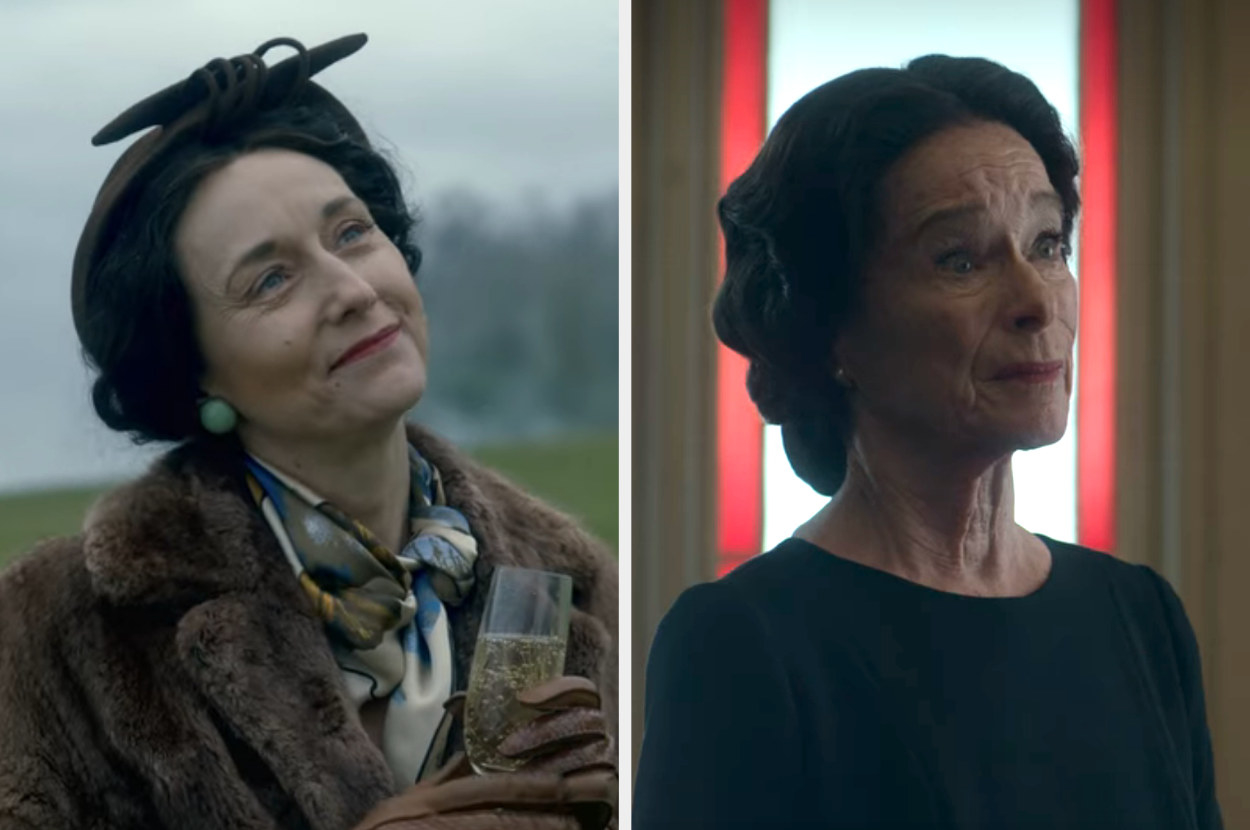
| The Queen Mother | Victoria Hamilton | Marion Bailey | Marcia Warren |
| Princess Anne | Lyla Barrett-Rye (Young) | Erin Doherty | Claudia Harrison |
Key Supporting Cast and Political Figures
While the Royal Family is the focus, the actors playing the Prime Ministers and other historical figures were equally vital to the show’s texture.
- John Lithgow as Winston Churchill (Seasons 1-2): Lithgow, an American, gave a transformative performance as the aging Lion of Britain. His relationship with the young Queen Elizabeth served as the emotional and political backbone of the first season.
- Gillian Anderson as Margaret Thatcher (Season 4): Anderson’s portrayal of the "Iron Lady" was one of the most talked-about performances in the show's history. She captured Thatcher’s distinctive voice and unwavering—sometimes polarizing—conviction.
- Jonny Lee Miller as John Major (Season 5): Miller portrayed Major as a steady, decent man trying to navigate the "War of the Waleses" and the economic shifts of the early 90s.
- Bertie Carvel as Tony Blair (Seasons 5-6): Carvel depicted the rise of New Labour and the friction between the Queen’s traditionalism and Blair’s modernization efforts, particularly in the aftermath of Princess Diana's death.
The Challenges of Real-Life Portrayal
For the actors of The Crown, the challenge was twofold: they had to provide an accurate impression of famous figures while also creating a compelling dramatic character. The production employed a team of researchers and dialect coaches to ensure that every "received pronunciation" vowel and royal gesture was correct.
However, the actors often noted in interviews that their goal was not mimicry. Actors like Josh O’Connor and Elizabeth Debicki spoke about finding the "inner truth" of their characters. For O’Connor, it was the "slump" of Charles’s shoulders that conveyed his emotional burden. For Debicki, it was the way Diana used her eyes to communicate with the camera. These subtle physical choices allowed the cast to transcend mere imitation and create characters that felt lived-in and deeply human.
Impact and Legacy of the Cast
As of 2026, The Crown remains a benchmark for ensemble acting in the streaming era. The show acted as a massive talent incubator, catapulting actors like Claire Foy, Vanessa Kirby, Josh O'Connor, and Emma Corrin into A-list stardom. Simultaneously, it provided a platform for veteran actors like John Lithgow and Jonathan Pryce to deliver some of the most nuanced work of their careers.
The legacy of the cast lies in their ability to make the most distant and formal family in the world feel relatable. Through their performances, the audience was able to empathize with the extreme pressures of the British constitutional monarchy. Whether it was the heartbreak of a forbidden romance or the loneliness of the throne, the actors brought a psychological depth to the historical record that changed how many viewers perceived the real-life Royal Family.
Frequently Asked Questions
Why did the cast change every two seasons?
The creator, Peter Morgan, decided to recast the roles to accurately depict the characters' aging over several decades. He felt that using older actors provided a more authentic emotional resonance than using prosthetics or digital de-aging technology on the same cast.
Who played Princess Diana in The Crown?
Princess Diana was played by two different actresses. Emma Corrin played a young Diana in Season 4, covering her introduction to the Royal Family and the early years of her marriage. Elizabeth Debicki took over the role for Seasons 5 and 6, portraying Diana during the 1990s and her final days in 1997.
Did any actors appear in more than two seasons?
While the main roles were recast every two seasons, some actors appeared in guest capacities or flashbacks. For example, Claire Foy returned for brief cameo appearances in later seasons to represent the Queen’s memories or younger self.
Which actor won the most awards for their role in The Crown?
The series was an awards juggernaut, but Claire Foy and Olivia Colman were particularly successful, both winning Emmy and Golden Globe awards for their portrayals of Queen Elizabeth II. The cast of Season 4 also swept the major categories at the 73rd Primetime Emmy Awards.
Who played Prince Harry and Prince William in the final seasons?
In the final season (Season 6), Prince William was played by Rufus Kampa (younger) and Ed McVey (older), while Prince Harry was played by Fflyn Edwards (younger) and Luther Ford (older). These actors covered the period from the late 90s through the early 2000s.
Practical Recommendation for Viewers
If you are new to The Crown or planning a rewatch in 2026, pay close attention to the "transition episodes" (the first episodes of Seasons 3 and 5). These episodes are specifically designed to help the audience adjust to the new faces. In Season 3, Episode 1 ("Olding"), there is a meta-moment where Olivia Colman’s Queen comments on her own aging while looking at a new postage stamp, which serves as a clever bridge between Claire Foy's era and her own. Viewing the series chronologically allows you to appreciate the subtle ways different actors interpreted the same character's evolving personality.