In 2019, relationships were defined by the peak of "swipe culture," the mainstream adoption of niche dating terminologies like "situationships," and a significant shift in dating etiquette driven by post-#MeToo social awareness. It was a year where digital-first connections became the statistical norm rather than the exception for meeting new partners.
The year 2019 stands as a pivotal moment in the history of human connection. Positioned just before the global disruptions of the early 2020s, it represented the final "pure" iteration of the digital dating revolution that began a decade earlier. To understand 2019 relationships, one must examine the intersection of mobile technology, shifting social values, and the psychological impact of having "infinite choice" in the palm of one's hand.
The Digital Hegemony: How Apps Defined 2019
By 2019, the stigma surrounding online dating had almost entirely evaporated. According to data from the Pew Research Center published in early 2020 (reflecting 2019 trends), nearly half of 18-to-29-year-olds had used a dating app. This wasn't just about utility; it was about the gamification of romance.
The Dominance of the "Big Three"
In 2019, the market was dominated by a few key players, each catering to a specific relationship "intent":
- Tinder: Remained the undisputed leader in volume. In October 2019, it launched "Swipe Night," an interactive apocalyptic adventure that used users' choices to match them with others. This signaled a move toward "experience-based" matching.
- Bumble: Solidified its position as the "feminist" alternative, requiring women to make the first move. This addressed a growing fatigue regarding harassment and unsolicited messages.
- Hinge: Rebranded in late 2018 and early 2019 with the slogan "Designed to be deleted." It focused on "Relationship Seekers" rather than "Casual Daters," utilizing prompts to encourage deeper conversation.
The Psychology of Infinite Choice
The 2019 relationship landscape was heavily influenced by the "paradox of choice." Psychologists noted that the sheer volume of available profiles led to a "disposable" dating culture. When a new potential partner is only a swipe away, the incentive to work through minor disagreements in an existing relationship often decreases. This contributed to a rise in short-term dating cycles and a delay in traditional milestones like cohabitation or marriage.
The Rise of the "Situationship" and New Terminology
If 2019 had an official relationship status, it was the "situationship." This term, which gained massive traction in lifestyle publications and social media that year, described a romantic arrangement that lacks a clear definition or long-term commitment but involves the emotional and physical intimacy of a traditional relationship.
Understanding 2019 Dating Vernacular
To navigate 2019 relationships, one had to master a new lexicon. These terms weren't just slang; they described specific behaviors enabled by digital communication:
- Ghosting: While not new to 2019, it reached its cultural peak. The act of ending a relationship by suddenly withdrawing all communication without explanation became a standard, albeit criticized, practice.
- Breadcrumbing: Sending out "sporadic but non-committal" signals to keep a romantic interest "on the hook" without any intention of moving the relationship forward.
- Orbiting: A phenomenon where someone breaks off direct contact but continues to engage with your social media content (liking photos, viewing stories), staying in your "orbit" without interacting.
- Cushioning: Maintaining several "backup" romantic interests while in a committed relationship to soften the blow if the primary relationship fails.
These behaviors reflected a broader anxiety about vulnerability. In a high-speed digital world, many individuals in 2019 used these tactics as defensive mechanisms to avoid the sting of direct rejection or the weight of commitment.
Social Movements and Dating Etiquette
The social landscape of 2019 was heavily influenced by the aftermath of the #MeToo movement, which had gained global momentum in late 2017. By 2019, these conversations had moved from the workplace into the private sphere of dating and intimacy.
Consent and Communication
In 2019, the conversation around "enthusiastic consent" became mainstream. Dating apps began introducing safety features, and there was a heightened awareness regarding power dynamics in relationships. For many, 2019 was a year of "re-learning" how to approach romantic interests with more transparency and respect for boundaries.
The Politicization of Attraction
2019 was also a year where political alignment became a "dealbreaker" more frequently than in previous decades. With high political polarization globally, dating app users increasingly used their profiles to signal their values. Terms like "No Trump supporters" or "Vocal about social justice" became common in bios, reflecting a desire for partners with shared ethical frameworks.
Demographic Shifts: Why 2019 Relationships Looked Different
The "Millennial" and "Gen Z" cohorts were the primary drivers of 2019 relationship trends. Their approach to commitment was fundamentally different from previous generations due to economic and social pressures.
| Metric | 2019 Status/Trend | Impact on Relationships |
|---|---|---|
| Median Age at First Marriage | 29.8 (Men), 28.0 (Women) | Historically high; led to more "pre-marital" life stages. |
| Online Meeting Rate | ~39% of heterosexual couples | Apps became the #1 way couples met, surpassing friends. |
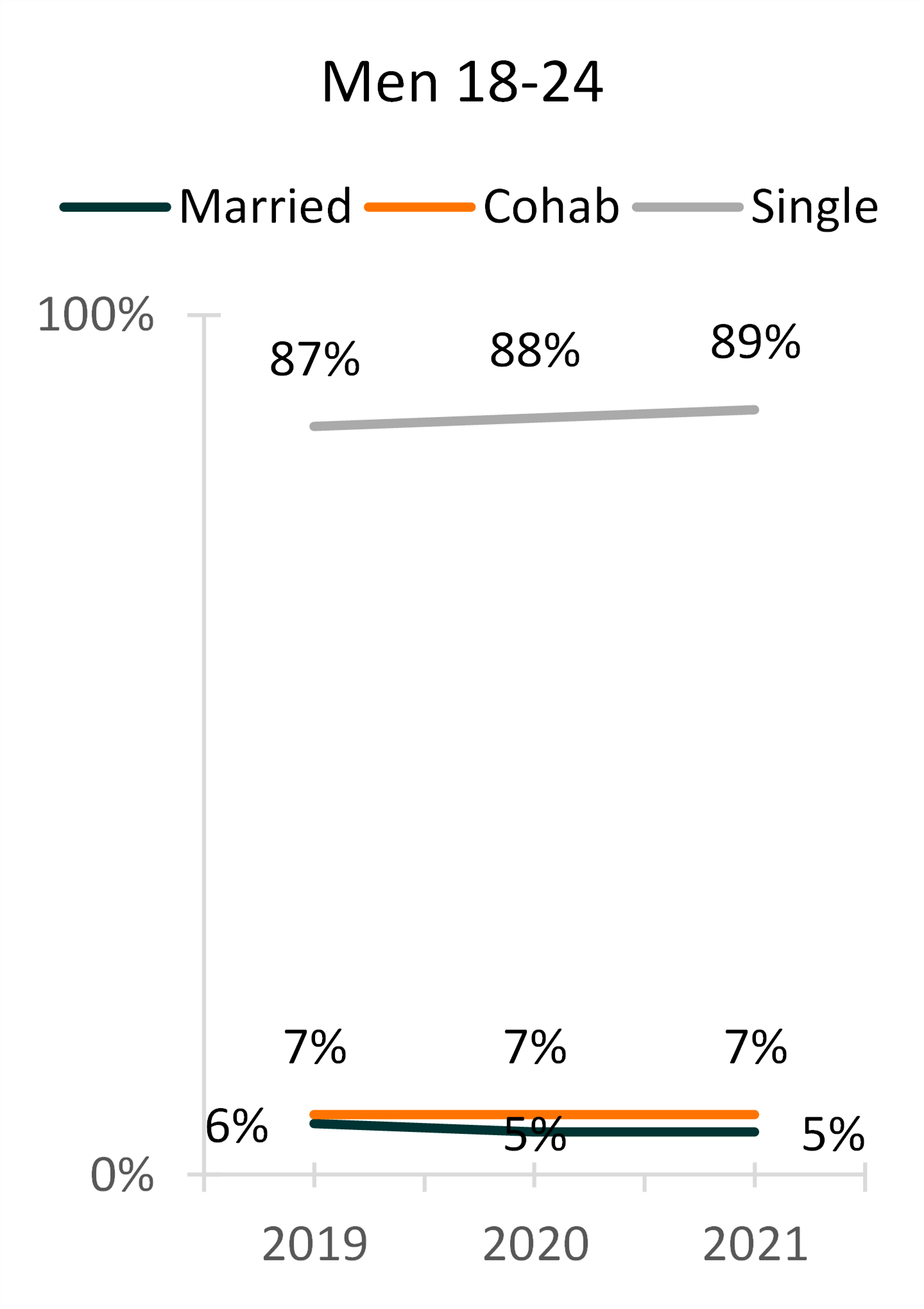
| Living Together | Significant increase in cohabitation | "Testing the waters" became a standard prerequisite for marriage. |
| Financial Independence | Rise of dual-income expectations | Relationships were viewed more as partnerships of equals. |
| Ethical Non-Monogamy | Increased visibility and search volume | Polyamory and "Open" relationships entered mainstream discourse. |
The Economic Factor
In 2019, student debt and the high cost of housing played a massive role in how relationships progressed. Many couples chose to remain in "long-term dating" phases or cohabit for years because the financial hurdle of a wedding or buying a home felt insurmountable. This led to the "Marriage Gap," where marriage became increasingly associated with higher socioeconomic status.
Communication Patterns: From Texting to "Storying"
In 2019, the way couples communicated changed. While texting remained the baseline, the "Instagram Story" and "Snapchat Streak" became vital tools for maintaining romantic interest.
- The "Soft Launch": A 2019 phenomenon where an individual would post a photo on social media that hinted at a relationship (e.g., two wine glasses, a mystery hand) without identifying the partner.
- Digital Footprints: Managing a "relationship online" became a source of stress. The decision of when to go "Instagram Official" was a significant relationship milestone, often requiring a formal conversation.
- Surveillance Anxiety: The ability to see when someone was "Active Now" or had "Read" a message led to increased anxiety and "over-analysis" of response times, a hallmark of 2019 dating stress.
Challenges and Mental Health in 2019 Relationships
Despite the ease of finding matches, 2019 was a year of significant "dating fatigue." Users reported feeling burnt out by the repetitive nature of app interactions.
The "Ulysses Contract" of Dating
Many individuals in 2019 practiced "dating app detoxes," recognizing that the dopamine hits of matching were often followed by the "loneliness of the scroll." The mental health impact of constant evaluation—being judged solely on a handful of photos—led to a rise in body image issues and social anxiety.
The Rise of Wellness and "Self-Love"
Paradoxically, 2019 saw a surge in the "Self-Love" movement. The idea that "you must love yourself before you can love someone else" became a dominant cultural narrative. This led many to prioritize therapy and personal growth over the pursuit of a relationship, a shift that fundamentally changed the "desperation" levels often associated with traditional dating.
Frequently Asked Questions
What was the most popular dating app in 2019?
Tinder remained the most popular dating app in 2019 by a significant margin in terms of monthly active users. However, apps like Bumble and Hinge saw the fastest growth in the "serious relationship" segment, as users began looking for more curated experiences and better-vetted communities.
How did 2019 relationships differ from those in the early 2010s?
In the early 2010s, online dating was still transitioning from desktop sites (like Match.com) to mobile apps. By 2019, the "mobile-first" experience was total. Furthermore, 2019 relationships were much more likely to be influenced by social media presence and digital "vetting" (checking a date's LinkedIn or Instagram) than relationships ten years prior.
Was marriage declining in 2019?
While the rate of marriage had been declining for years, 2019 showed that the desire for long-term partnership remained high. The "decline" was more accurately a "delay." People were waiting longer to marry to ensure financial stability and personal compatibility, leading to the rise of cohabitation as a standard life stage.
What is a "situationship" exactly?
A situationship is a romantic or sexual relationship that is undefined and lacks the formal label of "boyfriend" or "girlfriend." In 2019, these were common because they allowed individuals to enjoy the benefits of a relationship without the perceived "pressure" of traditional commitment or the need to integrate the partner into their broader social or family life.
How did the #MeToo movement affect 2019 dating?
It led to a much higher emphasis on clear, verbal consent and a decrease in the "gray areas" of dating. Men became more cautious about their approach, and women felt more empowered to set firm boundaries. Many dating apps also introduced "Report" features specifically designed to handle harassment and non-consensual behavior.
Moving Forward: The Legacy of 2019 Relationships
Looking back from 2026, 2019 represents the "Old Normal." It was the culmination of a decade of digital experimentation. The lessons learned in 2019—the importance of mental health in dating, the need for clear communication in "situationships," and the power of apps to connect diverse groups—provided the blueprint for how we relate today.
For those looking to build healthy relationships now, the 2019 era offers a cautionary tale about the "illusion of infinite choice." The most successful couples of that era were those who learned to "close the apps" and invest deeply in a single person, despite the distractions of a hyper-connected world. Whether you are navigating the current landscape or reflecting on the past, the core tenets of 2019—authenticity, consent, and digital balance—remain more relevant than ever.