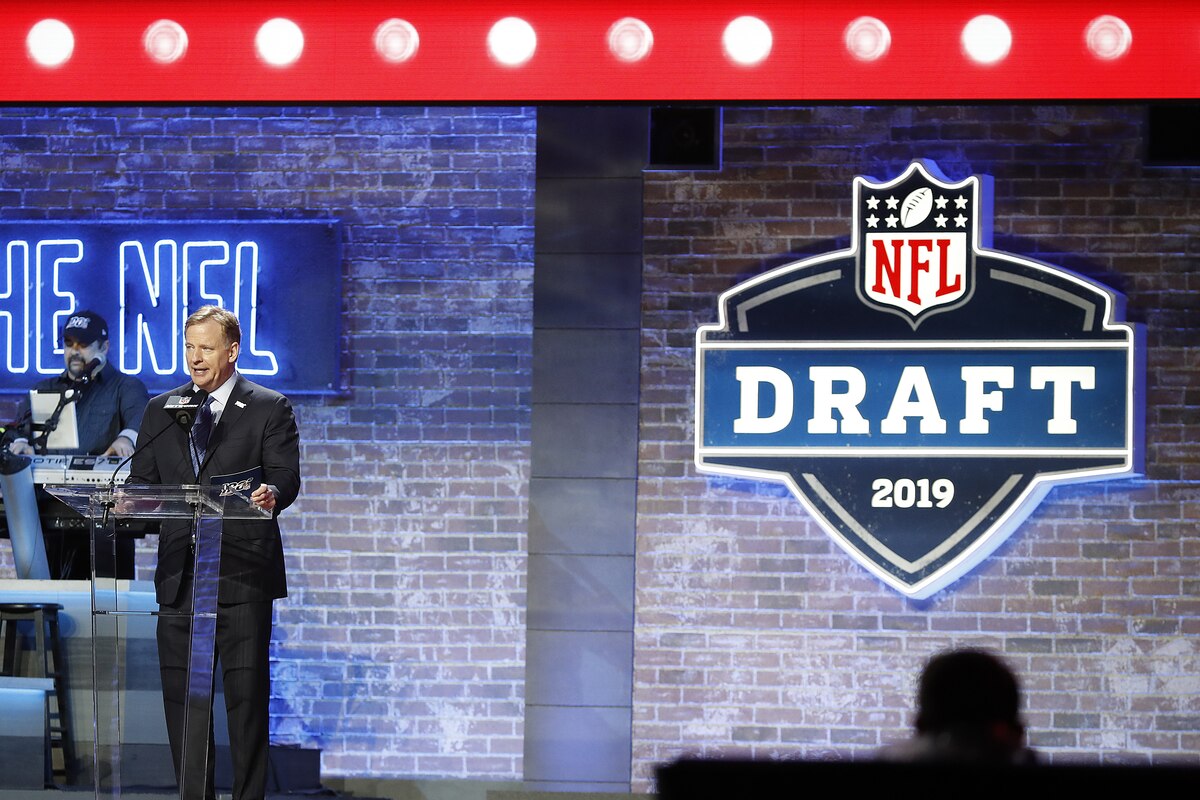
The 2020 NFL Draft stands as a transformative event that redefined franchise trajectories through an elite quarterback class and historic wide receiver depth. Conducted virtually due to global circumstances, it produced cornerstones like Joe Burrow, Justin Herbert, and Justin Jefferson, whose performances continue to shape the league's competitive landscape and salary structures in 2026.
The Historical Context of the 2020 Virtual Draft
The 2020 NFL Draft was unlike any other in the history of professional sports. Originally scheduled to take place in Las Vegas, the event was forced into a fully remote format due to the COVID-19 pandemic. Commissioner Roger Goodell announced picks from his basement, and team general managers operated from home offices. This technical challenge proved the NFL’s ability to maintain its "calendar-year" dominance despite external disruptions.
Beyond the logistics, the 2020 class was heralded as one of the most talented in a decade, particularly at the "premium" positions: quarterback, wide receiver, and offensive tackle. From the perspective of 2026, we can see that this draft did more than just provide players; it shifted the power dynamics of the AFC and NFC, ending eras for some legendary veterans and ushering in a new guard of elite signal-callers.
Round 1: Complete Results and Analysis
The first round of the 2020 NFL Draft saw 32 players selected, with a heavy emphasis on offensive firepower. Below is the complete list of first-round picks, followed by an analysis of the most impactful selections.
| Pick | Team | Player | Position | College |
|---|---|---|---|---|
| 1 | Cincinnati Bengals | Joe Burrow | QB | LSU |
| 2 | Washington Commanders | Chase Young | DE | Ohio State |
| 3 | Detroit Lions | Jeff Okudah | CB | Ohio State |
| 4 | New York Giants | Andrew Thomas | OT | Georgia |
| 5 | Miami Dolphins | Tua Tagovailoa | QB | Alabama |
| 6 | Los Angeles Chargers | Justin Herbert | QB | Oregon |
| 7 | Carolina Panthers | Derrick Brown | DT | Auburn |
| 8 | Arizona Cardinals | Isaiah Simmons | LB | Clemson |
| 9 | Jacksonville Jaguars | C.J. Henderson | CB | Florida |
| 10 | Cleveland Browns | Jedrick Wills Jr. | OT | Alabama |
| 11 | New York Jets | Mekhi Becton | OT | Louisville |
| 12 | Las Vegas Raiders | Henry Ruggs III | WR | Alabama |
| 13 | Tampa Bay Buccaneers | Tristan Wirfs | OT | Iowa |
| 14 | San Francisco 49ers | Javon Kinlaw | DT | South Carolina |
| 15 | Denver Broncos | Jerry Jeudy | WR | Alabama |
| 16 | Atlanta Falcons | A.J. Terrell | CB | Clemson |
| 17 | Dallas Cowboys | CeeDee Lamb | WR | Oklahoma |
| 18 | Miami Dolphins | Austin Jackson | OT | USC |
| 19 | Las Vegas Raiders | Damon Arnette | CB | Ohio State |
| 20 | Jacksonville Jaguars | K'Lavon Chaisson | DE | LSU |
| 21 | Philadelphia Eagles | Jalen Reagor | WR | TCU |
| 22 | Minnesota Vikings | Justin Jefferson | WR | LSU |
| 23 | Los Angeles Chargers | Kenneth Murray | LB | Oklahoma |
| 24 | New Orleans Saints | Cesar Ruiz | C/G | Michigan |
| 25 | San Francisco 49ers | Brandon Aiyuk | WR | Arizona State |
| 26 | Green Bay Packers | Jordan Love | QB | Utah State |
| 27 | Seattle Seahawks | Jordyn Brooks | LB | Texas Tech |
| 28 | Baltimore Ravens | Patrick Queen | LB | LSU |
| 29 | Tennessee Titans | Isaiah Wilson | OT | Georgia |
| 30 | Miami Dolphins | Noah Igbinoghene | CB | Auburn |
| 31 | Minnesota Vikings | Jeff Gladney | CB | TCU |
| 32 | Kansas City Chiefs | Clyde Edwards-Helaire | RB | LSU |
The Quarterback Revolution: Burrow, Herbert, and Love
The 2020 draft will forever be remembered for its quarterbacks. Joe Burrow was the consensus number-one pick after a legendary season at LSU, and he immediately lived up to the hype, leading the Cincinnati Bengals to a Super Bowl appearance by his second season. His "cool under pressure" archetype became the blueprint for modern pocket passers with mobility.
Justin Herbert, selected sixth by the Los Angeles Chargers, shattered rookie passing records. Often criticized during the pre-draft process for his "quiet leadership," Herbert proved that physical tools and high-level processing could translate into immediate NFL success. By 2026, Herbert and Burrow have established themselves as perennial Pro Bowlers, regularly competing for the league lead in passing yards and touchdowns.
The most controversial pick at the time was Jordan Love to the Green Bay Packers at 26. Moving up to draft a successor while Aaron Rodgers was still an MVP-level player caused internal friction. However, with the benefit of 2026 hindsight, the Packers' "sit and develop" strategy paid off, as Love transitioned into a franchise cornerstone following Rodgers' eventual departure, proving that the old-school developmental model still has merit in the modern era.
The Great Wide Receiver Gold Mine
While the 2014 class was previously considered the gold standard for receivers, the 2020 class arguably surpassed it. The most significant story remains the Philadelphia Eagles selecting Jalen Reagor at 21, only for the Minnesota Vikings to take Justin Jefferson at 22. Jefferson went on to have the greatest start to a career in NFL history, setting records for receiving yards through three, four, and five seasons.
The depth of this class was staggering:
- CeeDee Lamb (17th): Became the undisputed WR1 for the Dallas Cowboys, a consistent All-Pro candidate.
- Brandon Aiyuk (25th): Developed into a high-end route runner and a vital piece of the 49ers' offensive machine.
- Tee Higgins (33rd): Though a second-rounder, Higgins provided the Bengals with a dominant WR2 alongside Ja'Marr Chase (drafted in 2021).
- Michael Pittman Jr. (34th): Established himself as a high-volume "X" receiver for the Indianapolis Colts.
The Offensive Tackle Pivot Point
Four offensive tackles were taken in the top 13 picks, and their careers have taken wildly different paths. Andrew Thomas (4th) struggled initially but evolved into one of the league's premier left tackles, securing the blindside for the Giants. Tristan Wirfs (13th) was an immediate superstar for the Buccaneers, helping Tom Brady win a Super Bowl in his rookie year and eventually transitioning from right to left tackle with elite efficiency.
Conversely, Jedrick Wills Jr. and Mekhi Becton faced more turbulent paths. Becton's career was hampered by injuries in New York, while Wills provided steady but perhaps not "elite" play for Cleveland. The outlier was Isaiah Wilson (29th), who played only a handful of snaps for the Titans before off-field issues led to his exit from the league, serving as a cautionary tale regarding the importance of pre-draft character evaluations.
Day 2 Gems: The Jalen Hurts Factor
Perhaps no pick in the 2020 NFL Draft carries more "lasting impact" than Jalen Hurts going 53rd overall to the Philadelphia Eagles. At the time, the Eagles had Carson Wentz on a massive contract, making the Hurts pick one of the most scrutinized of the weekend.
Hurts’ development from a "project" dual-threat quarterback to an MVP runner-up changed the way NFL teams view the second round. His success encouraged teams to take swings on athletic quarterbacks even if they had an established starter, viewing the position as a high-value insurance policy that could turn into a franchise asset. By 2026, Hurts is a multi-time All-Pro, and his contract set new benchmarks for dual-threat signal-callers.
Other notable Day 2 and Day 3 successes include:
- Jonathan Taylor (41st): Became a rushing champion for the Colts.
- Trevon Diggs (51st): An interception machine for the Cowboys who redefined "ball-hawk" corner play.
- L'Jarius Sneed (138th): A fourth-round steal for the Chiefs who became a cornerstone of their championship defenses.
Lasting Impacts on League Strategy and Salary
Looking back from 2026, the 2020 NFL Draft fundamentally altered how front offices operate.
- The "Rookie QB Window" Maximization: The immediate success of Burrow and Herbert forced other teams to accelerate their rebuilds. The 2020 class proved that a hit at QB could take a team from the "basement" to a Super Bowl contender in 24 months.
- Wide Receiver Market Explosion: The sheer talent of Jefferson, Lamb, and Aiyuk led to a massive spike in wide receiver salaries. As these players reached their second contracts in 2024 and 2025, the market jumped from $25 million per year to over $35 million per year for top-tier talent.
- Virtual Scouting Integration: The success of this draft—conducted entirely without in-person visits or a traditional Pro Day circuit for many—led to a permanent change in scouting. Teams now rely more heavily on advanced data and video analytics, realizing that the "physicality" of the Combine is only one piece of the puzzle.
Common Mistakes and Missed Opportunities
Despite the talent, there were significant misses. The Las Vegas Raiders' first round (Henry Ruggs III and Damon Arnette) resulted in both players being off the roster within two years due to serious off-field legal issues. This emphasized that even with elite film, the "human element" remains the highest risk factor in the draft.
Additionally, the Detroit Lions taking Jeff Okudah at 3rd overall over a quarterback or a tackle like Andrew Thomas is often cited as a turning point that led to the eventual overhaul of their front office. While Okudah was a blue-chip prospect, the positional value of a cornerback at pick 3 has been heavily debated in the years since.
Frequently Asked Questions
Who was the best pick of the 2020 NFL Draft?
While Joe Burrow was the most impactful for a franchise's winning culture, Justin Jefferson (22nd overall) is widely considered the best value pick. Getting a Hall of Fame-caliber receiver outside the top 20 is a rare feat that completely changed the Minnesota Vikings' offensive identity.
How many quarterbacks from the 2020 class are still starters in 2026?
As of 2026, Joe Burrow, Justin Herbert, Jordan Love, Jalen Hurts, and Tua Tagovailoa remain primary starters in the NFL. This represents one of the highest retention and success rates for a single quarterback class in league history.
What happened to the defensive players in this draft?
The 2020 draft was offense-heavy, but it produced stars like Chase Young, Derrick Brown, and A.J. Terrell. Chase Young’s career was slowed by an ACL injury in 2021, leading to a trade from Washington to San Francisco and then into free agency. Derrick Brown, however, became one of the league's most dominant interior defenders.
Why was Jalen Hurts considered a "surprise" pick?
The Eagles had signed Carson Wentz to a four-year, $128 million extension just a year prior. Taking Hurts in the second round was seen as a lack of confidence in Wentz. Ultimately, the pick was a stroke of genius, as Wentz’s play declined and Hurts emerged as a superior leader and playmaker.
Which team had the best overall 2020 draft?
The Cincinnati Bengals (Burrow, Higgins, Logan Wilson) and the Minnesota Vikings (Jefferson, Dantzler, Wonnum) are frequently cited. The Bengals built a Super Bowl core, while the Vikings secured the best non-QB player in the draft along with several solid starters.
Final Recommendations for Evaluating Draft Success
When analyzing the 2020 NFL Draft or preparing for future evaluations, it is vital to look beyond the first year of production. The "lasting impact" of a draft is often not felt until years four and five, when fifth-year options are exercised and second contracts are signed.
For fans and analysts, the 2020 class serves as a masterclass in positional value. Teams that prioritized Quarterback, Offensive Tackle, and Wide Receiver generally saw the highest "Return on Investment" (ROI). Conversely, teams that reached for interior defensive linemen or cornerbacks early in the first round saw more volatile results. As the league continues to evolve into a pass-heavy, explosive environment, the 2020 draft remains the blueprint for how to build a modern contender.