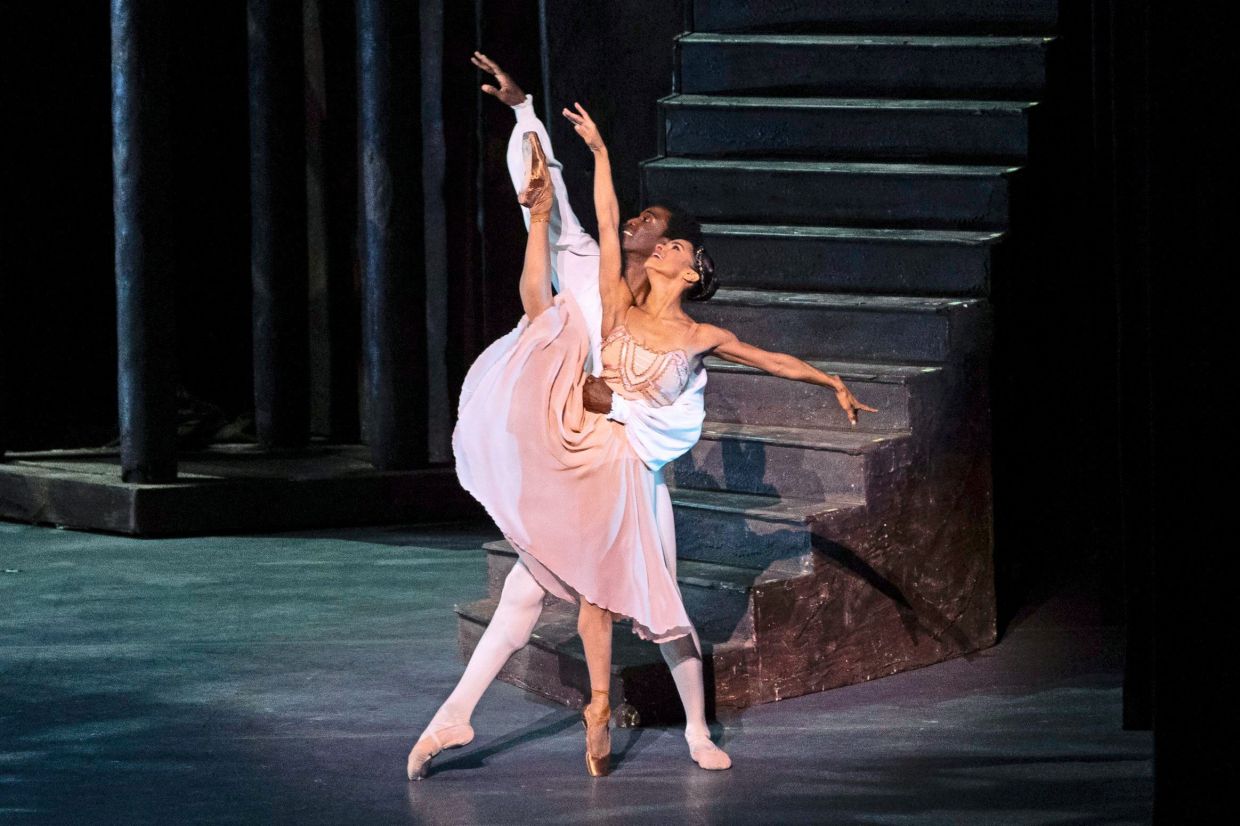
Misty Copeland is a pioneering American ballet dancer who made history as the first African American female principal dancer with the prestigious American Ballet Theatre. Her inspiring journey from a turbulent childhood in California to international stardom has redefined cultural boundaries, reshaped modern perceptions of classical dance, and opened doors for diverse generations of aspiring artists worldwide.
Introduction to a Cultural Icon
To understand the cultural impact of Misty Copeland, one must look beyond the proscenium arch and examine a career built on resilience, extraordinary raw talent, and a refusal to conform to the rigid, traditional expectations of the classical ballet world. Born in Kansas City, Missouri, and raised primarily in the San Pedro neighborhood of Los Angeles, Copeland did not step into a dance studio until the relatively late age of 13. While most professional ballerinas begin their rigorous training before starting elementary school, Copeland progressed from a local Boys & Girls Club after-school program to the pinnacle of American dance in a remarkably short span of time.
Her ascent was neither smooth nor expected. Facing severe housing instability during her early youth, she discovered ballet through an unconventional route that would later become a defining narrative of her public persona. When she finally entered the formal training pipeline, her physical stature—muscular, curvaceous, and radically different from the ultra-slim, linear archetype historically favored by European ballet companies—presented continuous challenges. Yet, rather than altering her body to fit a narrow mold, Copeland challenged the institution to expand its definition of what a classical ballerina could look like. Today, her legacy extends far beyond her performances in iconic ballets like Swan Lake and The Firebird; she has become a cultural ambassador, author, philanthropist, and a symbol of accessibility in an art form historically viewed as exclusive.
Fact 1: A Remarkably Late Start in Ballet
Most professional classical ballet dancers begin their formal training between the ages of three and eight, building the necessary bone alignment, flexibility, and muscle memory over more than a decade before performing professionally. Misty Copeland completely defied this industry standard by taking her very first ballet class at the age of 13.
Her introduction to dance did not happen at a prestigious conservatory or elite academy, but rather on the basketball court of a local Boys & Girls Club in San Pedro, California. A drill team coach noticed her natural rhythm, flexibility, and physical coordination and suggested she attend a free ballet class taught by Cindy Bradley at the local club. Within three months of her very first class, Copeland was dancing en pointe—a monumental technical feat that typically requires years of preparatory ankle-strengthening exercises. This accelerated progression highlighted an innate, generational talent that quickly caught the attention of seasoned dance instructors, propelling her into intensive professional training environments while she was still a teenager.
Fact 2: Overcoming Extreme Childhood Adversity
Before achieving international fame and grace on world-class stages, Copeland experienced a turbulent and financially unstable childhood. Raised by a single mother, Sylvia DelaCerna, Copeland was the youngest of four children from her mother's marriage, though she has multiple half-siblings from her mother's subsequent relationships. The family moved frequently, at times living in motels or relying on the generosity of friends and acquaintances when they lacked permanent housing.
By the time she was discovered at the Boys & Girls Club, Copeland's family situation was so precarious that her mother agreed to let her move in with her ballet teacher, Cindy Bradley, to maintain stability and ensure she could attend rehearsals. This living arrangement eventually sparked a highly publicized legal and custody dispute between her mother and her dance teachers when Copeland was 15, as both sides sought to guide her burgeoning career. Ultimately, Copeland emancipated herself legally for a brief period before reconciling with her family. This tumultuous background instilled in her a fierce independence and a work ethic that defined her professional journey through injuries, rejections, and historic milestones.
Fact 3: Historic Breakthrough at American Ballet Theatre
The defining moment of Copeland's professional career occurred in June 2015, when the American Ballet Theatre (ABT) promoted her to the rank of principal dancer. This appointment carried immense historical weight: after 75 years of the company's existence, Copeland became the first African American woman to achieve the highest rank of principal dancer in ABT's history.
| Career Milestone | Year | Significance in Dance History |
|---|---|---|
| Joined ABT Studio Company | 2000 | Entered the official pipeline of one of the world's premier ballet institutions. |
| Promoted to Soloist | 2007 | Became the second African American female soloist in ABT's history. |
| The Firebird Debut | 2012 | Starred in the title role, cementing her status as a dynamic leading artist. |
| Promoted to Principal Dancer | 2015 | Made history as the first African American female principal dancer at ABT. |
This promotion was not merely an internal company event; it made global headlines, shifting conversations about diversity, equity, and representation within the historically Eurocentric world of classical ballet. Her rise to principal status proved that institutional barriers could be dismantled when technical brilliance met unrelenting public demand for cultural evolution.
Fact 4: Redefining the Body Image Standard in Ballet
For generations, the classical ballet aesthetic was rigidly defined by slender, elongated silhouettes with minimal muscular definition, often leading to extreme dietary pressures and health issues among dancers. Copeland's physical build—characterized by defined musculature, powerful legs, and an athletic, curvaceous frame—challenged these traditional expectations directly.
During her early years training with ABT, instructors and directors occasionally suggested that her body type was unsuited for classical ballet, advising her to lose weight and lengthen her lines. Rather than conforming, Copeland embraced her natural physicality. Her success proved that strength, athleticism, and curves could enhance, rather than detract from, artistic expression on stage. By openly discussing her struggles with body image and her refusal to starve herself to meet outdated standards, Copeland became a powerful role model for dancers of all backgrounds, encouraging a healthier and more inclusive approach to physical health within the performing arts.
Fact 5: Mainstream Cultural Crossover and Media Stardom
While classical ballet dancers historically inhabit a niche cultural space, Copeland successfully crossed over into mainstream pop culture, expanding the reach of ballet to entirely new audiences. Her profile skyrocketed in 2014 when she starred in a digital advertising campaign for Under Armour titled "I Will What I Want." The commercial, which showcased her powerful athletic conditioning alongside text highlighting the rejections she faced early in her career, went viral, garnering millions of views and winning numerous advertising awards.
Her mainstream presence expanded further through high-profile media appearances, magazine covers, and documentaries. She was named one of Time magazine’s 100 most influential people in 2015, graced the cover of the magazine, and inspired numerous cultural tributes. In 2018, she crossed over into Hollywood by starring as the ballerina princess in Disney’s live-action fantasy film The Nutcracker and the Four Realms, directed by Lasse Hallström and Joe Johnston. These ventures transformed her from a celebrated classical artist into a globally recognized cultural phenomenon.
Fact 6: Prolific Author and Literary Voice
Copeland is not only a master of physical movement but also a gifted writer who has used literature to document her journey and inspire younger generations. She has authored several books spanning memoirs, children's literature, and instructional guides, providing intimate insights into her life and career.
Her 2014 memoir, Life in Motion: An Unlikely Ballerina, became a New York Times bestseller and detailed her arduous path from a California motel room to the stages of Lincoln Center. The book was later adapted into a young readers' edition and optioned for film adaptations. She followed this success with Ballerina Body: Dancing and Eating Your Way to a Leaner, Stronger, and More Graceful You (2017), which shares her personal wellness, nutrition, and fitness philosophies. Additionally, she has written several children's books, including Firebird (2014), illustrated by Christopher Myers, and Bunheads (2020), which encourage young readers to pursue ambitious dreams despite initial obstacles.
Fact 7: Dedicated Philanthropist and Mentorship Advocate
Recognizing the barriers that kept underrepresented youth out of classical dance spaces, Copeland has dedicated a significant portion of her platform to mentorship, charitable outreach, and educational equity. She understands firsthand how financial constraints and lack of access can derail a young artist's potential.
She serves as a spokesperson for the Boys & Girls Clubs of America, where her own artistic journey began, and frequently visits clubs across the United States to speak with children about perseverance and the arts. In 2020, amidst the COVID-19 pandemic and global social justice movements, she co-founded Black Girl Freedom Fund alongside philanthropic leaders to invest $1 billion over ten years in the well-being, education, and artistic endeavors of Black girls and women in the United States. Furthermore, she launched initiatives like Life in Motion Productions and various scholarship programs designed to provide financial aid, masterclasses, and proper dance attire to talented minority students seeking entry into elite training academies.
Fact 8: Cinematic Subject and Documentarian
Copeland’s extraordinary life and historic achievements have made her a frequent subject of documentary filmmaking. Rather than relying solely on authorized biographies, filmmakers have captured her rigorous daily training, physical injuries, and backstage preparations in real-time.
Her most prominent cinematic profile is the 2015 documentary film A Ballerina's Tale, directed by Nelson George. The film chronicles her harrowing recovery from a severe shin fracture—an injury that threatened to end her career prematurely—while simultaneously following her historic push toward the principal dancer promotion at American Ballet Theatre. The documentary offers an unvarnished look at the physical toll of classical ballet, the intense political dynamics of major dance institutions, and Copeland's role as a reluctant yet resolute trailblazer for racial diversity in the arts.
Fact 9: Broadway and Contemporary Dance Collaborations
While Copeland is universally celebrated for her mastery of traditional classical repertoire—such as Swan Lake, Giselle, Coppélia, and Romeo and Juliet—she has consistently sought to expand her artistic boundaries through modern and theatrical collaborations. Her versatility allows her to transition seamlessly between point shoes and contemporary barefoot choreography.
In 2019, she made her Broadway debut in a special workshop production and subsequently engaged in diverse theatrical projects. She has worked extensively with contemporary choreographers such as Kyle Abraham, Alexei Ratmansky, and Alonzo King, blending the strict geometry of classical ballet with fluid, expressive modern idioms. These collaborations demonstrate that her artistic vision is not tethered exclusively to 19th-century European storytelling, but actively engages with contemporary social themes, modern music, and avant-garde movement design.
Fact 10: Global Ambassador and Cultural Diplomat
Beyond her domestic achievements in American arts and culture, Copeland functions as an international ambassador for the power of the arts to bridge cultural divides. She has traveled extensively representing American culture, performing on international stages, and participating in global forums dedicated to arts education, women's empowerment, and racial equity.
Her influence extends into the fashion and design worlds, where she has collaborated with major luxury houses, athletic brands, and high-end designers to challenge traditional aesthetics and promote inclusive representation in high fashion. Whether speaking at international summits, judging prestigious youth ballet competitions like the Prix de Lausanne, or mentoring the next generation of global artists, Copeland utilizes her platform to ensure that the future of classical dance is far more diverse, accessible, and inclusive than the world she entered at age 13.
Frequently Asked Questions
When did Misty Copeland start dancing ballet?
Misty Copeland began taking ballet classes at the relatively late age of 13. She took her first formal class at a local Boys & Girls Club in San Pedro, California, and progressed rapidly, dancing en pointe within just three months of her initial lesson.
What is Misty Copeland's most significant career milestone?
Her most significant milestone occurred in June 2015, when she was promoted to principal dancer at the American Ballet Theatre. This made her the first African American woman to hold the highest rank in the company's 75-year history.
Has Misty Copeland written any books?
Yes, Copeland is a prolific author. Her published works include the bestselling memoir Life in Motion: An Unlikely Ballerina (2014), the wellness guide Ballerina Body (2017), and several children's books including Firebird (2014) and Bunheads (2020).
What injuries has Misty Copeland overcome?
Throughout her career, Copeland has managed several significant physical setbacks, most notably a severe stress fracture in her tibia (shinbone) in 2012. The injury required complex surgery and extensive rehabilitation, a challenging period documented in the film A Ballerina's Tale.
What philanthropic work does Misty Copeland lead?
Copeland actively supports youth arts education through organizations like the Boys & Girls Clubs of America. She co-founded the Black Girl Freedom Fund to invest in the future of Black women and girls and frequently provides scholarships and mentorship to minority ballet students.
Practical Next Actions and Recommendations
For readers inspired by Misty Copeland's journey, exploring her legacy can extend beyond reading about her achievements. To engage further with her work and support the broader world of dance:
- Read Her Memoirs: Start with Life in Motion: An Unlikely Ballerina to gain a first-hand understanding of the dedication required to overcome institutional and personal barriers in professional sports and arts.
- Watch Documentaries: View A Ballerina's Tale to witness the physical demands, injuries, and institutional dynamics of elite ballet companies firsthand.
- Support Local Arts Programs: Investigate local community dance centers, non-profit studios, or scholarship funds that provide access to the performing arts for underprivileged children in your area.
- Attend Live Performances: Support regional ballet and contemporary dance companies to keep live performance arts thriving within local communities.