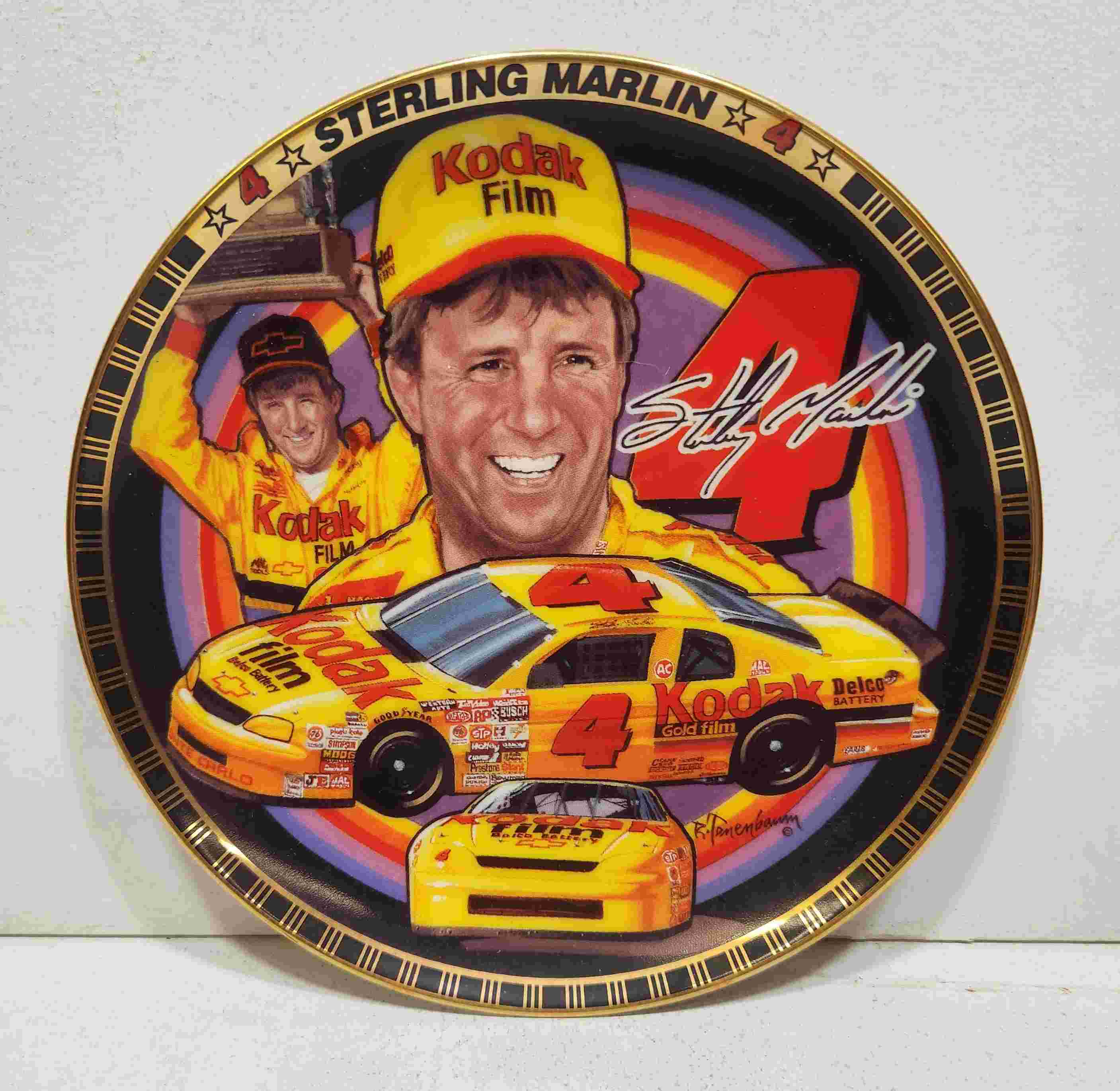
Sterling Marlin is a legendary American stock car driver best known for his back-to-back Daytona 500 victories in 1994 and 1995. Over a career spanning more than three decades in the NASCAR Cup Series, Marlin earned 10 wins, 216 top-10 finishes, and became a prominent figure in the sport’s transition into the modern era. Today, in 2026, he remains a respected elder statesman of racing and a dedicated advocate for Parkinson’s disease awareness.
The Roots of a Racing Dynasty
Sterling Marlin’s journey into the pantheon of racing history was not a matter of chance; it was a birthright. Born in Columbia, Tennessee, on June 30, 1957, Sterling was the son of Clifton "Coo Coo" Marlin, a stalwart of the NASCAR circuit from the 1960s through the 1980s. The younger Marlin’s childhood was spent in the garages and grandstands of the Nashville Fairgrounds Speedway, a proving ground that has birthed some of the greatest talents in the sport.
Growing up under the tutelage of Coo Coo Marlin, Sterling learned the mechanical intricacies of the cars as much as the tactical nuances of driving them. In an era where drivers were often their own chief mechanics, this technical foundation proved invaluable. Marlin began his own career at the Nashville Fairgrounds, winning three consecutive track championships (1980–1982). These early successes provided the springboard for his entry into the Winston Cup Series (now the Cup Series), though his path to the winner’s circle at the highest level would be a test of endurance and patience.
The Long Road to the First Victory
For many years, Sterling Marlin was characterized as the most talented driver in the field who had yet to win a race. He spent years driving for various teams, including his father’s team, Billy Hagan, and Junior Johnson & Associates. Despite several close calls and strong performances, that elusive first "W" remained out of reach.
It took Marlin 279 starts to finally break into the win column. When the breakthrough occurred, it happened on the grandest stage of all: the 1994 Daytona 500. Driving the iconic yellow No. 4 Kodak Chevrolet for Morgan-McClure Racing, Marlin outdueled Ernie Irvan in a tense finish. This victory was transformative; it erased the "best to never win" label and established Marlin as a premier superspeedway talent.
The Historic Back-to-Back (1994–1995)
Marlin’s 1994 victory was not a fluke. He returned to Daytona International Speedway in 1995 and did the unthinkable: he defended his title. By winning the 1995 Daytona 500, Marlin became only the third driver in history to win the "Great American Race" in consecutive years, joining the elite company of Richard Petty and Cale Yarborough (Denny Hamlin would later join this list in 2019-2020).
These wins highlighted Marlin’s unique mastery of restrictor-plate racing. He possessed an intuitive understanding of the aerodynamic "draft," knowing exactly when to pull out of line and how to use the air coming off his competitors' cars to his advantage. His calm demeanor behind the wheel earned him the nickname "The Silver Fox," a nod to both his tactical cunning and his prematurely graying hair.
Technical Prowess: The Morgan-McClure Years
The mid-1990s represented the peak of Marlin’s partnership with Morgan-McClure Racing. Based in Abingdon, Virginia, this team was a powerhouse on superspeedways. The synergy between Marlin’s driving style and the engines built by Tony Glover and the Morgan-McClure staff resulted in a car that was consistently the class of the field at Daytona and Talladega.
During this period, Marlin’s technical feedback was critical. He was known for his ability to describe minute changes in the car's handling at speeds exceeding 190 mph. Whether the car was "tight" (understeering) or "loose" (oversteering), Marlin could pinpoint if the issue was related to the aerodynamic balance of the spoiler or the mechanical grip of the suspension. This era solidified his reputation as a "driver’s driver"—someone who could extract every ounce of performance from a vehicle.
The Ganassi Shift and the 2002 Championship Run
In the late 1990s, Marlin transitioned to SABCO Racing, which later became Chip Ganassi Racing with Felix Sabates. This move marked a new chapter as the team switched to Dodge, which was re-entering the sport in 2001. Marlin was tasked with leading the development of the Dodge Intrepid R/T race car.
The 2001 and 2002 seasons saw a career resurgence for Marlin. In 2001, he won at Michigan and Charlotte, finishing third in the overall championship standings. However, 2002 was the year that should have been his. Marlin led the points standings for 25 consecutive weeks, demonstrating remarkable consistency and veteran savvy.
Disaster struck at Kansas Speedway late in the 2002 season. A crash resulted in a fractured vertebra in his neck, forcing him to sit out the remainder of the season. At the time of the injury, he was a primary favorite for the championship. Although he returned to racing, many analysts believe that 2002 was Marlin's best and final opportunity to secure a Cup Series title.
The 2001 Daytona 500 and the Dale Earnhardt Tragedy
It is impossible to discuss Sterling Marlin’s career without addressing the tragic events of the 2001 Daytona 500. On the final lap, Marlin was racing in the lead pack, positioned just behind Dale Earnhardt. In the shuffle for position, there was contact between Marlin’s front bumper and the rear of Earnhardt’s car. This contact contributed to the crash that claimed Earnhardt’s life.
In the immediate aftermath, Marlin faced an unthinkable wave of misplaced blame and even death threats from distraught fans. However, the racing community quickly rallied around him. Dale Earnhardt Jr. publicly defended Marlin, stating clearly that the contact was a routine part of racing and that his father would never have blamed Sterling. Marlin’s grace under extreme pressure during this period reflected his character, as he continued to compete with professionalism while grieving the loss of a peer.
Career Statistics and Milestone Victories
Marlin’s career is defined by his longevity and his ability to win on diverse track types, though his mastery of the high-banked superspeedways remains his hallmark.
| Category | Statistic | Key Details |
|---|---|---|
| Cup Series Starts | 748 | Spanning 1976 to 2009 |
| Cup Series Wins | 10 | Includes 2 Daytona 500s (1994, 1995) |
| Top 10 Finishes | 216 | Known for consistent high-tier performance |
| Pole Positions | 11 | Demonstrated raw qualifying speed |
| Best Points Finish | 3rd (2001) | Leading for most of 2002 before injury |
| Most Wins in a Season | 3 (1995) | Daytona 500, Darlington, Talladega |
Life After the Driver's Seat: Battling Parkinson’s
After retiring from full-time Cup Series competition in 2009, Marlin did not walk away from the sport. He returned to his roots, competing in late-model races at the Nashville Fairgrounds. However, a new challenge emerged in 2012 when Marlin was diagnosed with Parkinson’s disease, a progressive disorder of the central nervous system that affects movement.
True to his racing nature, Marlin met the diagnosis with grit. He became a public face for the disease, sharing his journey to help others. In 2019, he underwent Deep Brain Stimulation (DBS) surgery, a procedure involving the implantation of electrodes in the brain to regulate abnormal impulses. The surgery was highly successful, significantly reducing his tremors and allowing him to maintain a high quality of life.
By 2026, Marlin has become a cornerstone of the Parkinson’s advocacy community. His "Steering Clear of Parkinson's" initiatives have raised substantial funds for research, particularly in his home state of Tennessee. His story serves as an inspiration for athletes and laypeople alike, demonstrating that a diagnosis is not an end, but a new type of race to be run.
The Marlin Legacy in 2026
As of 2026, Sterling Marlin’s influence is still felt throughout the NASCAR garage. His son, Steadman Marlin, and grandson, Stirlin Marlin, have both pursued racing, keeping the family name alive on the short tracks of America. Sterling is often seen at the Nashville Fairgrounds, providing advice to young drivers who are navigating the same corners he mastered decades ago.
Marlin’s legacy is twofold. On the track, he was a tactician who conquered the sport’s most difficult race twice. Off the track, he is a man of immense resilience who faced tragedy, injury, and illness with a quiet, steady resolve. He represents a bridge between the "old school" era of NASCAR—where drivers were mechanics and hard-scrabble characters—and the modern era of high-tech engineering and corporate professionalism.
Technical Mastery of the "Draft"
To understand Marlin’s success, one must understand the physics of the draft. At tracks like Daytona and Talladega, cars travel in tight packs to reduce air resistance. Marlin was a master of "side-drafting"—positioning his car so that the air coming off his nose would "dump" onto the rear spoiler of the car next to him, effectively slowing them down while pulling him forward.
He also understood the "bubble," the cushion of air between two cars. Marlin often spoke about how he could feel the car's balance change based on how close a following car was. This sensory feedback allowed him to make micro-adjustments with the steering wheel and throttle that younger, less experienced drivers simply couldn't replicate.
Related Frequently Asked Questions
How many Daytona 500s did Sterling Marlin win?
Sterling Marlin won two Daytona 500s, specifically in 1994 and 1995. He was the first driver since Cale Yarborough in the 1980s to win the race in consecutive years. Both victories were achieved driving the No. 4 Chevrolet for Morgan-McClure Racing.
What happened to Sterling Marlin in the 2002 season?
In 2002, Marlin was having a career-best season and led the championship standings for most of the year. However, a crash at Kansas Speedway resulted in a fractured neck vertebra. This injury forced him to miss the final seven races of the season, effectively ending his bid for his first Winston Cup championship.
Is Sterling Marlin still involved in racing?
While he no longer competes in the NASCAR Cup Series, Marlin remained active in late-model racing in Tennessee for many years following his retirement. In 2026, he is primarily focused on his health, family, and Parkinson’s advocacy, though he remains a frequent guest and mentor at local racing events.
What is Sterling Marlin's connection to Dale Earnhardt?
Sterling Marlin was the driver whose car made contact with Dale Earnhardt’s during the final lap of the 2001 Daytona 500. This contact was a factor in the crash that led to Earnhardt's death. Despite initial backlash from some fans, NASCAR and the Earnhardt family cleared Marlin of any wrongdoing, acknowledging it as a standard racing incident.
How has Parkinson’s disease affected Sterling Marlin?
Diagnosed in 2012, the disease initially caused tremors and affected his mobility. However, after undergoing Deep Brain Stimulation surgery in 2019, Marlin saw a significant improvement in his symptoms. He has used his platform to raise awareness and funds for Parkinson's research, becoming a symbol of resilience in the racing community.
Final Thoughts for Racing Enthusiasts
For those looking to honor Sterling Marlin's legacy, the best path is to support local short-track racing and Parkinson’s research. Marlin’s career reminds us that success often requires immense patience—exemplified by his 279-race wait for a victory—and that true character is revealed not during the victory lap, but in how one handles the obstacles after the checkered flag falls. Whether you are a fan of the "Silver Fox" for his drafting skills or his brave battle with illness, Sterling Marlin remains one of the most significant figures in the history of American motorsports.