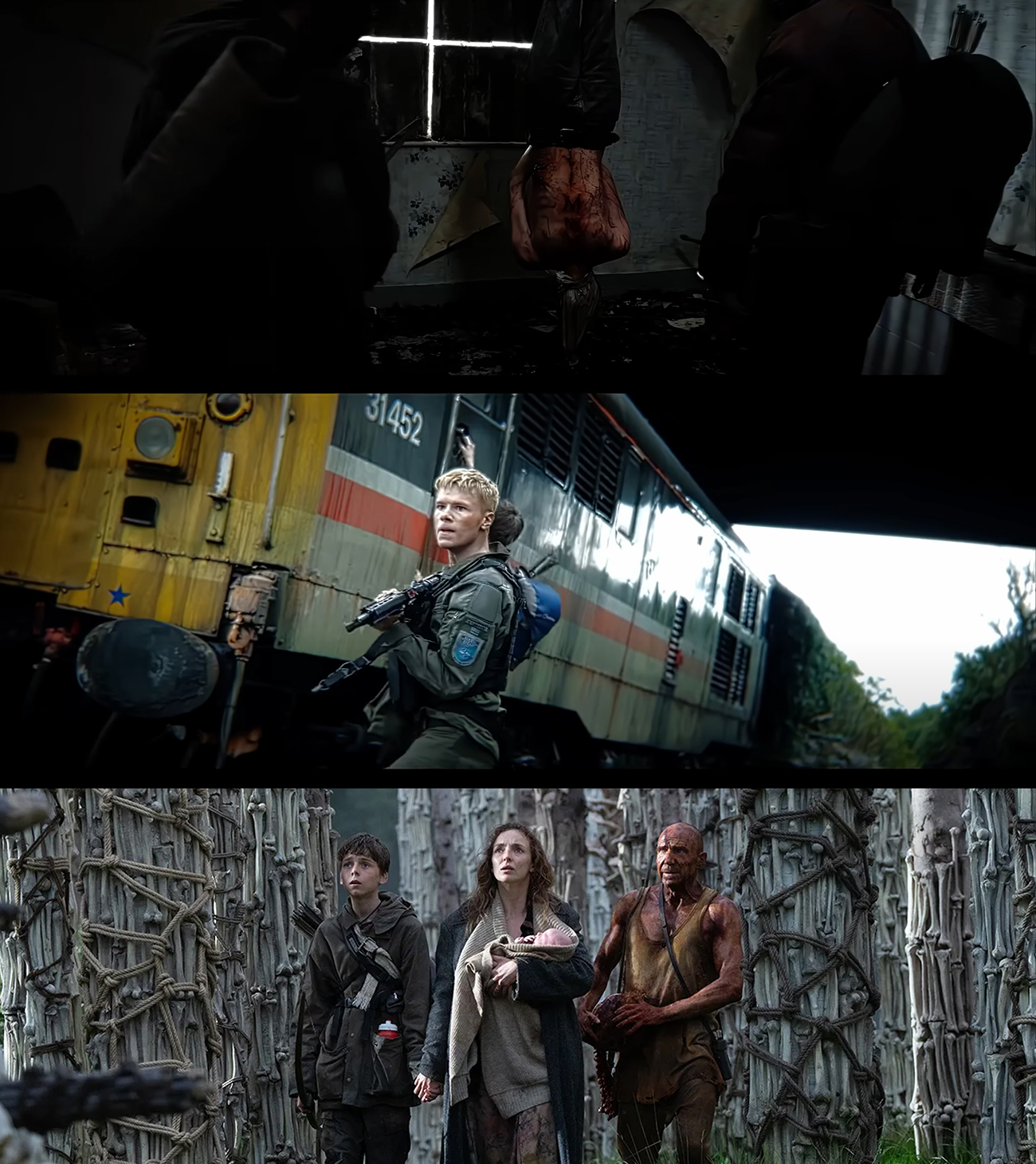
28 Years Later is the 2025 post-apocalyptic horror film directed by Danny Boyle and written by Alex Garland. Serving as the direct sequel to 28 Days Later (2002) and 28 Weeks Later (2007), the movie expands the franchise's universe 28 years after the initial release of the fast-acting Rage Virus, reuniting key original creators and starring Aaron Taylor-Johnson, Jodie Comer, Ralph Fiennes, Jack O'Connell, and Cillian Murphy.
Production Background and the Long-Awaited Reunion
The development of 28 Years Later represents one of the most anticipated cinematic reunions in modern horror. Following the release of 28 Days Later in 2002 and its 2007 sequel 28 Weeks Later, fan demand for a third installment remained high for nearly two decades. However, creative delays, rights management complexities, and busy schedules for director Danny Boyle and screenwriter Alex Garland repeatedly postponed the project. For years, media speculation focused on a theoretical title called 28 Months Later, but as time passed, the creators realized that matching the real-world timeline of the franchise would yield a far more compelling narrative foundation.
In early 2024, Sony Pictures acquired the distribution rights to the feature after a high-profile bidding war among major Hollywood studios. The deal secured not just a single movie, but an entire new trilogy set within the established lore of the Rage Virus outbreak. Danny Boyle returned to direct the first chapter of this new era, while Alex Garland agreed to write all three proposed installments, ensuring thematic consistency across the expanded saga.
Cillian Murphy, whose portrayal of bicycle courier Jim in the 2002 original launched his career to global prominence, also joined the production as an executive producer alongside Boyle, Garland, and original producer Andrew Macdonald. Murphy's confirmed on-screen return provides a direct narrative anchor to the film that started the fast-moving zombie movement in early 2000s cinema.
The project operates on a significantly larger scope than its predecessors. While 28 Days Later was produced on an indie budget of approximately $8 million and 28 Weeks Later operated on $15 million, 28 Years Later was backed by a budget estimated around $75 million. This increased budget allowed the creative team to build sprawling post-apocalyptic environments while preserving the intimate, character-driven tension that characterized the original work.
Technical Innovation: Filming on Smart Devices
One of the defining features of the original 28 Days Later was its gritty, visceral aesthetic. Cinematographer Anthony Dod Mantle shot the 2002 film using standard-definition Canon XL1 digital video cameras, a radical choice at the time that captured the abandoned streets of London with an unsettling, documentary-style urgency.
For 28 Years Later, Boyle and Dod Mantle—who previously won an Academy Award for their collaboration on Slumdog Millionaire—decided to honor that legacy of digital experimentation by adopting cutting-edge mobile camera technologies. Principal photography, which took place across Northern England in mid-2024, relied heavily on heavily customized iPhone 15 Pro Max devices equipped with high-end anamorphic lenses, specialized rig setups, and full-scale cinema gear attachments.
- Traditional Filming: Standard Digital Cinema Cameras
- 28 Years Later Production Setup: Customized iPhone 15 Pro Max Rigs + Anamorphic Lenses
This hybrid tech strategy achieved several critical aesthetic and practical goals:
- Visual Continuity: It recreated the tactile, immediate handheld motion of the 2002 original while outputting imagery capable of meeting modern 4K theatrical projection standards.
- Extreme Mobility: The compact size of the camera rigs allowed the crew to shoot in remote, rugged terrain throughout Northumberland and near the historic Holy Island of Lindisfarne with minimal environmental footprint.
- Unconventional Framing: The technical setup enabled fast-paced action choreography during scenes depicting infected encounters, preserving the kinetic intensity that defined the original Rage Virus sprinters.
By using smartphone sensor technology within an elite feature-film production framework, 28 Years Later set a major milestone in high-budget digital filmmaking.
Plot Premise, Setting, and Lore Expansion
28 Years Later advances the timeline nearly three decades after the initial containment failure in Great Britain. In the universe established by Boyle and Garland, the Rage Virus is not a classic supernatural reanimation virus; it is an engineered, highly contagious neurotropic pathogen that induces instantaneous, uncontrollable violence in host organisms.
By 2025, the global containment status and internal condition of the British Isles have dramatically evolved:
- Long-Term Quarantine: Following the collapse of initial repopulation efforts depicted in earlier chapters, the British mainland has remained under strict international maritime isolation. External powers maintain a perimeter to prevent transoceanic spillover.
- Societal Fragmentation: Inside the quarantine zone, surviving human populations have fractured into distinct, self-sustaining agrarian enclaves, nomadic groups, and fortified settlements. Without access to modern industrial infrastructure, weapon manufacturing, or electrical grids, society has reverted to pre-industrial defense strategies.
- Evolution of the Infected: Over 28 years, the infected population has undergone demographic and physical shifts. While early infected typically starved within weeks due to a lack of self-preservation instincts, later strains and generational dynamics within the quarantine zone present new survival challenges for remaining humans.
The plot centers on a tight-knit community of survivors operating in the isolated northern regions of Great Britain. When a expeditionary mission into the ruinous urban interiors goes awry, the enclave is exposed to renewed infected threats and human factions competing for scarce resources. Among the central cast, Jodie Comer portrays a resilient leader within the rural settlement, Aaron Taylor-Johnson plays a scout navigating the hazardous wild zones, and Ralph Fiennes plays a enigmatic figure holding critical knowledge about the historic outbreak.
Comprehensive Franchise Comparison
To understand how 28 Years Later fits into the broader timeline and technical evolution of the series, the following table outlines the core specifications of all three main feature films in the franchise.
| Feature | 28 Days Later (2002) | 28 Weeks Later (2007) | 28 Years Later (2025) |
|---|---|---|---|
| Director | Danny Boyle | Juan Carlos Fresnadillo | Danny Boyle |
| Lead Writer | Alex Garland | Juan Carlos Fresnadillo et al. | Alex Garland |
| Primary Lead Cast | Cillian Murphy, Naomie Harris, Christopher Eccleston | Robert Carlyle, Rose Byrne, Jeremy Renner | Aaron Taylor-Johnson, Jodie Comer, Ralph Fiennes, Cillian Murphy |
| Primary Camera Technology | Canon XL1 (PAL SD Digital Video) | 35mm Film & Super 16mm | Customized iPhone 15 Pro Max & Digital Rigs |
| Production Budget | ~$8 Million | ~$15 Million | ~$75 Million |
| Distributor | Fox Searchlight Pictures | Fox Searchlight Pictures | Sony Pictures Releasing |
| Primary Setting | Desolate London & Manchester | District 1 NATO Safe Zone (London) | Rural & Ruined Northern Britain |
| Infected Dynamics | Primary fast-running newly infected | Secondary outbreak in urban zone | Long-term adapted infected & decayed urban sprawl |
Release Date, Distribution, and Commercial Impact
Sony Pictures officially slated 28 Years Later for a nationwide theatrical release on June 20, 2025. The high-profile summer release date underlined studio confidence in the film's broad commercial appeal, positioning it as a major tentpole feature rather than a niche genre release.
Theatrical to Home Video Windows
Following its wide theatrical rollout in June 2025, the film followed standard industry distribution windows:
- Exclusive Theatrical Window: 45 days exclusively in global cinemas, featuring premium formats such as IMAX and Dolby Cinema.
- Premium Digital VOD: Made available for digital purchase and rental approximately six to eight weeks after theatrical debut.
- Physical Media Release: Released on 4K UHD Blu-ray, Standard Blu-ray, and DVD featuring behind-the-scenes featurettes on the film's smartphone camera setups and director commentary.
- Subscription Streaming: Arrived on major subscription streaming platforms under Sony's multi-year output agreements.
The film's performance at the global box office served as an industry benchmark for reviving long-dormant horror intellectual properties, demonstrating that audience interest in original creator-led genre storytelling remains robust when backed by distinct visual craft.
The Future of the Franchise: Expanding the New Trilogy
28 Years Later was designed from its inception not as a standalone retrospective, but as the foundation of a brand-new trilogy. Even prior to the premiere of the 2025 film, pre-production and back-to-back filming plans were initiated for the second chapter.
- 28 Years Later (2025)
- 28 Years Later Part II: The Bone Temple (Directed by Nia DaCosta)
- 28 Years Later Part III (Untitled Finale)
Key Elements of the Future Trilogy Roadmap
- Part II Director: Director Nia DaCosta (Candyman, The Marvels) was chosen to direct the second installment, titled 28 Years Later Part II: The Bone Temple. DaCosta filmed her entry closely following Boyle's principal photography to maintain continuity in production assets and regional shooting locations.
- Screenwriting Continuity: Alex Garland wrote the screenplays for the planned narrative arc, ensuring that character developments and the mystery surrounding the Rage Virus's long-term environmental effects payoff logically across all three films.
- Expanded Worldbuilding: While the 2025 film re-establishes the human element within Britain, subsequent chapters explore broader geopolitical ramifications, the true fate of continental Europe, and potential long-term medical responses to the pathogen.
Viewing Guide and Recommended Order
For viewers seeking to experience the complete story arc of the Rage Virus universe, watching the entries in release order provides the clearest dramatic progression. Official background documentation can be referenced through distributor portals such as Sony Pictures Entertainment.
Recommended Viewing Sequence
- 28 Days Later (2002): Introduces the accidental release of the Rage Virus from a Cambridge research laboratory, Jim's awakening from a coma, and the initial breakdown of British society.
- 28 Weeks Later (2007): Details NATO's attempt to establish a secure repopulation zone in London six months after the initial outbreak, illustrating how human error leads to a second containment failure.
- 28 Years Later (2025): Explores the mature post-outbreak world nearly three decades later, examining how surviving societies have adapted to a permanent containment landscape.
Understanding this chronology helps highlight the stylistic and thematic evolution of the series—shifting from immediate survival horror to tactical quarantine control, and ultimately to long-term post-apocalyptic societal rebuilding.
Frequently Asked Questions
Is Cillian Murphy in 28 Years Later (2025)?
Yes, Cillian Murphy returns to the franchise for 28 Years Later. In addition to reprising his original role as Jim, Murphy served as an executive producer on the film alongside director Danny Boyle and writer Alex Garland.
Is 28 Years Later a remake or a direct sequel?
28 Years Later is a direct canonical sequel to 28 Days Later (2002) and 28 Weeks Later (2007). It continues the continuity of the original universe 28 years after the initial virus outbreak rather than rebooting the story.
Who directed 28 Years Later?
Danny Boyle directed 28 Years Later, returning to the franchise he helped create in 2002. Screenwriter Alex Garland also returned to write the script.
Was 28 Years Later really shot on an iPhone?
Yes, principal photography for 28 Years Later utilized customized iPhone 15 Pro Max camera bodies adapted with professional cinema lenses, specialized mounting rigs, and external recording equipment, continuing the franchise's history of digital technology experimentation.
Will there be more movies after 28 Years Later 2025?
Yes, 28 Years Later is the first entry in a planned sequel trilogy. The second film, titled 28 Years Later Part II: The Bone Temple, was directed by Nia DaCosta and shot in close proximity to the 2025 release.
Next Steps for Fans and Viewers
To get the most out of 28 Years Later and its upcoming sequels:
- Revisit the Original Duology: Watch 28 Days Later and 28 Weeks Later on digital video-on-demand or physical media to refresh your knowledge of the Rage Virus transmission rules and historical timeline.
- Explore Technical Production Details: Look into behind-the-scenes featurettes on home media releases detailing how cinematographer Anthony Dod Mantle adapted mobile phone sensors for big-screen cinema projection.
- Follow Upcoming Releases: Track updates on 28 Years Later Part II: The Bone Temple through official studio announcements to stay informed on theatrical premiere dates and cast announcements for the continuing trilogy.