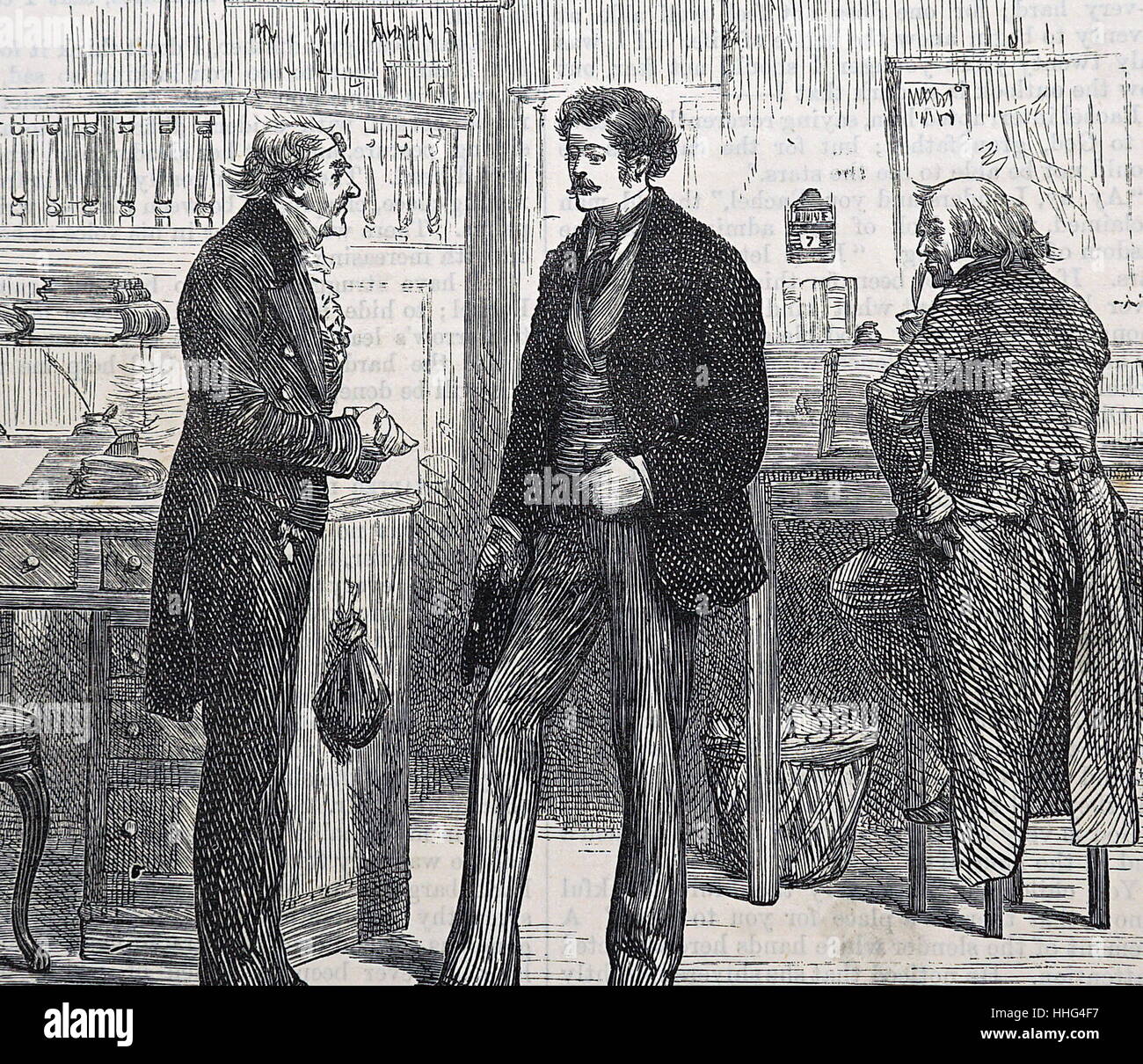
The 19th century witnessed a radical transformation in the nature of commerce, evolving from localized mercantile trade to complex, industrialized corporate enterprise driven by technological innovation, expansive transportation networks, and novel legal frameworks. Understanding the mechanisms, institutions, and operational strategies of this era provides essential context for modern corporate structures, capital markets, and labor practices.
The Industrial Revolution and Mass Production
The foundation of 19th-century business was the transition from handcraft production to machine-driven manufacturing. This shift altered how goods were produced, priced, and distributed on a global scale.
Mechanization of the Factory Floor
Before the 19th century, most manufacturing occurred in small workshops or domestic settings through the putting-out system. The introduction of steam power, water frames, and automated textile machinery centralized production within large factories. This physical consolidation allowed business owners to maximize output, standardize product quality, and reduce unit costs.
Factory owners faced entirely new operational challenges, including:
- Managing heavy capital investments in machinery that depreciated rapidly.
- Ensuring a steady supply of raw materials, such as cotton, coal, and iron ore.
- Coordinating complex supply chains across regional and international borders.
- Establishing standardized operating procedures to maintain continuous production cycles.
Economies of Scale and Capital Intensity
As factories grew, businesses required unprecedented amounts of capital to build facilities, purchase heavy machinery, and secure large inventories. This capital intensity favored larger firms over small artisanal shops. Business owners discovered that producing goods in massive quantities lowered the average cost per unit, creating competitive advantages that drove smaller competitors out of the market or forced them to consolidate.
Evolution of Legal Structures: The Rise of the Corporation
To fund capital-intensive ventures like railways, canals, and large manufacturing plants, the legal framework governing business ownership underwent a profound evolution during the 19th century.
From Partnerships to Limited Liability
Early 19th-century businesses were predominantly sole proprietorships or general partnerships. These structures carried significant personal risk, as owners were legally liable for all business debts, often risking personal bankruptcy if a venture failed.
The expansion of commerce necessitated legislative reforms, notably the passage of general incorporation laws in Great Britain (such as the Joint Stock Companies Act 1844 and limited liability legislation in 1855) and across various U.S. states. These laws allowed businesses to incorporate without requiring a special act of parliament or state legislature.
- Limited Liability: Investors were now only liable up to the value of their shares, which protected personal assets and encouraged wider public participation in equity markets.
- Perpetual Succession: Corporations gained a legal identity separate from their founders, ensuring continuity of operations even as owners or managers changed.
- Separation of Ownership and Control: Shareholders owned the company, but professional managers and boards of directors ran daily operations, laying the groundwork for modern corporate governance.
Transportation and Communication Infrastructure
Industrial and commercial expansion would have been impossible without simultaneous revolutions in how goods and information moved across geography.
The Railway Revolution
Railroads were the quintessential 19th-century business enterprise. They required astronomical sums of capital, pioneered professional management hierarchies, and created national markets out of isolated regional economies.
For other businesses, the railway provided reliable, year-round transport for raw materials and finished products, drastically cutting transit times compared to horse-drawn wagons or coastal sailing ships. Businesses could now centralize production in massive hubs and distribute goods nationwide.
Telegraph and Market Integration
The invention and commercialization of the electric telegraph in the mid-19th century transformed business communication. For the first time, information could travel faster than physical transport.
- Business owners could coordinate shipments, adjust prices, and manage inventories in real-time across distant cities.
- Commodity markets and stock exchanges integrated rapidly, allowing for standardized pricing and the emergence of national financial centers like Wall Street and the London Stock Exchange.
Financing Growth: Banking and Investment Capital
The scale of 19th-century enterprises required sophisticated financial intermediaries to mobilize savings and allocate capital effectively.
| Financial Institution | Primary Function in the 19th Century | Impact on Commerce |
|---|---|---|
| Commercial Banks | Provided short-term working capital loans and managed commercial paper and bills of exchange. | Facilitated daily liquidity and trade settlements. |
| Investment Banks | Underwrote corporate securities, negotiated railway bonds, and structured mergers. | Channelled large-scale domestic and international savings into heavy industry and infrastructure. |
| Stock Exchanges | Provided secondary markets for buying and selling corporate shares and bonds. | Enabled public liquidity and transparent price discovery for investors. |
The Role of Investment Bankers
Figures like J.P. Morgan in the United States played pivotal roles in structuring industrial consolidation. Investment bankers did not merely provide capital; they often insisted on seats on corporate boards to protect investor interests, stabilize chaotic markets, and prevent cutthroat competition through industry trusts and mergers.
Labor Dynamics and Management Theories
The shift from agrarian labor to industrial wage-earning created profound social tensions and prompted new approaches to organizational management.
The Emergence of the Industrial Workforce
Nineteenth-century workers faced demanding conditions: long hours (often 12 to 16 hours a day, six days a week), dangerous machinery without safety guards, and minimal job security. These conditions sparked the rise of the organized labor movement. Trade unions formed to agitate for the eight-hour workday, safer working conditions, and higher wages through strikes, collective bargaining, and political lobbying.
Scientific Management and Administrative Hierarchy
As businesses grew into vast, multi-layered organizations, informal management methods became obsolete. By the late 19th century, firms began implementing systematic administrative structures. Managers tracked costs, monitored worker output, and designed hierarchical reporting lines. This administrative evolution culminated at the turn of the century in Frederick Winslow Taylor's principles of scientific management, which sought to optimize industrial workflows through time-and-motion studies.
Marketing, Branding, and Retail Innovation
Mass production required mass consumption. To clear warehouse inventories of standardized goods, 19th-century businesses revolutionized marketing and retail distribution.
The Birth of National Brands
Before industrialization, most household goods were unbranded and sold in bulk from barrels or sacks. Manufacturers soon realized that branding created consumer trust and brand loyalty. Companies invested in national advertising campaigns utilizing newspapers, magazines, and colorful lithographic posters to promote packaged goods such as soap, canned foods, and patent medicines.
Department Stores and Mail-Order Catalogs
Urbanization and rising middle-class incomes gave rise to urban department stores (such as Macy's in New York, Wanamaker's in Philadelphia, and Harrods in London). These establishments introduced fixed pricing, browse-friendly displays, and customer service standards that redefined the shopping experience.
For rural consumers, mail-order businesses like Montgomery Ward and Sears, Roebuck & Co. bridged geographical divides, using illustrated catalogs to bring urban consumer goods directly to remote farmsteads.
Frequently Asked Questions
What legal innovation most fueled 19th-century business growth?
The widespread adoption of limited liability corporate law was the most significant legal driver. By shielding investors from personal bankruptcy beyond their initial share investment, it unlocked vast amounts of public capital for risky, capital-intensive ventures like railways and steel mills.
How did the telegraph change 19th-century business operations?
The telegraph decoupled communication speed from physical travel. Businesses could execute transactions, track shipments, check market prices, and manage geographically dispersed branch offices instantaneously, leading to unified national markets.
What role did banks play in the Industrial Revolution?
Commercial banks provided short-term operational credit, while investment banks underwrote large-scale stock and bond issuances. Investment bankers frequently orchestrated industry consolidations and mergers to stabilize volatile markets.
Why did mass production require new marketing strategies?
Factories generated unprecedented volumes of standardized goods. To prevent overproduction, businesses had to stimulate continuous consumer demand through national branding, packaged goods, and innovative retail formats like department stores.
How did labor unions respond to industrialization?
Workers formed trade unions to combat long hours, low pay, and hazardous working conditions. Through strikes, negotiations, and political advocacy, unions fought for structural labor reforms, notably the eight-hour workday and basic workplace safety standards.
Practical Takeaways and Historical Lessons
Examining 19th-century business reveals enduring principles of commercial scaling and operational evolution. Modern organizations continue to navigate challenges rooted in that era: balancing capital intensity with liquidity, managing complex supply chains, protecting investor interests through corporate governance, and adapting to disruptive communication technologies. Understanding these historical roots offers valuable perspective on contemporary market structures and corporate strategy.