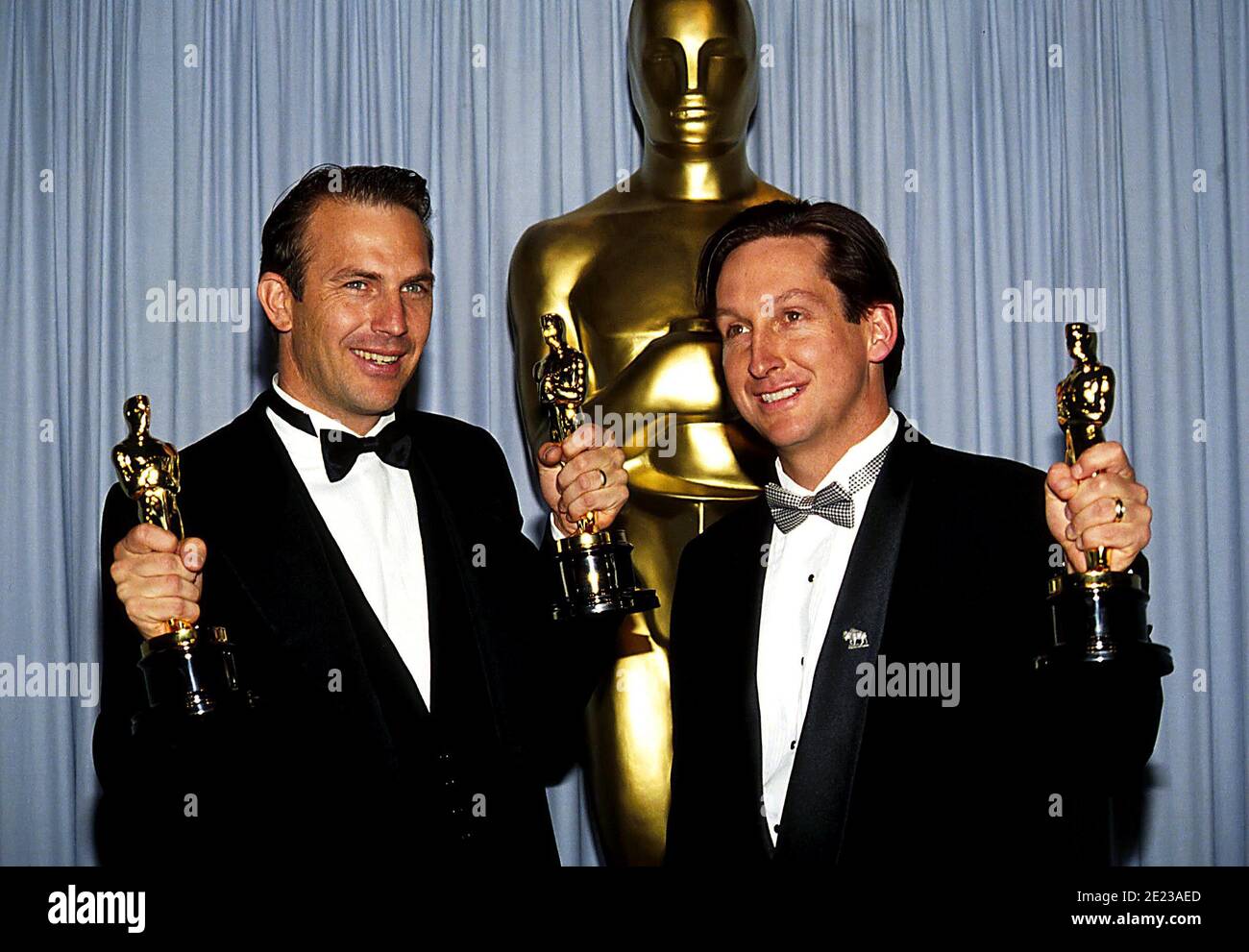
The 63rd Academy Awards, honoring the best films of 1990, took place on March 25, 1991, at the Shrine Auditorium in Los Angeles, California. Dominated by Kevin Costner’s sweeping Western Dances with Wolves, the ceremony captured a pivotal transitional moment in Hollywood history, balancing traditional epic filmmaking against the rising tide of independent cinema and blockbuster spectacles.
Historical Context and Cultural Background of the 1991 Oscars
To understand the significance of the 63rd Academy Awards, one must examine the state of the American film industry at the dawn of the 1990s. Hollywood was navigating a shifting landscape defined by corporate studio consolidation, the expansion of the multiplex, and the explosive growth of the home video market. Yet, despite these commercial pressures, the cinematic output of 1990 reflected a broad spectrum of artistic ambition, ranging from gritty crime dramas and psychological thrillers to massive historical epics.
The cultural backdrop of early 1991 was also heavily influenced by global events, most notably the Gulf War, which had concluded just weeks prior to the ceremony. Security was exceptionally tight, and the broadcast carried a subdued yet patriotic tone that acknowledged the international political climate. Despite these external pressures, the film industry gathered to celebrate its highest achievements, projecting an image of resilience and continuity. The Academy of Motion Picture Arts and Sciences (AMPAS) faced the ongoing challenge of balancing populist appeal with critical prestige—a tension that would deeply define the night's big winners and notable snubs.
The Production and Presentation of the 63rd Academy Awards
The telecast of the 1991 Oscars marked a notable transition in production style and tone. Billy Crystal hosted the ceremony for the second consecutive year, earning widespread acclaim for his sharp comedic timing, musical opening numbers, and ability to navigate the evening's formal proceedings with lighthearted humor. Crystal’s opening montage, in which he humorously inserted himself into clips of the nominated films, set a benchmark for awards show hosting that would influence producers for decades.
The venue itself, the Shrine Auditorium, provided a grand, historic stage that contrasted with the more modern Dorothy Chandler Pavilion, offering a different visual texture for the broadcast. Produced by Gil Cates, the ceremony emphasized theatricality and celebrated the centennial of cinema's technological roots while looking forward to modern digital advancements. The pacing of the show was praised for keeping the audience engaged, though it still adhered to the traditional structure of distributing technical awards early in the evening and saving the major marquee categories for the final hours.
Major Winners and Nominees: The Dominance of Dances with Wolves
The undisputed behemoth of the 1991 Oscars was Kevin Costner’s Dances with Wolves. Earning 12 nominations, the film walked away with seven Academy Awards, including Best Picture and Best Director for Costner in his feature directorial debut.
Major Category Breakdown
- Best Picture: Dances with Wolves triumphed over a diverse field that included Awakenings, Ghost, The Godfather Part III, and GoodFellas. While Martin Scorsese’s GoodFellas was favored by many critics as the defining cinematic achievement of the year, the Academy opted for the traditional, sweeping scale of Costner’s frontier epic.
- Best Director: Kevin Costner won over Martin Scorsese (GoodFellas), Francis Ford Coppola (The Godfather Part III), Stephen Frears (The Grifters), and Barbet Schroeder (Reversal of Fortune). Costner’s victory made him one of the few actor-turned-directors to win the category.
- Best Actor: Jeremy Irons captured the award for his chilling portrayal of Claus von Bülow in Reversal of Fortune, besting a competitive field that included Robert De Niro (Awakenings), Gérard Depardieu (Cyrano de Bergerac), Richard Harris (The Field), and Robin Williams (Awakenings).
- Best Actress: Kathy Bates won for her terrifying yet complex performance as Annie Wilkes in the Stephen King adaptation Misery. She triumphed over Annette Bening (The Grifters), Angelica Huston (The Grifters), Julia Roberts (Pretty Woman), and Meryl Streep (Postcards from the Edge).
- Best Supporting Actor: Joe Pesci took home the Oscar for his volatile performance as Tommy DeVito in GoodFellas, cementing the film's legacy despite its loss in the top race.
- Best Supporting Actress: Whoopi Goldberg won for her iconic turn as psychic Oda Mae Brown in the romantic fantasy blockbuster Ghost, becoming the second African American woman in history to win an Academy Award for acting.
| Category | Winner | Film | Notable Nominees |
|---|---|---|---|
| Best Picture | Jim Wilson, Kevin Costner | Dances with Wolves | GoodFellas, The Godfather Part III, Ghost, Awakenings |
| Best Director | Kevin Costner | Dances with Wolves | Martin Scorsese (GoodFellas), Francis Ford Coppola (The Godfather Part III) |
| Best Actor | Jeremy Irons | Reversal of Fortune | Robert De Niro (Awakenings), Robin Williams (Awakenings) |
| Best Actress | Kathy Bates | Misery | Julia Roberts (Pretty Woman), Meryl Streep (Postcards from the Edge) |
| Best Supporting Actor | Joe Pesci | GoodFellas | Andy García (The Godfather Part III), Al Pacino (Dick Tracy) |
| Best Supporting Actress | Whoopi Goldberg | Ghost | Annette Bening (The Grifters), Diane Ladd (Wild at Heart) |
Critical Reception and Industry Debates
The outcome of the 1991 Oscars sparked intense debate among film critics, historians, and cinephiles—a discussion that continues to reverberate decades later. The primary point of contention was the Academy's choice of Dances with Wolves over Martin Scorsese’s GoodFellas.
While Dances with Wolves was praised for its majestic cinematography by Dean Semler, John Barry’s soaring musical score, and its respectful portrayal of the Lakota Sioux language and culture, modern retrospective analysis often views it as a conventional revisionist Western that adhered safely to Hollywood epic traditions. Conversely, GoodFellas is widely regarded by contemporary film scholars as a revolutionary masterwork of editing, narration, and kinetic pacing that fundamentally altered the gangster genre. This split between populist, traditional storytelling and gritty, stylistic innovation remains one of the most frequently cited examples of the Academy rewarding the safer, more palatable choice over a boundary-pushing artistic triumph.
Furthermore, the ceremony highlighted the ongoing struggle for recognition faced by independent and genre films. While horror and thriller genres are historically overlooked by the Academy, Kathy Bates’s win for Misery proved that transformative performances in mainstream genre fare could break through the prestige barrier. Similarly, Whoopi Goldberg’s win for Ghost demonstrated that comedic and supernatural performances in commercial blockbusters could garner critical validation.
Technical Achievements and Craft Categories
Beyond the major acting and directing races, the 63rd Academy Awards celebrated remarkable achievements across the technical and craft disciplines, reflecting the evolving standards of Hollywood production design, makeup, and sound.
- Art Direction and Costume Design: Dick Tracy, directed by and starring Warren Beatty, dominated the technical categories with its vibrant, primary-color aesthetic inspired by Chester Gould’s classic comic strip. It won three Oscars, including Best Art Direction and Best Costume Design for Milena Canonero, whose work translated the flat page into a living, three-dimensional noir universe.
- Makeup: Continuing the tradition of transformative creature and character design, John Caglione Jr. and Doug Drexler won Best Makeup for their extraordinary work on Dick Tracy, turning actors into grotesque caricatures reminiscent of classic comic book villains.
- Cinematography: Dean Semler’s work on Dances with Wolves captured the sweeping expanses of the American frontier, utilizing natural light and vast landscapes to elevate the narrative, securing a well-deserved win against stiff competition.
- Visual Effects: Total Recall, directed by Paul Verhoeven, received a Special Achievement Academy Award for its groundbreaking practical and optical visual effects, showcasing the pinnacle of pre-digital science fiction filmmaking.
Legacy and Long-Term Impact on the Academy
The 63rd Academy Awards occupy a fascinating space in Oscar history. They represent the twilight of a certain kind of traditional Hollywood epic—films with massive budgets, sprawling runtimes, and earnest historical scopes—just as independent cinema, spearheaded by the rise of companies like Miramax and the Sundance Film Festival, began to reshape the industry's economic and creative foundations.
For Kevin Costner, the night was the absolute zenith of his commercial and critical power, establishing him as a multi-hyphenate powerhouse. For Martin Scorsese, the loss of the Best Picture and Best Director prizes to Dances with Wolves became part of a legendary narrative of Academy snubs that would finally end years later when he won Best Director for The Departed (2006).
The broadcast also serves as a historical time capsule of early 1990s fashion, celebrity culture, and television production values. Reviewing the 1991 Oscars provides modern audiences with a clear lens into the aesthetic priorities of the Hollywood establishment at the turn of a new decade, illustrating both the cautious conservatism of the voting body and its occasional willingness to embrace bold, transformative performances.
Frequently Asked Questions
Which film won Best Picture at the 1991 Oscars?
Dances with Wolves, directed by and starring Kevin Costner, won the Academy Award for Best Picture at the 63rd Academy Awards. It defeated a formidable slate of nominees, including Martin Scorsese's GoodFellas and Francis Ford Coppola's The Godfather Part III.
Who hosted the 63rd Academy Awards?
Comedian and actor Billy Crystal hosted the 1991 ceremony. His critically acclaimed opening performance and comedic interludes established him as one of the definitive hosts in Oscar history, leading to multiple subsequent hosting gigs.
Was Martin Scorsese nominated for Best Director in 1991?
Yes, Martin Scorsese was nominated for Best Director for GoodFellas. He lost the category to Kevin Costner, who won for his feature directorial debut on Dances with Wolves.
Who won Best Actor at the 1991 Oscars?
Jeremy Irons won the Best Actor award for his performance as Claus von Bülow in the biographical legal drama Reversal of Fortune, outcompeting nominees such as Robert De Niro and Robin Williams.
Why is the outcome of the 1991 Oscars controversial among film critics?
The ceremony is frequently debated because the Academy chose the traditional, epic western Dances with Wolves over GoodFellas. Modern film critics and historians widely regard GoodFellas as a more influential and groundbreaking cinematic achievement of 1990.