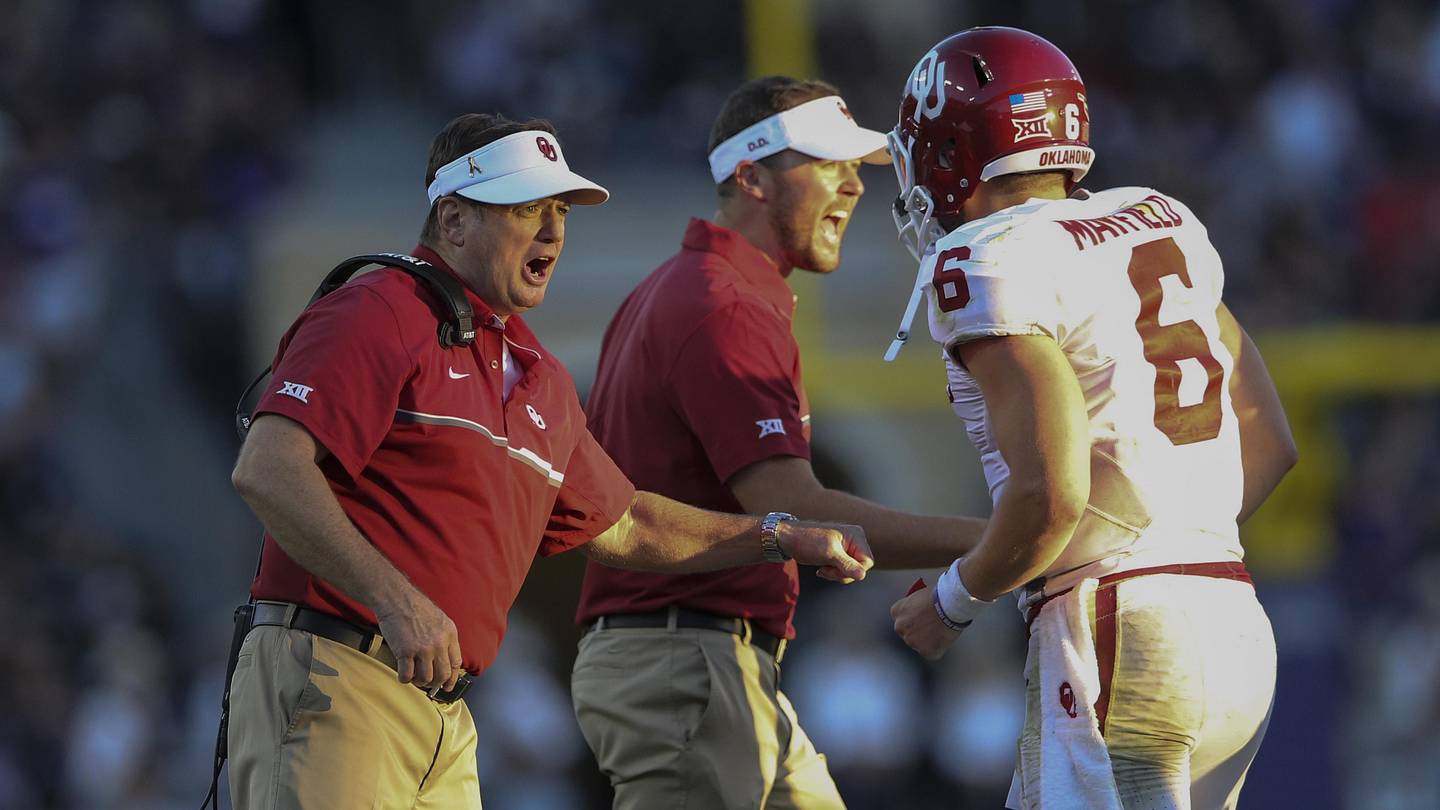
The Bob Stoops coaching tree is one of the most prolific and successful lineages in the history of college football, characterized by its dual mastery of aggressive defensive schemes and the revolutionary Air Raid offense. His protégés, including figures like Lincoln Riley, Mike Leach, and Brent Venables, have collectively won numerous conference titles and redefined strategic play across the FBS level for over two decades.
In the realm of American sports, few things signify a leader's impact more than their "coaching tree"—the network of former assistants and players who have ascended to head coaching positions. For Bob Stoops, the legendary former head coach of the University of Oklahoma (OU), this tree is not merely a list of names; it is a blueprint that has dictated the evolution of the sport from the late 1990s through the mid-2020s. As of 2026, the ripples of Stoops’ tenure in Norman continue to shape the tactical landscape of the SEC, Big Ten, and beyond.
The Roots of the Stoops Philosophy
To understand the influence of Bob Stoops, one must first look at his own origins. Stoops was a product of two distinct but equally potent coaching philosophies. He served as the defensive coordinator under Bill Snyder at Kansas State, where he learned the meticulous art of program building and disciplined defensive structure. Later, he served as the defensive coordinator for Steve Spurrier at Florida, where he was exposed to a high-flying, aggressive offensive mindset and the "big game" pressure of a blue-blood program.
When Stoops arrived at Oklahoma in 1999, the program was in a state of historic decline. He immediately combined Snyder’s discipline with Spurrier’s swagger. This hybrid approach—focusing on elite defensive back play and a willingness to take massive risks on offense—became the DNA of every coach who worked under him. The "Stoops Way" was defined by a refusal to be stagnant; he was a defensive-minded coach who was never afraid to hire assistants who would eventually overshadow his own defensive roots with explosive offensive production.
The Offensive Architects: The Mike Leach Revolution
Perhaps the most significant branch of the Stoops tree began with a single, unconventional hire in 1999: Mike Leach. At the time, Leach was a relatively unknown offensive coordinator from Kentucky with a "weird" system called the Air Raid. Stoops recognized that to revitalize Oklahoma, he needed to disrupt the traditional power-running hierarchies of the Big 12.
Leach stayed in Norman for only one season, but the impact was seismic. He transformed Oklahoma’s offense into a high-octane machine that paved the way for the 2000 National Championship. More importantly, the Leach-Stoops connection birthed a sub-tree that dominated college football's offensive thinking for twenty-five years.
The Successors of the Air Raid
From that single year under Stoops, Leach went on to Texas Tech, where he mentored future head coaches like Kliff Kingsbury, Sonny Cumbie, and Dana Holgorsen. However, the most direct "Stoops-Leach" hybrid was Lincoln Riley. Though Riley never coached directly under Stoops and Leach at the same time, Stoops’ decision to hire Riley in 2015 was a spiritual return to the 1999 Leach hire.
Riley’s tenure as offensive coordinator and later as Stoops’ hand-picked successor led to a string of Heisman Trophy winners and Playoff appearances. By 2026, Riley’s influence at USC and his development of elite quarterbacks have become the gold standard for offensive efficiency, all tracing back to the structural freedom Stoops provided his coordinators.
The Defensive Disciples: Stability and Aggression
While the offense grabbed the headlines, Stoops’ primary legacy was rooted in defensive excellence. He was a master of the "4-3" defense and the "Tampa 2" concepts, adapting them to counter the very spread offenses his own coordinators were popularizing.
Brent Venables: The Keeper of the Flame
Brent Venables is arguably the most loyal and successful defensive protégé in the Stoops tree. Venables served on Stoops’ staff from 1999 to 2011, learning the nuances of pressure-based defense and player motivation. After a legendary stint as the defensive coordinator at Clemson, where he helped win two national titles, Venables returned to Oklahoma as head coach in 2022. By 2026, Venables has solidified the Sooners' transition into the SEC, employing a modern version of the aggressive defensive identity Stoops established in the early 2000s.
Bo Pelini and Mark Mangino
The early years of the Stoops era also produced Bo Pelini and Mark Mangino. Pelini, who served as defensive coordinator in 2003, led one of the most statistically dominant defenses in NCAA history before becoming a successful, albeit controversial, head coach at Nebraska. Mark Mangino, Stoops' original assistant head coach and offensive coordinator after Leach, took over a struggling Kansas program and led them to a historic Orange Bowl victory in 2008. These men proved that the Stoops "blueprint" for program management could work even at schools without Oklahoma’s massive resources.
A Comparative Analysis of Major Coaching Disciples
The following table highlights the most prominent members of the Bob Stoops coaching tree and their primary contributions to the sport as of 2026.
| Coach | Role under Stoops | Primary Head Coaching Role(s) | Key Impact/Legacy |
|---|---|---|---|
| Mike Leach | Offensive Coordinator (1999) | Texas Tech, Washington St, Miss. St | Popularized the Air Raid; changed CFB passing game. |
| Brent Venables | Co-DC/Defensive Coord. (1999–2011) | Oklahoma (Current) | Defensive master; maintained Stoops’ defensive standards. |
| Lincoln Riley | Offensive Coordinator (2015–2016) | Oklahoma, USC | Quarterback whisperer; refined the "Power-Spread" hybrid. |
| Mark Mangino | Asst. Head Coach/OC (1999–2001) | Kansas | Proved Oklahoma's structure could win at Kansas. |
| Josh Heupel | QB/Offensive Coord. (2006–2014) | UCF, Tennessee | Combined Stoops’ toughness with ultra-fast tempo. |
| Shane Beamer | Asst. Coach (2008–2010) | South Carolina | Cultural builder; focused on "complementary football." |
| Bo Pelini | Defensive Coordinator (2003) | Nebraska, Youngstown State | Brought NFL-style defensive complexity to the college level. |
| Kevin Sumlin | Co-OC/Wide Receivers (2003–2007) | Houston, Texas A&M, Arizona | Early pioneer of the spread in the SEC. |
The "Grand-Tree" and Second-Generation Influence
By 2026, the Stoops tree has entered its third generation. We are no longer just seeing Stoops' direct assistants get jobs; we are seeing the assistants of his assistants taking over major programs.
Josh Heupel is a prime example. As the quarterback who led Stoops to his 2000 National Championship, Heupel later coached under Stoops. After being let go in 2014—a rare moment of internal friction in the tree—Heupel rebuilt his career and brought a lightning-fast version of the Stoops/Leach philosophy to Tennessee. His success in the SEC has created a new branch of "velocity-based" coaches who prioritize snaps-per-minute above all else.
Similarly, Shane Beamer at South Carolina represents the "culture" branch. Beamer, who worked under Stoops during the late 2000s, has often cited Stoops' ability to manage personalities and maintain a "family" atmosphere as the foundation for his rebuilding efforts in Columbia. This emphasizes that Stoops' influence wasn't just about X’s and O’s, but about the "CEO" model of head coaching.
Strategic Impact on the Game
The Stoops tree didn't just win games; it solved specific problems that college football faced at the turn of the century.
- The Death of the "Three yards and a cloud of dust": Before Stoops and Leach, the Big 12 was a conference of I-formation power running. The Stoops tree forced every defensive coordinator in the country to learn how to defend the entire 100-yard length and 53-yard width of the field.
- The Hybrid Defender: Stoops pioneered the use of smaller, faster linebackers and safeties who could play in space. This was a necessity to stop the offenses his own disciples were creating. This "positionless" defensive philosophy is now standard in 2026.
- The Transfer Portal and Recruiting: Stoops was an early adopter of aggressive, nationwide recruiting. His proteges, particularly Lincoln Riley, were among the first to master the modern transfer portal era, treating roster construction more like an NFL GM than a traditional high school recruiter.
Common Criticisms and Challenges
Despite the immense success, the Stoops tree has faced its share of criticism. The most common "knock" on Stoops-style coaches is a perceived lack of physicality in the trenches during high-stakes games. Critics often pointed to Oklahoma’s struggles in the College Football Playoff during the 2010s as evidence that the "finesse" of the Air Raid and spread systems couldn't hold up against the sheer power of teams like Alabama or Georgia.
However, in 2026, we see a correction in this trend. Coaches like Brent Venables and Josh Heupel have integrated a much more physical, line-of-scrimmage-focused approach into their spread systems. This "Evolution of the Tree" shows that the foundation Stoops built was flexible enough to adapt to the changing physical demands of the sport.
Frequently Asked Questions
Who is the most successful coach from the Bob Stoops coaching tree?
In terms of pure win percentage and offensive innovation, Lincoln Riley is often cited as the most successful. However, Brent Venables is considered the most successful in terms of championship hardware, having won multiple titles as a coordinator and establishing himself as a premier head coach in the SEC by 2026.
Did Bob Stoops' brothers also contribute to his coaching tree?
Yes. Mike Stoops served as Bob’s long-time defensive coordinator and had a stint as the head coach of Arizona. Mark Stoops, while having worked with Bob, built a massive legacy of his own as the all-time winningest coach at Kentucky. While they are brothers, their tactical overlap is significant, particularly in defensive secondary play.
How did the "Air Raid" become associated with a defensive coach like Stoops?
Bob Stoops was a pragmatist. He realized that to win at Oklahoma, he needed an edge that traditional programs didn't have. By hiring Mike Leach, he embraced a system he hated to defend. This "if you can't beat 'em, hire 'em" mentality is a hallmark of the Stoops tree.
Is Josh Heupel considered part of the Stoops tree?
Absolutely. Heupel was the starting quarterback for Stoops’ 2000 championship team and spent the majority of his early coaching career on Stoops’ staff. Despite a brief falling out when Stoops replaced him as offensive coordinator, Heupel credits the organizational structure of the Oklahoma program as the basis for his success at Tennessee.
What is the "Stoops Way" of program management?
The "Stoops Way" refers to a CEO-style leadership where the head coach manages the culture, recruiting, and boosters while giving his coordinators total autonomy over their units. Stoops was known for not micromanaging his assistants, which allowed them to develop the skills necessary to become head coaches themselves.
Practical Recommendation for Sports Analysts
When evaluating a new coaching hire in the modern era, analysts should look beyond the candidate's recent win-loss record and examine their "lineage." A coach originating from the Stoops tree typically brings a specific set of organizational advantages: a proven template for recruiting at a national level, an aggressive approach to offensive or defensive play-calling, and a background in a "winning culture."
As we progress through the late 2020s, observing how these coaches adapt the Stoops blueprint to the 12-team playoff format will be the ultimate test of the tree's longevity. If you are tracking the future of a program, determine if their coach has "Stoops DNA"—it remains one of the most reliable indicators of a program’s potential to reach the elite tier of college football.