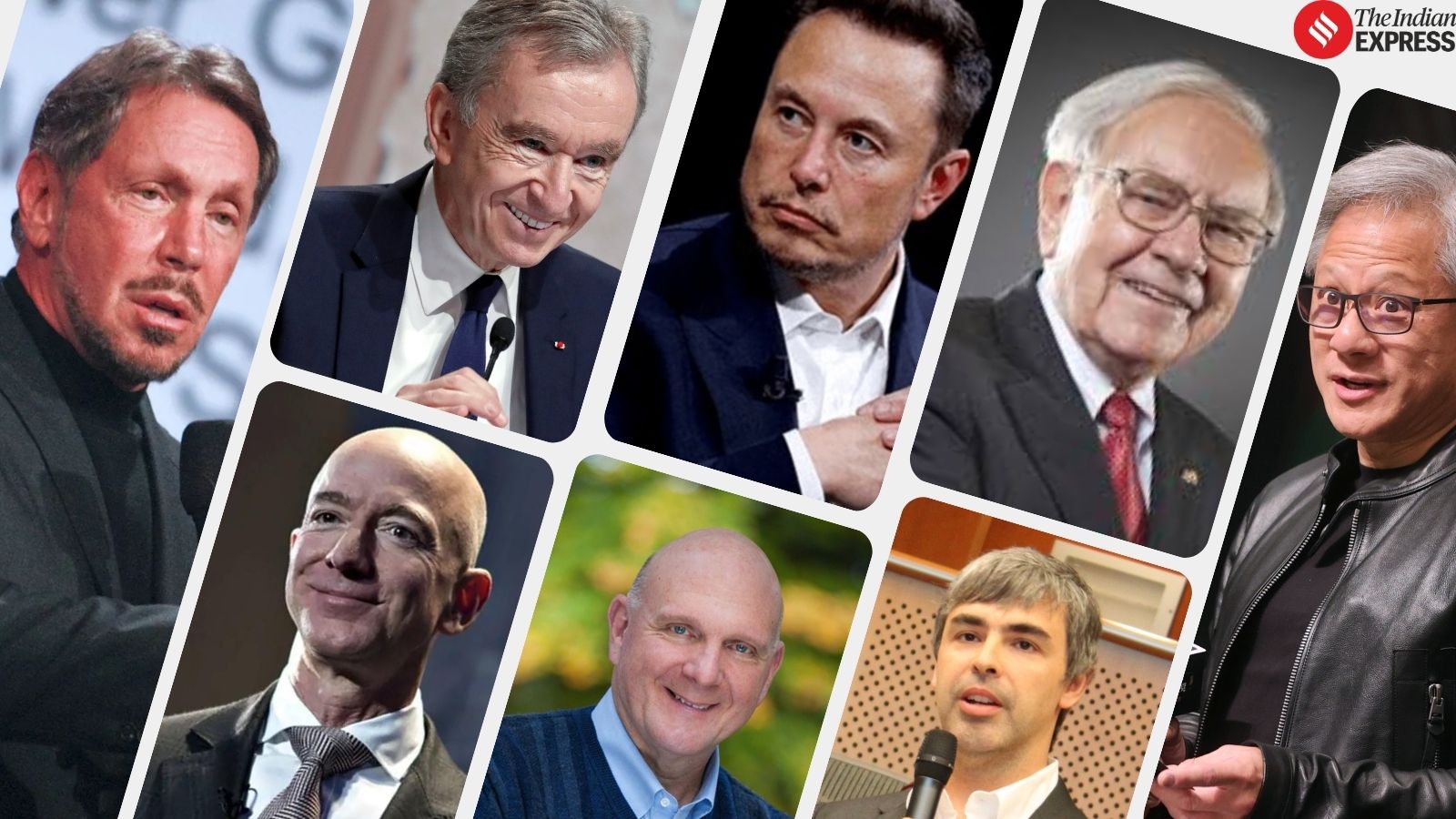
The 2024 billionaire rich list marked a historic peak in global wealth concentration, featuring a record 2,781 individuals with a collective net worth of $14.2 trillion. Led by luxury conglomerate titan Bernard Arnault, the rankings underscored the dominant influence of the technology, luxury goods, and finance sectors in shaping the modern global economy.
The Landscape of Global Wealth in 2024
When analyzing the 2024 billionaire rich list, the most striking observation is the sheer resilience of ultra-high-net-worth individuals amidst fluctuating global interest rates and geopolitical tensions. As we look back from the perspective of 2026, the 2024 data serves as a critical benchmark for understanding how the "Artificial Intelligence Gold Rush" and a post-pandemic luxury boom restructured the hierarchy of the world’s elite.
The total number of billionaires in 2024 increased by 141 from the previous year, surpassing the previous record set in 2021. This growth was not evenly distributed; rather, it was concentrated among those who pivoted successfully toward emerging technologies or maintained a stranglehold on the global luxury market. The collective wealth of $14.2 trillion represented a $2 trillion increase from 2023, a staggering figure that highlights the widening gap between the ultra-wealthy and the rest of the global population.
The Methodology of Wealth Tracking
Calculating the "wealthiest" is a complex exercise in real-time financial auditing. The 2024 rankings primarily utilized stock prices and exchange rates from early 2024 to determine net worth. Most lists, including the prominent ones from Forbes and Bloomberg, distinguish between "real-time" wealth—which fluctuates daily based on market closes—and the "annual list" wealth, which provides a snapshot in time for historical comparison.
To be included, an individual's net worth must exceed $1 billion USD. This includes tangible assets like real estate, art collections, and private jets, but the vast majority of billionaire wealth is tied to equity in public or private companies. For instance, the net worth of tech moguls like Elon Musk or Jeff Bezos is highly sensitive to the quarterly earnings reports of Tesla and Amazon, respectively.
The Top Five: Profiles of Unprecedented Prosperity
The summit of the 2024 billionaire rich list was occupied by familiar names, yet their positions shifted as market sentiment evolved. The top five individuals alone accounted for nearly a trillion dollars in combined wealth.
1. Bernard Arnault & Family (LVMH)
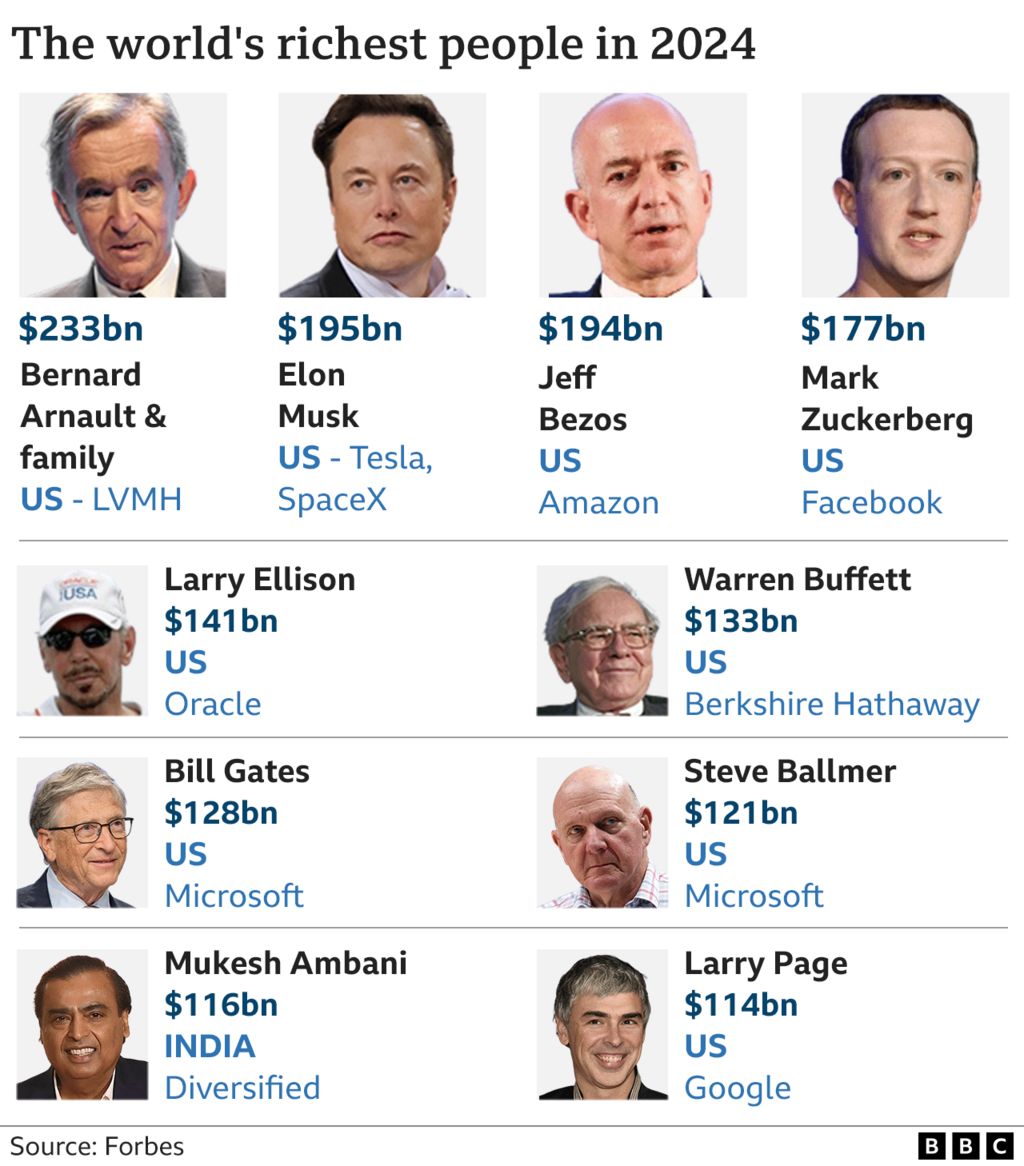
For much of 2024, Bernard Arnault held the title of the world’s richest person. As the CEO and chairman of LVMH (Moët Hennessy Louis Vuitton), Arnault oversees an empire of 75 luxury brands, including Christian Dior, Tiffany & Co., and Sephora. His wealth, estimated at approximately $233 billion in early 2024, was a testament to the "un-crushable" nature of high-end consumption. Even as middle-class spending slowed, the global elite continued to invest in heritage brands, allowing Arnault to maintain a significant lead over his tech-heavy rivals.
2. Elon Musk (Tesla, SpaceX)
Elon Musk’s 2024 ranking was characterized by volatility. With a net worth hovering around $195 billion at the time of the list's publication, his fortune was primarily anchored by his 13% stake in Tesla and his 42% stake in SpaceX. While Tesla faced headwinds from increased competition in the electric vehicle (EV) market and pricing pressures, the skyrocketing valuation of SpaceX—driven by its dominance in satellite launches and the Starlink internet service—provided a robust cushion for his net worth.
3. Jeff Bezos (Amazon)
Jeff Bezos, the founder of Amazon, occupied the third spot with a net worth of roughly $194 billion. Bezos benefited immensely from Amazon’s "Year of Efficiency," which saw the company’s stock price soar as it optimized its logistics network and expanded its cloud computing division, Amazon Web Services (AWS). Despite selling billions of dollars in stock to fund his Blue Origin space venture and philanthropic efforts, Bezos remained a permanent fixture at the top of the wealth pyramid.
4. Mark Zuckerberg (Meta)
Mark Zuckerberg saw one of the most dramatic wealth recoveries in history. After a difficult 2022 and early 2023, Meta’s pivot toward AI and a leaner operational model caused its stock price to nearly triple. By the time the 2024 list was finalized, Zuckerberg’s wealth had surged to $177 billion. This resurgence was fueled by the success of Instagram Reels and the integration of generative AI across Meta’s advertising platforms.
5. Larry Ellison (Oracle)
Larry Ellison, the co-founder of Oracle, rounded out the top five with $141 billion. Ellison’s wealth growth in 2024 was almost entirely attributed to the AI boom. As companies scrambled to build AI models, the demand for Oracle’s cloud services and database technology reached fever pitch. Ellison, a major shareholder in Oracle, saw his net worth reach all-time highs as the market revalued the company as a core infrastructure provider for the next generation of computing.
2024 Wealth Comparison Table
The following table outlines the top 10 wealthiest individuals as recorded during the 2024 peak, highlighting their primary industries and the geographic distribution of extreme wealth.
| Rank | Name | Net Worth (2024 Approx.) | Source of Wealth | Country |
|---|---|---|---|---|
| 1 | Bernard Arnault | $233 Billion | LVMH (Luxury Goods) | France |
| 2 | Elon Musk | $195 Billion | Tesla, SpaceX | United States |
| 3 | Jeff Bezos | $194 Billion | Amazon | United States |
| 4 | Mark Zuckerberg | $177 Billion | Meta (Social Media) | United States |
| 5 | Larry Ellison | $141 Billion | Oracle (Software) | United States |
| 6 | Warren Buffett | $133 Billion | Berkshire Hathaway | United States |
| 7 | Bill Gates | $128 Billion | Microsoft | United States |
| 8 | Steve Ballmer | $121 Billion | Microsoft | United States |
| 9 | Mukesh Ambani | $116 Billion | Diversified (Reliance) | India |
| 10 | Larry Page | $114 Billion | Google (Alphabet) | United States |
Geographic Trends: Where the Wealth Resides
The 2024 data highlighted a significant geographic concentration of wealth, with the United States and China continuing to lead, though their trajectories began to diverge.
The United States: The Hub of Tech Billionaires
The U.S. maintained its status as the billionaire capital of the world, boasting a record 813 billionaires. The primary engine of this wealth was the Nasdaq’s performance, particularly the "Magnificent Seven" tech stocks. Silicon Valley and the burgeoning AI corridor in San Francisco created a new wave of billionaires, from Nvidia executives to early investors in OpenAI.
China: Economic Headwinds and Consolidation
In contrast, China experienced a slight decline in its billionaire count, finishing 2024 with 473 (including Hong Kong). This was due to a sluggish real estate market and a regulatory environment that had become more stringent for tech giants like Alibaba and Tencent. Despite this, China remained the second-largest home for the world's wealthiest, with bottled water mogul Zhong Shanshan leading the domestic rankings.
India’s Historic Rise
India emerged as a major growth story in 2024. With 200 billionaires, the country reached a new milestone. Mukesh Ambani and Gautam Adani dominated the headlines, but the list also saw a rise in self-made entrepreneurs in the software and manufacturing sectors. The Indian stock market's robust performance reflected a global investor shift toward the subcontinent as an alternative to other emerging markets.
Key Drivers of Wealth in 2024
Understanding the 2024 billionaire rich list requires looking beyond the names and into the economic forces that propelled them.
The Artificial Intelligence Catalyst
AI was the single most influential factor for wealth creation in 2024. This wasn't limited to the founders of AI startups. It extended to the hardware providers like Jensen Huang of Nvidia, whose net worth skyrocketed as his company’s market capitalization crossed the $2 trillion threshold. Software companies that integrated AI into their existing products also saw significant stock appreciation, directly benefiting their majority shareholders.
Luxury Goods and Brand Equity
While inflation impacted many sectors, the luxury goods sector remained insulated. The 2024 list showed that brand equity—the perceived value and status of a name like Hermès or Louis Vuitton—is one of the most stable forms of wealth. Investors flocked to these "defensive" growth stocks, keeping the families behind them at the top of the rich list.
The Great Wealth Transfer
2024 also saw the continued influence of inherited wealth. Many of the world’s billionaires inherited their stakes in family businesses, then expanded them. This "Great Wealth Transfer" began to take center stage as aging patriarchs and matriarchs in Europe and the U.S. started passing their empires to the next generation, often creating multiple billionaires from a single family tree.
New Entries and Noteworthy Exits
The 2024 list was not just about the "old guard." It featured 265 newcomers. One of the most publicized additions was Taylor Swift, who became the first musician to make the list solely based on her music and performances, following the massive success of the Eras Tour. Her entry signaled a shift in how the entertainment industry generates ultra-high-net-worth individuals, moving away from "side hustles" like liquor or clothing brands and back toward the core value of intellectual property.
Conversely, the list also saw individuals drop off due to legal troubles or business failures. The volatility of the cryptocurrency market in the preceding years led to several high-profile exits, as those whose wealth was tied to unproven digital assets saw their valuations crater during restructuring and bankruptcy proceedings.
The Social and Economic Impact of Billionaire Wealth
The publication of the 2024 billionaire rich list sparked significant debate regarding global inequality. With the top 0.0001% holding a larger share of global wealth than ever before, calls for tax reform and increased philanthropy grew louder.
Philanthropic Initiatives
In response to these criticisms, many on the 2024 list increased their commitments to the Giving Pledge. Warren Buffett continued his tradition of donating billions in Berkshire Hathaway stock to the Bill & Melinda Gates Foundation. Meanwhile, Mackenzie Scott remained a standout for her "no-strings-attached" approach to giving, donating billions to underfunded non-profits at a pace that challenged traditional philanthropic models.
Economic Influence
Billionaires in 2024 were not just passive owners; they were active participants in global politics and infrastructure. From Elon Musk’s influence on global communications via Starlink to Jeff Bezos’s investments in climate technology, the decisions made by these few individuals had far-reaching consequences for the world's population. This concentration of power led to increased scrutiny from regulators in the U.S. and Europe regarding antitrust issues and the influence of "big money" in democratic processes.
Frequently Asked Questions
Who was the youngest billionaire on the 2024 list?
In 2024, the title of the world’s youngest billionaire was held by Livia Voigt, a 19-year-old student from Brazil. Her wealth came from a significant minority stake in WEG, an electrical equipment manufacturer co-founded by her grandfather. Her entry highlighted the role of inheritance in the global wealth rankings.
How many women were on the 2024 billionaire list?
The 2024 list included 369 women, making up about 13% of the total. The wealthiest woman was Francoise Bettencourt Meyers, the granddaughter of the founder of L'Oréal. While the number of women on the list has been gradually increasing, the vast majority of the world's wealthiest remain male, reflecting long-standing disparities in corporate leadership and venture capital access.
Is the billionaire list updated in real-time?
While major publications like Forbes and Bloomberg offer real-time trackers that update based on daily stock market fluctuations, the official "Annual Rich List" is a snapshot taken at a specific point in the year (usually March or April). This annual snapshot is used for historical records and year-over-year comparisons.
What industry produced the most billionaires in 2024?
The technology sector remained the primary producer of billionaires, followed closely by finance and investments. However, manufacturing and fashion/retail also contributed significantly. The rise of "FinTech" and "Green Tech" created a sub-sector of wealthy individuals focused on the transition to a sustainable economy.
How does someone get "removed" from the billionaire list?
An individual is removed if their net worth falls below the $1 billion threshold. This can happen due to a drop in the stock price of their primary company, the sale of assets to cover debts, or the division of wealth during a divorce settlement. In some cases, individuals are removed if new information reveals their assets were overvalued or if they are found to be involved in fraudulent activities.
Looking Ahead: The Legacy of 2024
The 2024 billionaire rich list was more than just a tally of names; it was a mirror reflecting the global economy's priorities. It showed a world that valued innovation in AI, the stability of luxury brands, and the massive scale of e-commerce. As we move further into 2026, the 2024 data remains the foundation for understanding the current shifts in wealth—where the billionaires of tomorrow are likely those currently solving the world's most pressing problems in energy, healthcare, and advanced computing.
For those tracking wealth for investment purposes or economic research, the 2024 rankings serve as a reminder that net worth is often a lagging indicator of a company’s or industry’s true impact. The real value lies in the assets and intellectual property these individuals control, which continue to shape the global marketplace long after the annual lists are published.