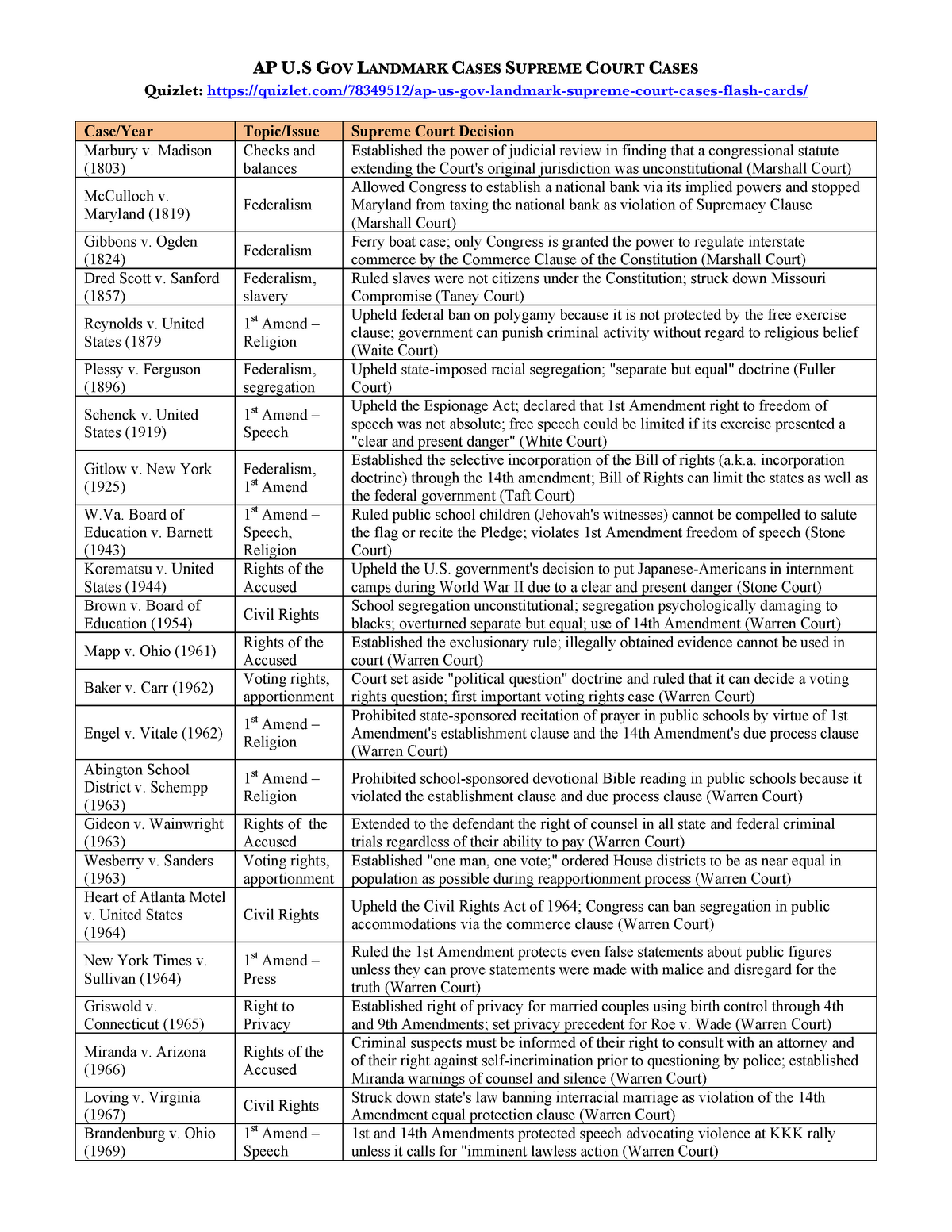
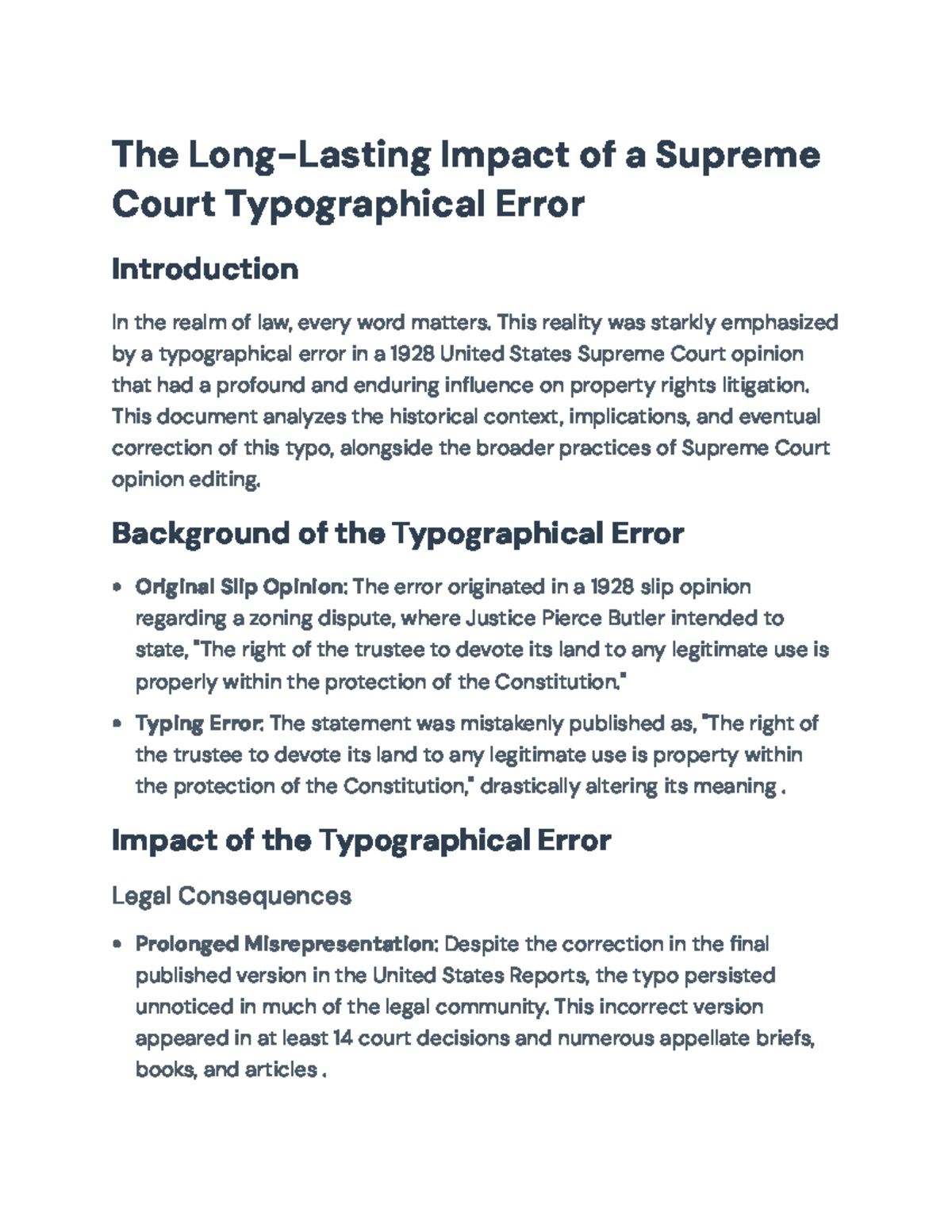
In 1970, the United States Supreme Court, under the newly appointed Chief Justice Warren E. Burger, delivered landmark rulings that fundamentally reshaped due process, juvenile justice, and criminal procedure. Key cases such as Goldberg v. Kelly, In re Winship, and Williams v. Florida established critical precedents regarding administrative hearings, the standard of proof for minors, and jury size requirements that remain foundational to American law in 2026.
The year 1970 served as a pivotal transition point in American judicial history. It marked the first full year of the "Burger Court," following the retirement of the activist Chief Justice Earl Warren. While many legal scholars initially expected a sharp conservative reversal of Warren-era precedents, the decisions of 1970 revealed a more complex reality: a court that continued to expand procedural due process while simultaneously beginning to limit the expansion of substantive social rights.
The Constitutionalization of Administrative Law: Goldberg v. Kelly
One of the most consequential decisions of 1970—and arguably of the 20th century—was Goldberg v. Kelly, 397 U.S. 254 (1970). This case fundamentally altered the relationship between the individual and the state by redefining the nature of government benefits.
The Facts and the Ruling
The case arose when residents of New York City receiving financial aid under the federally assisted program for Aid to Families with Dependent Children (AFDC) challenged the state’s right to terminate their benefits without a prior evidentiary hearing. Under the existing rules, officials could stop payments first and hold a hearing later.
Justice William Brennan, writing for the majority, held that the Due Process Clause of the Fourteenth Amendment requires an evidentiary hearing before a recipient’s welfare benefits can be terminated. The Court reasoned that for a person in extreme poverty, these benefits provide the "very means to live," and their termination could lead to an "unconscionable" situation where the individual is unable to survive while waiting for a post-termination review.
The Lasting Legal Impact
Goldberg v. Kelly introduced the concept of "new property." It moved the legal understanding of welfare from a "gratuity" (which the state could withdraw at will) to an "entitlement" (which is protected by the Constitution). This shift has had a profound impact on administrative law through 2026, influencing how every government agency—from the Social Security Administration to state licensing boards—handles the revocation of benefits or licenses.
The "Goldberg requirements" for a fair hearing include:
- Timely and adequate notice.
- The right to confront and cross-examine adverse witnesses.
- The right to present arguments and evidence orally.
- The right to retained counsel (though not necessarily state-funded counsel).
- An impartial decision-maker.
- A decision based solely on the legal rules and evidence adduced at the hearing.
Redefining Juvenile Justice: In re Winship
Prior to 1970, juvenile courts were often viewed as "civil" or "rehabilitative" rather than "criminal." As a result, the standard of proof required to find a minor guilty (or "delinquent") was often a "preponderance of the evidence"—the same lower standard used in car accident lawsuits.
The Decision in In re Winship
In In re Winship, 397 U.S. 358 (1970), the Court took a major step toward aligning juvenile rights with adult rights. The case involved a 12-year-old boy, Samuel Winship, who was accused of stealing $112 from a woman's pocketbook. The judge acknowledged that the evidence did not meet the "beyond a reasonable doubt" standard but ruled against Winship based on the lower "preponderance" standard.
The Supreme Court reversed this, explicitly stating that the "beyond a reasonable doubt" standard is a constitutional requirement under the Due Process Clause for any criminal proceeding, including those involving juveniles.
Significance for Modern Law
By 2026, the legacy of In re Winship is seen in the near-total professionalization of juvenile courts. It ended the era of "informal" justice where judges had near-total discretion over a minor's liberty based on thin evidence. It solidified the "beyond a reasonable doubt" standard as a "prime instrument for reducing the risk of convictions resting on factual error," a principle that remains the bedrock of the American criminal justice system.
Criminal Procedure and the Sixth Amendment: Williams v. Florida
While the Court was expanding due process in some areas, it began to permit more flexibility in others. Williams v. Florida, 399 U.S. 78 (1970), is a landmark case regarding the Sixth Amendment right to a trial by jury.
The Twelve-Person Jury Myth
For centuries, the common law tradition held that a jury must consist of exactly 12 people. In Williams, the defendant challenged his conviction for robbery because he was tried by a six-person jury, as permitted by Florida law at the time.
The Supreme Court ruled that the "12-man panel is not a necessary ingredient of 'trial by jury.'" Justice Byron White argued that the number 12 was a "historical accident" and that the relevant inquiry was whether the jury was large enough to promote group deliberation and provide a fair cross-section of the community.
Evolution Toward the Present
This decision paved the way for many states to adopt smaller juries for non-capital cases. However, the impact of Williams has been refined over the decades. In 2020 (and consistently applied through 2026), the Court in Ramos v. Louisiana clarified that while the number of jurors might be flexible, the requirement for a unanimous verdict in serious criminal cases is not.
Plea Bargaining and the "Brady" Trilogy
In 1970, the Supreme Court effectively institutionalized the modern plea-bargaining system through a series of cases, most notably Brady v. United States, 397 U.S. 742 (1970).
Validating the Guilty Plea
Robert Brady was charged with kidnapping and faced a potential death sentence. He pleaded guilty only after learning that his co-defendant would testify against him and to avoid the death penalty. He later argued that his plea was "coerced" by the threat of capital punishment.
The Court disagreed, holding that a guilty plea is not "compelled" under the Fifth Amendment simply because it was entered to avoid a harsher sentence. As long as the plea is voluntary, knowing, and intelligent, it is constitutionally valid.
Structural Impact on the Judiciary
In 2026, over 95% of criminal cases in the United States are resolved through plea bargains rather than trials. Brady v. United States provided the legal framework that allows the justice system to function under heavy caseloads. Critics argue it created a "trial penalty" that pressures innocent defendants to plead guilty, but the precedent remains a pillar of American criminal procedure.
Equal Protection and the Limits of Rights: Dandridge v. Williams
If Goldberg v. Kelly represented the expansion of procedural rights for the poor, Dandridge v. Williams, 397 U.S. 471 (1970), represented a refusal to expand substantive economic rights.
The Maximum Grant Regulation
Maryland had a policy that capped the maximum amount of welfare a family could receive, regardless of the family's size. Large families argued this violated the Equal Protection Clause by discriminating against children in large households.
The Court ruled in favor of Maryland. Justice Stewart wrote that in the area of "economics and social welfare," a state does not violate the Equal Protection Clause merely because the classifications made by its laws are imperfect. As long as the classification has a "rational basis," it is constitutional.
Enduring Precedent
Dandridge is a foundation of the "rational basis test" in modern constitutional law. It established that poverty is not a "suspect class" (unlike race), and therefore, the government has wide latitude to manage social programs without strict judicial oversight. This decision continues to limit the ability of litigants in 2026 to claim a constitutional "right" to a specific level of subsistence.
Summary of Key 1970 Supreme Court Decisions
| Case Name | Primary Legal Issue | Ruling Summary | Lasting Impact (as of 2026) |
|---|---|---|---|
| Goldberg v. Kelly | Administrative Due Process | Welfare benefits cannot be terminated without a pre-termination hearing. | Established the "Entitlement" doctrine for government benefits. |
| In re Winship | Juvenile Justice | Standard of proof for juveniles must be "beyond a reasonable doubt." | Standardized juvenile court procedures with adult criminal trials. |
| Williams v. Florida | Sixth Amendment | A 12-person jury is not a constitutional requirement; 6 is sufficient. | Allowed states to use smaller juries, influencing trial efficiency. |
| Brady v. United States | Plea Bargaining | Guilty pleas are valid even if motivated by a desire to avoid the death penalty. | Provided the constitutional green light for the modern plea-bargaining system. |
| Dandridge v. Williams | Equal Protection | States can cap welfare grants; poverty is not a "suspect class." | Limited the use of the Equal Protection Clause in economic litigation. |
| Ashe v. Swenson | Double Jeopardy | Collateral estoppel is part of the Fifth Amendment protection against double jeopardy. | Prevents the state from relitigating facts already decided in a defendant's favor. |
The "Collateral Estoppel" Expansion: Ashe v. Swenson
Another vital but often overlooked 1970 case is Ashe v. Swenson, 397 U.S. 436. This case dealt with the Fifth Amendment’s Double Jeopardy Clause.
The defendant was accused of robbing six poker players. The state tried him for robbing one player and lost because the jury didn't believe he was one of the robbers. The state then tried him for robbing a second player at the same table. The Supreme Court ruled this was unconstitutional. Once a jury had determined that the defendant was not there (a factual determination), the state could not try that same issue again in a different trial.
This principle of collateral estoppel ensures that the government cannot "wear down" a defendant by repeatedly prosecuting them for the same incident using different victims as technicalities.
Practical Guidance for Legal Researchers and Professionals
For those examining these cases in 2026, it is essential to understand that while these 1970 decisions are "old," they are not "stale." They form the "plumbing" of the legal system. When a modern administrative agency sends a "Notice of Intent to Terminate," they are following the rules laid down in Goldberg. When a prosecutor offers a deal, they are operating within the boundaries of Brady.
Key Considerations for Case Application:
- Administrative Law: Always verify if the client has a "property interest" in the benefit. If Goldberg applies, the lack of a pre-deprivation hearing is a winning constitutional argument.
- Juvenile Defense: Use Winship to challenge any attempt by a court to lower the evidentiary standard or use "informal" findings to justify detention.
- Jury Selection: While Williams allows for 6-person juries, look to state constitutions, as many states provide more protection than the federal minimum and still require 12 jurors.
FAQ: The 1970 Supreme Court Term
Did the 1970 cases move the Court in a more conservative direction?
The 1970 term was a mixture. While Dandridge and Brady showed a more conservative, "restrained" approach to social engineering and criminal procedure, Goldberg and Winship were significant expansions of individual rights against the state. It was the beginning of a shift from the "Warren Court" style of judicial activism toward a more "Burger Court" style of procedural focus.
Why is Goldberg v. Kelly still important in 2026?
It remains the "gold standard" for due process. In an era of automated government decision-making and AI-driven benefit denials, the requirement for a human-led, evidentiary hearing before life-sustaining benefits are cut off is more relevant than ever.
Can a state still require a 12-person jury despite Williams v. Florida?
Yes. Williams v. Florida established the federal floor, not the ceiling. Most states still require 12-person juries for serious crimes by statute or state constitution, even though the U.S. Supreme Court says 6 is the constitutional minimum.
What is the difference between Dandridge and Goldberg?
Goldberg was about procedure (how the government takes something away), while Dandridge was about substance (how much the government has to give in the first place). The Court is much more willing to tell the government how to act than what to provide.
How did In re Winship change the daily operations of juvenile courts?
Before Winship, juvenile hearings were often conversational and lacked strict rules of evidence. After 1970, these hearings became adversarial. Prosecutors had to prove their cases with the same rigor as in adult court, and defense attorneys became a standard fixture in the process.
Final Recommendation
When litigating or researching issues of procedural fairness, start with the 1970 precedents. These cases represent the moment the Supreme Court codified the "rules of the game" for the modern American state. Whether dealing with a criminal trial or a dispute over government assistance, the 1970 term provides the necessary constitutional framework to challenge arbitrary state action. Ensure that any contemporary analysis accounts for how these 56-year-old precedents have been integrated into modern state codes and federal regulations.