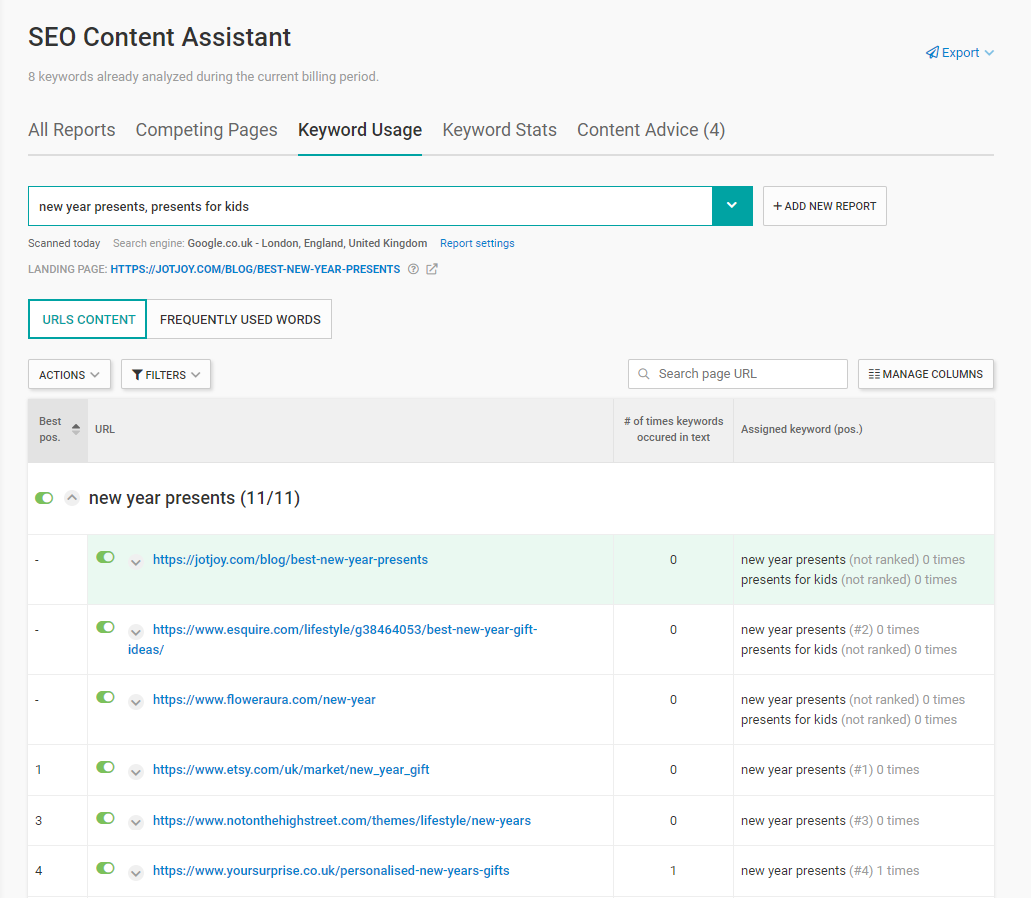
Keywords are the fundamental bridge between user intent and digital content, serving as the primary linguistic signals search engines use to categorize and rank information. Understanding how keywords function, from their semantic role in query processing to their strategic application in content architecture, is essential for anyone aiming to improve visibility and provide relevant value in search results.
1. Understanding Search Intent
The most critical aspect of modern keyword strategy is search intent, which categorizes why a user performs a specific query. Search engines are designed to satisfy user needs rather than merely matching strings of text. Keywords typically fall into four intent categories: informational (seeking knowledge), navigational (looking for a specific site), commercial investigation (researching before a purchase), and transactional (ready to convert). Effective keyword usage requires aligning your content's substance with the user's underlying goal at that specific stage of their journey.
2. The Role of Long-Tail Keywords
Long-tail keywords are specific, multi-word phrases that represent more nuanced search queries. While they typically carry lower search volume compared to broad, "head" terms, they often boast higher conversion rates because the user is further down the funnel and has a more defined intent. For example, "running shoes" is a high-volume, competitive head term, whereas "best lightweight trail running shoes for wide feet" is a long-tail query with significantly less competition and higher intent-alignment.
3. Semantic Search and Contextual Relevance
In 2026, search engines rely heavily on semantic search—the ability of an algorithm to understand the meaning and context behind words rather than just indexing literal matches. This means you do not need to repeat a keyword verbatim to rank for it. Search engines use natural language processing (NLP) to identify synonyms, related concepts, and entities. Consequently, your focus should be on creating topically authoritative content that covers a subject comprehensively rather than obsessing over exact-match keyword density.
4. Avoiding Keyword Stuffing
Keyword stuffing refers to the outdated practice of unnaturally cramming keywords into content to manipulate search rankings. Modern algorithms are sophisticated enough to detect this behavior, often penalizing sites that prioritize machine-readability over human-readability. The golden rule remains: write for the reader first. If a keyword fits naturally within a sentence to provide clarity, use it. If you find yourself forcing a term into a paragraph, it is likely detrimental to your content’s quality.
5. Keyword Placement Best Practices
While semantic relevance is vital, structured placement still helps search engines understand the focus of a page. Essential locations for keywords include the H1 header, the first 100 words of the body, subheadings (H2/H3), the page URL, and the
6. Search Volume Versus Competition
When evaluating potential keywords, you must weigh the search volume against the difficulty of ranking for that term. High-volume keywords often attract significant competition from established authorities, making them difficult to rank for without significant existing domain equity. A balanced strategy targets a mix of high-volume terms for long-term growth and "low-hanging fruit"—keywords with moderate volume and lower competition—to build early traffic and authority.
7. The Importance of Keyword Mapping
Keyword mapping involves assigning specific primary and secondary keywords to individual pages on your website. This prevents "keyword cannibalization," a scenario where multiple pages on your site compete against each other for the same search term. By mapping a unique, focused set of keywords to each URL, you ensure that the search engine serves the most relevant page for a specific query, increasing the efficiency of your site's architecture.
8. Evaluating Keyword Performance
Ranking is not a static state; it is a fluid metric. You must regularly track how your chosen keywords perform in search engine results pages (SERPs) using tools like Google Search Console. Look for shifts in ranking positions, changes in click-through rates (CTR), and fluctuations in traffic. If a page ranks for a keyword you did not intend to target, analyze why the search engine made that connection and consider optimizing the content to capture that traffic more effectively.
9. User Experience and Keyword Strategy
Keywords are a subset of the broader User Experience (UX) design. If a user clicks a result because it contains the keyword they searched for, but the page provides irrelevant or poorly structured content, they will bounce—leading to a negative signal for search engines. Always ensure that the destination page delivers the precise information promised by the keyword. A high bounce rate often indicates a mismatch between the keyword's implication and the page's actual value.
10. The Evolution of Voice and AI-Driven Queries
As AI-driven search experiences become more integrated into the browsing ecosystem, the nature of keywords is shifting toward conversational queries. People are increasingly asking full questions ("How do I fix a leaking faucet?") rather than using fragmented search strings ("leaking faucet fix"). Incorporating these long-form, conversational, or question-based keywords—often called "question modifiers"—is vital for capturing traffic from voice assistants and AI-summarized search responses.
Comparative Analysis: Keyword Approaches
| Keyword Strategy | Focus | Best For |
|---|---|---|
| Head Terms | High-volume, short phrases | Broad brand awareness and traffic. |
| Long-Tail | Niche, intent-driven phrases | High conversion rates and niche authority. |
| Question-Based | Natural language queries | AI-search optimization and featured snippets. |
| LSI/Semantic | Concept-based connections | Establishing topical authority and relevance. |
Frequently Asked Questions
Does keyword density still matter for SEO? Keyword density is no longer a primary ranking factor. Search engines prioritize the relevance and depth of the content. Instead of focusing on a percentage of keyword occurrences, focus on addressing the user's question completely using a natural, varied vocabulary.
What is keyword cannibalization? Cannibalization occurs when multiple pages on your site target the same keyword. This dilutes your ranking potential because the search engine cannot determine which page is the best authority. To fix this, consolidate similar pages or refine the target keywords to differentiate them.
How do I find keywords for a new website? Start by identifying the primary problems your audience faces. Use competitor analysis to see what terms they rank for, and utilize search suggestion tools (like auto-complete or "people also ask" sections) to identify the questions your target audience is actively asking.
Should I target keywords with zero search volume? Yes. Terms with zero search volume—often called "niche" or "micro" keywords—can still be valuable. If a query is highly specific to your service, it may attract a visitor with a high likelihood of conversion, even if the query is rarely performed.
How often should I update my keyword strategy? Revisit your keyword mapping and performance data quarterly. Search trends and user behavior evolve; updating your strategy allows you to pivot your content to remain relevant to current search demands and competitive shifts.
Final Recommendation
To master keyword implementation, start by auditing your existing content to ensure each page targets a unique, clear intent. Rather than chasing high-volume terms that are beyond your current site authority, focus on building topical authority by answering the specific, long-tail questions of your target audience. Use tools to verify that the language you use aligns with how your customers speak about your products or services, and refine your content to answer their questions more thoroughly than any other available source.