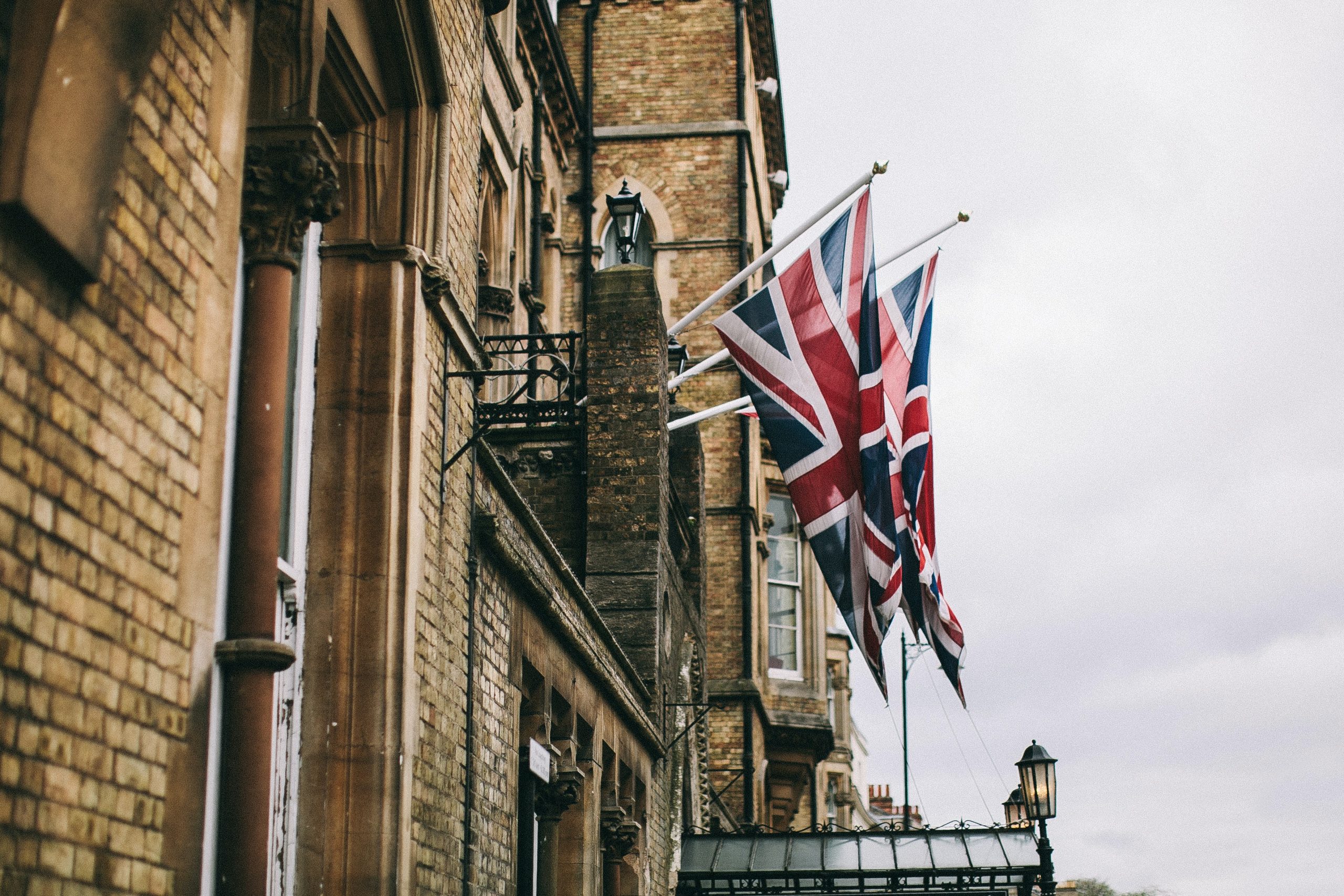
The Union Jack, officially known as the Union Flag, is one of the most recognizable and enduring banners in the world. Blending the crosses of three patron saints into a single design, its history spans centuries of royal unions, political maneuvers, and global expansion, making it a masterclass in vexillology and historical symbolism.
1. The Origin of the Name: "Union Jack" vs. "Union Flag"
A common debate among flag enthusiasts and historians concerns whether the banner should be called the Union Jack or the Union Flag. While many people use the terms interchangeably, strict traditionalists often point out a historical distinction based on how and where the banner is flown.
Historically, a "jack" was specifically a small flag flown on the jackstaff at the bowsprit of a warship. The flag flown from the main mast of a land-based installation or a ship at sea was simply the Union Flag. However, this distinction has blurred significantly over centuries of common usage. By the late 17th century, the term "Union Jack" was already widely used in official documents to describe the flag regardless of its location. In 1902, the British Admiralty officially settled the debate by stating that either name could be used legally and correctly in all contexts.
2. The First Union Flag of 1606
The story of the Union Flag began on April 12, 1606, following the Union of the Crowns in 1603. When King James VI of Scotland also became King James I of England, the two independent kingdoms shared a monarch while retaining their separate parliaments and laws. To symbolize this regal union on the high seas and across the realm, the King commanded that a new flag be created.
This initial design was relatively simple compared to the modern version. It combined the red cross of Saint George (representing England) with the white saltire of Saint Andrew (representing Scotland) against a blue field. However, this early version caused friction among Scottish mariners and citizens who felt that the prominent red cross of Saint George visually overpowered the white saltire beneath it. To appease Scottish sensitivities, a separate version of the flag was used in Scotland where the Scottish saltire was placed on top of the English cross.
3. The Incorporation of Ireland in 1801
The Union Flag achieved its final, modern configuration on January 1, 1801, following the Acts of Union 1800, which formally united Great Britain and Ireland into the United Kingdom of Great Britain and Ireland. To reflect this new constitutional reality, the red saltire of Saint Patrick (representing Ireland) was incorporated into the existing design.
Adding a third cross without completely redesigning the flag presented a major vexillological challenge. Placing a red saltire directly over the white saltire of Saint Andrew would violate the heraldic rule of tincture, which dictates that color cannot be placed directly upon color. To resolve this, heralds devised the ingenious technique of fimbriation—separating the red saltire of Saint Patrick from the blue background by placing a thin white border around it. Furthermore, the red and white diagonal stripes were counterchanged, meaning they do not align symmetrically across the center, giving equal visual weight to both Scotland and Ireland.
4. The Notable Absence of Wales
One of the most surprising facts about the Union Jack is that it contains no direct symbol representing Wales. When the original flag was commissioned in 1606, Wales was not represented because it had already been formally annexed and legally unified with the Kingdom of England through the Laws in Wales Acts 1535 and 1542. Consequently, from a legal and heraldic perspective of the 17th century, Wales was considered an administrative part of the realm of England rather than a distinct kingdom.
By the time the flag was updated in 1801 to include Ireland, incorporating Welsh heraldry—such as the iconic Red Dragon (Y Ddraig Goch)—was not seriously considered. The Red Dragon does not conform to traditional vertical or diagonal Christian cross motifs used in the rest of the banner. Despite this historical omission, modern debates occasionally resurface regarding whether the Welsh Dragon or Saint David's Cross should be added to a future redesign, though no official changes have ever been proposed in Parliament.
5. The Heraldic Meaning of the Component Crosses
Every line, color, and cross embedded in the Union Jack carries deep historical and religious significance tied to patron saints. Understanding the flag requires breaking down its three distinct heraldic components:
- Saint George’s Cross: A upright red cross centered on a white background, representing England. Saint George has been revered as England's patron saint since the Crusades.
- Saint Andrew’s Cross: A white diagonal saltire set against a deep blue field, representing Scotland. According to legend, Saint Andrew was martyred on an X-shaped cross at Patras.
- Saint Patrick’s Cross: A red diagonal saltire set against a white background, representing Ireland. It was adopted as the badge of the Order of Saint Patrick in 1783 before being integrated into the national flag.
| Component Cross | Represented Nation | Heraldic Description | Year Added |
|---|---|---|---|
| St. George's Cross | England | Red cross on a white field | 1606 |
| St. Andrew's Cross | Scotland | White diagonal saltire on a blue field | 1606 |
| St. Patrick's Cross | Ireland | Red diagonal saltire on a white field | 1801 |
6. The Strict Protocol of Flying It Upside Down
Flying the Union Jack upside down is an international symbol of distress, and due to the flag's complex asymmetric design, making this mistake is surprisingly easy. Because the red saltires of Saint Patrick and the white saltires of Saint Andrew are counterchanged, the thicker white bands must always appear above the red diagonal stripes in the upper hoist canton (the corner closest to the flagpole).
A simple memory aid for remembering the correct orientation is the phrase "broad white broad." When looking at the upper left corner nearest the pole, the wide white stripe must sit above the red diagonal line. If the narrow white stripe is on top, the flag is inverted. Historically, flying the flag upside down was used by British military units and merchant ships to signal an emergency, capture, or dire peril at sea.
7. Influence on Global Flags and the Commonwealth
As the British Empire expanded across the globe during the 18th, 19th, and 20th centuries, the Union Jack was carried to every corner of the world. Consequently, it became a foundational element in the design of numerous national flags, ensigns, and regional banners throughout the British Commonwealth.
Countries such as Australia, New Zealand, and Tuvalu still prominently feature the Union Jack in the canton (upper left corner) of their national flags. Additionally, several Canadian provincial flags—including those of British Columbia, Manitoba, and Ontario—incorporate the banner. Even the state flag of Hawaii in the United States features the Union Jack, a historical nod to the close relationship between the Kingdom of Hawaii and the British Royal Navy during the 19th century.
8. Legal Status and Lack of Official Status in England
Despite its iconic status, the Union Jack has never been formally adopted as the de jure national flag of the United Kingdom by an act of Parliament. Its status as the national banner is rooted entirely in royal proclamation and centuries of customary constitutional convention.
In 1908, the House of Lords formally declared that "the Union Jack should be regarded as the National Flag" of the United Kingdom. However, no statutory legislation explicitly mandates its use or penalizes the misuse of the flag in civilian contexts. This contrasts sharply with countries like the United States, which have rigorous legal codes governing the display, treatment, and handling of their national colors.
9. Maritime Ensigns and Specialized Variants
While the Union Jack is the most famous version, it serves as the base for several official ensigns used by the British Armed Forces and government departments. These variants ensure clear identification of vessels, military installations, and diplomatic outposts:
- The White Ensign: Flown by Royal Navy warships and certain shore establishments, featuring a red cross of Saint George with the Union Jack in the canton over a white field.
- The Red Ensign: Traditionally flown by British merchant navy vessels and private watercraft.
- The Blue Ensign: Flown by government-owned vessels, ships belonging to certain public departments, and various yacht clubs with Admiralty warrants.
These maritime flags have strict regulations regarding who may fly them, and unauthorized civilian use of the White Ensign, in particular, carries historical legal penalties under maritime law.
10. Cultural Iconography, Pop Culture, and Fashion
Beyond its geopolitical and historical roots, the Union Jack transcended its official duties in the 1960s to become a powerful global symbol of pop culture, youth movements, and fashion. During the "Swinging Sixties" in London, designers and musicians embraced the flag as an emblem of modernism and rebellion rather than rigid establishment politics.
Rock bands like The Who, led by Pete Townshend, famously wore jackets made from the Union Jack. Decades later, during the "Cool Britannia" era of the mid-1990s, Spice Girl Geri Halliwell wore an unforgettable Union Jack dress at the 1997 Brit Awards, cementing the flag's status as a timeless pop-culture icon. Today, the banner appears on everything from skateboards and high fashion to album covers and interior design, proving that its striking geometric symmetry remains perennially fashionable.
Frequently Asked Questions
Why is the Union Jack asymmetric?
The asymmetry of the Union Jack is a result of combining the diagonal cross of Saint Andrew (Scotland) and the diagonal cross of Saint Patrick (Ireland). To prevent the red strokes of Saint Patrick from visually dominating or violating heraldic color rules, heralds offset the diagonal bars so that each nation's cross has a distinct white border and balanced visual weight.
Is it illegal to burn or desecrate the Union Jack?
Unlike in some nations where flag burning is explicitly criminalized by statute, there is no specific law in the United Kingdom that criminalizes desecrating or burning the Union Jack. However, such actions can still lead to arrest and prosecution under broader public order laws, such as causing a breach of the peace or inciting racial or religious hatred.
Why is Wales not represented on the Union Jack?
Wales is not represented on the flag because it was formally annexed and legally integrated into the Kingdom of England through the Laws in Wales Acts in the 16th century, long before the first Union Flag was designed in 1606. At that time, Wales was considered an administrative principality of England rather than an independent kingdom requiring separate heraldic representation.
How can you tell if a Union Jack is upside down?
You can identify an inverted Union Jack by examining the upper canton closest to the flagpole. On a correctly oriented flag, the wider white stripe of the Saint Andrew's cross must be positioned directly above the red diagonal stripe of Saint Patrick's cross. If the narrow white border is on top, the flag is upside down.
Does the United Kingdom have an official national flag by law?
No, the Union Jack has never been established as the official national flag through an act of Parliament. Its status as the national emblem rests entirely on royal proclamations issued by monarchs across the centuries and accepted constitutional custom.
Conclusion and Next Actions
Understanding the history and symbolism of the Union Jack reveals a complex tapestry of political union, heraldic ingenuity, and cultural evolution. Whether studying vexillology, researching British constitutional history, or examining maritime traditions, recognizing the careful balance of crosses within the banner deepens appreciation for its enduring global legacy. For those wishing to explore further, visiting historical sites such as the Royal Museums Greenwich or examining primary parliamentary records from 1606 and 1801 offers profound insight into the formation of the United Kingdom.