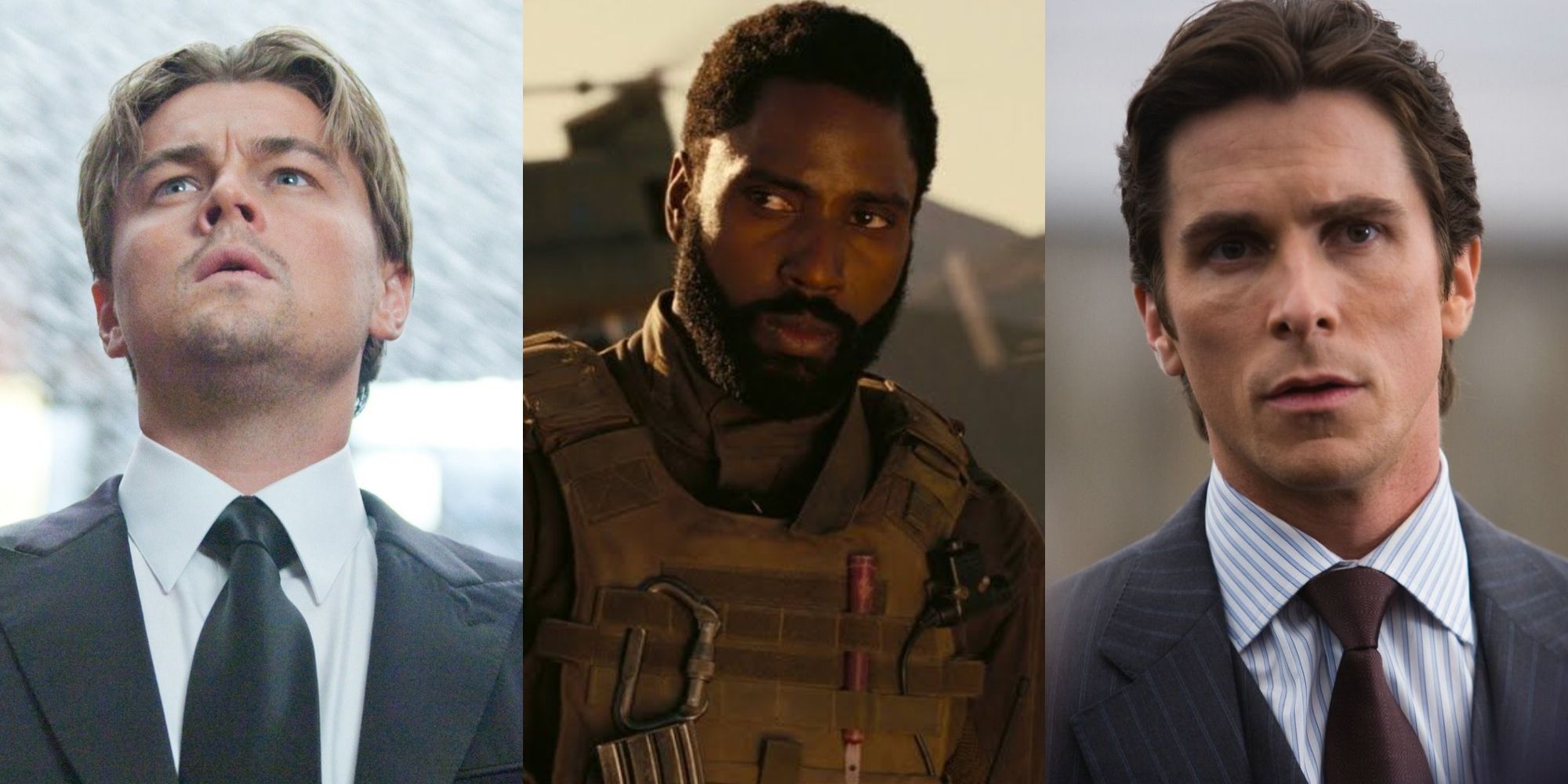
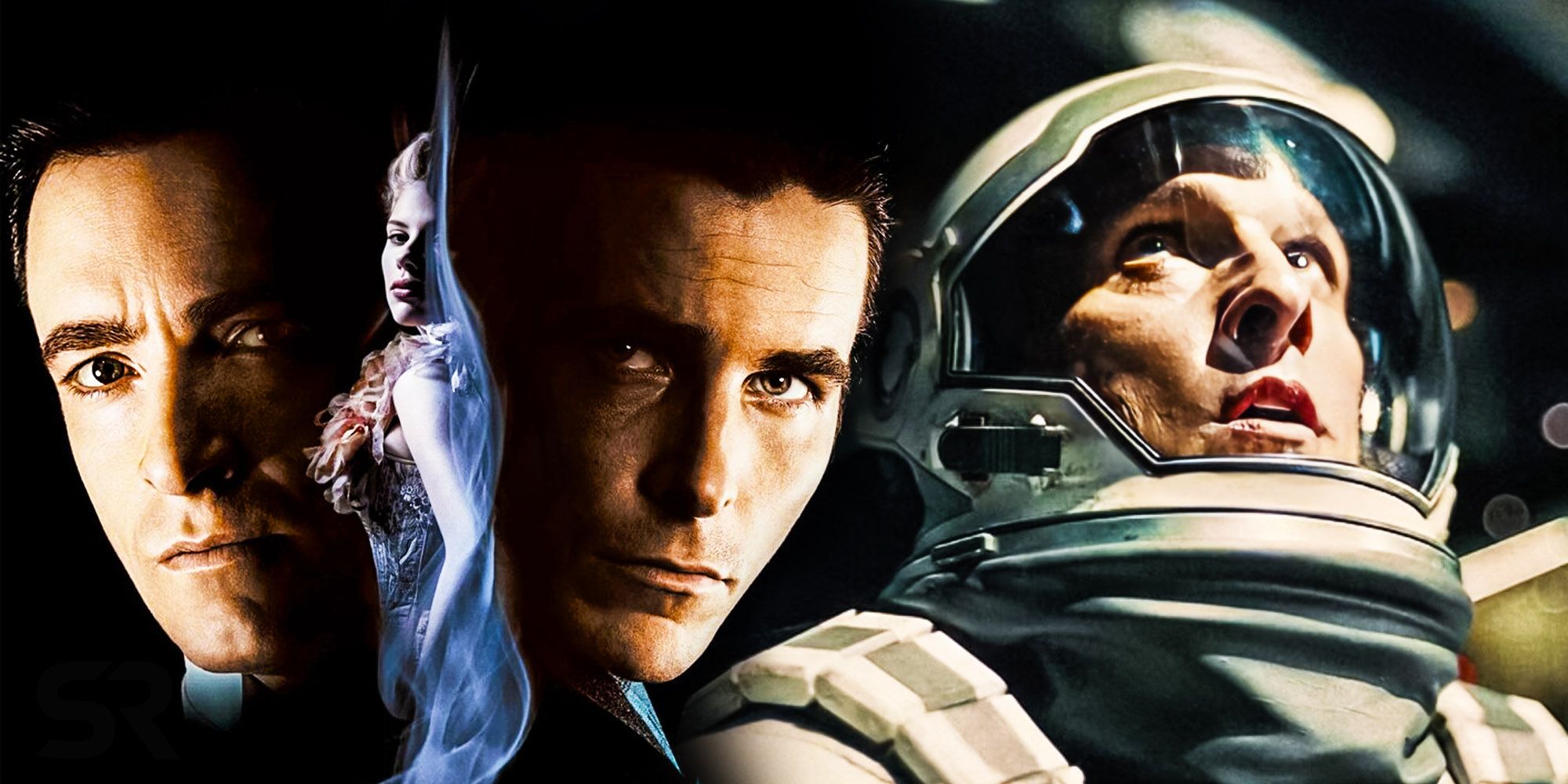
Christopher Nolan and Jonathan Nolan represent one of the most intellectually rigorous and commercially successful sibling creative duos in modern cinema and television. This comprehensive guide explores their shared cinematic footprint, tracing how Christopher’s visionary large-format direction converges with Jonathan’s intricate, concept-driven screenwriting. While Christopher is primarily known as a writer-director and Jonathan as a writer-creator and producer, their distinct creative synergy has shaped some of the most influential blockbusters and mind-bending narratives of the 21st century.
Introduction to the Nolan Brothers Creative Partnership
The professional dynamic between Christopher and Jonathan Nolan is rooted in a unique cross-pollination of literary premises and cinematic scale. Christopher, born in 1970, and Jonathan, born in 1976, grew up between London and Chicago, developing a shared fascination with non-linear storytelling, philosophy, memory, and the mechanics of time. Their partnership officially began when Christopher adapted Jonathan's short story Memento Mori into the breakout 2000 indie neo-noir thriller Memento.
Rather than working as a traditional co-writing team on every project, the brothers frequently alternate between independent endeavors and deeply collaborative screenwriting ventures. Jonathan often supplies the high-concept structural premise—such as temporal loops, advanced computing, or psychological identity fractures—while Christopher infuses these frameworks with practical filmmaking techniques, tactile action sequences, and grand thematic gravity. Understanding their collective filmography requires examining both their joint screenwriting credits and their independent creative milestones in film and television.
Foundational Collaborations and Early Breakthroughs
The genesis of the Nolan brothers' cinematic impact lies in the transition from short fiction to feature film execution. Their early works established the thematic vocabulary that would define their later, multi-million-dollar studio projects: unreliable narrators, moral ambiguity, and the manipulation of chronology.
Memento (2000)
Based on Jonathan Nolan’s unpublished short story Memento Mori, Memento established Christopher Nolan as a major directorial voice and earned Jonathan his first Academy Award nomination for Best Original Screenplay. The film follows Leonard Shelby, a man suffering from anterograde amnesia who uses polaroids, tattoos, and notes to hunt for his wife's murderer.
- Structure: The narrative unfolds in two alternating timelines—one moving backward in black-and-white, and the other moving forward in color, converging at the narrative climax.
- Thematic Core: The unreliability of memory and how human beings construct personal myths to survive trauma.
The Prestige (2006)
Adapting Christopher Priest's 1995 science-fiction novel, the brothers co-wrote the screenplay for The Prestige, exploring the bitter, obsessive rivalry between two late-19th-century London magicians, Robert Angier (Hugh Jackman) and Alfred Borden (Christian Bale).
- Narrative Design: Structured like a magic trick with three acts: the pledge, the turn, and the prestige. The film utilizes nested framing devices, journals within journals, and parallel framing.
- Technical & Thematic Depth: The movie investigates sacrifice, scientific ambition versus stage illusion, and the destructive nature of obsession, incorporating Nikola Tesla (played by David Bowie) as a catalyst for genuine science-fiction escalation.
The Dark Knight Trilogy: Reinventing the Superhero Blockbuster
Between 2005 and 2012, the Nolan brothers, alongside co-writer David S. Goyer, reshaped the cinematic landscape of superhero cinema. They grounded the Batman mythos in gritty realism, geopolitical anxiety, and systemic institutional corruption.
| Film | Release Year | Core Narrative & Thematic Focus |
|---|---|---|
| Batman Begins | 2005 | Fear, origin of identity, systemic corruption |
| The Dark Knight | 2008 | Chaos vs. order, escalation, surveillance ethics |
| The Dark Knight Rises | 2012 | Populism, economic collapse, legacy and rebirth |
Batman Begins (2005)
Directed by Christopher from a story by David S. Goyer and a screenplay co-written by Christopher and Goyer, this film rebooted Warner Bros.' dormant franchise. It prioritized practical martial arts, tactile armor design, and psychological realism over camp or fantastical CGI spectacles. It established Bruce Wayne's journey not merely as a costumed vigilante, but as a psychological survivor mastering fear.
The Dark Knight (2008)
Co-written by Christopher and Jonathan Nolan, The Dark Knight is widely regarded as a landmark achievement in modern blockbusters. Jonathan reportedly contributed crucial elements regarding the Joker's nihilistic philosophy and the subversion of institutional ethics, drawing inspiration from crime thrillers like Heat (1995) and classic Batman comics such as The Long Halloween. The film captures post-9/11 anxieties surrounding state surveillance, civil liberties, and the fragility of societal order.
The Dark Knight Rises (2012)
Co-written by Christopher and Jonathan Nolan, the trilogy closer shifts its gaze to class warfare, revolutionary populism, and historical cycles of societal collapse, drawing thematic parallels to the French Revolution and Charles Dickens' A Tale of Two Cities.
Interstellar and Cosmic Exploration
While Christopher directed and co-wrote Interstellar (2014) alongside Jonathan, the film’s origins trace back to Jonathan's initial development of the script for producer Lynda Obst, heavily influenced by the theoretical physics of Kip Thorne.
- Scientific Rigor: Jonathan spent time auditing relativity courses at Caltech while working on the screenplay equations and orbital mechanics.
- Thematic Focus: The intersection of paternal love and cosmic isolation, environmental collapse, and the survival instinct of the human species across dimensions.
- Collaborative Evolution: Although Jonathan initially developed the project as a Spielberg-directed venture, Christopher took over directorial duties upon signing on, merging Jonathan’s hard-science frameworks with his own preference for practical visual effects and IMAX cinematography.
Independent Masterpieces and Individual Pursuits
While their joint ventures define high-concept studio filmmaking, both brothers have pursued monumental solo projects that reflect their individual artistic priorities.
Christopher Nolan's Solo Directorial Landmarks
- Inception (2010): Written solely by Christopher, this heist thriller set inside the architecture of the human subconscious explores guilt, shared dreaming, and the subjective nature of reality.
- Dunkirk (2017): A masterclass in spatial-temporal tension, chronicling the WWII evacuation through three interlocking timelines (Land, Sea, and Air) operating at different durations.
- Tenet (2020): An espionage epic utilizing inverted entropy, challenging audiences with complex temporal mechanics and reverse-action choreography.
- Oppenheimer (2023): A biographical thriller detailing the life of J. Robert Oppenheimer and the creation of the atomic bomb, earning Christopher Academy Awards for Best Director and Best Picture.
Jonathan Nolan's Television and Streaming Expansion
Jonathan has successfully migrated his complex, philosophical storytelling style into television as a showrunner, writer, and director:
- Person of Interest (2011–2016): Created by Jonathan for CBS, this series evolved from a procedural surveillance drama into a prescient philosophical exploration of artificial general intelligence, mass data harvesting, and free will.
- Westworld (2016–2022): Co-created with Lisa Joy, this HBO adaptation of Michael Crichton's 1973 film used a high-end sci-fi Western theme park to examine consciousness, memory loops, and free will.
- Fallout (2024–Present): Developed alongside Lisa Joy, Jonathan directed the pilot episodes of this acclaimed video game adaptation, maintaining a sharp balance of dark satire, retro-futuristic world-building, and gritty survivalism.
Comparative Analysis of Creative Styles
While the Nolan brothers share an affinity for non-linear structures, high-concept premises, and cerebral engagement, their individual execution styles exhibit distinct nuances:
- Scope and Scale: Christopher leans toward cinematic immensity, preferring celluloid film stock, IMAX cameras, and practical physical stunts over digital augmentation. Jonathan frequently gravitates toward serialized television and streaming, where prolonged narrative arcs allow deep exploration of character psychology and world-building over multiple seasons.
- Tone and Emotion: Christopher's work often approaches emotion through the lens of duty, legacy, and intellectual puzzles (such as the father-daughter dynamics in Interstellar and Inception). Jonathan's work tends to explore darker, more cynical views of human nature, institutional corruption, and the ethical dilemmas of emergent technology.
- Narrative Geometry: Both brothers favor fragmented timelines, but Christopher uses them to manipulate audience perception of immediate suspense, whereas Jonathan uses them to examine the cyclical nature of human behavior, history, and artificial memory.
Common Misconceptions About the Nolan Brothers
Navigating the filmography of Christopher and Jonathan Nolan often leads to several persistent misunderstandings regarding authorship and collaboration:
- They co-write every movie: In reality, their collaborations are specific (Memento, The Prestige, The Dark Knight trilogy, Interstellar), while many of their most famous works—such as Inception, Dunkirk, and Oppenheimer for Christopher, and Person of Interest and Westworld for Jonathan—were spearheaded independently.
- Jonathan directed Christopher's films: Jonathan is primarily a writer, producer, and television director. All feature films commonly associated with "Nolan" as a feature director are directed by Christopher.
- Their stories are purely academic exercises: While intellectual concepts dominate their work—such as time dilation, entropy, and amnesia—both brothers anchor their narratives in raw human vulnerability, grief, and moral choice to maintain emotional resonance.
Practical Guide: How to Watch the Nolan Brothers Filmography in Chronological or Thematic Order
For viewers seeking to trace the evolution of the Nolan brothers' cinematic universe, watching their works in strategic sequence offers profound insight into their recurring motifs.
1. Thematic Chronology (Recommended for Depth)
- Start with Psychological Roots: Watch Memento (2000) to understand their mastery of subjective memory and fractured chronology.
- Explore Obsession and Ambition: Watch The Prestige (2006) to see how period settings combine with technological obsession.
- Examine Systemic Power: Watch The Dark Knight Trilogy (2005–2012) to trace their evolution into large-scale geopolitical and social commentary.
- Venture into Cosmic Scale: Watch Interstellar (2014) as the culmination of their collaborative screenwriting blending hard science with human emotion.
- Expand into Television: Transition to Jonathan's television work (Person of Interest and Westworld) to observe how their cinematic themes translate into long-form serialized narratives.
2. Verification and Troubleshooting for Streamers
Because the brothers' filmography is distributed across multiple studios (Warner Bros., Paramount, Universal, and various streaming networks), availability changes frequently across subscription video-on-demand (SVOD) platforms. Viewers should verify current streaming rights via aggregated search services like JustWatch or Reelgood before planning a viewing marathon, as physical media (4K UHD Blu-ray) remains the gold standard for experiencing Christopher Nolan's expansive aspect ratios and intricate sound design.
Frequently Asked Questions
Did Christopher and Jonathan Nolan write every movie together?
No. While they have collaborated on several major screenplays including Memento, The Prestige, The Dark Knight, The Dark Knight Rises, and Interstellar, they also pursue separate projects. Christopher writes and directs films like Inception, Dunkirk, and Oppenheimer independently, while Jonathan creates and runs television series such as Person of Interest and Westworld.
Which Nolan brother directed The Dark Knight?
Christopher Nolan directed The Dark Knight (2008), as well as the other two films in the trilogy, Batman Begins (2005) and The Dark Knight Rises (2012). Jonathan Nolan co-wrote the screenplay for The Dark Knight and The Dark Knight Rises alongside Christopher and David S. Goyer.
What was Jonathan Nolan's role in Interstellar?
Jonathan Nolan wrote the initial draft of the screenplay for Interstellar, spending years researching theoretical physics and orbital mechanics with physicist Kip Thorne. When Christopher took over directorial duties, he rewrote and adapted the script to fit his vision, retaining Jonathan's core scientific and emotional framework.
How do Christopher and Jonathan's styles differ?
Christopher focuses primarily on feature-length cinematic spectacles, utilizing large-format film stock and practical effects to explore time, memory, and existential scope. Jonathan focuses heavily on television and streaming production, utilizing multi-season arcs to explore artificial intelligence, ethics, and the cyclical nature of human consciousness.
Are there any upcoming projects featuring both Nolan brothers?
Neither brother has officially announced a new joint feature film or television project as of 2026, as both remain focused on their respective individual cinematic and television slates following their recent major solo accolades.
Conclusion and Next Actions
The creative output of Christopher and Jonathan Nolan represents a high-water mark for intellectually ambitious storytelling in contemporary media. To fully appreciate their impact, start by exploring their foundational collaborations like Memento and The Prestige, then trace how their shared fascination with time and identity expands into cosmic and societal scales. For the ultimate viewing experience, seek out physical media releases to fully appreciate the meticulous framing, sound design, and technical mastery that define the Nolan brothers' cinematic universe.