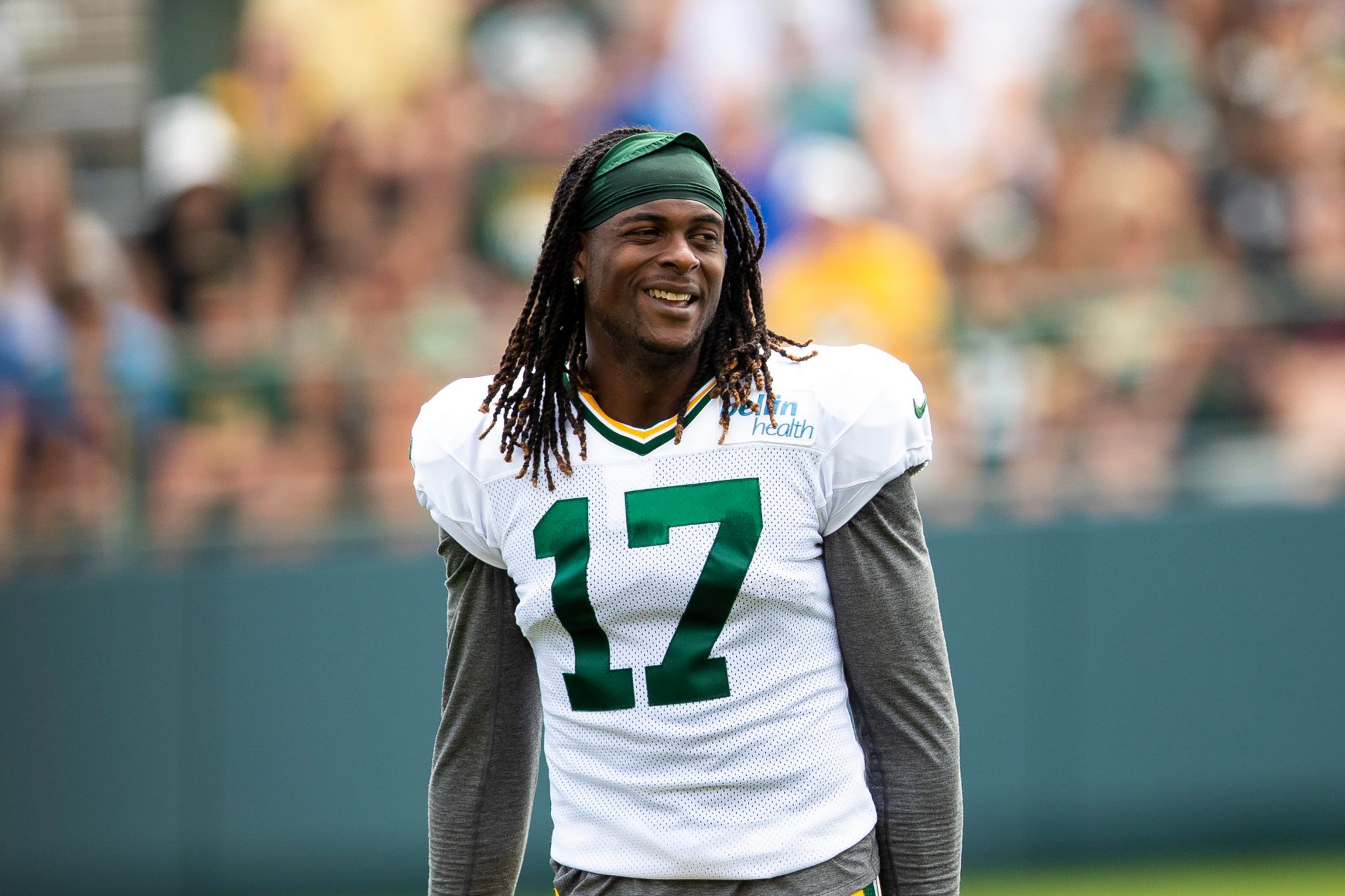
When evaluating modern elite wide receiver legacies, few comparisons capture the evolution of the position quite like A.J. Green and Davante Adams. While Green defined the archetype of the dominant, long-striding X-receiver throughout the 2010s with the Cincinnati Bengals, Adams revolutionized the modern route-tree craft, establishing himself as the preeminent separator of his era primarily with the Green Bay Packers and Las Vegas Raiders. Analyzing their trajectories involves exploring starkly contrasting physical profiles, route specializations, cap allocations, and contextual team fits that shaped their respective impacts on the National Football League.
Introduction to the Elite Receiver Archetypes
The debate between A.J. Green and Davante Adams transcends simple box-score scouting. It is a study in how wide receiver value is calculated, deployed, and compensated across different eras of modern football strategy. A.J. Green entered the league in 2011 as a consensus top-five draft pick out of the University of Georgia, possessing rare length, fluid vertical tracking, and immediate WR1 capabilities. He anchored the Cincinnati offense for a decade, earning seven consecutive Pro Bowl nods to begin his career.
Conversely, Davante Adams entered the league in 2014 as a second-round selection out of Fresno State, taking several seasons to refine his release packages and footwork before unlocking historic production. Adams became the master of the tight-window slant, the hard-angle curl, and an unguardable red-zone weapon. Examining their financial compensation, statistical accumulation, and locker-room utility provides a comprehensive blueprint of what it takes to sustain elite play at the professional level.
Career Statistics and Production Profile Breakdown
To understand the on-field value of both players, one must examine their career milestones, efficiency metrics, and statistical volume. A.J. Green’s career was characterized by immediate, high-volume production despite playing in a relatively conservative offensive system for much of his tenure in Cincinnati. Green surpassed the 1,000-yard receiving mark in six of his first seven professional seasons, missing out only during an injury-shortened 2016 campaign where he still posted 964 yards in just 10 games. His ability to win contested catches downfield made him a favored target for Andy Dalton, providing a reliable safety valve that elevated the entire offensive floor.
Davante Adams followed a more developmental yet ultimately more explosive statistical trajectory. After a quiet start to his career, Adams evolved under the tutelage of Aaron Rodgers in Green Bay into arguably the most prolific scoring wide receiver of the late 2010s and early 2020s. Adams led the NFL in receiving touchdowns twice (2020 with 18, and 2018 with 13) and consistently commanded a target share exceeding 30% in high-octane offensive schemes.
| Metric / Category | A.J. Green (Career Totals) | Davante Adams (Career Totals) |
|---|---|---|
| Primary Teams | Cincinnati Bengals, Arizona Cardinals | Green Bay Packers, Las Vegas Raiders, New York Jets |
| Seasons Active | 12 Seasons (2011–2022) | 11+ Seasons (2014–Present) |
| Games Played | 158 | 150+ |
| Receptions | 731 | 900+ |
| Receiving Yards | 10,551 | 11,000+ |
| Touchdowns | 70 | 95+ |
| Pro Bowl Selections | 7 | 6 |
| First-Team All-Pro | 0 | 3 |
While Green reached the 10,000-yard milestone through consistent exterior dominance and deep-threat capability, Adams leveraged elite release technique and route precision to accumulate high reception volume and touchdowns at an historically rapid rate.
Contract Values and Financial Trajectory
Financial compensation for elite wide receivers has escalated dramatically, making contract comparisons between different eras a fascinating exercise in market inflation. A.J. Green signed his major extension with the Cincinnati Bengals in September 2015—a four-year, $60 million deal that placed him among the highest-paid wideouts of that era, averaging roughly $15 million per year. At the time, this represented elite tier-one compensation, though it looks modest compared to modern figures. Green later played on the franchise tag in 2020 ($18.17 million) and closed his career with one-year veteran deals with the Arizona Cardinals.
Davante Adams, benefiting from the massive wide receiver market explosion catalyzed by rising television revenues and the 2022 market reset, secured a blockbuster contract following his trade to the Las Vegas Raiders. Adams signed a five-year, $140.75 million contract averaging $28 million annually, making him one of the highest-paid receivers in NFL history at the time of signing.
The structural differences in their earnings reflect the macro-economic shifts of the league:
- Market Timing: Green's peak earning years occurred before the exponential post-2020 salary cap jumps.
- AAV Disparity: Adams commanded nearly double the annual average value (AAV) of Green's prime extension, reflecting current positional scarcity and inflation.
- Guaranteed Money: Adams's deals featured significantly higher percentages of guaranteed compensation, underscoring the modern front office's willingness to commit massive cash upfront for elite route technicians.
Route Specialization and Scheme Fit Analysis
Team fit dictates how effectively a wide receiver translates physical traits into weekly tactical advantages. A.J. Green was the quintessential X-receiver who could align on the boundary, run deep vertical stems, and win 50-50 balls against tight man coverage. His tall, rangy frame (6'4") made him exceptionally dangerous on back-shoulder fades and sideline throws. Green did not require complex motion or manufactured touches to find production; he could simply be isolated on the weak side to win against premier cornerbacks. This made him an ideal fit for traditional West Coast or vertical-stretch offenses that valued clear-out responsibilities and outside leverage.
Davante Adams represents the modern hybrid separator. Standing at 6'1", Adams is not necessarily the tallest boundary threat, but his mastery of the line of scrimmage is legendary. Utilizing basketball-style footwork, subtle body leans, and an extensive catalog of hand-fighting releases, Adams defeats press coverage with unmatched consistency. This makes him scheme-versatile: he can be deployed in the slot, motioned across formations to avoid bracket coverage, or isolated on the perimeter. Adams thrives in timing-and-rhythm offenses where the quarterback and receiver operate on a telepathic understanding of spacing, as seen during his peak years with the Green Bay Packers.
Health, Longevity, and Career Decline Phase
Evaluating wide receiver value requires examining how players handle the physical attrition of the position as they transition past their athletic primes. A.J. Green dealt with significant lower-body injuries later in his career, notably a severe toe injury that wiped out his 2018 season and persistent ankle issues that hampered his final years in Cincinnati and his subsequent stint in Arizona. These injuries robbed him of his elite vertical burst, forcing him to adapt into a more methodical possession receiver before his retirement after the 2022 season.
Davante Adams has maintained remarkable durability throughout his career, largely avoiding catastrophic structural lower-body injuries despite absorbing heavy contact across the middle of the field. His game relies less on raw straight-line speed and more on deceleration, leverage, and spatial awareness—traits that age exceptionally well. Consequently, Adams has sustained high-level production deeper into his thirties than many traditional speed or size-dependent wideouts.
Frequently Asked Questions
Who had the better peak: A.J. Green or Davante Adams?
Davante Adams holds the edge in peak dominance, particularly regarding All-Pro selections (three First-Team nods) and historical red-zone efficiency. A.J. Green was remarkably consistent with seven consecutive Pro Bowls to start his career, but Adams reached consensus status as the best receiver in the NFL during his peak seasons in Green Bay.
How do their contract values compare when adjusted for inflation?
While A.J. Green’s $15 million annual average in 2015 was elite for its time, Davante Adams’s $28 million annual average reflects the dramatic inflation of the wide receiver market. When adjusted for the rising salary cap and modern revenue shares, Adams's contract represents a significantly larger capital investment by his respective front office.
What made A.J. Green difficult for cornerbacks to defend?
Green presented a rare combination of height (6'4"), fluid long speed, and exceptional catch-radius tracking. Defensive backs struggled to contest jump balls against him because he could elevate over defenders and secure difficult catches away from his frame.
Why is Davante Adams considered one of the best route runners in NFL history?
Adams utilizes elite release packages at the line of scrimmage, precise intermediate pacing, and deceptive body control to create separation against any form of coverage. His ability to snap off routes without losing speed allows him to win consistently against both man and zone schemes.
Conclusion and Strategic Takeaway
Comparing A.J. Green and Davante Adams highlights two distinct paradigms of wide receiver excellence. Green offered traditional perimeter dominance, imposing size, and reliable volume during an era when boundary isolation was paramount. Adams redefined modern receiver play through technical mastery at the line of scrimmage, route nuance, and scheme adaptability, commanding a vastly higher financial valuation in an era of surging salary caps. For general managers building a roster, Green represents the durable foundational X-receiver of the 2010s, while Adams embodies the matchup-proof tactical weapon of the contemporary NFL.