The year 1997 stands as one of the most transformative and commercially monumental periods in modern cinematic history, bridging the gap between practical filmmaking traditions and the digital revolution. Defined by massive box office blockbusters, daring independent releases, and groundbreaking technological achievements, films from 1997 continue to shape contemporary pop culture, narrative structures, and visual effects standards nearly three decades later.
The Historical and Technological Landscape of 1997 Cinema
To understand the enduring legacy of the 1997 film landscape, one must examine the industry's technological and economic conditions at the close of the twentieth century. Major Hollywood studios were transitioning away from traditional optical compositing into the era of digital computer-generated imagery (CGI). While films like Jurassic Park (1993) and Independence Day (1996) proved that audiences hungered for spectacle, 1997 demonstrated how digital tools could seamlessly merge with sweeping dramatic narratives and character-driven epics.
Simultaneously, the independent film movement was experiencing a golden age. Following the success of breakout hits earlier in the decade, specialty divisions of major studios and independent distributors were aggressively funding mid-budget, high-concept dramas and idiosyncratic auteur projects. This dual-track ecosystem allowed monumental studio blockbusters to share theater marquees with gritty urban crime stories, dark comedies, and emotionally resonant character studies.
The Shift Toward Digital Visual Effects
The late 1990s marked a crucial turning point for post-production workflows. In 1997, facilities like Digital Domain, Industrial Light & Magic (ILM), and Pixar were pushing the boundaries of what could be rendered on screen. The challenges faced by visual effects supervisors in balancing physical miniatures, full-scale practical builds, and nascent CGI laid the methodological foundation for modern blockbuster pipelines.
Landmark Blockbusters and Box Office Titans
The commercial pinnacle of 1997 cinema is inextricably linked to films that shattered global box office records and dominated cultural discourse for months on end. These pictures redefined the scale of Hollywood investments and proved that international markets were increasingly vital to studio profitability.
James Cameron's Titanic
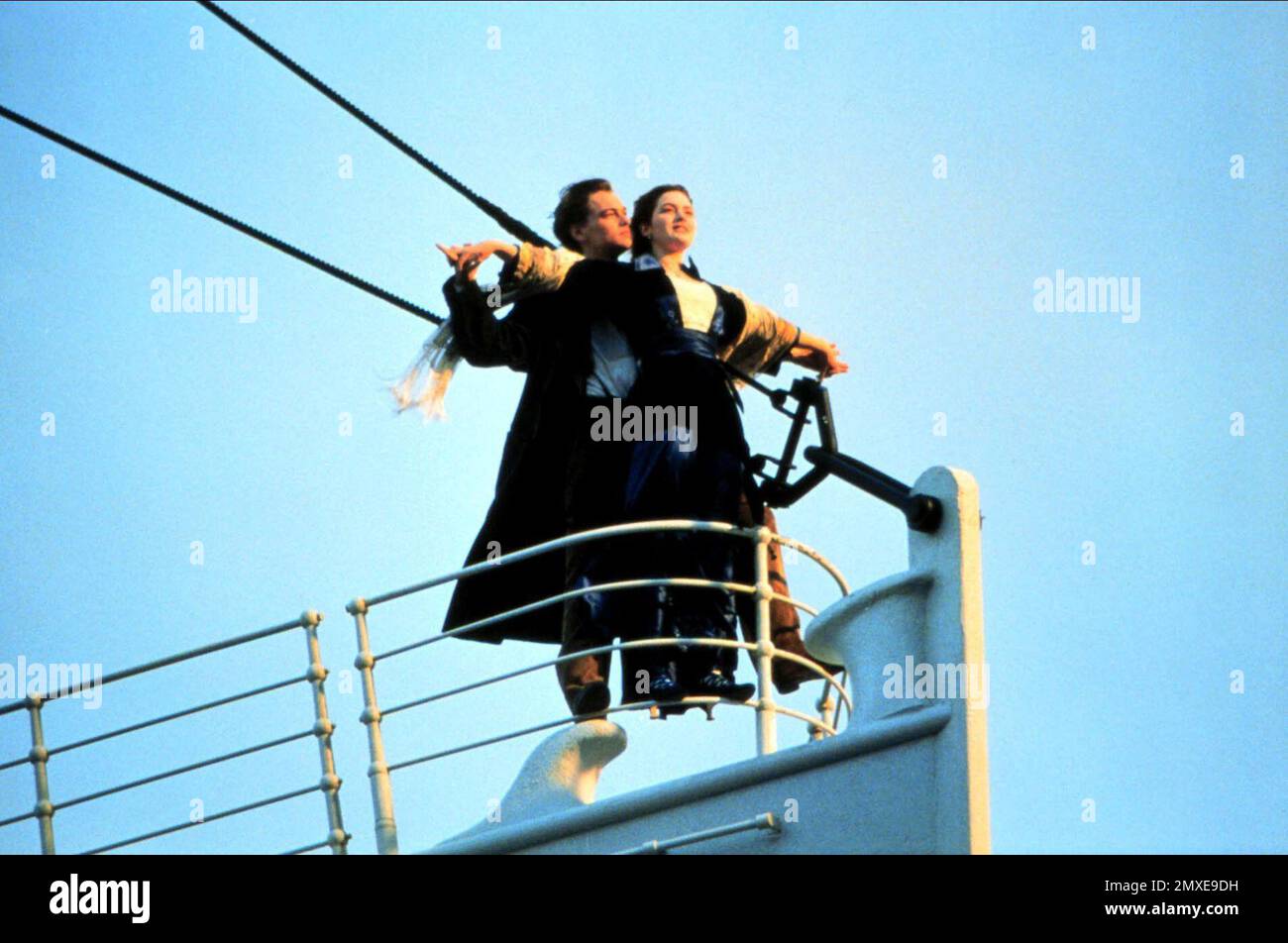
No discussion of 1997 cinema is complete without addressing James Cameron’s Titanic. Released in December 1997 by Paramount Pictures and 20th Century Fox, the epic romance and disaster film became a cultural phenomenon of historic proportions. Starring Leonardo DiCaprio as Jack Dawson and Kate Winslet as Rose DeWitt Bukater, the film combined historical tragedy with a sweeping, class-conscious love story.
- Box Office Dominance: Titanic became the first film in history to gross over $1 billion worldwide, eventually surpassing $2 billion during its initial theatrical run and subsequent re-releases. It held the worldwide all-time box office record for over a decade.
- Academy Awards Sweep: At the 70th Academy Awards held in 1998, Titanic tied the record for the most Oscar wins by a single film, taking home 11 awards, including Best Picture, Best Director for James Cameron, Best Original Song ("My Heart Will Go On"), and numerous technical categories.
- Technological Innovation: Cameron pushed underwater cinematography to new limits, commissioning specialized submersibles to capture footage of the actual wreck. The production also pioneered digital water simulation techniques and advanced composite shots that combined live-action actors on massive physical decks with digital crowds and ocean environments.
Sci-Fi, Action, and Franchise Expansion
Beyond the tragic romance of the RMS Titanic, 1997 delivered a diverse array of action and science fiction films that expanded existing intellectual properties or birthed new cult favorites.
- Men in Black: Directed by Barry Sonnenfeld and starring Will Smith and Tommy Lee Jones, this sci-fi comedy blended practical creature effects by Rick Baker with sharp buddy-cop chemistry. It became a massive commercial hit, grossing over $589 million worldwide and launching a lucrative multimedia franchise.
- The Lost World: Jurassic Park: Steven Spielberg returned to direct the sequel to his 1993 blockbuster. While it received mixed reviews compared to its predecessor, it demonstrated the sheer appetite global audiences had for dinosaur-centric spectacle, setting opening weekend records at the time.
- Air Force One: Wolfgang Petersen’s high-altitude political action thriller starring Harrison Ford as a heroic U.S. President defending his hijacked plane captured the patriotic, high-concept action aesthetic of the late 1990s.
- Starship Troopers: Paul Verhoeven’s satirical military science fiction film offered a biting critique of fascism and media propaganda disguised as a big-budget bug-hunt action movie. Though initially misunderstood by some critics and audiences upon release, it has since been widely reassessed as a masterclass in subversive sci-fi.
Defining Contributions of Independent and International Cinema
While Hollywood blockbusters captured mainstream headlines, 1997 was equally remarkable for the breadth and depth of independent, art-house, and international cinema. These releases challenged narrative norms and introduced audiences to fresh directorial voices.
The Rise of Modern Indie Icons
Several filmmakers who would go on to dominate twenty-first-century cinema released seminal works in 1997:
- Boogie Nights: Paul Thomas Anderson solidified his status as a major cinematic voice with this sprawling, vibrant, and ultimately tragic examination of the late-1970s and early-1980s San Fernando Valley adult film industry. Featuring an ensemble cast led by Mark Wahlberg, Burt Reynolds, and Julianne Moore, the film combined energetic, Scorsese-esque long takes with a deeply empathetic look at found families.
- Good Will Hunting: Directed by Gus Van Sant and written by its stars Matt Damon and Ben Affleck, this Boston-set drama about a working-class mathematical genius struggling with emotional trauma became a critical and commercial darling, winning Academy Awards for Best Supporting Actor (Robin Williams) and Best Original Screenplay.
- L.A. Confidential: Directed by Curtis Hanson, this neo-noir adaptation of James Ellroy’s novel presented a cynical, beautifully stylized portrait of 1950s Los Angeles police corruption. It earned critical acclaim and won two Academy Awards, famously going head-to-head with Titanic in several major categories.
International Masterpieces
Global cinema in 1997 also produced works that left an indelible mark on film history. Abbas Kiarostami won the prestigious Palme d'Or at the 1997 Cannes Film Festival for Taste of Cherry (Ta'm-e gilas), a minimalist Iranian masterpiece exploring existential questions of life, death, and human connection. Meanwhile, Japanese animation witnessed a monumental shift with the theatrical release of Hayao Miyazaki’s Princess Mononoke (Mononoke-hime), which broke Japanese box office records and introduced sophisticated ecological fantasy themes to Western arthouse audiences.
Critical Comparison of 1997 Cinematic Movements
To appreciate the multifaceted nature of the 1997 film year, consider the following structural comparison between major studio releases and independent/international breakthroughs:
| Category | Studio Blockbusters (e.g., Titanic, The Fifth Element) | Independent & Arthouse Releases (e.g., Boogie Nights, L.A. Confidential) | International Cinema (eg., Princess Mononoke, Taste of Cherry) |
|---|---|---|---|
| Primary Financial Model | High-budget financing ($90M+), heavy reliance on global box office and merchandising. | Mid-budget funding ($15M–$40M), targeted distribution, theatrical-to-home-video pipeline. | State-backed funding, international co-productions, festival circuit premieres. |
| Technological Focus | Pioneering digital effects, large-scale physical sets, advanced sound design (Dolby Digital). | Character-driven cinematography, period-accurate set design, location shooting. | Hand-drawn traditional animation, minimalist framing, naturalistic soundscapes. |
| Narrative Approach | High-concept premises, universal emotional stakes, clear heroic arcs. | Complex moral ambiguity, ensemble character studies, deconstruction of genre tropes. | Philosophical exploration, poetic realism, cultural specificity with universal resonance. |
Frequently Asked Questions About 1997 Films
What was the highest-grossing film released in 1997?
James Cameron's Titanic was by far the highest-grossing film of 1997, earning over $1.8 billion during its initial theatrical run and eventually crossing the $2 billion mark following subsequent 3D re-releases. It dominated the global box office for over a decade until Cameron's Avatar surpassed it in 2010.
Which film won the Academy Award for Best Picture for films released in 1997?
Titanic won the Academy Award for Best Picture at the 70th Academy Awards ceremony, held in March 1998. It won 11 Oscars out of its 14 nominations, tying the record previously held by Ben-Hur (1959) for the most Academy Awards won by a single motion picture.
Were there any notable horror films released in 1997?
Yes, 1997 was an interesting transitional year for horror, bridging the self-referential meta-horror craze sparked by Scream (1996) with classic creature features. Notable titles include Scream 2, which successfully lampooned and expanded upon sequel tropes just one year after the original, and I Know What You Did Last Summer, another major teen slasher hit penned by Kevin Williamson.
How did 1997 impact the evolution of visual effects?
The year 1997 accelerated the integration of computer-generated imagery (CGI) into live-action filmmaking. Films like Titanic utilized digital stunt doubles, digital water, and virtual crowd generation to execute scenes that were physically impossible or dangerously impractical to shoot practically, setting new technical standards for the industry.
What independent films from 1997 achieved enduring critical acclaim?
Several independent and mid-budget releases from 1997 achieved classic status. Boogie Nights, Good Will Hunting, L.A. Confidential, Kevin Smith’s Chasing Amy, and Harmony Korine’s Gummo represent the diverse aesthetic and narrative risks taken outside the traditional studio blockbuster system during that year.
Practical Takeaways for Film Historians and Cinephiles
Exploring the 1997 film landscape offers valuable lessons for modern creators and scholars analyzing media history. When researching or curating viewings from this era, keep the following approaches in mind:
- Examine the Hybridization: Look at how films from 1997 balanced physical craftsmanship (stunts, practical makeup, miniatures) with early digital tools.
- Contextualize Box Office Realities: Recognize that the late 1990s represented the peak era of the physical home video market (VHS rental and purchase), which heavily influenced how mid-budget films achieved profitability outside of theatrical runs.
- Explore Beyond the Winners: While Titanic dominated awards ceremonies, diving into the year's independent and international offerings reveals a much richer, more experimental cinematic ecosystem.