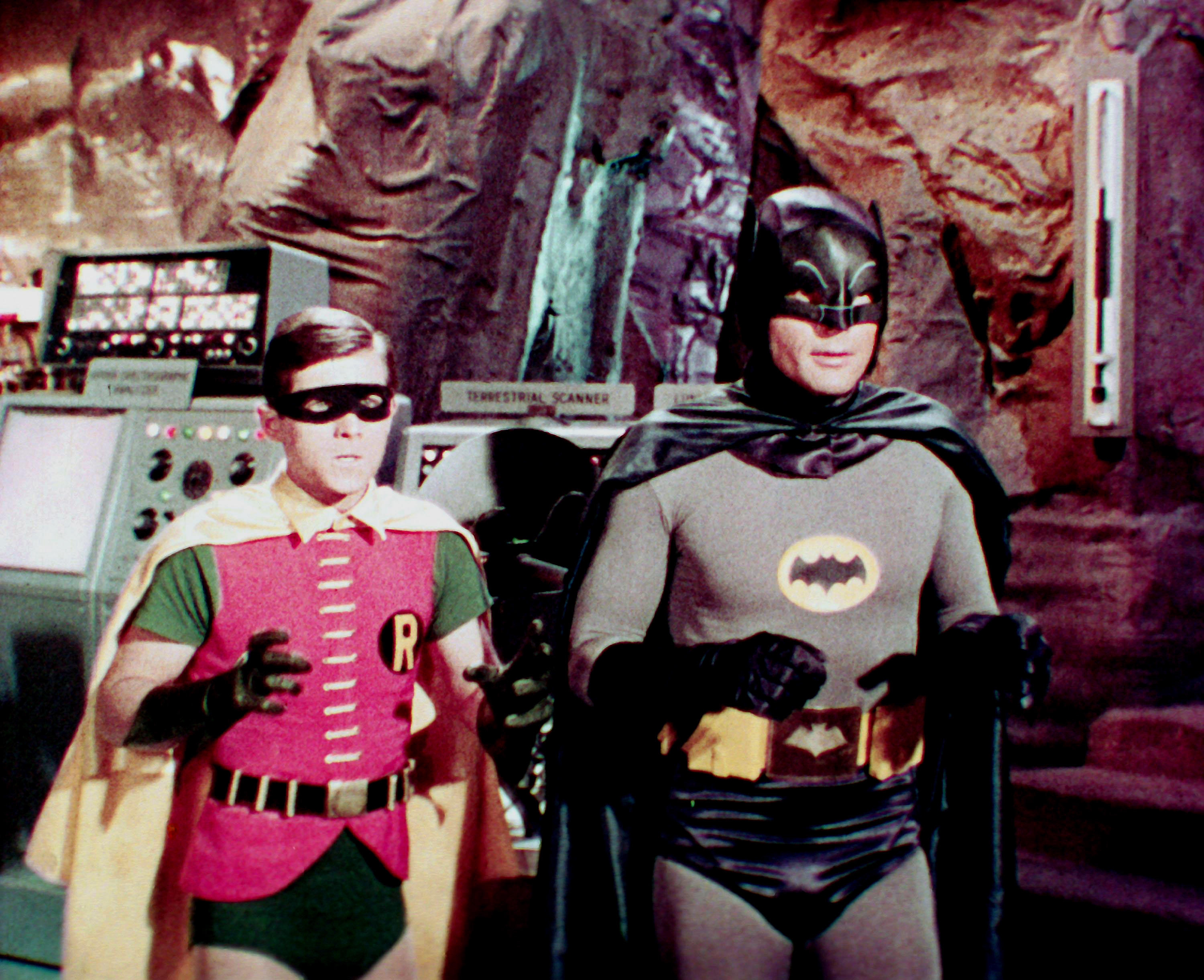
The 1966 Batman television series, starring Adam West and Burt Ward, is a landmark of 20th-century pop culture that redefined the "Caped Crusader" as a campy, neon-soaked icon of the Pop Art movement. Airing on ABC from 1966 to 1968, the show transformed a struggling comic book character into a global phenomenon known as "Batmania," influencing fashion, language, and the future of superhero media for decades.
The Origins of Batmania: Bringing the Comics to Life
By the mid-1960s, the Batman comic books published by DC Comics were facing declining sales. National Periodical Publications (now DC) sought a television adaptation to revitalize the brand. ABC, which was trailing in the ratings compared to NBC and CBS, took a gamble on the project. Producer William Dozier and his production company, Greenway Productions, were tasked with bringing the Gotham City vigilante to the small screen.
Dozier’s vision was revolutionary: he decided to film the series as a "living comic book." Instead of a gritty noir or a standard action drama, he leaned into high-concept camp. This meant the actors played the most absurd situations with absolute, deadpan seriousness. This duality allowed children to enjoy the show as a straight adventure series while adults could appreciate the satirical, tongue-in-cheek humor.
The premiere on January 12, 1966, was an immediate sensation. The show utilized a unique "twice-weekly" format, where the Wednesday episode ended on a cliffhanger, urging viewers to return the following night—at the "same Bat-time, same Bat-channel"—to see the resolution.
The Dynamic Duo: Adam West and Burt Ward
The success of the 1966 Batman relied heavily on the chemistry between its leads. Adam West was cast as Bruce Wayne/Batman, bringing a distinctive staccato delivery and a rigid, heroic posture that became synonymous with the character. West’s Batman was a "Bright Knight"—a law-abiding, milk-drinking citizen who served as a moral compass for the youth of America.
Burt Ward won the role of Dick Grayson/Robin out of hundreds of applicants, partly due to his background in martial arts and his youthful energy. Ward’s Robin was famous for his "Holy..." catchphrases (e.g., "Holy Smokes, Batman!"), of which there were 352 unique variations throughout the series. Together, West and Ward performed many of their own stunts, adding a level of physicality to the brightly colored fight scenes.
The show also featured a supporting cast that grounded the absurdity. Alan Napier played the loyal butler Alfred Pennyworth, Neil Hamilton portrayed Commissioner James Gordon, and Stafford Repp was the bumbling but well-meaning Chief O'Hara. In the third season, Yvonne Craig joined the cast as Barbara Gordon/Batgirl, introduced to bolster ratings among female viewers and provide a new dynamic to the crime-fighting team.
The Gallery of Rogues: Special Guest Villains
One of the most enduring elements of the 1966 Batman series was its "Special Guest Villains." At the height of the show's popularity, being cast as a Batman villain was a prestigious mark of status in Hollywood. The villains were often given more screen time and more flamboyant dialogue than the heroes, allowing legendary actors to deliver over-the-top performances.
The "Big Four" villains appeared most frequently and defined the show's antagonistic landscape:
- The Joker: Portrayed by Cesar Romero, who famously refused to shave his mustache for the role, simply applying white greasepaint over it. His high-pitched laugh and chaotic energy set the standard for the character for years.
- The Penguin: Burgess Meredith brought a squawking laugh and a signature waddle to the umbrella-wielding aristocrat of crime.
- The Riddler: Frank Gorshin received an Emmy nomination for his manic, high-energy portrayal. His performance emphasized the psychological obsession with puzzles that remains a core trait of the character today.
- Catwoman: The role was most famously played by Julie Newmar in seasons one and two, followed by Eartha Kitt in season three and Lee Meriwether in the 1966 feature film.
The table below details the primary villains and their impact on the series:
| Villain | Primary Actor(s) | Key Characteristic | Notable Gadget/Weapon |
|---|---|---|---|
| The Joker | Cesar Romero | Manic laughter, mustache under paint | Exploding joy buzzers, Joker-gas |
| The Penguin | Burgess Meredith | Bird-like squawk, tuxedo | Weaponized umbrellas |
| The Riddler | Frank Gorshin / John Astin | Obsessive puzzling, green spandex | Riddles, puzzles |
| Catwoman | Julie Newmar / Eartha Kitt | Purring dialogue, romantic tension | Sleeping gas, cat-claws |
| Mr. Freeze | George Sanders / Otto Preminger / Eli Wallach | Cold-themed puns, suit requirements | Freeze gun |
| King Tut | Victor Buono | Delusional Egyptologist | Ancient "curses," traps |
Production Design and the "Pop Art" Aesthetic
The 1966 Batman was a visual marvel for its time. It was one of the few shows in the mid-60s to be broadcast in full color, and the producers took every opportunity to exploit that fact. The production design was heavily influenced by the Pop Art movement of the 1960s, which utilized bold primary colors, comic-style graphics, and a sense of irony.
Key visual elements included:
- Dutch Angles: Whenever a scene took place in a villain’s lair, the camera was tilted at a sharp angle. This was a visual metaphor for the "crooked" nature of the criminals.
- Onomatopoeia Overlays: During the choreographed fight scenes, brightly colored graphics reading "POW!", "WHAM!", "ZAP!", and "BIFF!" would flash across the screen, synchronized with the sound effects.
- The Batcave: One of the most expensive sets in television history at the time, the Batcave was filled with blinking lights, rotating platforms, and labeled equipment (e.g., the "Atomic Pile," the "Bat-Computer").
The 1966 Batmobile: An Automotive Icon
Perhaps no single prop from the series is as famous as the Batmobile. Designed by legendary custom car builder George Barris, the vehicle was based on the 1955 Lincoln Futura concept car. Barris had only three weeks to transform the non-functional concept car into the crime-fighting machine seen on screen.
The 1966 Batmobile featured several "functional" gadgets for the show, including:
- The Atomic Turbine: A simulated jet exhaust at the rear.
- The Bat-Ray: A front-mounted laser used to destroy obstacles.
- Emergency Bat-Turn Lever: Which deployed two parachutes to allow the car to make a 180-degree turn at high speeds.
- The Bat-Phone: A mobile communication device located between the seats.
The original car sold at auction in 2013 for over $4 million, and as of 2026, it remains one of the most valuable and recognizable television vehicles in the world.
The 1966 Feature Film: Batman: The Movie
Between the first and second seasons, 20th Century Fox released Batman: The Movie (1966). Originally intended to be a pilot for the series to generate interest, it was pushed back to capitalize on the show's immediate success. The film is notable for featuring the "United Underworld," where the Joker, Penguin, Riddler, and Catwoman (Lee Meriwether) teamed up to dehydrate the members of the United Nations Security Council into dust.
The film's budget allowed for the introduction of several major vehicles that would later appear in the series, including the Bat-Copter, the Bat-Boat, and the Bat-Cycle. It also featured the infamous "Shark Repellent Bat-Spray" scene, which remains one of the most parodied moments in superhero history.
The Decline and Cancelation of the Series
Despite the massive success of the first two seasons, "Batmania" began to fade by 1967. The show’s formula—villain commits crime, Batman enters trap, Batman escapes, final fight—started to feel repetitive to audiences. In an attempt to freshen the show for Season 3, the format was changed to single episodes, and Batgirl was introduced.
The production costs were also astronomical. The intricate sets and high salaries for guest stars made the show difficult to sustain as ratings dipped. ABC canceled the series in March 1968. NBC expressed interest in picking up the show, but by the time they made an offer, the expensive Batcave sets had already been demolished, and the deal fell through.
The Long-Term Impact and Modern Accessibility
The 1966 Batman series had a complex relationship with the source material. For decades, it was blamed by some comic fans for making the character a "joke," leading to the darker, more serious reinventions by Frank Miller and Tim Burton in the 1980s. However, in the 21st century, the show has been reclaimed as a masterpiece of satirical comedy and a vital part of the character's history.
Where to Watch and Collect in 2026
As of 2026, the series is more accessible than ever before. For years, legal disputes between 20th Century Fox (the producer) and Warner Bros. (the owner of DC Comics) kept the show off home video. Those issues were resolved in 2014, leading to high-definition remasters.
- Streaming: The series is frequently available on platforms like Max or Tubi, often in remastered 4K quality.
- Physical Media: The "Complete Television Series" is available on Blu-ray and 4K Ultra HD. These sets include extensive behind-the-scenes documentaries and rare screen tests of the actors.
- Merchandise: The 1966 aesthetic remains a favorite for collectors. Companies like Mattel, NECA, and Hot Toys continue to produce high-end figures of the Adam West Batman and the Barris Batmobile.
Technical Specifications of the Production
For researchers and media historians, the technical aspects of the 1966 production reveal a high level of craftsmanship despite the "campy" exterior.
- Aspect Ratio: 1.33:1 (Standard for 1960s TV).
- Film Stock: 35mm Technicolor.
- Sound: Mono (later remastered to 5.1 Surround for home video).
- Executive Producer: William Dozier.
- Distributor: 20th Century Fox Television (now part of Disney).
Frequently Asked Questions
Why did the 1966 Batman use "Dutch angles" in villain scenes?
The tilted camera angles, known as Dutch angles, were a deliberate stylistic choice used to represent the "crooked" and "unbalanced" nature of the criminals. When the scene shifted back to Batman’s perspective or the Batcave, the camera was level, representing order and the law.
Did Adam West do his own stunts?
Adam West and Burt Ward performed many of their own stunts, particularly in the choreographed fight scenes. However, for more dangerous sequences—such as explosions or high-wire work—professional stunt doubles were used. Hubert Wells and Dave Cass were among the stunt performers who filled in for West.
What happened to the original 1966 Batmobile?
The original Batmobile remained in George Barris’s personal collection for decades. It was occasionally displayed at car shows and museums. In 2013, it was sold at the Barrett-Jackson auction to collector Rick Champagne for $4.62 million. Several officially licensed replicas have been built since for promotional use.
Is the 1966 Batman series part of the DC Multiverse?
Yes. In recent years, DC has officially integrated the 1966 universe into its "Multiverse" as Earth-66. This was most notably seen in the Crisis on Infinite Earths crossover event on the CW, where a brief cameo confirmed the existence of this world. There was also a popular comic book series titled Batman '66 that continued the adventures of West and Ward’s characters in print.
Future Recommendations for Fans
If you have finished watching the original 120 episodes of the 1966 series, there are several modern ways to continue exploring this specific era of Gotham City:
- Watch the Animated Continuations: In 2016 and 2017, Adam West, Burt Ward, and Julie Newmar returned to voice their characters in two animated feature films: Batman: Return of the Caped Crusaders and Batman vs. Two-Face. These serve as excellent spiritual sequels.
- Read the Batman '66 Comics: DC Comics published a long-running digital-first series that captures the tone of the show perfectly, even featuring "episodes" with villains who never appeared on screen, like Two-Face (designed to look like William Shatner).
- Visit the Hollywood Museum: Located in Los Angeles, the museum often features costumes and props from the series, including the original outfits worn by West and Ward.
The 1966 Batman remains a bright, joyous celebration of heroism. While the character of Batman has since moved into much darker territory, the "Bright Knight" of the 1960s continues to remind audiences that sometimes, the best way to fight crime is with a heavy dose of color, a sense of humor, and a reminder to always fasten your seatbelt.