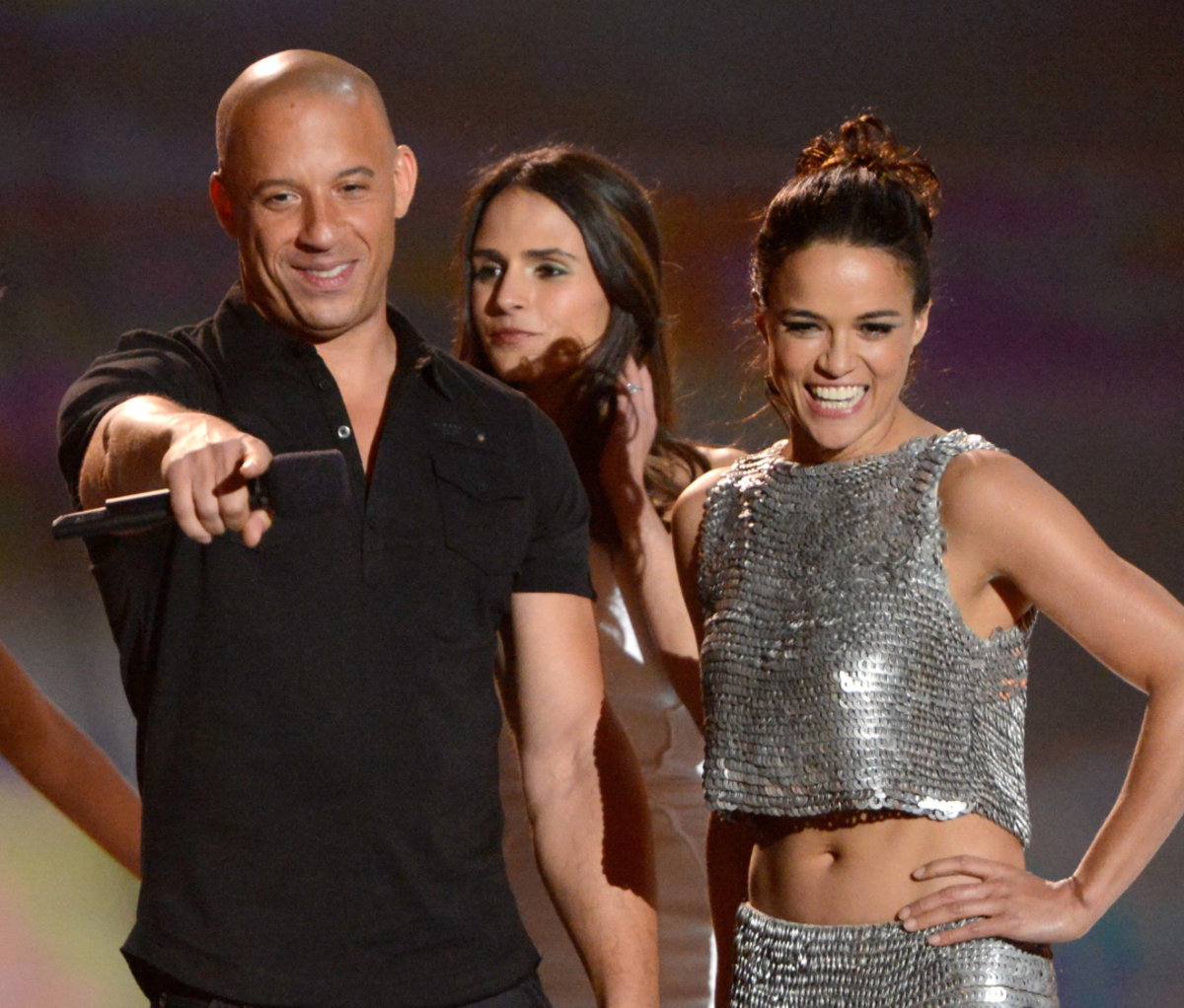
Vin Diesel changed his birth name, Mark Sinclair, to a stage name during his early days as a bouncer in New York City to cultivate a tougher persona and project authority while managing rowdy crowds. Over time, this working alias transitioned seamlessly into his professional identity as he entered the film industry, eventually becoming one of the most recognizable action movie monikers in Hollywood history.
The Early Life and Birth of Mark Sinclair
Before he became the global action icon known for commanding the screen in high-octane franchises like The Fast and the Furious and xXx, the actor was born Mark Sinclair on July 18, 1967, in Alameda County, California, alongside his fraternal twin brother, Paul. Raised in New York City by his astrologer and psychologist mother, Deloras Sherleen Sinclair, and his adoptive father, Irving H. Vincent—an acting instructor and theater manager—Diesel grew up immersed in the bohemian and artistic culture of Greenwich Village.
His introduction to the performing arts came at a remarkably young age. When he was just seven years old, he and some friends broke into the Theater for the New City in the West Village with the intention of vandalizing it. Instead of calling the police, the artistic director of the theater offered them a script and a part in an upcoming children’s play, Dinosaur Door, paying them twenty dollars a week on the condition that they attend every rehearsal. This accidental debut ignited a lifelong passion for acting and storytelling, leading him to participate in various off-Off-Broadway productions throughout his youth and adolescence.
Despite his early theatrical training, breaking into mainstream Hollywood as a young adult proved exceptionally difficult. By the time he reached his late teens and early twenties, the traditional casting pipelines were not yielding the breakthrough roles he craved. To sustain himself financially while navigating auditions and writing his own screenplays, Diesel took a job that would not only pay the bills but also inadvertently give birth to his legendary professional persona.
The Bouncer Years and the Creation of "Vin Diesel"
In the late 1980s and early 1990s, New York City nightlife was notoriously volatile. To support his ambitions, Sinclair secured employment as a bouncer at some of Manhattan’s most famous and aggressive nightspots, most notably the legendary Greenwich Village club The Tunnel. Standing guard at the door of a high-volume, high-energy venue required a commanding physical presence, absolute confidence, and an unshakeable aura of authority to deter potential fights and manage unruly patrons.
It was during this high-stakes chapter of his life that he realized the name "Mark Sinclair" lacked the rugged, dangerous edge required to command respect in the club scene. "Vin" was naturally derived from his last name, Vincent (the surname of his adoptive father, Irving), while "Diesel" was a playful nickname given to him by his fellow bouncers and regular patrons. They observed his seemingly boundless physical energy, high stamina, and relentless work ethic, remarking that he ran on diesel fuel.
| Original Identity | Stage Name Component | Origin and Meaning |
|---|---|---|
| Mark Sinclair | Vin | Shortened form of Vincent, derived from his adoptive father's surname. |
| Mark Sinclair | Diesel | A nickname given by coworkers due to his high energy and stamina as a bouncer. |
By combining the streamlined prefix with the industrial, high-octane surname, the moniker "Vin Diesel" was born. Initially, the name functioned as a psychological shield and a professional tool on the streets of New York. It provided a layer of anonymity and toughness, separating his vulnerable artistic aspirations as a writer and independent filmmaker from his intimidating day-to-day employment guarding club entrances.
Transition from Club Security to Independent Filmmaking
While working the doors at New York City clubs by night, Diesel continued to pursue his true creative ambitions by day. Frustrated by the lack of diverse or compelling casting opportunities available for an actor of his ambiguous ethnic background and muscular build, he decided to take matters into his own hands. He began writing screenplays and studying filmmaking independently at Hunter College, where he focused on English and creative writing.
In 1994, he wrote, directed, produced, and starred in his first feature film, a short drama titled Multi-Facial. The semi-autobiographical project explored the struggles of a multiracial actor auditioning for various stereotypical roles in Hollywood. Operating on a shoestring budget funded by personal savings and earnings from his bouncer job, Diesel used his professional moniker in the credits. Multi-Facial was accepted into the prestigious Cannes Film Festival in 1995, marking his first major critical validation in the industry and proving that his self-fashioned identity could carry professional weight.
Encouraged by this initial success, he followed up with his first full-length feature film, Strays, in 1997. Serving once again as writer, director, producer, and star, Diesel used the name Vin Diesel on screen. While Strays did not achieve immediate commercial dominance, it caught the attention of visionary director Steven Spielberg, who saw Diesel's performance in Multi-Facial and decided to cast him in a small but memorable supporting role as Private Adrian Caparzo in the critically acclaimed World War II epic Saving Private Ryan (1998).
The Rise of a Global Action Star
The exposure gained from Saving Private Ryan acted as a major catalyst for Diesel's career, officially transitioning him from an indie filmmaker and nightlife bouncer to a sought-after Hollywood talent. Throughout this professional ascent, he chose to retain the name Vin Diesel permanently, recognizing its immense marketability and strong alignment with the action genre he was beginning to conquer.
| Year | Project | Role / Contribution | Professional Name Used |
|---|---|---|---|
| 1994 | Multi-Facial | Writer, Director, Producer, Star | Vin Diesel |
| 1997 | Strays | Writer, Director, Producer, Star | Vin Diesel |
| 1998 | Saving Private Ryan | Actor (Private Caparzo) | Vin Diesel |
| 1999 | The Iron Giant | Voice Actor (The Iron Giant) | Vin Diesel |
| 2000 | Pitch Black | Actor (Riddick) | Vin Diesel |
His distinct voice and imposing physical frame secured him the title role in Brad Bird's animated classic The Iron Giant (1999) and the breakout sci-fi hit Pitch Black (2000), where he introduced audiences to the antihero Richard B. Riddick. However, it was his casting as Dominic Toretto in The Fast and the Furious (2001) that cemented Vin Diesel as a household name worldwide. The sharp, industrial ring of the name matched the roaring engines and high-stakes themes of the franchise, cementing a brand that endures across multiple sequels spanning over two decades.
Public Perception and Personal Branding in Hollywood
The decision to adopt a stage name is a time-tested Hollywood tradition, utilized by countless actors to create memorable brands, distance themselves from personal histories, or improve pronunciation and marketability. In Diesel’s case, the evolution from Mark Sinclair to Vin Diesel represents a rare instance where a pseudonym was forged in the real-world crucible of urban nightlife before ever hitting the silver screen.
Fans frequently debate whether the name is entirely fabricated or contains elements of his legal identity. While "Mark Sinclair" remains his legal name on official documents, contracts, and birth records, "Vin Diesel" functions as his corporate and artistic entity. In various interviews throughout his career, Diesel has expressed deep affection for both names, noting that Mark Sinclair represents his private family life, artistic introspection, and upbringing, whereas Vin Diesel embodies the resilient, high-energy public persona built through hard work and determination.
Maintaining this dual identity has allowed him to protect his personal life while delivering the larger-than-life performances expected by audiences. By keeping the gritty authenticity of his bouncer days alive through his professional moniker, he sustains a continuous connection to the hustle required to break into an industry that initially overlooked him.
Frequently Asked Questions
What is Vin Diesel’s real birth name?
Vin Diesel’s legal birth name is Mark Sinclair. He was born Mark Sinclair in Alameda County, California, in 1967 before moving to New York City, where he was raised in Greenwich Village by his mother and adoptive father.
When and why did he adopt the name Vin Diesel?
He adopted the name during the late 1980s and early 1990s while working as a bouncer at prominent New York City nightclubs such as The Tunnel. The name was created to project toughness and authority for crowd control, combining a shortened version of his adoptive surname, Vincent, with the nickname "Diesel," given because of his high energy and stamina.
Does Vin Diesel still use his real name legally?
Yes, Mark Sinclair remains his legal name for all official documentation, legal filings, and business contracts. "Vin Diesel" is used exclusively as his professional stage name, trademark, and public brand within the entertainment industry.
Did his family influence his entry into acting?
His adoptive father, Irving H. Vincent, worked as a theater manager and acting instructor, which heavily influenced Diesel's early exposure to stage productions. He began acting in theater workshops and plays in Greenwich Village when he was just seven years old.
How did his bouncer background help his film career?
Working as a bouncer taught him how to handle high-pressure environments, manage difficult personalities, and project absolute confidence. These traits translated directly into his screen presence, helping him secure physically demanding action roles and giving him the resilience needed to finance and produce his own independent films.
Conclusion and Next Action
Understanding why Vin Diesel changed his name sheds light on the deliberate construction of one of Hollywood's most durable modern brands. Far from a random Hollywood invention, the moniker is a authentic relic of his formative years working security on the gritty streets of New York City while fighting for a foothold in the film industry. To explore this topic further, consider watching his breakthrough independent short film Multi-Facial or reading more about the history of independent cinema in the 1990s to see how early DIY filmmaking shaped the modern action landscape.