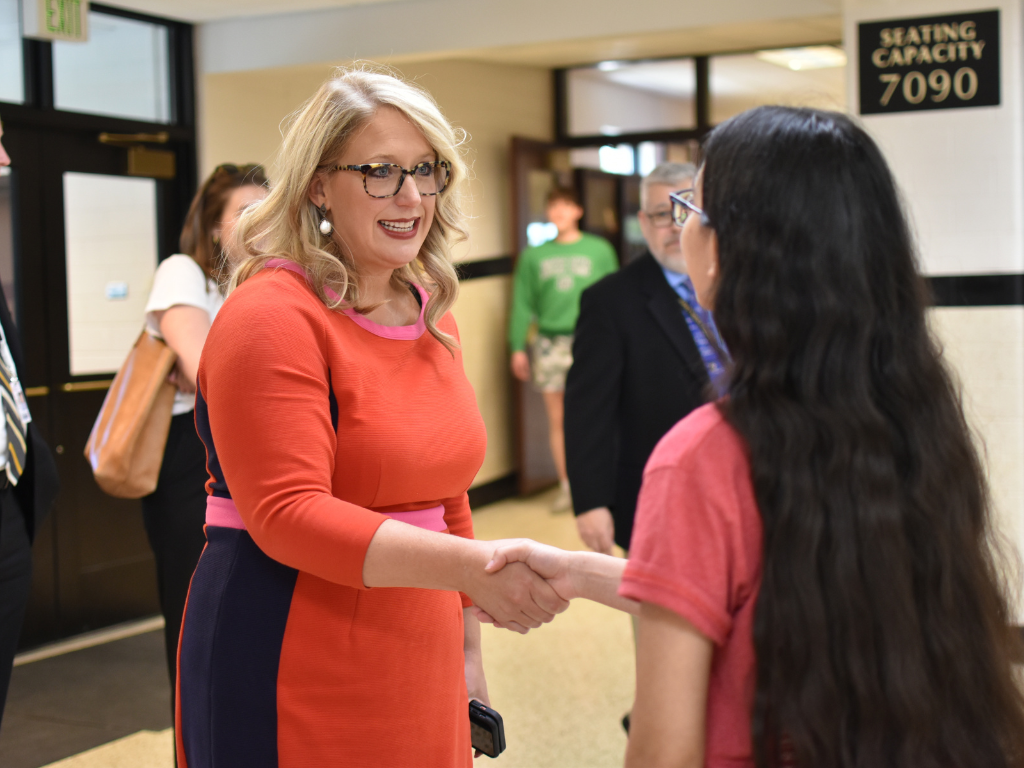
Dr. Katie Jenner serves as Indiana’s first Secretary of Education, a historic role she assumed in January 2021. Appointed by Governor Eric Holcomb, she leads the Indiana Department of Education (IDOE) with a focus on literacy through the Science of Reading, workforce readiness via the Indiana GPS dashboard, and expanding career-connected learning for K-12 students.
The Evolution of Education Leadership in Indiana
The role of Dr. Katie Jenner represents a fundamental shift in how Indiana governs its K-12 education system. Historically, the head of Indiana’s schools was the Superintendent of Public Instruction, a position filled via statewide general elections. However, following legislative changes intended to align the executive branch’s educational goals with the Department of Education's operations, the position transitioned to an appointed Secretary of Education.
Dr. Jenner’s appointment in 2021 marked the end of the elected era and the beginning of a cabinet-level approach to schooling. As of 2026, her tenure has been defined by a move away from traditional "siloed" education toward a "pipeline" model that connects early childhood education, K-12 schooling, and post-secondary career outcomes. This alignment is designed to ensure that the state's economic needs are directly addressed by the competencies taught in the classroom.
Professional Background and Academic Foundation
Dr. Jenner’s career trajectory is rooted in the classroom, a factor that has provided her with significant credibility among Hoosier educators. She began her career as a Career and Technical Education (CTE) teacher at Madison Consolidated High School. Her transition from the classroom to administration saw her take on roles as an assistant principal and later as a district administrator.
Before her appointment as Secretary, Jenner served as the Vice President of K-12 Initiatives and Statewide Partnerships for Ivy Tech Community College. During her time at Ivy Tech, she focused on dual-credit programs and creating "seamless" transitions for high school students entering the workforce or higher education. Her academic credentials include a Bachelor’s degree from Transylvania University, a Master’s degree from the University of Kentucky, an MBA from Indiana State University, and a Doctorate in Education from the University of Kentucky. This multidisciplinary background—combining education, business, and administrative leadership—has informed her data-driven approach to state-level policy.
The Science of Reading: A Literacy Mandate
One of the most significant pillars of Dr. Jenner’s leadership is the aggressive implementation of the Science of Reading. Recognizing a decline in national and state reading scores, the IDOE under Jenner’s guidance pivoted toward evidence-based reading instruction that emphasizes phonics, phonemic awareness, vocabulary, fluency, and comprehension.
Legislative Support and Implementation
In 2023 and 2024, Indiana passed landmark legislation (such as HEA 1558) that mandated the Science of Reading curriculum in all Indiana schools. By 2026, this shift has moved from a pilot phase to a full-scale operational standard. The IDOE provided substantial funding for teacher coaching and professional development, ensuring that educators were not merely handed new textbooks but were trained in the neurological processes of how children learn to read.
The IREAD-3 Assessment
Under Jenner, the state intensified its focus on the IREAD-3, the assessment used to determine third-grade reading proficiency. The department’s policy reinforces that students must be proficient in reading before moving to the fourth grade, with specific interventions and "summer buckets" of support for those who struggle. This "literacy-first" philosophy is based on the premise that after third grade, students stop "learning to read" and begin "reading to learn."
Indiana GPS: A New Model for Accountability
Dr. Jenner has been a vocal critic of relying solely on standardized test scores to measure school quality. To provide a more comprehensive view of student success, she spearheaded the launch of Indiana Graduates Prepared to Succeed (Indiana GPS).
Beyond the A-F Grade
Indiana GPS is a digital dashboard that replaces the traditional, often reductive, A-F school grading system. As of 2026, this dashboard provides parents and stakeholders with real-time data on five key characteristics:
- Academic Mastery: Traditional proficiency in math and English.
- Career and Postsecondary Readiness: Enrollment in advanced coursework or CTE programs.
- Communication and Collaboration: Measures of how students interact and work in teams.
- Work Ethic: Attendance rates and persistence.
- Civic, Financial, and Digital Literacy: Preparedness for the modern adult world.
The dashboard allows for a nuanced comparison between schools, focusing on growth rather than just static achievement. It reflects Jenner’s belief that the "success" of a high school should be measured by where its graduates are one year after they leave the building.
Career Scholarship Accounts and Workforce Alignment
Bridging the gap between high school and the labor market is perhaps the most distinctive aspect of Dr. Jenner’s policy agenda. She has championed the expansion of Work-Based Learning (WBL) and the creation of Career Scholarship Accounts (CSA).
The CSA program provides students with approximately $5,000 to spend on approved career-related expenses. These funds can be used for:
- Apprenticeship programs.
- Certification exams.
- Transportation to work sites.
- Technical training equipment.
This initiative is part of a broader strategy to "re-invent" the American high school experience. In Jenner’s view, a high school diploma should not be an end point but a credential that has immediate value in the Indiana economy. By 2026, the number of students participating in modernized apprenticeships has grown significantly, particularly in high-demand sectors like advanced manufacturing, healthcare, and information technology.
Teacher Recruitment and Retention Strategies
Like many states, Indiana has faced significant challenges in maintaining a robust teacher pipeline. Dr. Jenner has addressed this through several strategic initiatives aimed at both recruitment and long-term retention.
| Initiative | Primary Focus | Target Outcome |
|---|---|---|
| Attract, Prepare, Retain | Grant funding for local districts. | Localized solutions for teacher shortages. |
| James Madison Fellowship | History and Civics teachers. | Specialized expertise in social studies. |
| I-STEM Partnerships | Science and Math educators. | Increased STEM certification among current staff. |
| Teacher Appreciation Grants | Performance-based bonuses. | Retention of high-performing educators. |
| Science of Reading Coaching | In-classroom support. | Reducing teacher burnout through better tools. |
Dr. Jenner has emphasized that teacher retention is not just about salary—though the state has seen incremental increases in average teacher pay—but also about professional respect and the quality of the working environment. The IDOE has worked to reduce the "red tape" of licensure, making it easier for professionals from other industries to transition into the classroom while maintaining high standards for pedagogical training.
Addressing the Learning Gap and Special Education
The COVID-19 pandemic left a lasting mark on student achievement, and much of Jenner's early tenure was focused on "learning recovery." In 2026, the department continues to utilize data to identify students who fell behind, particularly in mathematics.
Special education has also seen a shift toward more inclusive practices and improved funding formulas. Dr. Jenner has advocated for better "transition services" for students with disabilities, ensuring that these students have the same access to career-connected learning and post-secondary opportunities as their peers. This includes the development of alternative diplomas and certificates that recognize the diverse achievements of all Hoosier students.
Challenges and Critiques
No public official is without critics, and Dr. Jenner’s tenure has faced scrutiny on several fronts. Some educational advocates have expressed concern that the heavy emphasis on "career readiness" might detract from a well-rounded liberal arts education. Others have questioned the accountability of the Science of Reading mandates, noting the immense pressure placed on teachers to change their instructional methods in a short timeframe.
Additionally, the transition to an appointed Secretary has sparked debates about transparency and the influence of the Governor’s office on education policy. However, Jenner has largely maintained high approval ratings within the state legislature, often successfully navigating bipartisan support for her core literacy and workforce initiatives.
Navigating the 2026 Educational Landscape
As of 2026, the Indiana Department of Education is focused on the long-term sustainability of the programs Dr. Jenner introduced. The "Indiana GPS" dashboard has become the primary tool for real estate agents, parents, and businesses to evaluate the health of local communities. The Science of Reading has led to a measurable uptick in third-grade literacy rates, providing a model that other Midwestern states are increasingly looking to emulate.
The IDOE is also currently exploring the integration of Artificial Intelligence (AI) in the classroom. Under Jenner’s leadership, the department has released guidelines on the ethical use of AI, focusing on how it can be used to personalize learning for students and reduce administrative burdens for teachers, rather than replacing the essential human element of instruction.
Frequently Asked Questions
What is Dr. Katie Jenner's official title?
Dr. Katie Jenner is the Secretary of Education for the State of Indiana. She is the first person to hold this appointed position, which replaced the elected Superintendent of Public Instruction role.
How was Dr. Katie Jenner selected for her role?
She was appointed by Governor Eric Holcomb in November 2020 and officially took office in January 2021. The selection was based on her extensive background in both K-12 education and higher education partnerships.
What is the "Science of Reading" initiative in Indiana?
This is a state-mandated approach to literacy instruction that uses evidence-based methods. It focuses on teaching children how to decode words through phonics and phonemic awareness, moving away from "balanced literacy" or "three-cueing" methods that have been shown to be less effective for many students.
What is the Indiana GPS dashboard?
Indiana GPS (Graduates Prepared to Succeed) is an online performance dashboard. It tracks school performance across various metrics beyond test scores, such as graduation pathways, career preparedness, and student growth, providing a more holistic view of education quality.
How do Career Scholarship Accounts (CSA) work?
CSAs are state-funded accounts that allow high school students to pay for career-connected learning experiences. This can include trade school tuition, certification fees, and other costs associated with preparing for a specific profession while still in high school.
Recommended Next Actions
For parents and educators interested in the current state of Indiana schools under Dr. Katie Jenner’s leadership, the following steps are recommended:
- Access the Indiana GPS Dashboard: Visit the official Indiana Department of Education website to view your local school’s performance across the new multi-dimensional metrics.
- Review Literacy Resources: Parents of K-3 students should explore the Science of Reading resources provided by the IDOE to support at-home literacy development.
- Explore Career Pathways: High school students and their families should consult with school counselors regarding eligibility for Career Scholarship Accounts (CSA) to fund technical certifications or apprenticeships.
- Monitor Legislative Updates: Stay informed about future education funding and policy changes by following the Indiana General Assembly sessions, as education remains a top priority in the state budget.