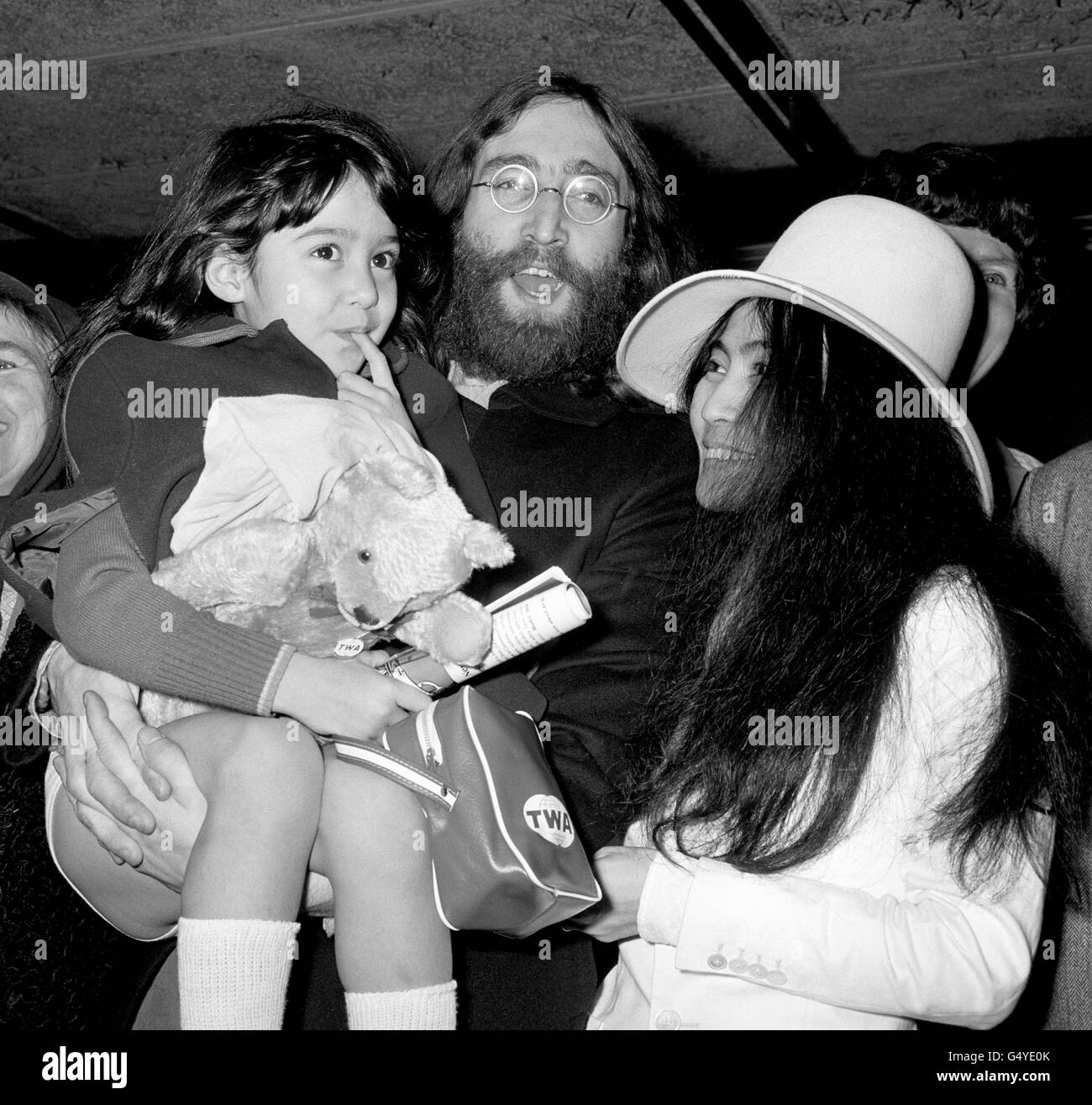
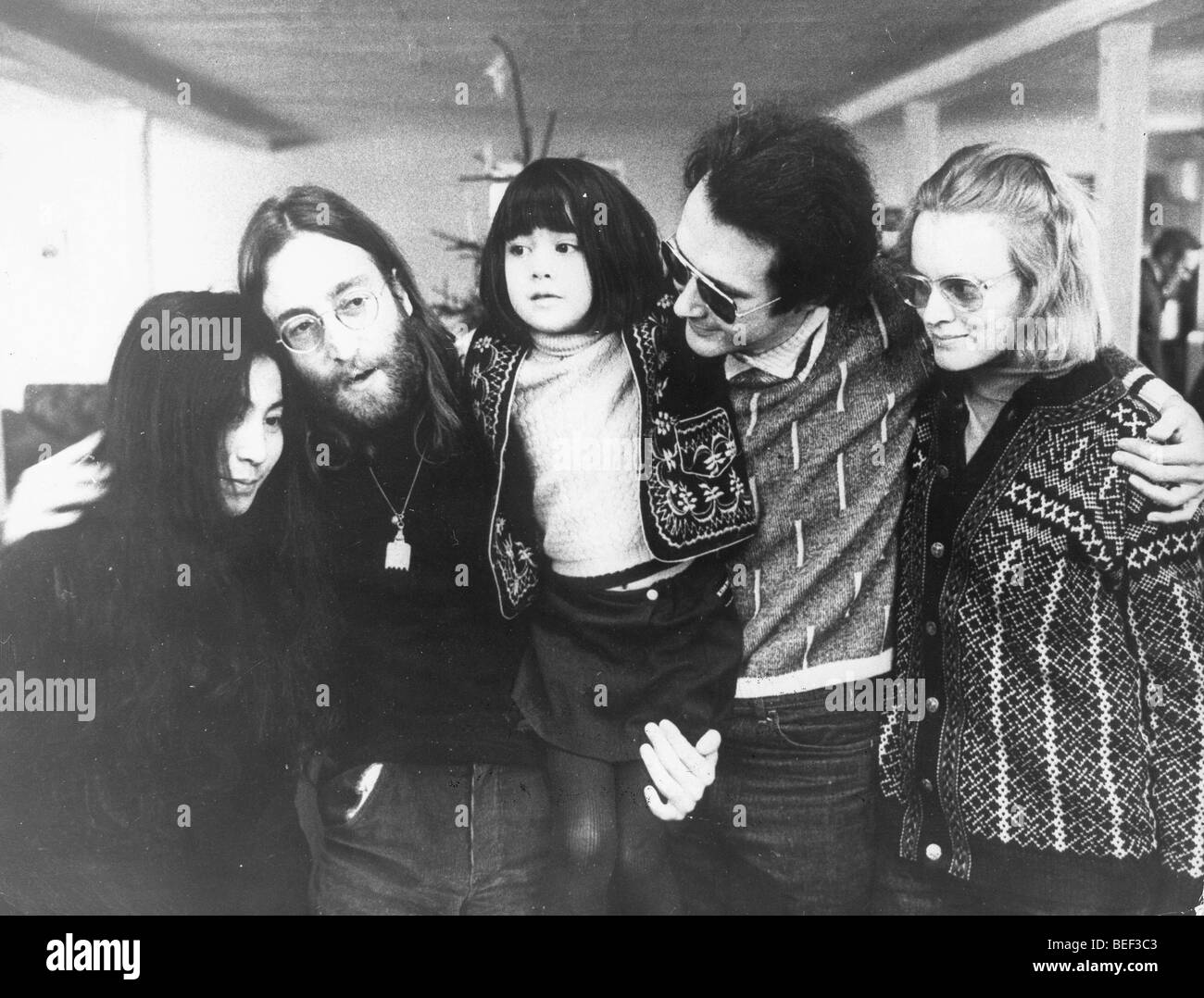
Kyoko Chan Cox is best known as the daughter of artist Yoko Ono and film producer Anthony Cox, whose prolonged 1970s custody dispute and 23-year disappearance made international headlines. Covered across Wikipedia entries for Yoko Ono and Anthony Cox, her life story encompasses a high-profile court battle, years spent in hiding within a religious movement, and an eventual family reunion in 1994.
Overview of Kyoko Chan Cox: Identity and Encyclopedic Documentation
Kyoko Chan Cox occupies a unique position in popular culture and modern biographical history. Born into the center of the 1960s avant-garde art scene and later linked to Beatles history through her mother Yoko Ono’s marriage to John Lennon, Kyoko's early life was marked by media attention, legal disputes, and an extended disappearance that captivated global audiences for more than two decades.
When researching Kyoko Chan Cox on encyclopedic platforms such as Wikipedia, readers frequently discover that she does not maintain a standalone biographical article. Instead, Wikipedia’s editorial standards regarding living persons who are primarily notable for their relationship to public figures (WP:BLPNAME and WP:NOPAGE) consolidate her history within the primary articles of her parents, Yoko Ono and Anthony Cox. This encyclopedic structure ensures that her personal privacy as a private citizen is respected while maintaining an accurate public record of the legal, cultural, and biographical events surrounding her youth.
Understanding Kyoko Chan Cox's life requires examining several distinct historical phases:
- Her early childhood in Tokyo and New York amid avant-garde art circles.
- The fierce custody litigation between Yoko Ono and Anthony Cox following their 1969 divorce.
- Her abduction and decades-long life underground under an assumed name within a religious community.
- Her eventual outreach to her mother in 1994, leading to a private reconciliation away from media scrutiny.
Early Life and Parentage (1963–1969)
Kyoko Chan Cox was born on August 8, 1963, in Tokyo, Japan. Her mother, Yoko Ono, was already establishing herself as a pioneering conceptual artist connected to the international Fluxus movement. Her father, Anthony Cox, was an American jazz musician, film producer, and art promoter who played an instrumental role in helping curate and produce Ono's early performance art pieces and experimental exhibitions across Japan, London, and New York.
Kyoko spent her earliest years surrounded by the creative energy of the 1960s art world. Following her parents' marriage in 1962 (which was briefly annulled and legally finalized in 1963), the family moved between Tokyo, London, and New York City. During this time, Kyoko was frequently present at art installations, loft gatherings, and conceptual film shoots organized by Ono and Cox.
The dynamics of the household changed dramatically in the late 1960s as Ono's artistic partnership with John Lennon developed into a personal relationship. Ono and Cox divorced in March 1969, shortly before Ono married Lennon in Gibraltar. Initially, Anthony Cox was granted physical custody of six-year-old Kyoko, with Ono granted extensive visitation rights. However, as relations between the former spouses deteriorated, a legal conflict over parental rights began to escalate across multiple jurisdictions.
The Custody Battle, Abduction, and Hiding (1970–1994)
The custody battle for Kyoko Chan Cox grew into one of the most publicized family law cases of the early 1970s. In late 1970, Ono and Lennon sought legal action to secure full custody of Kyoko, alleging that Cox was failing to adhere to visitation agreements and was creating an unstable environment for the child.
The Legal Rulings and Abduction
In December 1971, a court in Houston, Texas, officially awarded legal custody of Kyoko to Yoko Ono. However, before the court ruling could be fully enforced, Anthony Cox disappeared with eight-year-old Kyoko, defying judicial orders and warrants for his arrest.
Cox joined a Christian fundamentalist group known as The Walk (officially known as the Church of the Living Word). To evade law enforcement, private investigators, and international media searches funded by Lennon and Ono, Cox adopted an off-grid lifestyle, frequently moving between rural communities across the United States and abroad.
Key Timeline of Separation: 1969: Yoko Ono and Anthony Cox divorce; initial joint custody arrangement. 1971: Texas court awards custody to Ono; Cox flees with 8-year-old Kyoko. 1970s–1980s: Kyoko raised under alias "Rosemary" within isolated religious communities. 1994: Kyoko contacts Yoko Ono after giving birth to her first child.
Life Under an Assumed Name
During her years underground, Kyoko's name was changed to Rosemary. She was raised without access to mainstream news or television, isolated from awareness of her mother's global fame or the public search campaigns being conducted to find her.
Anthony Cox eventually left The Walk in the late 1970s, but he and Kyoko continued to live quietly under assumed identities to avoid legal prosecution and media attention. Kyoko attended school and eventually university under her alias, remaining entirely unaware for many years of the extent to which her mother and step-father had sought her return.
Cultural and Musical Impact During Separation
The search for Kyoko Chan Cox profoundly influenced the artistic and musical output of Yoko Ono and John Lennon during the late 1960s and 1970s. Rather than relying solely on legal channels, Ono used music and public appearance as tools to broadcast messages to her missing daughter.
"Don't Worry Kyoko"
The most prominent artistic testament to this period is Yoko Ono's song "Don't Worry Kyoko (Mummy's Only Looking for Her Hand in the Snow)". First recorded in 1969 with the Plastic Ono Band and featuring guitar work by John Lennon and Eric Clapton, the song became a staple of Ono's live performances and appeared on albums including Live Peace in Toronto 1969 and Fly (1971).
The raw, frantic vocal performance was designed as a direct emotional appeal from mother to daughter, carrying the explicit message that her mother had not abandoned her and was actively searching for her.
Media Campaigns and Open Letters
Throughout the 1970s, Lennon and Ono financed international missing-persons searches, hired prominent legal teams, and issued open letters through media outlets. In 1972, Ono published an open letter to Kyoko in public print media, writing that no matter how many years passed, her love and search for her would never end. These public appeals, documented across music history archives and Wikipedia's entries on Beatles-related history, stand as major cultural artifacts of early 1970s celebrity culture.
The 1994 Reunion and Subsequent Life
After more than two decades apart, the separation between Yoko Ono and Kyoko Chan Cox finally came to an end in the mid-1990s.
Reaching Out
In 1994, after marrying lawyer Edward Stanbury and giving birth to her daughter Emi, Kyoko decided to establish contact with her mother. Having re-examined her childhood history as an adult and becoming a parent herself, Kyoko sent a letter to Yoko Ono through mutual acquaintances.
The initial contact led to a private, emotional reunion in New York City in 1994. Breaking 23 years of complete silence, Ono and Kyoko re-established their mother-daughter relationship away from cameras, press releases, and public spectacles.
Private Life and Family Integration
Since their 1994 reunion, Kyoko Chan Cox has deliberately chosen to keep her life private. Unlike other members of famous artistic families, she has avoided public interviews, television appearances, or commercial memoir releases.
Her relationship with the broader Lennon-Ono family has remained warm and integrated:
- She reconnected with her half-brother, Sean Lennon.
- She attended family gatherings and private art retrospectives honoring her mother.
- She raised her family in the United States while pursuing a career in teaching and community work.
In public statements made during the late 1990s and 2000s, Yoko Ono expressed profound gratitude for the reunion, noting that while lost years could never be replaced, establishing a warm, respectful adult relationship brought deep healing to both of their lives.
Summary of Key Milestones and Wikipedia Documentation
The following table synthesizes the major life events of Kyoko Chan Cox, contrasting historical developments with how they are archived across encyclopedic reference entries on Wikipedia.
| Historical Period | Key Events & Status | Primary Wikipedia Reference Pages | Public Documentation Details |
|---|---|---|---|
| 1963–1968 | Born in Tokyo; raised in avant-garde art circles in Tokyo, London, and NYC. | Yoko Ono, Anthony Cox (producer) | Documented as daughter of Ono and Cox during Fluxus movement period. |
| 1969–1971 | Parental divorce; intense custody litigation in US courts; awarded to Ono in late 1971. | Yoko Ono, John Lennon | Highlighted in legal timeline and background of Lennon-Ono biography. |
| 1971–1993 | Abducted by father; raised as "Rosemary" within "The Walk" movement; lived off-grid. | Anthony Cox (producer), Yoko Ono | Noted as a long-running high-profile missing-child case of the 1970s/80s. |
| 1969–1972 | Inspiration for songs like "Don't Worry Kyoko"; subject of open media appeals. | Fly (Yoko Ono album), Plastic Ono Band | Covered in musical track histories and discography analysis pages. |
| 1994–Present | Reunited with Yoko Ono; established private adult life; maintains non-public profile. | Yoko Ono | Documented as a successful private family reconciliation in Ono's biography. |
Understanding Wikipedia's Editorial Handling of Kyoko Chan Cox
Many users searching for a standalone "Kyoko Chan Cox Wikipedia overview" wonder why search queries resolve to redirects or sub-sections within other articles. Understanding Wikipedia’s guidelines clarifies how biographical information is published for individuals in her position.
Notability and Living Persons Guidelines
Wikipedia enforces strict policies regarding biographical articles for living people:
- WP:BLPNAME (Biographical Privacy): When an individual’s notable actions or involvement in news events stem entirely from their relationship to a more famous family member, Wikipedia policies prefer redirecting the name to the primary entry rather than creating a separate article.
- WP:NOPAGE (Topic Coverage Efficiency): If a person’s history is best understood within the context of a broader narrative—such as Yoko Ono’s overall life history or Anthony Cox’s artistic career—the information is centralized to prevent fragmented or repetitive entries.
- Avoidance of Exploitative Coverage: Independent living-person pages require sustained independent coverage where the individual is the primary topic, rather than being the subject of family news or custody reports.
Because Kyoko Chan Cox intentionally stepped out of the public eye following her 1994 reunion and has chosen not to publish commercial autobiographies or seek public career fame, her encyclopedic footprint remains appropriately integrated into the master biographical pages of her family.
Frequently Asked Questions
Does Kyoko Chan Cox have a standalone Wikipedia page?
No, Kyoko Chan Cox does not have an independent, standalone English Wikipedia article. Under Wikipedia’s non-public figure policies (WP:BLPNAME), searches for her name redirect to relevant biographical sections within the Yoko Ono and Anthony Cox Wikipedia articles, where her early life, custody case, and reunion are detailed in full context.
Who are Kyoko Chan Cox's parents?
Kyoko Chan Cox is the daughter of artist and musician Yoko Ono and American film producer and art promoter Anthony Cox. Following her parents' 1969 divorce, her mother married John Lennon, making Lennon her step-father during her early childhood.
Why did Kyoko Chan Cox disappear in 1971?
In December 1971, after a Texas court awarded legal custody of Kyoko to Yoko Ono, her father Anthony Cox fled with her to avoid turning her over. Cox joined an isolated religious group known as "The Walk," changing Kyoko's name to "Rosemary" and keeping her hidden from public view and law enforcement for over two decades.
What song did Yoko Ono write for her daughter Kyoko?
Yoko Ono wrote and recorded "Don't Worry Kyoko (Mummy's Only Looking for Her Hand in the Snow)" in 1969. The song was released on the Plastic Ono Band's live albums and Ono's 1971 solo album Fly. It served as both an avant-garde musical piece and a direct public appeal to her missing daughter.
When did Kyoko Chan Cox reunite with Yoko Ono?
Kyoko Chan Cox reconnected with Yoko Ono in 1994. After becoming a mother herself, Kyoko initiated contact with Ono, ending a 23-year separation. The two established a private, close mother-daughter relationship that has continued quietly ever since.
Guidance for Researchers and Pop Culture Historians
For historians, Beatleologists, and researchers looking into public records regarding Kyoko Chan Cox, the following steps offer the most accurate paths for historical investigation:
- Consult Primary Wikipedia Biographies: Review the history sections on the official Wikipedia pages for Yoko Ono and Anthony Cox, which contain verified citations from original news reports (such as The New York Times, Rolling Stone, and court filings from the early 1970s).
- Examine Musical Discographies: Study the liner notes and recording contexts for 1969–1971 releases by Yoko Ono and the Plastic Ono Band, where legal search efforts were documented through song titles and album artwork.
- Respect Personal Privacy: Recognize that while the 1971–1994 disappearance is a matter of documented historical record, Kyoko Chan Cox remains a private citizen who chooses to live outside the public domain.