By age 34, a common financial benchmark is to have a net worth approximately equal to 1.5 to 2 times your annual salary. In 2026, the median net worth for individuals in the 30–34 age bracket is estimated to be between $45,000 and $60,000, while the average (mean) is often much higher, exceeding $150,000 due to high-net-worth outliers.
Understanding Net Worth at Age 34
Net worth is the most comprehensive metric of your financial health. It is calculated by subtracting your total liabilities (what you owe) from your total assets (what you own). At age 34, many individuals find themselves at a unique crossroads. You are likely a decade into your professional career, potentially transitioning from the "accumulation of debt" phase (student loans, early mortgages) into the "accumulation of wealth" phase.
In the 2026 economic landscape, net worth figures are influenced by several years of fluctuating inflation and a shifting housing market. For a 34-year-old, your net worth is not just a number on a balance sheet; it is a reflection of your past financial decisions, your career trajectory, and your geographic location.
The Formula for Net Worth
To find your current standing, use the standard equation: Total Assets - Total Liabilities = Net Worth
- Assets include: Cash in checking and savings accounts, retirement accounts (401(k), IRA), brokerage accounts, home equity, the resale value of vehicles, and ownership stakes in businesses.
- Liabilities include: Remaining student loans, mortgage balances, credit card debt, auto loans, and personal loans.
Benchmarks for a 34-Year-Old: Different Perspectives
There is no single "correct" number for net worth at 34 because financial journeys vary wildly based on education, industry, and luck. However, several institutional benchmarks provide a framework for comparison.
The Fidelity Benchmark
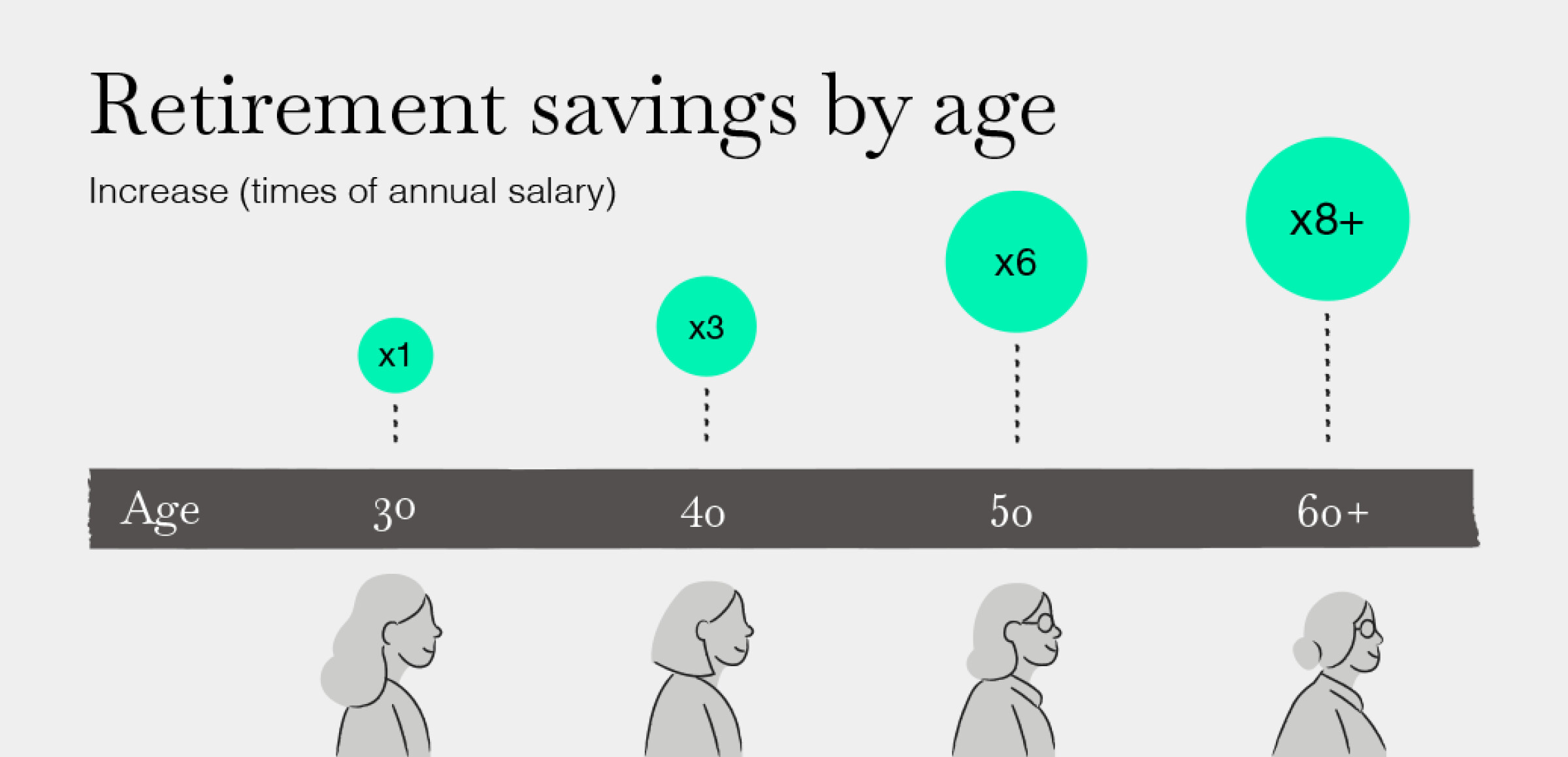
Fidelity Investments provides one of the most cited rules of thumb for retirement savings. While they focus on retirement specifically rather than total net worth, their milestones are useful. Fidelity suggests having 1x your annual salary saved for retirement by age 30 and 3x your salary by age 40. At age 34, you should ideally be on track toward that 2x or 3x mark.
The Millionaire Next Door Formula
Thomas J. Stanley and William D. Danko, authors of The Millionaire Next Door, proposed a formula to determine if you are an "Under Accumulator of Wealth" (UAW) or a "Prodigious Accumulator of Wealth" (PAW). The formula is: (Age × Pretax Annual Household Income) / 10.
For a 34-year-old earning $85,000 a year: (34 × 85,000) / 10 = $289,000.
In 2026, many financial experts consider this formula aggressive for those under 40, as it does not account for the heavy debt loads (such as medical school or advanced degrees) that younger professionals often carry. If your net worth is half of this number at 34, you are still performing well relative to the broader population.
Average vs. Median Net Worth in 2026
When looking at "how much you should have," it is vital to distinguish between the average and the median. The average is skewed upward by the top 1% of earners. The median represents the true "middle" of the population and is often a more realistic benchmark for the average worker.
| Financial Metric | Estimated Median (Age 30-34) | Estimated Average (Age 30-34) |
|---|---|---|
| Total Net Worth | $52,000 | $165,000 |
| Retirement Account Balance | $35,000 | $88,000 |
| Home Equity (Homeowners) | $85,000 | $140,000 |
| Cash Reserves | $7,500 | $22,000 |
Data based on 2026 projections following the Federal Reserve’s Survey of Consumer Finances trends.
At 34, your net worth may be temporarily suppressed if you recently purchased a home. While a home is an asset, the mortgage is a significant liability. In the first few years of homeownership, your net worth might not grow as quickly as someone who is aggressively investing in the stock market, but you are building long-term equity.
Key Factors Influencing Net Worth at 34
1. Education and Entry into the Workforce
A 34-year-old who started working at 22 with a bachelor's degree has had 12 years of compounding interest. Conversely, a physician or lawyer might have only been in the workforce for 4 to 6 years at this age, often carrying six-figure student loan debt. While the professional may have a lower—or even negative—net worth at 34, their higher income potential usually leads to a rapid "catch-up" in their late 30s.
2. Geographic Location (HCOL vs. LCOL)
Living in a High Cost of Living (HCOL) area like San Francisco, New York, or London often means higher salaries but significantly higher expenses. A 34-year-old in a Low Cost of Living (LCOL) area might have a higher net worth because their housing costs are 30% of what their HCOL counterpart pays, allowing for more aggressive investing.
3. Lifestyle Creep
By age 34, many professionals receive significant promotions. "Lifestyle creep"—the tendency to increase spending as income rises—is the primary enemy of net worth. If your salary increases by $20,000 but you lease a more expensive car and move into a luxury apartment, your net worth remains stagnant despite your higher earnings.
How to Calculate and Track Your Progress
To accurately assess where you stand at 34, you must conduct a formal audit of your finances. This process should be done annually to track the velocity of your wealth accumulation.
- List Liquid Assets: Total your checking, savings, and money market accounts.
- List Invested Assets: Include 401(k), 403(b), Roth and Traditional IRAs, and taxable brokerage accounts. Use current market values as of 2026.
- List Use Assets: Estimate the conservative private-party sale value of your vehicles and the current market value of your primary residence.
- List Short-term Liabilities: Credit card balances, medical bills, and any personal loans.
- List Long-term Liabilities: The remaining principal on your mortgage, student loans, and auto loans.
Once you have these totals, subtract the liabilities from the assets. If the number is positive, you are on the right track. If it is negative, your primary focus should be debt restructuring and aggressive repayment.
Strategies to Increase Net Worth by Age 35
With one year left before the "mid-30s" milestone of 35, there are several levers you can pull to significantly move the needle on your net worth.
Maximize Tax-Advantaged Accounts
In 2026, the contribution limits for retirement accounts have adjusted for inflation. Ensure you are taking full advantage of any employer match—this is a 100% return on your investment. If you have a high-deductible health plan, maximize your Health Savings Account (HSA), as it offers a triple tax advantage: tax-deductible contributions, tax-free growth, and tax-free withdrawals for medical expenses.
Address the "Big Three" Expenses
Housing, transportation, and food typically consume 60-70% of a 34-year-old's budget. Reducing costs in just one of these areas can free up thousands of dollars for investment. For example, keeping a reliable vehicle for 10 years instead of upgrading every 3 years can add six figures to your net worth over a lifetime due to the avoided interest and the opportunity cost of the invested cash.
Diversify Income Streams
By 34, many individuals have reached a level of expertise in their field that allows for consulting, freelance work, or teaching. Diversifying your income reduces the risk of a job loss and provides "extra" capital that can be funneled directly into investments without impacting your standard of living.
The Impact of Debt on Net Worth at 34
Not all debt is created equal. At 34, you should distinguish between "productive" and "unproductive" debt.
- Unproductive Debt: Credit card debt with 20%+ interest rates and high-interest auto loans. These are "wealth killers" that actively erode your net worth every month.
- Productive Debt: A mortgage with a 4-6% interest rate or student loans with low fixed rates. While these are still liabilities, they allow you to hold an appreciating asset (a home) or have enabled a higher earning capacity (a degree).
If you are 34 and have high-interest consumer debt, your priority must be the "Debt Avalanche" or "Debt Snowball" method. No investment strategy can consistently outperform a 20% interest rate on a credit card.
Professional Advice and Limitations
While benchmarks are helpful for context, they do not account for personal circumstances such as inheritance, disability, or periods of unemployment. Financial planning is highly individualized. The figures provided here are for educational purposes and based on general economic trends observed in 2026.
Note: This article does not constitute professional financial, legal, or tax advice. Always consult with a certified financial planner (CFP) or tax professional before making significant changes to your investment portfolio or debt repayment strategy.
Frequently Asked Questions
Is it normal to have a negative net worth at 34?
Yes, particularly for professionals who pursued advanced degrees. Doctors, lawyers, and PhDs often spend their 20s and early 30s accumulating debt and only begin their "true" earning years in their 30s. While a negative net worth at 34 is not ideal, it is not a sign of failure if your income trajectory is high and you have a clear plan to eliminate the debt.
How much should I have in my 401(k) at 34?
A healthy goal is to have between 1x and 1.5x your annual salary in your 401(k) or equivalent retirement accounts. If you earn $80,000, having $80,000 to $120,000 in retirement assets suggests you are well-prepared for long-term compounding.
Should I prioritize my net worth or my quality of life?
Personal finance is a balance. While maximizing your net worth is a goal, "aggressive frugality" can lead to burnout. Most financial advisors suggest the 50/30/20 rule: 50% for needs, 30% for wants (quality of life), and 20% for savings and debt repayment (net worth building).
Does my car count toward my net worth?
Technically, yes, because it is an asset you can sell. However, since cars are depreciating assets (they lose value over time), most conservative net worth trackers only include the car's "Blue Book" value and subtract any remaining loan balance. Some people choose to exclude vehicles entirely to get a "lean" view of their wealth.
What if I am 34 and just starting to save?
You are not alone. While you have missed some years of compounding, you still have approximately 30 years until traditional retirement age. Focus on increasing your savings rate to 25% or more of your income to "compress" the time needed to build wealth.
Next Steps for a 34-Year-Old
Your 34th year is an ideal time to perform a "mid-decade" financial review. Start by calculating your exact net worth today. Once you have that number, set a specific goal for your 35th birthday. Whether that goal is to increase your net worth by $10,000, pay off a specific loan, or reach a certain balance in your brokerage account, having a concrete target will influence your daily spending and saving habits.
Consistency in your mid-30s is the greatest predictor of financial independence in your 50s. Focus on widening the gap between what you earn and what you spend, and direct that gap into diversified, low-cost index funds to let time and compound interest do the heavy lifting.