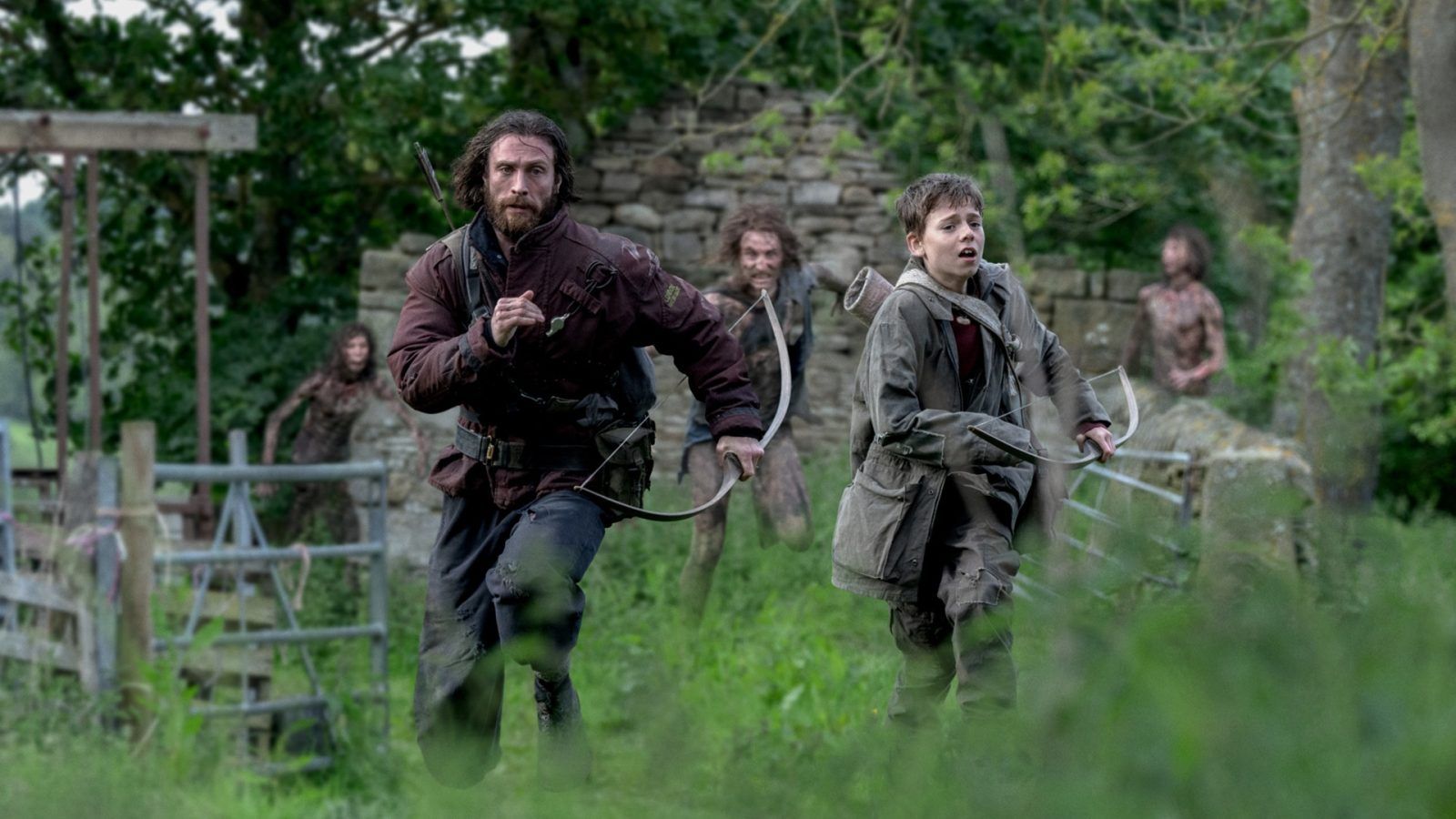
The 28 Days Later movie series is a cornerstone of modern survival horror, centering on the devastating "Rage Virus" outbreak in Great Britain. This guide provides a comprehensive analysis of the film trilogy—including the 2025 revival—detailed lore regarding the infected, and tactical survival strategies based on the franchise's unique rules of biological collapse.
Understanding the Rage Virus: The Core Threat
To survive the world of 28 Days Later, one must first understand that the antagonists are not "zombies" in the traditional, reanimated sense. They are living human beings infected with a highly contagious, blood-borne pathogen known as the Rage Virus. This distinction is critical for survival because the infected maintain human speed, agility, and a primitive level of sensory perception, while lacking the physical durability of the undead.
Origins and Transmission
The Rage Virus originated in a research laboratory where scientists were experimenting with inhibitors for extreme aggression. Liberated by animal rights activists, the virus jumped from primates to humans instantly. Unlike traditional cinematic viruses that may take hours or days to manifest, the Rage Virus has an incubation period of approximately 10 to 20 seconds.
Transmission occurs through:
- Blood-to-blood contact: The most common method, often occurring during violent altercations.
- Saliva and biting: Though the infected do not eat their victims, they bite as an expression of pure aggression.
- Mucosal membrane exposure: A single drop of infected blood in the eye or mouth is sufficient for total infection.
Symptom Progression and Physiology
Once the virus enters the bloodstream, the host experiences an immediate and total loss of higher brain function, replaced by a permanent state of murderous fury. Physically, the infected exhibit hemorrhaging in the eyes (becoming blood-red) and constant vocalizing in the form of screams or snarls.
Because they are still living organisms, the infected are susceptible to the same physical limitations as healthy humans. They require oxygen, they can bleed out, and, most importantly for long-term survival, they can starve to death. This was a pivotal plot point in the original 2002 events, where the initial wave of infected in London eventually succumbed to inanition after several weeks of lack of food.
The Film Timeline: From Outbreak to Decades Later
As of 2026, the franchise has expanded into a trilogy of films and supplementary media that cover the initial collapse, the failed reconstruction, and the long-term societal shifts occurring decades after the first infection.
28 Days Later (2002): The Beginning of the End
Directed by Danny Boyle and written by Alex Garland, the first installment follows Jim (Cillian Murphy), a bicycle courier who wakes from a coma to find London deserted. This film establishes the "quiet" horror of an empty metropolis and the brutal reality of the Rage Virus.
Survival in this stage was characterized by:
- Avoidance of urban centers: The density of the infected made cities deathtraps.
- Silent movement: Using bicycles and manual tools to avoid attracting attention.
- The "Human Element": The film famously posits that uninfected human survivors, particularly those in positions of power like Major Henry West’s rogue soldiers, can be as dangerous as the infected.
28 Weeks Later (2007): The Failed Reconstruction
Set six months after the initial outbreak, this sequel depicts an attempt by NATO forces (primarily the U.S. Army) to repopulate a "Green Zone" in London’s Isle of Dogs. The survival guide for this era shifted toward military protocols and the dangers of bureaucratic overconfidence.
The catastrophic failure of the Green Zone highlighted:
- Asymptomatic Carriers: The introduction of genetic immunity (as seen with the character Andy) created a false sense of security while allowing the virus to persist.
- Code Red Protocols: The military’s "firebreak" strategy—indiscriminate killing of all persons in a zone to contain the virus—showed that institutional survival often sacrifices individual lives.
28 Years Later (2025): The New Era
Released in 2025, 28 Years Later marked the return of the original creative team. Set nearly three decades after the first film, it explores a world that has fundamentally changed. The infected are no longer a sudden shock but a persistent environmental hazard, much like a natural disaster or a predatory species.
Survival in the 2025/2026 timeframe focuses on:
- Fortified Settlements: Small, self-sustaining communities with sophisticated early-warning systems.
- Biological Literacy: A deeper understanding of the virus's mutations over thirty years.
- Legacy Knowledge: How the survivors of the original "28 Days" and "28 Weeks" periods passed down tactical skills to a new generation born into the post-apocalypse.
Essential Survival Strategies in the Rage Universe
Surviving a Rage Virus outbreak requires a different tactical mindset than surviving a slow-moving zombie apocalypse. Speed and containment are the two most important factors.
Urban vs. Rural Survival
In the 28 Days series, the environment dictates your life expectancy. Urban environments offer resources (supermarkets, pharmacies) but are high-risk zones for "hibernating" infected who may be hiding in shadows or buildings.
Rural Strategy: The countryside provides visibility and natural barriers. In the first film, the survivors found temporary safety in the hills of Northern England. However, rural survival requires knowledge of agriculture and water purification, as supply lines from the cities are the first to fail. As of the 2026 landscape, most stable communities are located in remote, defensible areas with low population density.
Urban Strategy: If trapped in a city, the "Jim Strategy" is best: remain in high-altitude apartments with limited access points. Blockade stairwells and use roof-to-roof travel if possible. Never use elevators, as a power failure will lead to entrapment.
Defensive Fortifications and Gear
Standard defensive gear for a Rage Virus scenario must prioritize protection against fluid transmission rather than just physical bites.
- Full-Body Coverage: Heavy denim, leather, or synthetic materials that prevent blood from touching the skin.
- Facial Protection: Goggles and masks are non-negotiable. A single drop of blood from an infected person above you (e.g., through a floorboard or ceiling) can end your life in 20 seconds.
- Weaponry: Silent weapons like crossbows or melee tools with reach (spears, halberds) are preferred. Firearms should be a last resort, as the noise attracts every infected within a several-mile radius.
Comparative Analysis of the Franchise
The following table compares the three primary films in the series to help survivors understand the evolution of the threat and the shifting tone of the narrative.
| Feature | 28 Days Later (2002) | 28 Weeks Later (2007) | 28 Years Later (2025) |
|---|---|---|---|
| Primary Setting | London / Northern England | Isle of Dogs (Green Zone) | Post-Collapse Britain |
| Central Theme | Societal Collapse & Isolation | Institutional Failure & Re-infection | Long-term Survival & Legacy |
| Infected Status | Peak Aggression / Starvation | Massive Secondary Outbreak | Mutated / Persistent Hazard |
| Military Role | Rogue Units (Antagonistic) | NATO Oversight (Incompetent) | Tribal / Local Militias |
| Key Protagonist | Jim (Cillian Murphy) | Don / Alice / Kids | Evolving (New & Returning) |
The Role of Media and Expanded Lore
To fully master the survival guide of this series, one must look beyond the films into the graphic novels and comics, which provide essential bridge data.
- 28 Days Later: The Aftermath (Graphic Novel): This provides the backstory of the virus's creation and the immediate "Day 1" through "Day 28" events that the first movie skips. It is essential for understanding the virus's spread in high-traffic areas like the London Underground.
- BOOM! Studios Comic Series: This series follows Selena (from the first film) as she returns to Great Britain as a guide for American journalists. It offers deep insight into the state of the country between the first and second films, particularly the "Zone 4" outskirts.
Comparative Analysis: Rage Infected vs. Traditional Zombies
Understanding the difference between the Rage-infected and the "Romero-style" undead is the difference between life and death.
- Movement: Traditional zombies shuffle; Rage-infected sprint. You cannot outrun a crowd of the infected for long. High-intensity cardio is a survival requirement.
- Intelligence: While the infected don't solve puzzles, they exhibit animalistic cunning. They will follow sounds and can navigate stairs and simple obstacles with ease.
- Duration: Traditional zombies last until they rot away (years). Rage-infected are bound by biology. If they cannot find a source of hydration or caloric intake, they will eventually collapse. The "Wait and Hide" strategy is viable in the short term, provided you have at least 30 days of supplies.
Production and Legacy: Why These Films Redefined Horror
The 28 Days Later series is credited with revitalizing the "zombie" genre by introducing "fast" zombies, though purists maintain they are "infected humans." Danny Boyle’s use of the Canon XL-1 digital camera for the first film gave it a gritty, news-reel quality that made the apocalypse feel immediate and real.
By 2026, the legacy of the franchise is viewed as a prophetic look at viral containment and the fragility of modern infrastructure. The films serve as a grim reminder that the systems we rely on—electricity, water, law enforcement—can vanish in less than a month.
Frequently Asked Questions
Can the Rage Virus be cured?
As of the events documented through 2026, there is no known cure for an active infection. The transformation is neurological and instantaneous, meaning the brain is effectively "rewired" for aggression. However, research into the "carriers" (those with genetic immunity who can carry the virus without symptoms) remains the only hope for a potential vaccine or preventative treatment.
Is the Rage Virus airborne?
No, the Rage Virus is not airborne. It requires direct contact with infected bodily fluids (blood, saliva, etc.). This makes it less transmissible than a respiratory flu but far more dangerous in close-quarters combat. Survival depends on maintaining a "fluid barrier" between yourself and any potential host.
How long do the infected live?
In the original 2002 outbreak, the infected in London began dying of starvation after approximately 20 to 25 days. However, in later outbreaks and in the 2025/2026 timeline, the infected have occasionally found ways to sustain themselves or have migrated to areas with higher concentrations of livestock or uninfected humans, extending their "lifespan" significantly.
Does the military provide a safe haven?
History within the series suggests that military "safe zones" are often the most dangerous places to be. In 28 Days Later, the military outpost was a site of internal corruption and sexual violence. In 28 Weeks Later, the military’s solution to an outbreak was the total firebombing of the civilian population. True safety is usually found in small, independent, and highly mobile groups.
Is 28 Years Later the final movie?
While billed as the start of a new trilogy, the future of the franchise depends on the stability of the cinematic landscape in 2026. Current reports suggest that a follow-up, tentatively titled 28 Years Later: Part II, is in development, focusing on the global spread of the virus beyond the British Isles.
Practical Recommendation for Fans and Survivors
To truly appreciate the 28 Days Later series, viewers should watch the films in chronological order of release: 28 Days Later, 28 Weeks Later, and finally 28 Years Later. For those interested in the "survival" aspect, we recommend studying the first film’s emphasis on silence and the second film’s emphasis on the "two-person rule" for checking for infection.
The most important takeaway for any survivalist in this universe is simple: Speed kills, but blood infects. Always maintain distance, always wear eye protection, and never assume a "cleared" area is truly safe.