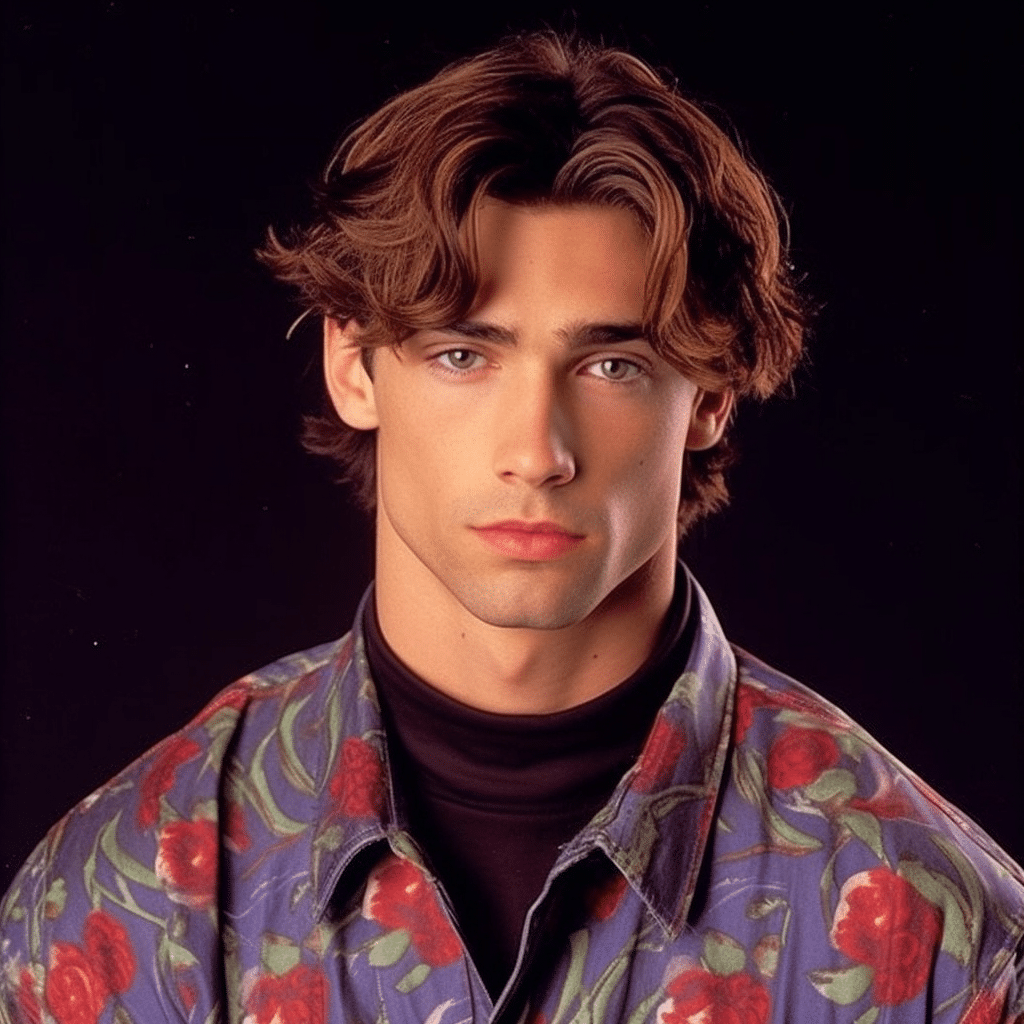
The hairstyles of the 1990s defined a decade of transition, shifting away from the hyper-teased, heavy-product excess of the 1980s toward minimalist, grunge-inspired textures, ultra-sleek straight looks, and culturally diverse protective styling. Characterized by high-contrast highlights, butterfly clips, and effortless face-framing layers, 1990s hair remains a powerful reference point for contemporary beauty trends.
Introduction to the Aesthetic of the 1990s
The landscape of hair design underwent a profound democratization and fragmentation during the final decade of the twentieth century. Where the 1980s had been dominated by uniform hair metal volume and rigid hairspray architecture, the 1990s fractured into distinct, counter-cultural, and mainstream movements.
On one hand, the rise of grunge music popularized an unwashed, undone aesthetic that rejected salon perfection. On the other hand, supermodel culture championed ultra-glossy, liquid-silk blowouts that set a new standard for luxury. Simultaneously, hip-hop and R&B icons introduced intricate braided designs, sculptural updos, and vibrant color blocking that influenced global fashion. Understanding 1990s hair requires examining these parallel streams, as each contributed techniques and silhouettes that continue to cycle back into modern style vernaculars.
Defining Categories of 1990s Hair
To understand the era, one must break down the distinct subcultures and celebrity influences that shaped hair trends. The decade can be categorized into four primary movements, each utilizing specific tools, cuts, and chemical treatments.
The Grunge and Indie Sleaze Movement
Emerging from the Pacific Northwest, the grunge movement rejected traditional grooming standards. The goal was to look as though you had just rolled out of bed or spent hours in a mosh pit.
- The Curtain Bangs and Shag: Worn famously by Kurt Cobain and later adapted by Winona Ryder, limp, middle-parted hair that fell heavily around the face became the uniform of disaffected youth.
- Low-Maintenance Textures: Air-drying with sea salt or texturizing sprays replaced the curling iron. Frizz was embraced rather than fought.
The Supermodel Blowout and Sleek Minimalist Styles
In stark contrast to grunge, the runway models of the mid-90s—such as Cindy Crawford, Naomi Campbell, and Christy Turlington—popularized voluminous, bouncy blowouts and glass-like straightening.
- The Rachel Cut: Perpetuated by Jennifer Aniston on Friends starting in 1994, this heavy, face-framing layered cut required a round brush and a blow dryer to flip the ends outward.
- Flat-Ironed Straight: As ceramic flat irons became more widely available in the late 90s, ultra-straight, pin-straight hair parted cleanly down the middle became the ultimate symbol of modern sophistication.
Hip-Hop, R&B, and Black Hair Innovation
The 1990s was a golden era for Black hair artistry, heavily visible in music videos and cinema. Icons like Brandy, Janet Jackson, and Lauryn Hill showcased the versatility and artistry of textured hair.
- Box Braids and Micro Braids: Made famous by Brandy in the sitcom Moesha, waist-length box braids accessorized with beads or worn in half-up buns became a defining cultural look.
- Finger Waves and Sculptural Updos: Smooth, molded edges and elaborate updo configurations dominated red carpets, utilizing heavy-hold gels and pomades to create architectural marvels.
Pop Punk and Boy Band Mania
As the decade drew to a close, pop music exploded with boy bands and teen pop stars who introduced specialized men's grooming and youth styling trends.
- Spiky Hair with Frosty Tips: Boy bands like *NSYNC and Backstreet Boys popularized short crops styled upward with stiff gels, often accompanied by bleach-blonde tips achieved through highlighting caps.
- The High Ponytail with Face-Framing Tendrils: Pop stars like Britney Spears and Christina Aguilera cemented the high, slicked-back ponytail paired with two thin, uncurled strands falling straight down the sides of the face.
Comparison of 1990s Hair Trends by Subculture
| Subculture / Movement | Key Signature Styles | Primary Tools and Products | Major Cultural Figures |
|---|---|---|---|
| Grunge / Alternative | Middle part, undone shag, piecey layers | Texturizing paste, sea salt spray, diffuser | Kurt Cobain, Winona Ryder, Drew Barrymore |
| High Fashion / Minimalist | The Rachel cut, sleek straight, voluminous blowout | Round brush, ceramic flat iron, smoothing serum | Jennifer Aniston, Cindy Crawford, Gwyneth Paltrow |
| R&B / Hip-Hop | Box braids, finger waves, sculpted updos, bantu knots | Edge control gel, holding pomade, braiding hair | Brandy, Janet Jackson, Lauryn Hill |
| Pop / Teen Culture | Frosted tips, spiky cuts, butterfly clips, tendrils | Styling gel, bleach kits, butterfly hair claws | Britney Spears, Justin Timberlake, Sarah Michelle Gellar |
Technical Evolution: Tools and Chemical Treatments
The methods used to achieve 1990s hair relied heavily on technological shifts in hair care appliances and formulations.
The Transition in Heat Styling
At the start of the decade, styling was still heavily reliant on traditional curling irons with clamps, hot rollers, and hooded dryers. By the mid-to-late 1990s, ceramic technology began to enter the consumer market, revolutionizing the flat iron. Prior to this, people often used domestic clothes irons to achieve pin-straight hair—a dangerous practice that frequently caused severe heat damage and breakage.
Coloring Techniques: Chunkiness and Contrast
Unlike the seamless, blended balayage of the modern era, 1990s hair color favored high contrast. Chunky, foil-woven highlights—often referred to as "skunk highlights" when placed thickly around the face—created stark divisions between dark base colors and bleached-blonde streaks. This technique was pioneered by pop stars and actors who wanted their hair to read clearly on television screens.
Accessories as Architectural Elements
Hair accessories in the 90s were functional statements.
- Butterfly Claws: Small, spring-loaded plastic clips shaped like butterflies were used to pin back small sections of hair or secure half-up styles.
- Snap Clips: Colorful metal clips that snapped open and shut were stacked in rows along the side of the head.
- Scrunchies: Fabric-covered elastic bands, often made of velvet, satin, or neon cotton, were worn high on the head or wrapped around the base of messy buns.
How to Adapt 1990s Hair for Modern Wear
Recreating 1990s styles today requires a balance between historical accuracy and modern hair health. Modern products offer superior heat protection and lighter weight formulations compared to the crunchy, alcohol-heavy hairsprays and gels of the 90s.
Recreating the Blowout
- Prep: Apply a lightweight volumizing mousse to damp roots and a heat protectant through the mid-lengths.
- Blow Dry: Use a large round boar-bristle brush, lifting sections upward from the scalp to build maximum crown volume.
- Set (Optional): Wrap warm sections around Velcro rollers and allow them to cool completely before brushing out for maximum bounce.
Styling the Face-Framing Tendrils
- Section: Isolate two thin sections of hair directly in front of the ears before pulling the rest of the hair back into a sleek claw clip or ponytail.
- Smooth: Run a flat iron lightly over the tendrils to ensure they are straight and glossy, avoiding any unwanted kinks.
- Lock: Mist a flexible-hold hairspray onto your fingertips and gently press them down the length of the tendrils to tame flyaways without stiffness.
Frequently Asked Questions
What is the most famous haircut from the 1990s?
The most famous haircut of the decade is undeniably "The Rachel," worn by Jennifer Aniston during the early seasons of Friends. Characterized by heavy, choppy layers that framed the face and bounced outward, it became a global phenomenon requested in salons worldwide.
How do you get the chunky highlights popular in the 90s?
Chunky highlights are achieved through traditional foil highlighting using thick sections of hair rather than fine, micro-weaved subsections. A high-lift bleach is applied to these substantial sections to create maximum contrast against a darker base color.
What products were essential for 1990s hairstyles?
Essential products included stiff styling gels for spiky boy band hair, heavy-hold hairsprays for pageant and supermodel blowouts, edge control pomades for sculpted baby hairs, and texturizing sprays for grunge-inspired styles.
Are 1990s hairstyles back in style?
Yes, 1990s hairstyles have experienced a major resurgence in contemporary fashion. Trends like claw clips, butterfly clips, face-framing tendrils, and bouncy blowouts are frequently seen on modern runways and social media platforms.
How did Black hair culture influence 1990s mainstream trends?
Black hair culture heavily influenced the decade through the mainstream adoption of box braids, intricate updos, bantu knots, and dramatic edge-laying techniques, which were popularized by R&B singers, actresses, and athletes.
Practical Next Steps for Styling
If you plan to experiment with a 1990s-inspired look, start by identifying your hair type and selecting modern tools that protect hair integrity. Invest in a quality ceramic flat iron, a set of medium-to-large Velcro rollers, and a collection of vintage-inspired accessories like velvet scrunchies or matte claw clips. Practice working with sectioning clips to master half-up, half-down styles and face-framing framing details without causing unnecessary thermal damage.