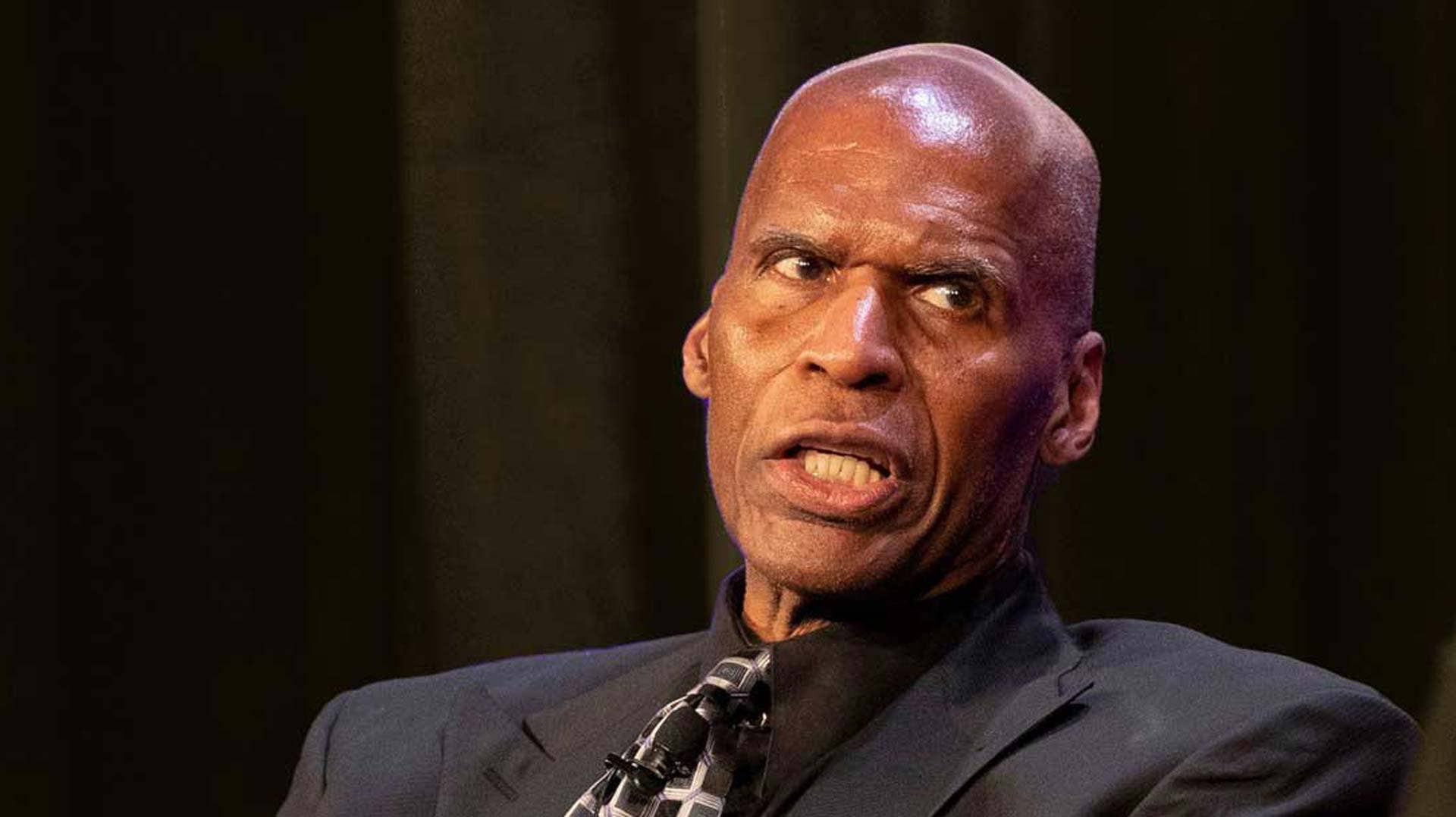
Robert Parish stands as one of the most durable and decorated centers in the history of professional basketball. Known for his stoic demeanor, unmatched longevity, and fundamental reliability, Parish’s career spanned an incredible 21 seasons in the National Basketball Association (NBA). His legacy is defined by his role as the backbone of the Boston Celtics' dynasty in the 1980s, where his synergy with Larry Bird and Kevin McHale formed arguably the greatest frontcourt in the history of the sport. Beyond his four NBA championships, Parish holds the distinction of having played more regular-season games than any other player in league history, a record that highlights his physical conditioning and professional discipline.
The Foundation of a Historic Career
Born in Shreveport, Louisiana, Robert Parish developed his game at Centenary College before being selected eighth overall in the 1976 NBA Draft by the Golden State Warriors. While his time in Golden State provided him with early professional seasoning, it was his 1980 trade to the Boston Celtics that catalyzed his ascent to superstardom.
In Boston, under the guidance of legendary figures, Parish found his niche. He was not a high-volume scorer who required constant touches; rather, he was a master of the mid-range jumper, a tenacious rebounder, and an elite rim protector. His ability to anchor the defense allowed the Celtics to run their offense through Bird, creating a balanced and formidable attack. His career achievements are not merely statistical anomalies; they are the result of a two-decade-long commitment to high-level performance and tactical intelligence.
Chronology of NBA Championships
Parish secured four NBA championship rings during his career, all while wearing the iconic Celtics green. These victories were not accidental; they were the culmination of deep playoff runs and sustained dominance against the most competitive eras in basketball history.
- 1981 NBA Championship: In his first season with Boston, Parish helped the Celtics overcome the Houston Rockets. This championship validated the team's new roster configuration and cemented Parish as a premier center.
- 1984 NBA Championship: Often cited as the peak of the "Big Three" era, the 1984 series against the Los Angeles Lakers was a grueling seven-game battle. Parish’s defensive presence and rebounding were critical in neutralizing the Lakers' interior threats.
- 1986 NBA Championship: The 1986 Celtics team is frequently ranked among the greatest in basketball history. Parish’s contribution to this dominant squad, which finished with a 67-15 regular-season record, was essential to their championship victory over the Houston Rockets.
- 1997 NBA Championship: In the final act of his illustrious career, Parish joined the Chicago Bulls. Though his role was significantly reduced, his veteran presence and championship pedigree provided valuable depth to the team led by Michael Jordan, Scottie Pippen, and Dennis Rodman as they secured the title.
Statistical Longevity and All-Star Recognition
The most defining metric of Robert Parish’s career is his record-setting 1,611 regular-season games played. In an era where physical attrition routinely shortened careers, Parish maintained his body with a rigorous approach to diet and training, often involving martial arts and long-distance running.
His impact was recognized by his peers and the league through numerous accolades:
- NBA All-Star Selections: Parish was named an NBA All-Star nine times (1981–1987, 1990, 1991). This consistency over a decade proves that he was not merely a role player on a good team, but an elite individual performer.
- All-NBA Team Honors: He was named to the All-NBA Second Team in 1982 and the All-NBA Third Team in 1989.
- Top 50 and 75 Lists: In 1996, Parish was named one of the 50 Greatest Players in NBA History. In 2021, he was deservedly included in the NBA 75th Anniversary Team, a testament to his enduring status among the pantheon of basketball legends.
Technical Contribution and Tactical Role
To understand why Parish is held in such high regard, one must look at his technical contributions beyond the box score. As a center, his playstyle was sophisticated. Unlike the power-focused centers of his time, Parish utilized a high-arcing, signature mid-range jumper that was nearly impossible for shorter defenders to block.
Defensively, he operated as a "help-side" master. While he was capable of individual post defense, his true value lay in his timing as a shot-blocker and his defensive rebounding efficiency. By controlling the glass, he ensured that the Celtics could minimize opponent second-chance opportunities, a critical factor in their high-efficiency offensive system.
Comparative Performance Metrics
The following table outlines the key areas where Parish excelled compared to his peers during his prime years in Boston.
| Category | Typical Season Average (Celtics Era) | Significance |
|---|---|---|
| Points Per Game | 16.5 – 18.5 | Consistent secondary scoring threat |
| Rebounds Per Game | 9.0 – 11.0 | Elite defensive and offensive glass control |
| Field Goal % | 53% – 55% | High efficiency for a primary interior option |
| Blocks Per Game | 1.5 – 2.0 | Rim protection and defensive anchor |
Post-Career Legacy and Hall of Fame Induction
Robert Parish was inducted into the Naismith Memorial Basketball Hall of Fame in 2003. This honor was the final validation of a career that had already seen his jersey number, 00, retired by the Boston Celtics. His induction solidified his place not just as a great teammate, but as an individual whose statistical output and championship success earned him a permanent spot in basketball history.
Beyond the Hall of Fame, Parish serves as a standard for longevity for modern centers. Athletes often look to his career path as the gold standard for how to adjust one’s game as athletic prime inevitably gives way to veteran experience. Even into 2026, experts often cite "The Chief"—his well-known nickname—as the ultimate example of durability in a sport that demands peak physical output.
Frequently Asked Questions
How many total seasons did Robert Parish play in the NBA? Robert Parish played for 21 seasons, from 1976 to 1997. This remains one of the longest careers in the history of the sport, matched by only a few others.
Why is Robert Parish's nickname "The Chief"? The nickname was given to him by Cedric Maxwell, his Celtics teammate. It is a reference to the stoic character Chief Bromden from the film One Flew Over the Cuckoo's Nest, reflecting Parish's quiet and intense demeanor on the court.
What is the significance of the 1,611 games played record? This record represents the highest number of regular-season games played in NBA history. It is a testament to his professional longevity, durability, and his ability to remain a productive contributor well into his 40s.
Did Robert Parish win a championship outside of the Boston Celtics? Yes. While he won three championships with the Boston Celtics (1981, 1984, 1986), he won his fourth and final NBA championship in 1997 as a member of the Chicago Bulls, during the team's second championship three-peat.
What was the most notable aspect of his playing style? Parish was known for his high-arcing mid-range jump shot and his ability to play a disciplined, low-mistake game. He provided elite rebounding and rim protection while fitting perfectly into the high-IQ team system employed by the 1980s Celtics.
Recommendations for Further Study
For those interested in understanding the tactical evolution of the center position, studying game film from the 1984 and 1986 NBA Finals provides the best insight into Parish’s defensive rotations and rebounding positioning. Additionally, historical archives of the Boston Celtics' 1980s offensive sets offer a blueprint for how a team can maximize the value of a high-efficiency big man who does not demand a high usage rate. Robert Parish remains the blueprint for the reliable, championship-level professional athlete.