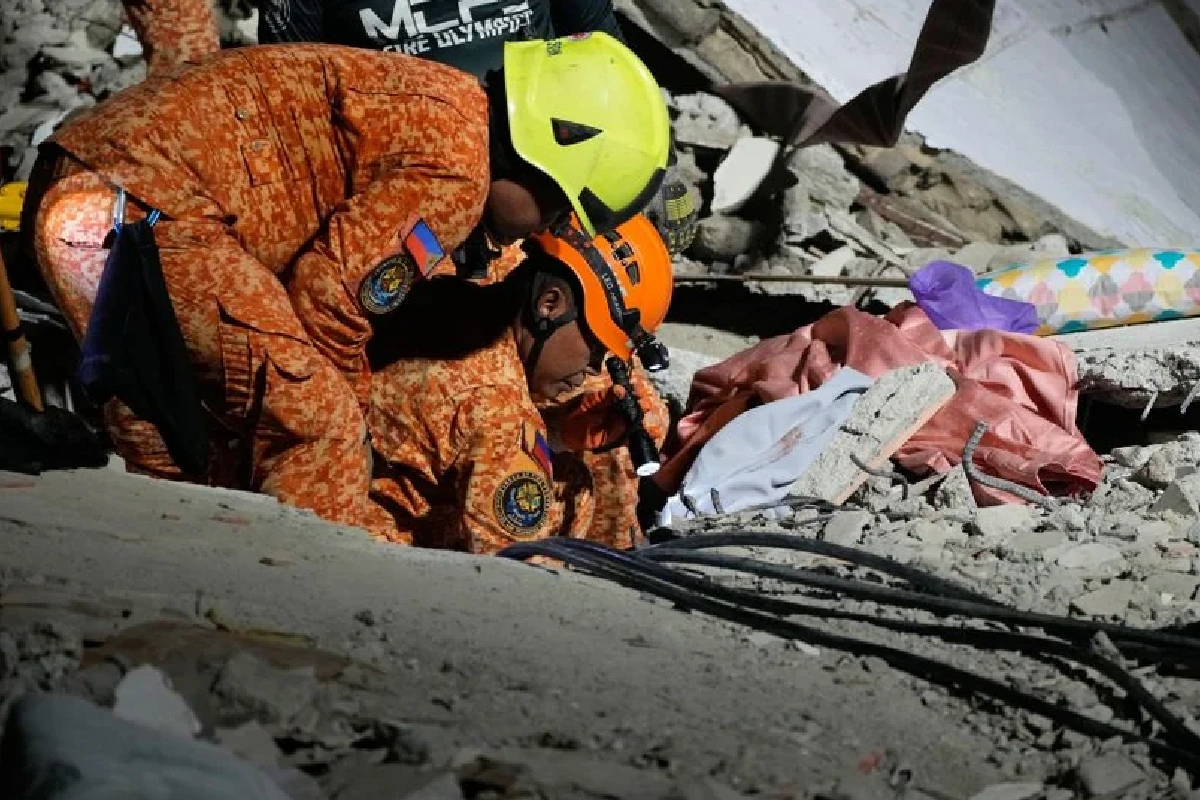
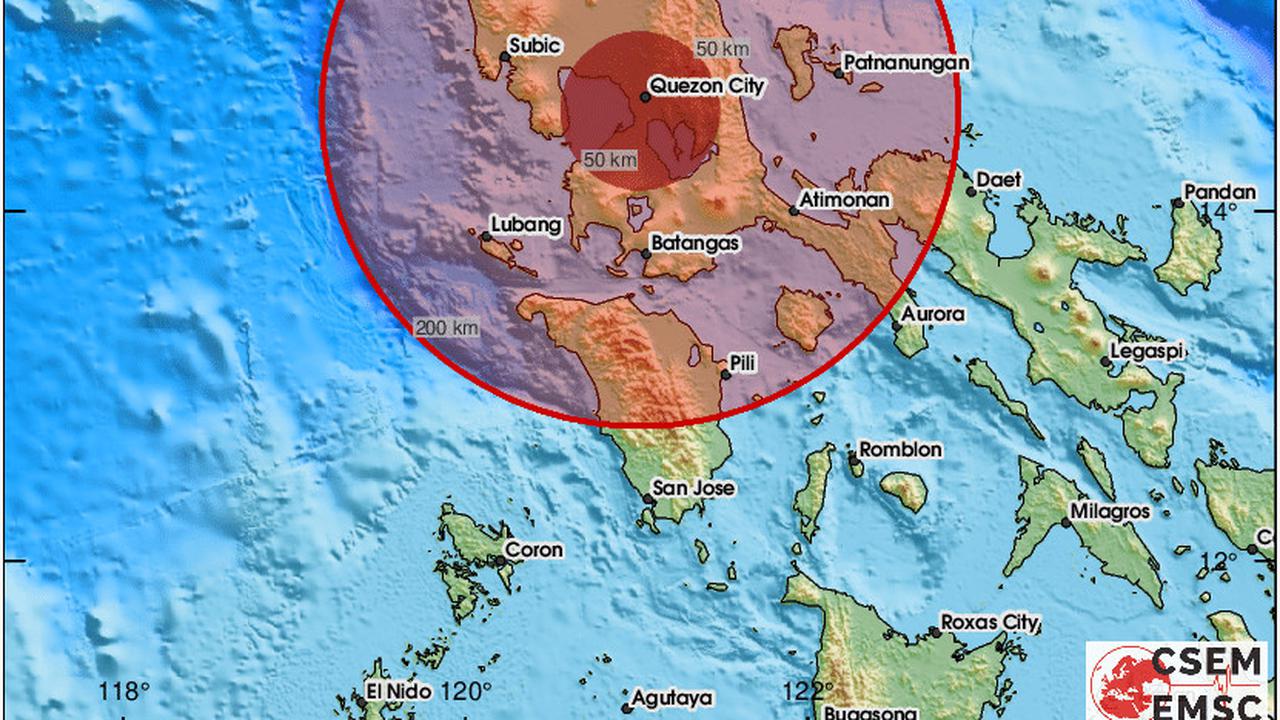
A 6.9 magnitude earthquake in the Philippines signifies a major tectonic event capable of causing widespread structural damage, landslides, and infrastructure failure. It means that immense strain along active fault lines or subduction zones has violently released, demanding immediate emergency response, rigorous structural evaluations, and long-term disaster resilience planning from communities and government agencies.
Tectonic Setting of the Philippines
The Philippines is one of the most seismically active regions on Earth. Straddling the western rim of the Pacific Ring of Fire, the archipelago sits at a complex and highly dynamic convergence zone between major tectonic plates.
Understanding why a 6.9 magnitude earthquake occurs requires examining the underlying geological framework. The Philippine Sea Plate is constantly moving westward and subducting beneath the Eurasian Plate along the eastern board, while the Sunda Plate and various micro-plates interact along the western and southern boundaries.
This continuous convergence creates immense stress within the Earth’s crust. This stress is accommodated by a sprawling network of faults known collectively as the Philippine Fault System (PFS), as well as major offshore trench systems like the Manila Trench, the Philippine Trench, and the Negros Trench. When the friction holding these fault segments together is finally overcome by tectonic forces, the accumulated energy is abruptly released as seismic waves.
| Tectonic Drivers in the Philippines | |
|---|---|
| Philippine Sea Plate | Subducts westward along the eastern trenches |
| Eurasian Plate | Interacts along the western and central boundaries |
| Philippine Fault System | A 1,200 km strike-slip fault zone slicing the islands |
| Offshore Trench Systems | Generates megathrust earthquakes and potential tsunamis |
Defining a 6.9 Magnitude Earthquake
In seismology, the magnitude of an earthquake measures the total amount of energy released at the source, quantified using the moment magnitude scale ($M_w$). A magnitude 6.9 earthquake is classified as a strong to major event.
To put this energy release into perspective, seismological scaling dictates that an increase of one whole number on the magnitude scale represents roughly 32 times more energy released. A 6.9 event is exponentially more powerful than a 5.9 tremor and releases energy equivalent to multiple atomic bombs, though most of this energy dissipates through the earth before reaching the surface.
| Earthquake Magnitude Breakdown | ||
|---|---|---|
| Magnitude Class | Typical Effects | Structural Vulnerability |
| 5.0 - 5.9 (Moderate) | Felt widely; minor object displacement | Minor cracks in poorly built masonry |
| 6.0 - 6.9 (Strong) | Serious damage to poorly built structures | Heavy damage in poorly constructed buildings; moderate to heavy in others |
| 7.0+ (Major/Great) | Widespread, severe destruction | Catastrophic destruction over large areas |
The severity of the impact, however, is not determined solely by the magnitude. Intensity—measured by the Philippine Institute of Volcanology and Seismology (PHIVOLCS) Earthquake Intensity Scale (PEIS)—plays a critical role. Intensity describes the actual shaking felt at a specific location and the damage observed. Factors influencing intensity include:
- Hypocentral Depth: Shallow earthquakes (hypocenters less than 70 kilometers deep) cause much more intense surface shaking because the seismic waves have less distance to travel before reaching structures.
- Local Soil Conditions: Soft sedimentary basins, reclaimed land, and river deltas can amplify seismic waves through a process called site response amplification, causing significantly worse damage than solid rock foundations.
- Distance from the Epicenter: Areas directly above the epicenter experience the most direct shockwaves, while damage attenuates with distance unless amplified by local geology.
Immediate Impacts and Emergency Consequences
When a 6.9 magnitude earthquake strikes, the immediate aftermath triggers a cascade of secondary hazards that can be just as deadly as the initial shaking.
Ground Shaking and Structural Failures
The primary hazard is violent ground acceleration. Unreinforced masonry structures, older concrete buildings lacking proper lateral reinforcement, and non-engineered residential homes face a high risk of partial or total collapse. Buildings constructed without adherence to the National Structural Code of the Philippines (NSCP) often suffer from "soft-story" failures, where ground floors collapse under the weight of upper levels.
Landslides and Slope Failures
In mountainous or hilly regions—common across the Philippine archipelago—severe ground shaking loosens soil, rock, and vegetation. This frequently triggers devastating landslides that can bury entire communities, block vital mountain passes, and isolate rescue workers from reaching injured populations.
Liquefaction
In coastal areas, river valleys, and alluvial plains, water-saturated, loosely packed sandy soils can temporarily lose their shear strength and behave like a dense liquid during prolonged shaking. When liquefaction occurs, heavy structures sink, tilt, or fracture, while underground utility pipelines rupture.
Aftershocks
A 6.9 magnitude earthquake is rarely an isolated event. It is typically followed by a sequence of aftershocks—some of which can reach magnitudes in the high 5s or low 6s. These secondary tremors pose a severe threat because they can collapse already compromised buildings, endanger rescue personnel, and cause psychological trauma to affected populations.
Societal and Economic Implications
The societal and economic footprint of a major earthquake in the Philippines extends far beyond the immediate disaster zone.
- Infrastructure Disruption: Bridges, highways, airports, and ports can suffer structural compromise, cutting off supply chains and delaying the delivery of humanitarian aid, medical supplies, and heavy search-and-rescue equipment.
- Lifeline Failures: Power grids, municipal water systems, and telecommunications towers routinely experience outages. Downed power lines can spark secondary fires, while ruptured water mains complicate firefighting efforts and create public health risks.
- Economic Toll: Rebuilding public infrastructure, repairing private commercial real estate, and compensating for lost economic productivity place a heavy burden on local government units (LGU) and the national economy. Agricultural sectors can suffer losses if irrigation systems fail or farm-to-market roads are blocked by landslides.
Emergency Preparedness, Response, and Verification
Mitigating the risks posed by major seismic events requires continuous, proactive disaster risk reduction management (DRRM) at national, regional, and community levels.
Official Monitoring and Information Sources
In the event of a significant earthquake, accurate, real-time data is vital. Official agencies provide verified information regarding magnitude, epicenter coordinates, depth, and tsunami warnings:
- PHIVOLCS (Philippine Institute of Volcanology and Seismology): The primary national institution tasked with monitoring earthquakes, volcanic activity, and tsunamis in the Philippines.
- USGS (U.S. Geological Survey) Earthquake Hazards Program: Provides global seismic monitoring, moment tensor solutions, and rapid impact assessments.
Key Actions During and After Shaking
- Drop, Cover, and Hold On: During active shaking, drop to your hands and knees, take cover under a sturdy desk or table, and hold on until the shaking stops. Move away from glass windows, exterior walls, and hanging heavy fixtures.
- Evacuate Safely: Once shaking ceases, evacuate calmly using designated stairwells—never use elevators. Move to open areas away from tall buildings, power lines, and landslide-prone slopes.
- Inspect for Damage: Check homes and workplaces for gas leaks, electrical shorts, and structural cracks. Turn off utility mains if damage is suspected.
- Monitor Official Channels: Rely on verified radio broadcasts, official LGU bulletins, and government social media feeds for evacuation orders, relief distribution points, and aftershock updates.
Frequently Asked Questions
What does a 6.9 magnitude earthquake feel like?
A 6.9 magnitude earthquake produces violent to severe shaking. People will find it difficult to stand upright, heavy furniture will overturn or slide across floors, masonry walls may crack or collapse, and hanging objects will swing violently or detach.
Can scientists predict when a 6.9 magnitude earthquake will happen in the Philippines?
No. Modern science cannot predict the exact day, time, or location of earthquakes. Seismologists can only estimate seismic hazard probabilities along known fault lines and evaluate recurrence intervals based on historical data and paleoseismic studies.
Are aftershocks always smaller than the main earthquake?
In most cases, yes. The largest aftershock is typically one to two magnitude units smaller than the mainshock. However, large aftershocks can still cause significant damage, especially to structures already weakened by the initial 6.9 magnitude event.
Why do some earthquakes with the same magnitude cause different amounts of damage?
Damage depends heavily on hypocentral depth, distance from the epicenter, local soil composition, population density, and—most importantly—the enforcement and quality of building construction standards in the affected area.
What is the difference between magnitude and intensity?
Magnitude measures the total energy released by an earthquake at its source and is expressed with a single number. Intensity measures the severity of shaking and observed damage at a specific location, meaning a single earthquake can have many different intensity ratings depending on where it is felt.
Next Actions for Communities and Property Owners
For residents, property owners, and local planners in seismically active zones, preparation must occur long before a tremor strikes. Ensure that all residential and commercial buildings are evaluated by licensed structural engineers to verify compliance with the National Structural Code of the Philippines. Implement non-structural mitigation measures, such as securing tall bookshelves, water heaters, and heavy appliances to wall studs. Finally, establish family communication plans, assemble a comprehensive 72-hour emergency go-bag containing water, non-perishable food, first aid supplies, flashlights, and battery-powered radios, and participate regularly in community earthquake drills.