The cinema of the 2000s was a transformative era defined by the digital revolution in filmmaking, the rise of serialized comic book franchises, the dominance of gritty independent dramas, and a major shift in how audiences consumed visual storytelling across global box offices.
Introduction to 2000s Cinema
The decade spanning from 2000 to 2009 stands as one of the most dynamic transition periods in film history. As the industry stepped away from traditional analog celluloid, filmmakers embraced groundbreaking digital visual effects (VFX), non-linear editing systems, and early high-definition digital capture. This technological shift coincided with profound cultural moments, altering the types of stories studios were willing to fund and how international audiences engaged with the medium.
To fully understand 2000s cinema, one must examine the intersection of pioneering blockbuster franchises, the rebirth of prestige television running parallel to independent cinema, and the seismic shift toward digital projection and post-production workflows. This era laid the foundational blueprints for modern intellectual property (IP) management while simultaneously fostering some of the most daring auteur-driven cinema of the modern age.
The Technological Transition: From Celluloid to Digital
The transition from analog film stock to digital production methods transformed 2000s cinema. While 35mm film remained the standard for prestige productions, the early 2000s saw the introduction of high-definition digital cameras capable of capturing cinematic imagery without physical film rolls.
Pioneers of Digital Capture
Directors such as George Lucas with Star Wars: Episode II – Attack of the Clones (2002)—shot entirely on high-definition digital video systems—and Michael Mann with Collateral (2004) proved that digital cameras could handle complex low-light environments and fast-paced action sequences. These early experiments paved the way for lightweight digital cinematography, drastically reducing production costs and altering the visual texture of modern filmmaking.
Evolution of CGI and Performance Capture
Computer-generated imagery (CGI) evolved rapidly throughout the decade. Peter Jackson’s The Lord of the Rings trilogy (2001–2003) integrated live-action performance with advanced digital character rendering, most notably through Andy Serkis’s portrayal of Gollum. This technology matured further with James Cameron’s Avatar (2009), which pushed stereoscopic 3D and performance-capture technology to unprecedented heights, triggering a brief industry-wide 3D renaissance.
| Feature | Early 2000s (2000–2004) | Late 2000s (2005–2009) |
|---|---|---|
| Dominant Format | 35mm Celluloid / Early HD Digital | Maturing HD Digital / 3D Stereoscopic |
| CGI Integration | Hybrid Practical/Digital Effects | Fully Digital Environments & Motion |
| Exhibition | Traditional Film Projection | Transition to Digital Cinema (DCP) |
The Rise of the Modern Blockbuster and Franchise Culture
The blockbuster landscape of the 2000s shifted away from standalone action spectacles toward interconnected universes and serialized adaptations of young adult literature and comic books.
Comic Book Adaptations Reborn
Before the Marvel Cinematic Universe formally launched in 2008 with Iron Man, 2000s cinema established the commercial and artistic viability of comic book adaptations. Bryan Singer’s X-Men (2000) and Sam Raimi’s Spider-Man (2002) demonstrated that superhero properties could achieve massive mainstream success while retaining emotional depth. Christopher Nolan redefined the genre further with Batman Begins (2005) and The Dark Knight (2008), introducing a gritty, grounded aesthetic that influenced Hollywood thriller and action filmmaking for the next two decades.
Fantasy Epics and Young Adult Phenomena
The commercial success of the Harry Potter series (2001–2011) and The Lord of the Rings trilogy proved the viability of multi-film adaptations. These franchises demanded long-term planning, massive global marketing campaigns, and extensive merchandising strategies, setting the template for contemporary studio filmmaking.
Independent Cinema and Prestige Drama
While major studios invested heavily in tentpole franchises, independent cinema thrived during the 2000s, finding backing from specialty divisions such as Miramax, Focus Features, and Searchlight Pictures.
Auteur Voices and Gritty Realism
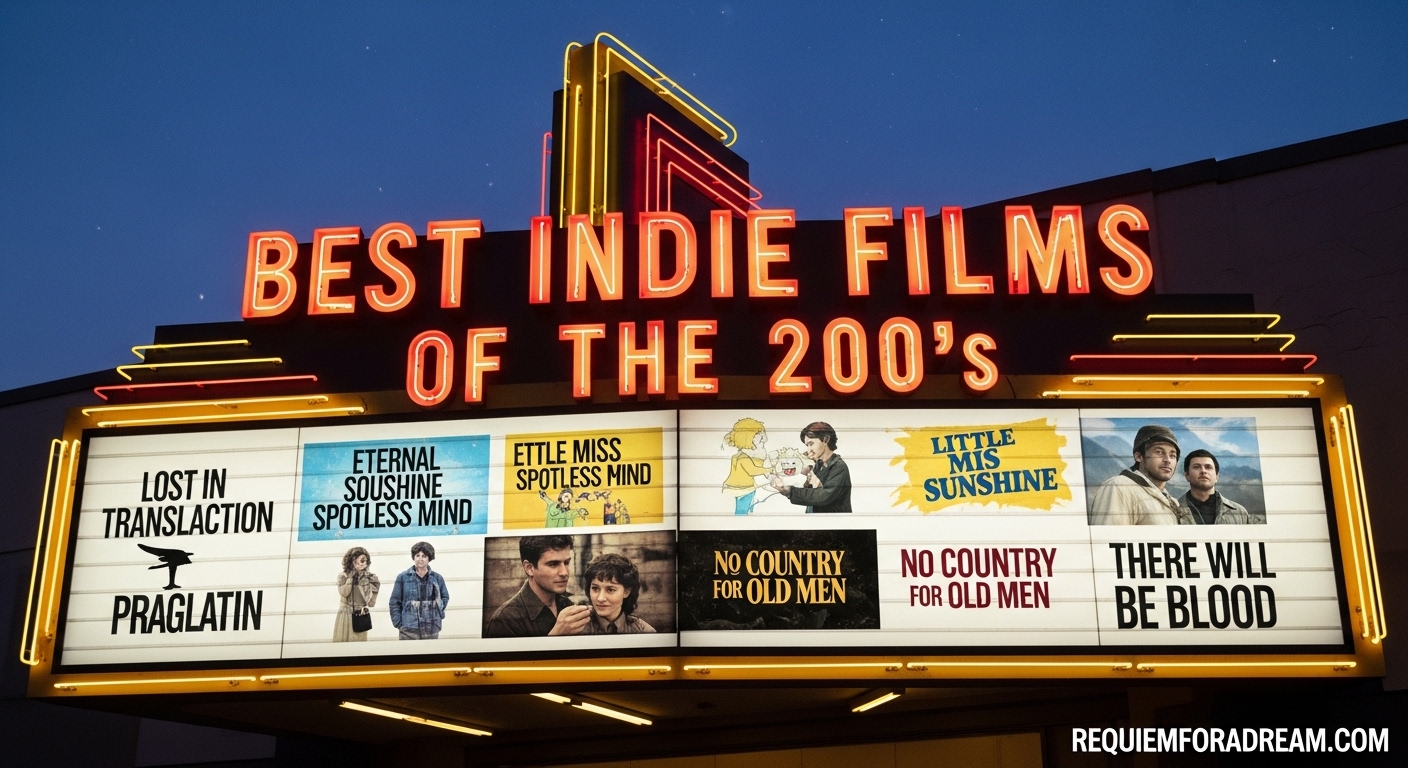
Filmmakers explored complex moral questions, the psychological toll of the War on Terror, and the shifting economic landscape. Paul Thomas Anderson’s There Will Be Blood (2007) and the Coen brothers' No Country for Old Men (2007) examined American capitalism, violence, and fatalism with unflinching precision. Kathryn Bigelow’s The Hurt Locker (2008) utilized handheld digital cameras to capture the visceral, high-tension reality of urban warfare in Iraq.
The International Art House Scene
Global cinema gained wider Western distribution through critical darlings and festival hits. Directors from East Asia, Latin America, and Europe—such as Wong Kar-wai (In the Mood for Love), Alfonso Cuarón (Y Tu Mamá También), and Guillermo del Toro (Pan's Labyrinth)—brought distinct visual styles and narrative structures that expanded global cinematic horizons.
Exhibition, Distribution, and Home Media
The way audiences watched movies changed dramatically between 2000 and 2009. The decade witnessed the peak and subsequent decline of physical media alongside the early infrastructure for digital distribution.
- The DVD Boom: Standard-definition DVDs became ubiquitous, offering consumers bonus features, director commentaries, and widescreen presentations that fostered a passionate collector culture.
- The High-Def Format War: The mid-2000s saw a fierce competition between Blu-ray Disc and HD DVD, which concluded when Blu-ray established itself as the high-definition standard in 2008.
- The Dawn of Streaming: Late in the decade, Netflix transitioned from a DVD-by-mail subscription service to pioneer streaming video on demand (SVOD), quietly laying the groundwork for the modern streaming era.
Frequently Asked Questions
What defined the visual style of 2000s cinema?
The visual style of the decade was marked by experimentation with digital grading, desaturated color palettes (particularly in thrillers and action films to convey grit), handheld camera work inspired by documentary filmmaking, and the integration of early-to-mid-stage CGI into practical sets.
How did 9/11 impact 2000s filmmaking?
The September 11 attacks profoundly altered American and international cinema. Studios initially pulled films featuring terrorist themes or destroyed landmarks, but the trauma eventually surfaced in allegory, science fiction, and gritty geopolitical thrillers addressing surveillance, security, and moral ambiguity.
Why are 2000s movies often associated with specific color grading?
Many films from the mid-to-late 2000s utilized the "teal and orange" color grading palette or heavily desaturated tones. This was driven by the early adoption of digital intermediate (DI) technology, which allowed colorists to digitally manipulate hues to create heightened moods and conceal imperfect digital effects.
What were the highest-grossing films of the 2000s?
James Cameron's Avatar (2009) and Titanic (1997, though its cultural footprint extended heavily into the early 2000s box office lexicon) led global earnings, alongside entries from the Harry Potter, The Lord of the Rings, and Pirates of the Caribbean franchises.
How did the 2007–2008 Writers Guild of America strike affect films?
The 100-day WGA strike disrupted the production schedules of several major 2008 and 2009 releases. It forced studios to fast-track productions with unfinished scripts, highlighting the vulnerability of studio pipelines and shifting focus toward unscripted television and international acquisitions.
Conclusion and Legacy
The cinema of the 2000s serves as the bridge between twentieth-century analog film culture and twenty-first-century digital media ecosystems. By redefining how movies were shot, distributed, and marketed, the decade established the cinematic frameworks that continue to shape global entertainment today. Reviewing this era provides essential context for understanding modern franchise mechanics, digital aesthetics, and the enduring power of independent storytelling.