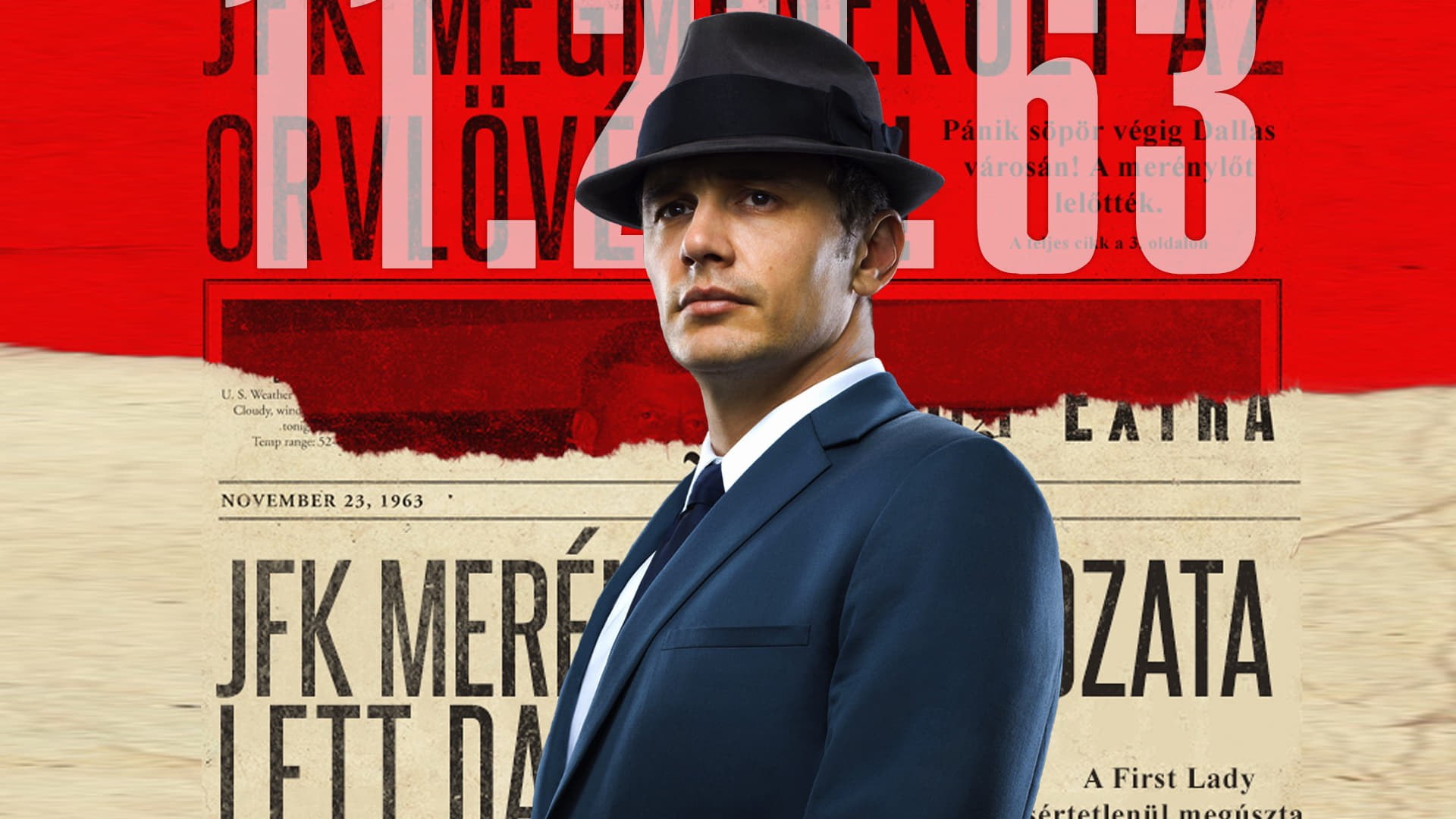
11/22/63 is a landmark work of historical fiction by Stephen King, depicting a man’s journey through time to stop the JFK assassination. Originally a 2011 novel and later a 2016 Hulu limited series, it remains a cornerstone of speculative storytelling, exploring the consequences of altering history and the nature of destiny.
Understanding 11/22/63: The Core Premise and Narrative
At its heart, 11/22/63 is a "what if" story of the highest magnitude. The narrative follows Jake Epping, a high school English teacher in Lisbon Falls, Maine. Jake’s life is ordinary until his friend Al Templeton, the owner of a local diner, reveals a staggering secret: the pantry of his diner contains a "rabbit hole" or portal to a specific moment in time—September 9, 1958, at 11:58 a.m.
Al, dying of lung cancer, has spent years attempting to prevent the assassination of President John F. Kennedy, believing that JFK’s survival would have prevented the Vietnam War and the social upheavals of the late 1960s. Because his health is failing, he tasks Jake with completing the mission. Jake must step through the portal, live in the past for five years, and ensure that Lee Harvey Oswald does not fire the fatal shots in Dallas on November 22, 1963.
The brilliance of the story lies in its mechanics. Every time someone enters the rabbit hole, the timeline resets. No matter how long you stay in the past—minutes or years—only two minutes pass in the present. However, if you return to the past a second time, every change you made during your previous trip is erased. This "reset" feature creates a high-stakes environment where Jake cannot afford to make a mistake near the end of his five-year vigil.
The Obdurate Past: The Rules of Time Travel
One of the most compelling aspects of Stephen King’s construction of 11/22/63 is the concept that the past is obdurate. In this universe, time is not a passive stream; it is a resistant force that actively tries to prevent changes to major historical events.
Resistance and "Harmonics"
King posits that the more significant a change is, the more the past "harmonizes" against the intruder. If Jake tries to change something minor, he might experience a small bout of bad luck. If he tries to stop the assassination of a President, the past will fight back with everything from mechanical failures and sudden illnesses to "strings" of coincidences that block his path.
The Reset Mechanism
The "reset" is a crucial technical detail for readers and viewers to understand. When Jake leaves 1963 and returns to the "present" (which was 2011 in the original text), he can see the results of his actions. If he doesn't like those results, he can step back through the portal to 1958, and the world is exactly as it was on his first visit. This creates a loop of trial and error that adds layers of psychological weight to Jake’s mission.
Historical Fidelity and the Portrayal of Lee Harvey Oswald
A significant portion of the narrative is dedicated to the meticulous surveillance of Lee Harvey Oswald. King spent years researching the Kennedy assassination, and the book reflects a deep dive into the Warren Commission Report and various conspiracy theories.
Ultimately, King’s narrative lands on the side of the "lone gunman" theory, but he allows Jake (and the reader) to experience the doubt. Jake spends years living in close proximity to Oswald in Texas, bugging his apartments and following his interactions with figures like George de Mohrenschildt.
The portrayal of the early 1960s is visceral. King does not merely romanticize the era; he highlights the pervasive smell of cigarette smoke, the blatant racism of the Jim Crow South, and the lower quality of medical care, contrasted against the superior taste of the food and the simplicity of life. This grounded realism makes the eventual "butterfly effect" of Jake’s interference much more jarring.
The 2016 Hulu Miniseries Adaptation
In 2016, J.J. Abrams’ Bad Robot Productions and Warner Bros. Television adapted the novel into an eight-episode limited series for Hulu. Starring James Franco as Jake Epping, the series remains one of the most successful adaptations of King’s non-horror work.
Key Differences Between Book and Show
To translate a nearly 900-page novel into eight hours of television, several structural changes were made:
- The Character of Bill Turcotte: In the novel, Jake operates largely alone for the surveillance of Oswald. In the series, Bill Turcotte (played by George MacKay) becomes Jake's sidekick to provide a sounding board for dialogue, making the internal monologues of the book more active for the screen.
- The Pacing of the "Jodie" Years: The novel spends a vast amount of time on Jake’s life in Jodie, Texas, where he falls in love with Sadie Dunhill. The series compresses this time significantly to maintain the momentum of the thriller plot.
- The Yellow Card Man: This enigmatic figure, who guards the portal and warns travelers about the "strings" of time, has a slightly different and more explicitly explained role in the series than the more metaphorical presence in the book.
Production and Reception
The series received critical acclaim for its production design and its ability to capture the tension of the era. The performances of Sarah Gadon (Sadie Dunhill) and Daniel Webber (Lee Harvey Oswald) were particularly praised for adding emotional depth and chilling realism, respectively.
Accessing 11/22/63 in 2026: A Consumer Guide
As of 2026, both the novel and the series remain highly accessible. Because the story is a "closed-loop" limited series, it does not suffer from the cliffhangers or cancellations common in modern streaming.
| Format | Availability (2026) | Estimated Cost/Requirement | Best For |
|---|---|---|---|
| Hulu Streaming | Included in Hulu/Disney+ Bundle | $14.99 - $24.99/mo | Casual viewers and fans of high-budget drama. |
| Physical Book | Scribner (Hardcover/Paperback) | $12.00 - $22.00 | Readers who want the full, detailed "butterfly effect" experience. |
| Audiobook | Audible / Libby | 1 Credit or Free via Library | Commuters; narrated by Craig Wasson (highly acclaimed). |
| Digital Purchase | Amazon/Apple TV/Vudu | $19.99 (Full Season) | Permanent access without a recurring subscription. |
| 4K Blu-ray | Major Retailers | $25.00 - $35.00 | Cinephiles wanting the best visual/audio quality. |
The "Butterfly Effect" and the Ending (Spoiler-Free Context)
The primary question 11/22/63 asks is: Should the past be changed even if it can be? This is the philosophical crux of the "Butterfly Effect." In the world of 11/22/63, the timeline is like a fragile tapestry. Removing one thread (Oswald) might save a President, but it can cause the entire fabric of the future to unravel in ways Jake never anticipated.
Stephen King originally wrote a different ending for the novel, but his son, fellow author Joe Hill, suggested a more poignant, emotionally resonant conclusion. This final version, which focuses on the bittersweet nature of love across time, is widely considered one of the most moving endings in King’s entire bibliography.
Technical Specifications and Production Details
For those interested in the technical execution of the series, the following data points illustrate the scale of the 2016 production, which continues to be the standard for the property in 2026:
- Executive Producers: J.J. Abrams, Stephen King, Bridget Carpenter, and Bryan Burk.
- Cinematography: David Katznelson and Adam Suschitzky. The series utilized specific color grading to differentiate the "polluted" look of the present day from the "vibrant, oversaturated" world of 1958.
- Filming Locations: Much of the series was filmed in Ontario, Canada, and Dallas, Texas, including the actual Dealey Plaza and the Texas School Book Depository (now the Sixth Floor Museum).
- Runtime: Approximately 438 minutes across 8 episodes.
Common Pitfalls and Troubleshooting for New Viewers/Readers
When engaging with 11/22/63 for the first time, audiences often encounter a few points of confusion:
- The "Two-Minute" Rule: It is easy to forget that Jake’s life in the past doesn't age the people in the present. If he spends 5 years in 1958, he returns to the present 5 years older, but only 120 seconds have passed for everyone else.
- The Name Changes: Jake Epping adopts the alias James Amberson in the past. In the book, he also uses other identities to hide his trail, which can be confusing if one isn't tracking his cover stories.
- Historical vs. Fictional Characters: While Lee Harvey Oswald, Marina Oswald, and George de Mohrenschildt were real people, characters like Sadie Dunhill and Deke Simmons are fictional creations of King.
- The Connection to "IT": In the novel, Jake spends time in Derry, Maine, shortly after the events of King’s novel IT. He even encounters Richie Tozier and Beverly Marsh. This "Easter Egg" is largely absent from the Hulu series due to licensing differences between streaming and film rights.
Frequently Asked Questions
Is 11/22/63 a horror story?
No, 11/22/63 is primarily a historical thriller and a speculative fiction romance. While it contains moments of intense violence and suspense (typical of Stephen King), it does not rely on supernatural horror tropes like ghosts or monsters. The "horror" comes from the psychological toll of the mission and the potential for a dystopian future.
How historically accurate is the depiction of the assassination?
Extremely. Stephen King utilized the research of historians and the autopsy records of the JFK assassination to reconstruct the events of November 22, 1963. While the prevention of the act is fictional, the movements of Lee Harvey Oswald leading up to that day are based on the historical record.
Do I need to read the book before watching the series?
While not strictly necessary, the book provides a much deeper explanation of the "Time Strings" and the consequences of the "Butterfly Effect." The series is an excellent companion that visualizes the era beautifully, but the novel offers the complete philosophical weight of Jake’s choices.
Why is the title sometimes written with slashes (11/22/63) and sometimes not?
The title refers to the numerical date of the assassination (November 22, 1963). In the United States, it is common to use slashes or dots. Stephen King’s novel is officially titled 11/22/63, and the Hulu series followed this naming convention.
Is there a sequel to 11/22/63?
As of 2026, there is no direct sequel to 11/22/63. The story is designed as a standalone narrative with a definitive conclusion. However, King's "Multiverse" (the Dark Tower series) implies that the "rabbit hole" could be one of many "thinnies" or doors between worlds, though this is never explicitly explored in a follow-up book.
Final Recommendation
For those seeking a masterclass in narrative tension and historical immersion, 11/22/63 is essential. Whether you choose the 900-page odyssey of the novel or the streamlined, visually stunning Hulu miniseries, the story offers a profound meditation on the "what ifs" of history.
Next Action: If you are a new viewer in 2026, start with the Hulu series to get a sense of the atmosphere and pacing. If you find yourself captivated by the "Rules of the Past," transition to the novel for the complete, unedited vision of Jake Epping’s journey. For the best experience, ensure your streaming subscription includes the 4K version of the series to appreciate the period-accurate costume and set design.