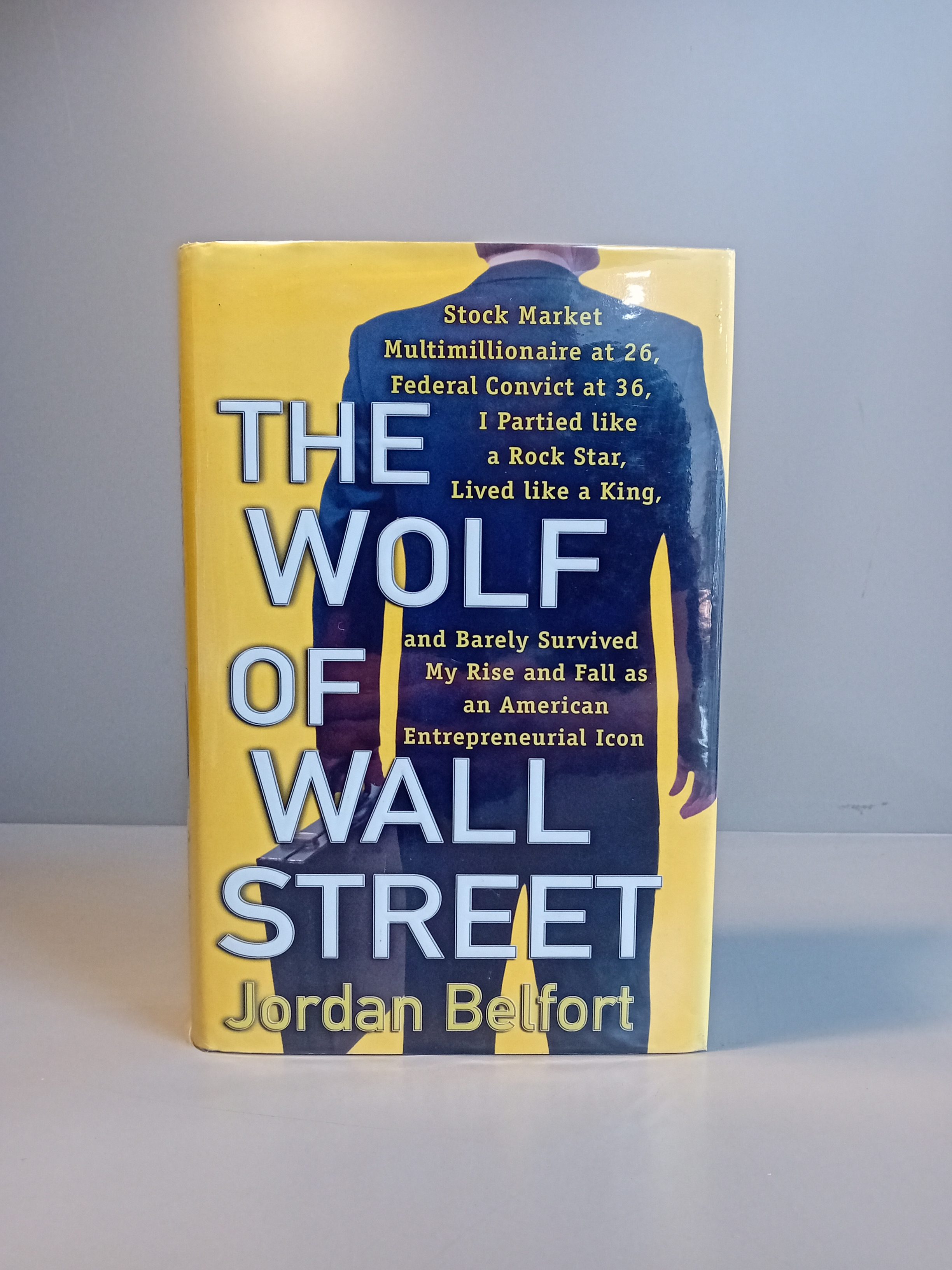
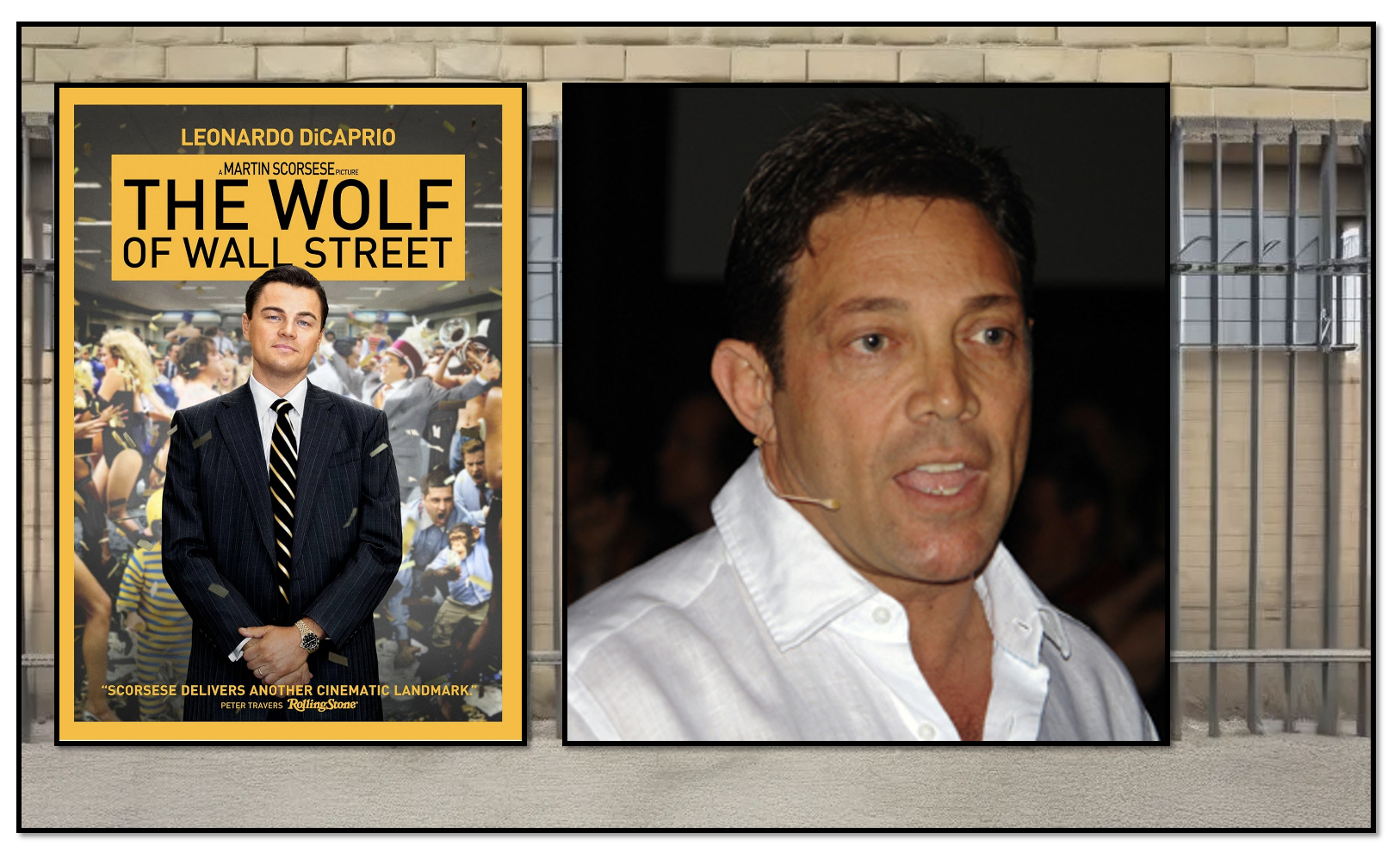
Jordan Belfort’s story is the chronicle of Stratton Oakmont, a Long Island brokerage that defrauded investors of over $200 million through aggressive "pump and dump" schemes during the late 1980s and 1990s. His life, famously depicted in the memoir and film The Wolf of Wall Street, serves as a cautionary tale of extreme wealth, systemic securities fraud, and the eventual federal crackdown that led to his conviction and imprisonment.
The Genesis of a Stock Market Predator
Before Jordan Belfort became the "Wolf," he was a young man from the Bronx with a natural gift for sales. His early career was marked by a failed meat-and-seafood business, which eventually led him to the doors of L.F. Rothschild in 1987. It was here that Belfort was first exposed to the high-stakes, high-pressure environment of Wall Street. However, his timing was unfortunate; the "Black Monday" stock market crash of 1987 led to the firm's collapse and Belfort's unemployment.
Rather than deterring him, the experience taught him the mechanics of the brokerage industry. He soon discovered the lucrative world of penny stocks—securities that trade at low prices (usually under $5) and are often sold over-the-counter (OTC) rather than on major exchanges like the NYSE. Because these stocks were thinly traded and lacked transparency, they were ripe for manipulation. Belfort realized that the commissions on these low-value stocks were significantly higher than those on blue-chip stocks, providing a massive incentive for aggressive sales tactics.
The Foundation of Stratton Oakmont
In 1989, Belfort and his partner Danny Porush (portrayed as Donnie Azoff in the film) established Stratton Oakmont. To give the firm an air of legitimacy, they chose a name that sounded like a venerable, old-money establishment. In reality, the firm operated out of a suburban office park in Lake Success, Long Island, far from the physical Wall Street.
Stratton Oakmont was not a traditional brokerage. It was a "boiler room"—an outbound call center where young, hungry brokers used high-pressure sales scripts to convince unsuspecting investors to buy speculative stocks. Belfort’s "Straight Line Persuasion" system became the backbone of the firm’s training. This method focused on moving a prospect along a psychological line from uncertainty to a "level ten" certainty about a product, regardless of its actual value.
The firm’s culture was legendary for its debauchery. Belfort fostered a high-testosterone environment fueled by drugs, alcohol, and frequent office parties. This culture served a strategic purpose: by keeping his employees addicted to a high-spending lifestyle, Belfort ensured they remained desperate for the massive commissions generated by his fraudulent schemes.
The Mechanics of the "Pump and Dump"
The primary engine of Stratton Oakmont’s wealth was the pump and dump scheme. This form of securities fraud involves three distinct phases that exploit both the market and the psychology of the investor.
Phase 1: Accumulation and Control
Belfort and his inner circle would quietly accumulate large positions in a "penny stock" or a small-cap company. They often gained control of these companies through Initial Public Offerings (IPOs) that Stratton Oakmont itself underwrote. By controlling the majority of the "float" (the shares available for public trading), they could easily influence the price.
Phase 2: The "Pump"
Once the insiders held their positions, the army of Stratton brokers would begin calling thousands of investors. They used misleading information, high-pressure tactics, and "inside" tips to create artificial demand. As more people bought the stock, the price would skyrocket. This was the "pump."
Phase 3: The "Dump"
When the stock reached a peak price, Belfort and his associates would sell their massive holdings simultaneously. This sudden flood of shares would cause the price to crater, leaving the public investors with nearly worthless stock. The insiders walked away with millions, while the retail investors lost their life savings.
The Steve Madden IPO
The most famous example of this was the IPO for Steve Madden Shoes. Madden, a childhood friend of Porush, took his company public through Stratton Oakmont. Belfort and his team controlled the vast majority of the shares through "rat holes"—nominees who held stock on Belfort's behalf to circumvent SEC regulations. When the stock went public, they manipulated the price from roughly $4 to $18 in minutes, generating massive illegal profits for the firm's leadership.
The Regulatory Net Tightens
The sheer scale and audacity of Stratton Oakmont’s operations eventually drew the attention of the National Association of Securities Dealers (NASD), now known as FINRA, and the Securities and Exchange Commission (SEC). Unlike modern digital trading, the 1990s relied heavily on paper trails and phone recordings, which the regulators began to meticulously assemble.
The NASD was the first to take action, repeatedly fining the firm for various infractions and attempting to shut it down. However, Belfort’s legal team was adept at stalling. It wasn't until the FBI launched a full-scale criminal investigation, led by Special Agent Gregory Coleman (represented as Patrick Denham in the movie), that the house of cards began to fall.
The investigation focused not just on the stock manipulation, but also on the money laundering required to hide the illicit profits. Belfort had been smuggling cash into Switzerland to hide it in secret bank accounts, utilizing "mules" like his wife’s aunt. The cooperation of a Swiss banker eventually provided the breakthrough the FBI needed.
Arrest, Conviction, and Cooperation
In 1998, Jordan Belfort was indicted for securities fraud and money laundering. Facing decades in prison, he chose to cooperate with the federal government. This involved wearing a wire to gather evidence against his former colleagues and business associates.
His cooperation led to a significantly reduced sentence. While many of his victims suffered total financial ruin, Belfort served only 22 months in a federal minimum-security prison. As part of his plea deal, he was ordered to pay $110.4 million in restitution to the investors he defrauded.
Fact vs. Fiction: The Wolf of Wall Street Adaptations
Belfort’s memoir, The Wolf of Wall Street, and the subsequent 2013 film directed by Martin Scorsese and starring Leonardo DiCaprio, brought his story to a global audience. While the film is praised for its cinematic quality, it is important to distinguish between Hollywood dramatization and historical fact.
| Feature | The Movie Version | The Historical Reality |
|---|---|---|
| Location | Depicted as being in the heart of Manhattan. | Located in Lake Success, Long Island (not Wall Street). |
| The Arrest | Depicted as a dramatic, sudden FBI raid. | A gradual process involving years of investigation and an indictment. |
| Restitution | Rarely mentioned or glossed over in the ending. | Belfort remains under a lifelong obligation to pay $110M+. |
| Drug Use | Portrayed as constant and extreme (The Quaalude scene). | Largely accurate; Belfort has admitted his drug use was severe. |
| Steve Madden | Depicted as a comedic, bumbling character. | Madden was a willing participant who served prison time. |
| Victims | Victims are largely invisible, "faceless" voices on phones. | Thousands of real people lost retirement funds and savings. |
Life After the Fall: The 2026 Perspective
As of 2026, Jordan Belfort has fully transitioned from a disgraced financier to a global brand. He has successfully rebranded himself as a sales trainer and motivational speaker. While he claims to have turned a new leaf, his post-prison life has not been without controversy, particularly regarding the pace of his restitution payments.
In the 2020s, Belfort also made headlines for his shifting stance on cryptocurrency. Originally a vocal critic of Bitcoin—calling it a "scam" and "mass delusion"—he later became an advocate, drawing parallels between the early crypto market and the "Wild West" of penny stocks in the 1990s. His involvement in the digital asset space has been a point of interest for both regulators and his followers, as he applies his "Straight Line" sales techniques to the modern financial landscape.
Current Financial and Legal Status
As we look at the situation in 2026, the following points remain critical:
- Restitution Progress: The U.S. government continues to monitor Belfort's income. A portion of his earnings from speaking engagements and book royalties is traditionally garnished to satisfy the $110 million judgment, though millions remain unpaid.
- Business Ventures: He operates Global Motivation Inc., focusing on corporate training. His "Straight Line" system remains a popular, albeit controversial, sales curriculum.
- Public Perception: Belfort remains a polarizing figure. To some, he is a survivor who reinvented himself; to others, he is a symbol of corporate greed who profited twice from his crimes—once by committing them, and again by selling the story.
Practical Lessons and Financial Safeguards
The story of Stratton Oakmont provides essential lessons for modern investors. Securities fraud has evolved, moving from phone calls to social media and "finfluencer" endorsements, but the underlying principles remain the same.
- Beware of High-Pressure Sales: Legitimate financial advisors do not use "limited time" pressure to force a decision. If a broker claims a stock is a "sure thing" or is about to "explode," it is a major red flag.
- Verify the Broker: Always use tools like FINRA’s BrokerCheck to verify the registration and disciplinary history of any individual or firm offering investment advice.
- Understand Liquidity: Penny stocks are often "illiquid," meaning it is hard to sell them once you own them. Scammers rely on this to trap investors in falling stocks.
- The "Too Good to Be True" Rule: Any investment promising high returns with low risk is almost certainly a scam. Risk and reward are fundamentally linked in financial markets.
Disclaimer: This article is for historical and educational purposes only and does not constitute financial or legal advice. Consult with a certified financial planner or legal professional before making significant investment decisions.
Frequently Asked Questions
What was the specific crime Jordan Belfort was convicted of?
Jordan Belfort was convicted of securities fraud and money laundering. Specifically, he was charged with orchestrating "pump and dump" schemes through Stratton Oakmont, where he manipulated the price of stocks to benefit himself and his partners at the expense of public investors. He also laundered the proceeds of these crimes through Swiss bank accounts.
How much money did Stratton Oakmont actually steal?
It is estimated that Stratton Oakmont cost investors approximately $200 million. As part of his 2003 sentencing, Belfort was ordered to pay $110.4 million in restitution. This figure represents the losses specifically tied to the criminal charges brought against him, though the total market impact may have been higher.
Is Jordan Belfort still banned from the financial industry?
Yes. As part of his settlement with the SEC and the terms of his conviction, Jordan Belfort is permanently barred from associating with any broker, dealer, investment adviser, or investment company. While he can talk about the markets and teach sales, he cannot legally trade securities for others or run a brokerage firm.
Who was the real "Donnie Azoff"?
The character Donnie Azoff, played by Jonah Hill in the movie, was based on Danny Porush. Like Belfort, Porush served time in prison (approximately 39 months) for his role in the Stratton Oakmont fraud. Porush has frequently criticized the movie, claiming that many of the more "outrageous" scenes were exaggerated or fabricated for entertainment.
How did the Steve Madden scandal end for Steve Madden himself?
Steve Madden was convicted of securities fraud and money laundering in connection with his dealings with Belfort and Stratton Oakmont. He was sentenced to 41 months in prison in 2002 and was forced to resign as CEO of his namesake company, although he later returned in a creative and advisory capacity after his release.
Final Recommendation for Investors
The most effective way to avoid becoming a victim of a "Wolf of Wall Street" style scam in the modern era is to prioritize transparency and regulation. Stick to established, reputable brokerage firms and avoid "hot tips" from unverified sources on social media or unsolicited calls. If an investment opportunity involves a company you cannot find detailed SEC filings for, or if the broker cannot explain how the company makes money, the best course of action is to walk away immediately.