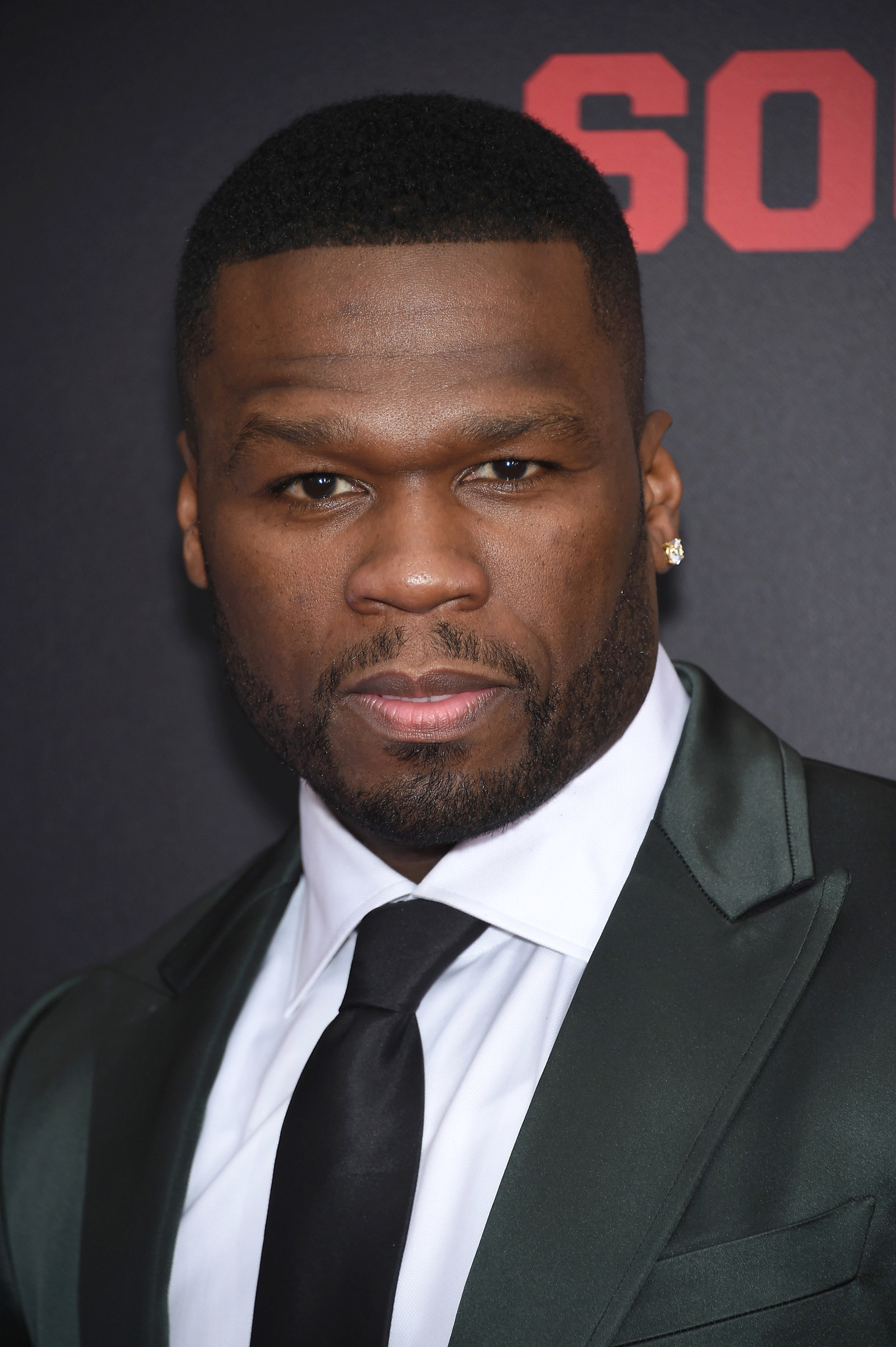
50 Cent, born Curtis James Jackson III, is a multi-platinum rapper, award-winning actor, and highly successful entrepreneur. He rose to global fame with his 2003 debut album Get Rich or Die Tryin’ and has since transitioned into a powerful media mogul, producing hit television series like Power and building a diverse business empire.
Few figures in modern entertainment have navigated the transition from the streets to the boardroom with as much calculated precision as 50 Cent. As of 2026, his influence spans the music industry, high-end spirits, and a massive television production landscape. Understanding his trajectory requires looking at his resilience following a near-fatal shooting, his disruption of the music industry’s distribution model, and his masterclass in celebrity branding.
The Foundation: Resilience and the Mixtape Revolution
Curtis Jackson’s entry into the public consciousness was defined by a narrative of survival. Growing up in the South Jamaica neighborhood of Queens, New York, he faced the systemic challenges of the 1980s and 90s crack epidemic. His early career was nearly extinguished in May 2000, when he survived being shot nine times at close range. This event, rather than ending his career, became the cornerstone of his public persona—a man who was, quite literally, "bulletproof."
Following the shooting, Jackson was dropped from Columbia Records and blacklisted by much of the New York recording industry. He responded by pivoting to the underground mixtape circuit. Alongside his group, G-Unit, he released a series of high-quality, street-ready projects like 50 Cent Is the Future and No Mercy, No Fear. These tapes served two purposes: they showcased his ability to craft catchy hooks over popular beats and they proved there was a massive, untapped demand for his specific brand of storytelling.
This independent hustle eventually caught the attention of Eminem, who brought the artist to Dr. Dre’s Aftermath Entertainment and Interscope Records. The resulting 2003 debut, Get Rich or Die Tryin’, sold 872,000 copies in its first four days, effectively shifting the sound of hip-hop toward a polished, melodic form of "gangsta rap."
The Vitaminwater Windfall: A Masterclass in Branding
While 50 Cent’s music sales were astronomical, his true financial breakthrough came from an equity-based endorsement deal. In 2004, he partnered with Glacéau to promote Vitaminwater, specifically the "Formula 50" flavor. Rather than accepting a standard flat-fee celebrity endorsement, Jackson negotiated for a minority stake in the company.
When Coca-Cola acquired Glacéau in 2007 for $4.1 billion, 50 Cent’s share netted him an estimated $100 million after taxes. This deal fundamentally changed how celebrities approached business. It moved the needle from "work-for-hire" to "equity-holder," a strategy he would later replicate across various industries. This success demonstrated that his brand value extended far beyond his lyrical ability; he possessed a keen understanding of consumer behavior and the power of cross-promotion.
Building the G-Unit Empire
The success of his debut album allowed Jackson to launch G-Unit Records, providing a platform for artists like Lloyd Banks, Young Buck, and Tony Yayo. However, his ambitions were not limited to music. The G-Unit brand expanded into:
- Apparel: A partnership with Marc Ecko created the G-Unit Clothing Company, which generated hundreds of millions in retail sales during the mid-2000s.
- Footwear: His deal with Reebok for G-Unit Sneakers rivaled the sales of traditional athletic endorsements at the time.
- Gaming: Titles like 50 Cent: Bulletproof and 50 Cent: Blood on the Sand leveraged his image for the burgeoning video game market.
- Electronics: SMS Audio was founded to compete in the high-end headphone market, focusing on lifestyle and fitness-oriented audio products.
These ventures were not always permanent, but they served as a laboratory for his future business endeavors. Jackson learned the importance of quality control and the necessity of owning the distribution channels for his products.
The Television Mogul: The Power Universe and G-Unit Film & TV
In the 2010s, 50 Cent pivoted toward television production, a move that would define his "second act." Partnering with Courtney A. Kemp and the Starz network, he executive produced and starred in Power. The show was a cultural phenomenon, blending crime drama with high-stakes business politics.
The success of Power led to one of the most successful franchise expansions in television history. As of 2026, the "Power Universe" includes multiple spinoffs:
- Power Book II: Ghost: Focusing on the legacy of the main protagonist’s son.
- Power Book III: Raising Kanan: A prequel exploring the origin of 50 Cent’s own character.
- Power Book IV: Force: Following the journey of fan-favorite Tommy Egan.
Beyond the Power franchise, Jackson’s G-Unit Film & TV produced BMF (Black Mafia Family), which chronicles the rise and fall of the Flenory brothers. His production style is characterized by "authentic grit," often hiring actors who bring a sense of realism to the screen. In 2024, he further solidified this division by launching G-Unit Studios in Shreveport, Louisiana, a massive production facility designed to foster film and television projects outside of the traditional Hollywood hubs.
Spirits and Luxury Goods: Sire Spirits
In recent years, Jackson has focused heavily on the luxury spirits market through his company, Sire Spirits. This venture includes:
- Le Chemin du Roi: A premium champagne brand often seen in winner’s circles at sporting events, notably within the NBA and NFL.
- Branson Cognac: A high-end cognac sourced from the heart of the Cognac region in France.
Jackson employs a "boots-on-the-ground" marketing strategy for these brands. He frequently makes personal appearances at liquor stores and nightclubs across the United States to sign bottles and engage with consumers. This direct-to-consumer approach has helped Sire Spirits secure major distribution deals and official partnerships with professional sports teams, including the Houston Rockets, Sacramento Kings, and the Washington Commanders.
Financial Strategy and the 2015 Chapter 11 Filing
A common point of confusion in 50 Cent’s biography is his 2015 filing for Chapter 11 bankruptcy. To the casual observer, it appeared he had lost his fortune. In reality, the filing was a strategic legal maneuver used to protect his assets following several large legal judgments, including a $17 million ruling in a lawsuit with Sleek Audio and a $7 million judgment regarding a private video.
Chapter 11 allows for business reorganization rather than total liquidation (Chapter 7). By filing, Jackson was able to restructure his debts and pay off his creditors under a court-ordered plan. He emerged from bankruptcy in early 2017 after paying out over $22 million, proving that his underlying business entities remained solvent and profitable. This period is often cited by financial analysts as an example of sophisticated wealth protection.
Summary of 50 Cent’s Business Revenue Streams
| Industry Segment | Primary Entity | Key Achievement |
|---|---|---|
| Music | G-Unit Records / Aftermath | Get Rich or Die Tryin' (12x Platinum). |
| Beverages | Glacéau / Vitaminwater | Negotiated equity stake leading to ~$100M windfall. |
| Television | G-Unit Film & TV | Created the Power Universe; multi-year Starz/Fox deals. |
| Spirits | Sire Spirits | Le Chemin du Roi and Branson Cognac global distribution. |
| Real Estate/Tech | G-Unit Studios | Acquisition of production facilities in Shreveport, LA. |
| Endorsements | Various | Long-term partnerships with Reebok, SMS Audio, and sports franchises. |
Frequently Asked Questions
How many times was 50 Cent shot?
50 Cent was shot nine times at close range in May 2000. The incident occurred outside his grandmother's house in Queens. The bullets hit his hand, arm, hip, both legs, chest, and left cheek. The facial wound resulted in a slight slur in his speech and a permanent fragment of a bullet in his tongue, which contributed to his unique vocal delivery.
What is 50 Cent’s net worth in 2026?
While exact figures are private, reputable financial trackers estimate his net worth to be in the range of $150 million to $200 million. His wealth is no longer tied primarily to music royalties but is driven by his massive television production deals, his ownership of Sire Spirits, and his extensive real estate holdings, including the G-Unit Studios production hub.
Is 50 Cent still making music?
Yes, but his output has shifted. While he rarely releases full-length solo studio albums in the traditional sense, he frequently contributes to the soundtracks of his television shows. He also performs globally, having recently completed the "Final Lap Tour," which celebrated the 20th anniversary of his debut. He remains one of the most-streamed hip-hop artists of the 2000s era.
Why did he start G-Unit Studios in Louisiana?
Jackson chose Shreveport, Louisiana, to take advantage of significant state tax incentives for film production and to revitalize a community by providing jobs and training in the media sector. By owning the physical studio space, he reduces production overhead for his own shows and can lease the facility to other major production companies, creating a new recurring revenue stream.
What is the "Power" Universe?
The "Power" Universe is a collection of interconnected television dramas executive produced by 50 Cent. It began with the original series Power (2014–2020) and expanded into three active spinoffs: Ghost, Raising Kanan, and Force. The franchise is credited with driving record-breaking subscriber growth for the Starz network and is known for its high production value and complex character arcs.
Final Recommendation for Aspiring Entrepreneurs
50 Cent’s career offers a definitive blueprint for brand longevity. For those looking to emulate his success, the primary lesson is the diversification of income. Do not rely on a single skill set or industry. Instead, use your primary platform (whether it be music, tech, or art) to acquire equity in scalable businesses. Like Jackson, prioritize ownership over "fame" and always maintain a direct connection with your audience through authentic engagement.