The 1990s was a transformative decade in cinema that bridged the gap between traditional Hollywood studio filmmaking and the digital revolution, characterized by the rise of independent cinema, groundbreaking computer-generated imagery, and a distinct cultural shift in storytelling.
The Cinematic Landscape of the 1990s: An Overview
The 1990s film era stands as one of the most dynamic periods in motion picture history. Sitting comfortably between the practical-effects blockbusters of the 1980s and the digital saturation of the 2000s, the decade forged a unique identity defined by technological leaps, structural storytelling experiments, and the explosion of independent cinema. Major studios courted massive global audiences with high-concept action and romantic dramas, while a parallel movement of independent filmmakers challenged conventional cinematic norms.
Understanding 1990s movies requires examining how economic shifts, the maturation of cable television and home video markets, and rapid technological advancements coalesced. Studios were willing to greenlight risky, mid-budget original screenplays—a practice that grew increasingly rare in subsequent decades. This financial risk tolerance fostered an environment where visionary directors could push boundaries, resulting in a robust catalog of enduring cultural touchstones.
Technological Evolution: The Birth of Modern CGI and Sound
The most profound technical catalyst of the 1990s was the transition from optical effects and physical models to computer-generated imagery (CGI). While early experiments began in the late 1980s, the decade opened with James Cameron’s Terminator 2: Judgment Day (1991), which showcased fluid, shape-shifting digital animation via the T-1000.
The watershed moment arrived in 1993 with Steven Spielberg’s Jurassic Park. By combining photorealistic CGI creatures from Industrial Light & Magic with Stan Winston’s full-scale animatronics, the film demonstrated that digital effects could carry narrative weight rather than serving as mere novelty spectacles. This paved the way for Pixar’s Toy Story (1995), the first entirely computer-animated feature film, which permanently altered the animation industry and signaled the decline of traditional hand-drawn cels for major studios.
Simultaneously, sound design experienced a revolution with the widespread adoption of Dolby Digital and DTS formats. Cinemas upgraded their sound systems to support multi-channel discrete audio, allowing sound designers to immerse audiences in precise acoustic environments. Action films gained visceral physical weight, while dramas utilized subtle ambient soundscapes to heighten psychological tension.
The Independent Film Boom and the Sundance Effect
While blockbusters captured box office records, the 1990s will be equally remembered for the seismic rise of independent cinema. Driven by the critical and financial success of Steven Soderbergh’s sex, lies, and videotape (1989) at the Sundance Film Festival, Hollywood studios recognized that low-budget, auteur-driven films could yield massive profit margins and critical prestige.
Distribution companies like Miramax, founded by Harvey and Bob Weinstein, capitalized on this trend, turning specialty cinema into a mainstream commercial enterprise. Filmmakers such as Quentin Tarantino (Pulp Fiction, 1994), Richard Linklater (Slacker, 1991; Dazed and Confused, 1993), and Paul Thomas Anderson (Boogie Nights, 1997) emerged from this ecosystem.
Key Characteristics of 90s Indie Cinema
- Non-Linear Narratives: Films frequently played with chronology, utilizing flashbacks, circular timelines, and overlapping perspectives.
- Stylized Dialogue: A heavy emphasis on rapid-fire, pop-culture-infused, or deadpan philosophical dialogue replaced traditional melodramatic scripting.
- Moral Ambiguity: Protagonists were frequently antiheroes, criminals, or morally compromised ordinary people rather than archetypal heroes.
- Low-Budget Ingenuity: Limited resources forced reliance on sharp screenwriting, distinct regional settings, and unconventional casting choices.
The Blockbuster Blueprint: High Concepts and Global Markets
The definition of the Hollywood blockbuster shifted dramatically during the 1990s. As international box office revenues began to rival domestic earnings, studios favored high-concept premises that transcended language barriers through spectacular visual action.
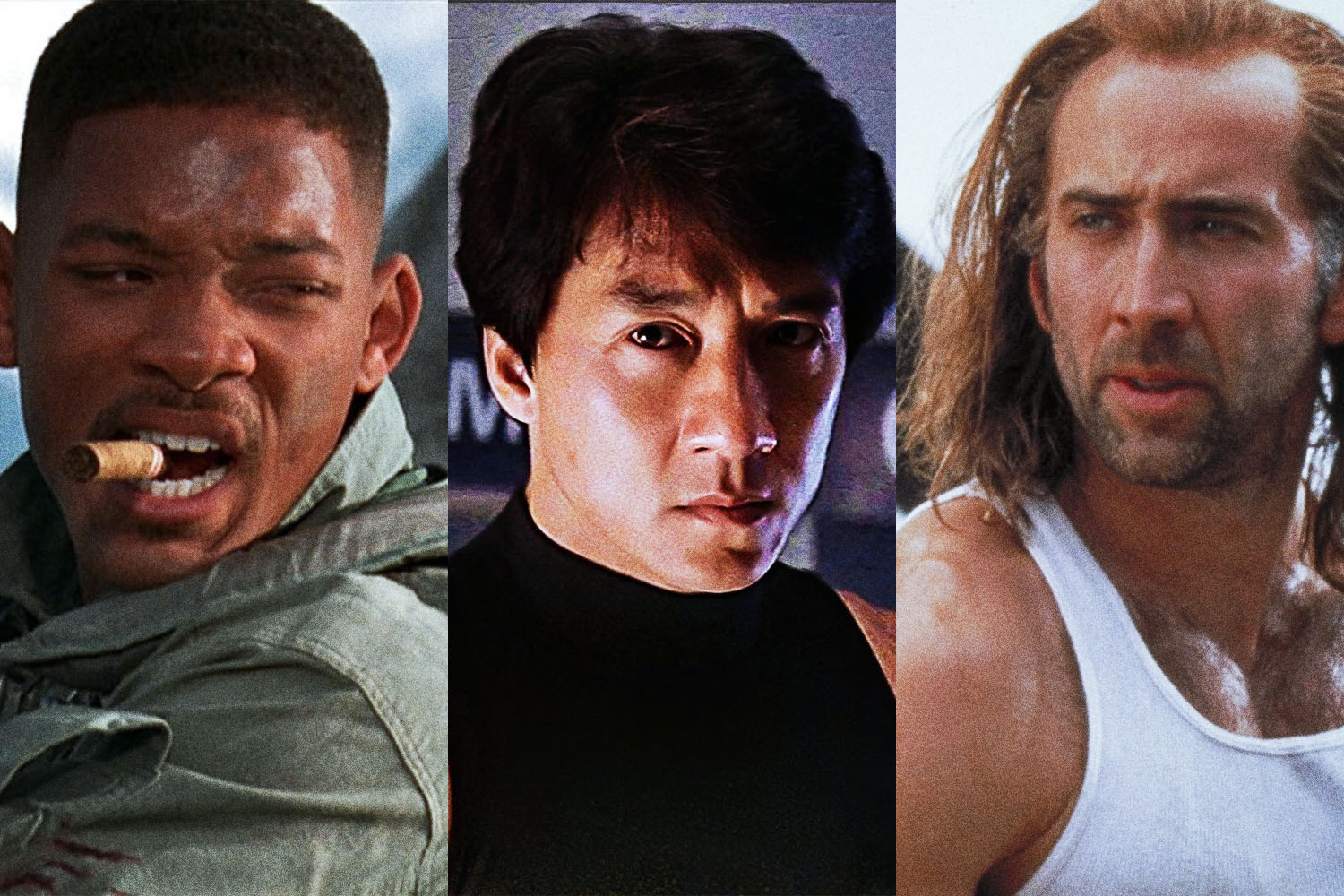
Roland Emmerich and Dean Devlin perfected the disaster-movie formula with Independence Day (1996), relying on global destruction, ensemble casts, and patriotic fervor. Meanwhile, James Cameron’s Titanic (1997) pushed production budgets to unprecedented heights ($200 million), ultimately becoming the highest-grossing film in history up to that point by combining classical romantic melodrama with state-of-the-art visual effects.
Action cinema also evolved through the "die-hard clone" formula—placing ordinary individuals in high-stakes environments—as well as the emergence of martial arts choreography crossing over into Western cinema, popularized by Hong Kong imports and stars like Jackie Chan.
Genre Breakdown and Defining Masterpieces
To grasp the breadth of 1990s cinema, it is useful to categorize the decade's output by primary genres and examine how they evolved.
| Genre | Defining Characteristic | Key Representative Films | Technological or Narrative Impact |
|---|---|---|---|
| Sci-Fi / Action | Integration of CGI, dystopian themes, and high-concept stakes | Terminator 2 (1991), The Matrix (1999) | Popularized digital compositing and bullet-time photography. |
| Crime / Thriller | Gritty realism, sharp dialogue, complex puzzle plots | Pulp Fiction (1994), Fargo (1996), The Usual Suspects (1995) | Revitalized neo-noir and non-linear storytelling structures. |
| Animation | Transition to full digital rendering and mature themes | The Lion King (1994), Toy Story (1995) | Established Disney's Renaissance peak and launched 3D animation. |
| Independents | Auteur-driven, low budgets, character studies | Dazed and Confused (1993), Before Sunrise (1995) | Proved commercial viability for non-studio art-house projects. |
Psychological Thrillers and the Twist Ending
The 1990s was a golden age for the psychological thriller, particularly films obsessed with institutional corruption, serial killers, and reality-bending twists. Following the massive success of Jonathan Demme’s The Silence of the Lambs (1991)—which swept the "Big Five" Academy Awards—studios rushed to produce gritty procedural thrillers.
This subgenre culminated in films like David Fincher’s Se7en (1995) and Fight Club (1999), both of which utilized bleak palettes, philosophical undertones, and shocking narrative resolutions. The trend reached its pop-cultural zenith with M. Night Shyamalan’s The Sixth Sense (1999), a film that cemented the audience's appetite for third-act plot twists that recontextualized the entire preceding narrative.
Cultural Impact and Enduring Legacy
The movies of the 1990s continue to exert a powerful influence on contemporary media culture. Much of today's nostalgia economy is fueled by adults who grew up watching these films on VHS tapes bought at local video stores or broadcast on cable television.
Furthermore, the aesthetic of 1990s filmmaking—characterized by natural film grain, practical lighting mixed with early digital enhancements, and practical stunt work—has become a benchmark for modern filmmakers seeking an authentic, tactile cinematic experience. As streaming platforms aggregate libraries from this era, a new generation of viewers continues to discover the unique balance of commercial ambition and creative risk-taking that defined the decade.
Frequently Asked Questions About 1990s Movies
What were the biggest box office hits of the 1990s?
The highest-grossing film of the decade by an overwhelming margin was James Cameron’s Titanic (1997), which grossed over $1.8 billion globally during its initial theatrical run. Other massive financial successes included Jurassic Park (1993), Independence Day (1996), Star Wars: Episode I – The Phantom Menace (1999), and The Lion King (1994).
How did CGI change 1990s cinema?
Computer-generated imagery shifted cinema from physical illusion to digital creation. While early 90s films used CGI sparingly for specific marvels (like the dinosaurs in Jurassic Park or the liquid metal in Terminator 2), late-decade releases like The Matrix (1999) and The Phantom Menace demonstrated complete digital environment creation and manipulation, laying the groundwork for 21st-century blockbusters.
Why is the 1990s considered a golden age for independent film?
The decade saw the institutionalization of independent film through dedicated distribution arms of major studios (such as Miramax and Sony Pictures Classics) and the rising cultural clout of festivals like Sundance. This infrastructure allowed mid-budget, unconventional films to achieve wide theatrical distribution and mainstream profitability.
What role did the home video market play in 1990s film culture?
The explosion of the VHS rental market, anchored by nationwide chains like Blockbuster Video, provided secondary revenue streams that often rescued underperforming theatrical releases. It also fostered a dedicated subculture of cinephiles who could study, collect, and rewatch films outside of theatrical windows.
How did action movies evolve during this decade?
Action cinema moved away from the unstoppable, muscle-bound heroes of the 1980s (such as Arnold Schwarzenegger and Sylvester Stallone in their prime) toward vulnerable, relatable protagonists pushed into extreme circumstances, as seen in Die Hard successors, Speed (1994), and The Rock (1996).
Conclusion and Next Actions
To fully appreciate 1990s cinema, explore beyond the major studio blockbusters. Seek out independent releases, foreign-language crossovers, and directorial debuts from this era to understand the wide spectrum of artistic expression that made the decade a crucial bridge to modern filmmaking.