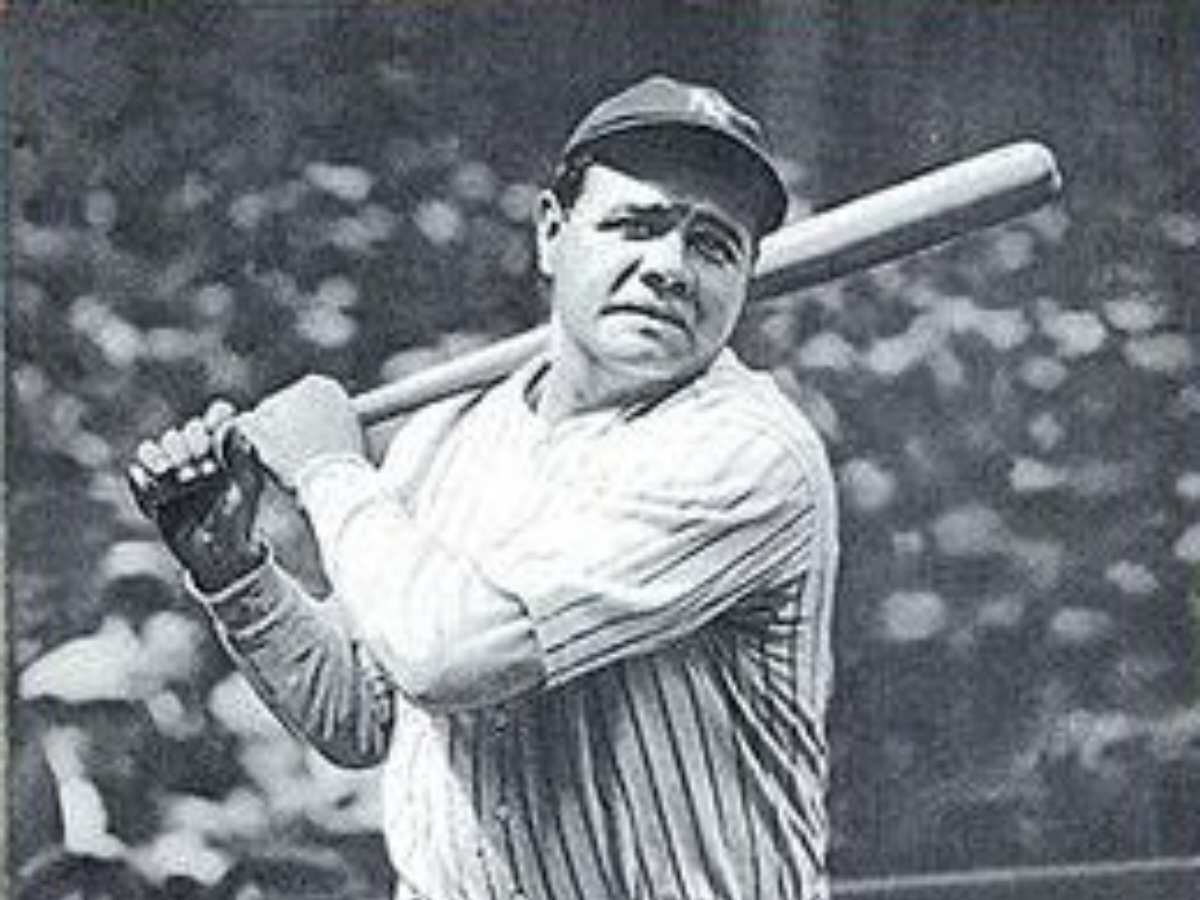
Babe Ruth fundamentally altered baseball through three primary milestones: his transition from a premier left-handed pitcher to the greatest power hitter of his era, his landscape-shifting sale from the Boston Red Sox to the New York Yankees in 1920, and his unprecedented statistical dominance that effectively ended the "Dead Ball Era" and birthed the modern game.
George Herman "Babe" Ruth remains the most iconic figure in American sports history. Even as we look back from the perspective of 2026, over eighty years after his passing, his influence on the mechanics of the game and the nature of sports celebrity is unparalleled. To understand the "Sultan of Swat," one must look beyond the myths and focus on the three pillars of his career that changed the trajectory of Major League Baseball (MLB) forever.
1. Ruth Was an Elite Pitcher Before Becoming a Power Hitter
While history remembers him for his towering home runs, Babe Ruth’s entry into the major leagues was defined by his dominance on the mound. Many casual fans are unaware that had Ruth never picked up a bat, he might still have been a candidate for the Baseball Hall of Fame based solely on his pitching prowess.
The Left-Handed Ace of the Red Sox
Ruth began his career with the Boston Red Sox in 1914. Between 1915 and 1917, he established himself as one of the most formidable left-handed pitchers in the American League. In 1916, Ruth posted an earned run average (ERA) of 1.75, which led the league, and he threw nine shutouts—a record for a left-handed pitcher that stood for decades.
During this "Dead Ball Era," where runs were scarce and the game relied on bunting and base-stealing, Ruth was a master of suppression. He relied on a powerful fastball and a deceptive curveball, logging over 300 innings in a single season. His pitching was not just statistically impressive; it was clutch. In the 1916 and 1918 World Series, Ruth set a record by pitching 29.2 consecutive scoreless innings, a mark that remained unbroken until 1961.
The Transition to the Outfield
The transition from pitcher to everyday outfielder was born out of necessity and the recognition of his extraordinary hitting talent. In 1918, due to player shortages during World War I, the Red Sox began using Ruth in the outfield on days he wasn't pitching. The results were immediate. He tied for the league lead in home runs with 11 while still winning 13 games as a pitcher.
By 1919, it became clear that Ruth’s bat was too valuable to sit out three out of every four days. In his final year with Boston, he hit a then-record 29 home runs. This shift was the first of its kind in professional baseball—a player moving from a top-tier starting pitcher to a full-time position player to maximize offensive output. It remains a rare feat that serves as the historical benchmark for modern "two-way" players.
2. The 1920 Sale to the Yankees Created the Greatest Dynasty in Sports
The second key fact about Babe Ruth is the transaction that arguably defined the next century of baseball: his sale from the Boston Red Sox to the New York Yankees. On December 26, 1919, Red Sox owner Harry Frazee sold Ruth to the Yankees for $100,000 in cash and a $300,000 loan.
Economic Factors vs. Cultural Myth
The sale is often shrouded in the legend of the "Curse of the Bambino," a supposed hex placed on the Red Sox that prevented them from winning a World Series for 86 years. However, the reality was grounded in finance. Frazee, a theatrical producer, needed capital to fund his Broadway ventures, most notably the musical No, No, Nanette. While the "Curse" is a compelling story, the sale's true impact was the radical shift in the balance of power within the American League.
Before Ruth arrived, the Yankees were a mediocre franchise that had never won a pennant. After the trade, the Yankees transformed into "The Bronx Bombers." In 1920, Ruth’s first year in New York, he hit 54 home runs—more than any other team in the American League except his own. This individual performance led to a massive surge in attendance, prompting the Yankees to move out of the Polo Grounds (which they shared with the Giants) and build Yankee Stadium, famously dubbed "The House That Ruth Built."
Launching the Yankee Dynasty
The acquisition of Ruth allowed the Yankees to dominate the 1920s and 1930s. With Ruth as the centerpiece of "Murderer's Row," the Yankees won seven American League pennants and four World Series titles during his tenure. This period established the Yankees as the premier brand in professional sports, a status they have maintained through 2026. Conversely, the Red Sox fell into a period of prolonged struggle, reinforcing the narrative that the trade was the most lopsided deal in history.
3. Ruth Single-Handedly Ended the Dead Ball Era
The third and perhaps most significant fact is that Ruth did not just play baseball; he fundamentally redesigned how the game was played. Prior to 1920, baseball was a game of "small ball." Strategy revolved around high-contact hitting, sacrifices, and defensive positioning. Ruth’s approach—swinging for the fences with a heavy, 40-ounce bat—introduced the "Live Ball Era."
Statistical Dominance and the "Home Run" Revolution
In 1920, Ruth’s 54 home runs shattered his own previous record of 29. To put this in perspective, the second-place hitter in the league that year, George Sisler, hit only 19. Ruth was outperforming entire rosters. His power was so immense that it forced pitchers to change their approach, leading to the rise of the "strikeout pitcher" as teams sought hurlers who could keep the ball in the park.
His 1927 season, where he hit 60 home runs, remained the gold standard for over three decades. Ruth finished his career with 714 home runs, a number that became the most sacred in American sports until it was eventually surpassed by Hank Aaron in 1974. His career slugging percentage of .690 remains the highest in MLB history as of 2026, a testament to his consistent ability to produce extra-base hits.
The First Modern Athlete Celebrity
Beyond the numbers, Ruth was the first athlete to transcend his sport to become a global cultural icon. He was the first player to have an agent and the first to earn more money than the President of the United States. When asked about his $80,000 salary during the Great Depression—more than President Herbert Hoover’s $75,000—Ruth famously replied, "I had a better year than he did." This persona helped baseball survive the 1919 Black Sox scandal, as Ruth's charisma and performance restored the public's faith in the integrity and excitement of the game.
Comparative Impact: Ruth’s Performance vs. League Averages (1920–1927)
To understand the sheer scale of Ruth's dominance, it is helpful to compare his individual output to the average performance of other teams during his peak years.
| Year | Babe Ruth Home Runs | Average AL Team Home Runs (Excl. NYY) | League Context |
|---|---|---|---|
| 1920 | 54 | 45 | Ruth out-homered every other AL team. |
| 1921 | 59 | 48 | Established the single-season record. |
| 1923 | 41 | 42 | The year Yankee Stadium opened. |
| 1927 | 60 | 52 | Part of the legendary "Murderer's Row." |
Source: Historical Data via Baseball-Reference
Frequently Asked Questions
Did Babe Ruth really point to where he was going to hit a home run?
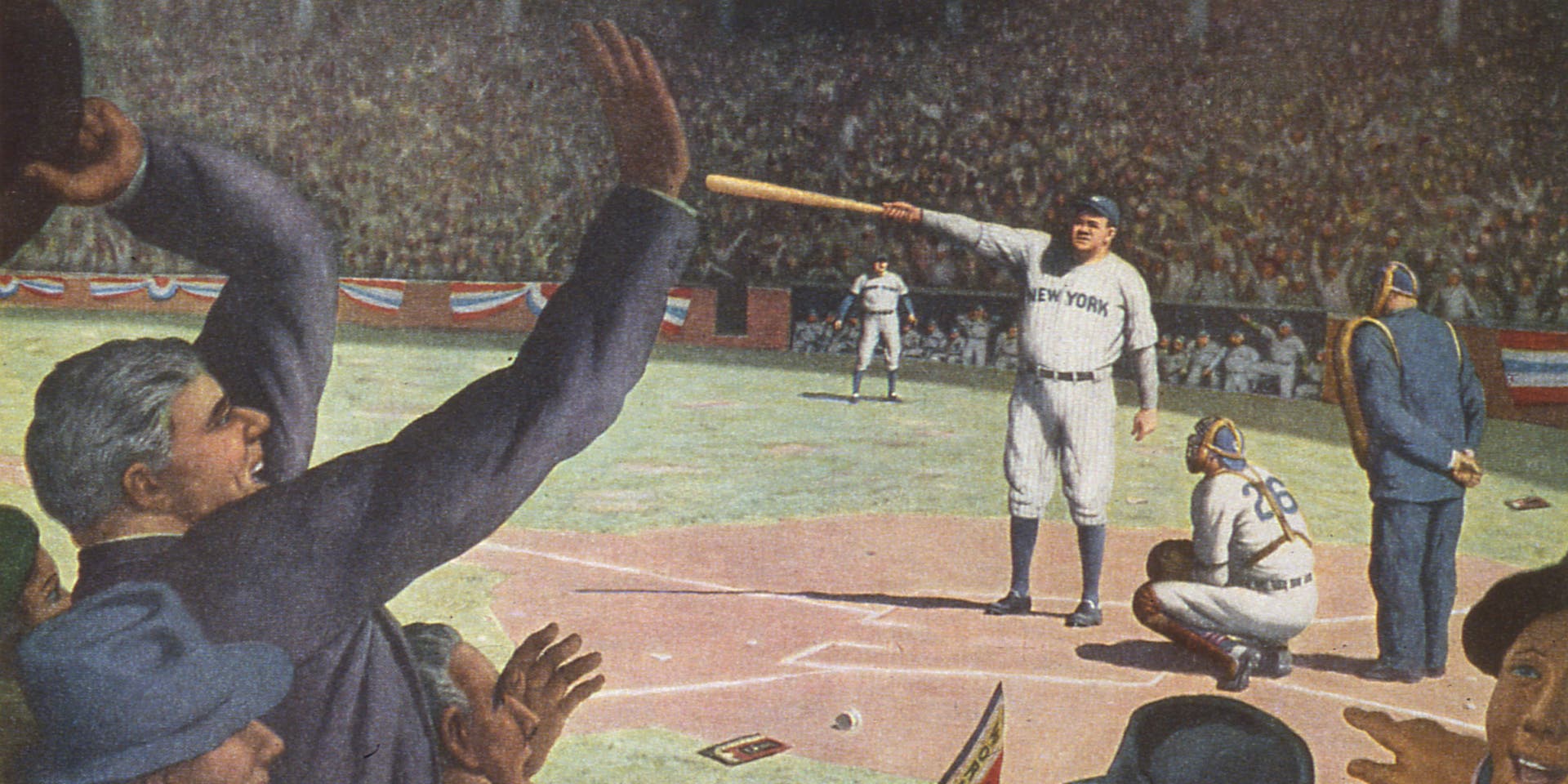
The "Called Shot" occurred during the 1932 World Series against the Chicago Cubs. In the fifth inning, after being heckled by the Cubs dugout, Ruth gestured toward center field and subsequently hit a massive home run to that exact spot. While historians and eyewitnesses have debated for decades whether he was pointing at the pitcher, the dugout, or the fence, the legend of the "Called Shot" remains a cornerstone of his mythos.
How many World Series rings did Babe Ruth win?
Babe Ruth won a total of seven World Series championships during his career. He won three with the Boston Red Sox (1915, 1916, and 1918) and four with the New York Yankees (1923, 1927, 1928, and 1932). His ability to perform on the biggest stage was a key factor in his status as the game's greatest winner.
Why was Babe Ruth called "The Bambino"?
The nickname "The Bambino" is Italian for "The Baby." It was given to him during his early years in the major leagues, reflecting both his youth when he entered the league and his surname "Babe." He was also known as "The Sultan of Swat," "The Colossus of Clout," and "The King of Crash," reflecting the public's obsession with his power hitting.
Was Babe Ruth a good fielder?
Yes, Ruth was a highly capable outfielder with a strong arm, a remnant of his days as a pitcher. While he became more stationary later in his career as his weight increased, in his prime, he was considered an above-average defender who could cover ground and discourage runners from advancing due to his powerful throwing arm.
What was Babe Ruth’s lifetime batting average?
Babe Ruth finished his 22-season career with a .342 lifetime batting average. This is particularly impressive because power hitters typically have lower batting averages due to the high-risk, high-reward nature of their swings. Ruth’s ability to maintain a high average while hitting for unprecedented power is why many analysts still consider him the greatest all-around hitter in history.
Future Perspective: The Legacy of Number 3
In 2026, we see the "three-true-outcome" era of baseball—home runs, walks, and strikeouts—as the standard. This entire philosophy can be traced back to the swing mechanics and plate discipline pioneered by Babe Ruth. He was the first to prove that a strikeout was an acceptable trade-off for the potential of a home run, a concept that dominates modern analytics today.
For those looking to explore the history of the game further, a visit to the National Baseball Hall of Fame and Museum in Cooperstown, New York, offers the most comprehensive look at Ruth’s artifacts, including the bats he used and the jerseys he wore during his legendary tenure with the Yankees. Understanding these three key facts is the first step in appreciating how a single individual could transform a 19th-century pastime into a modern American institution.