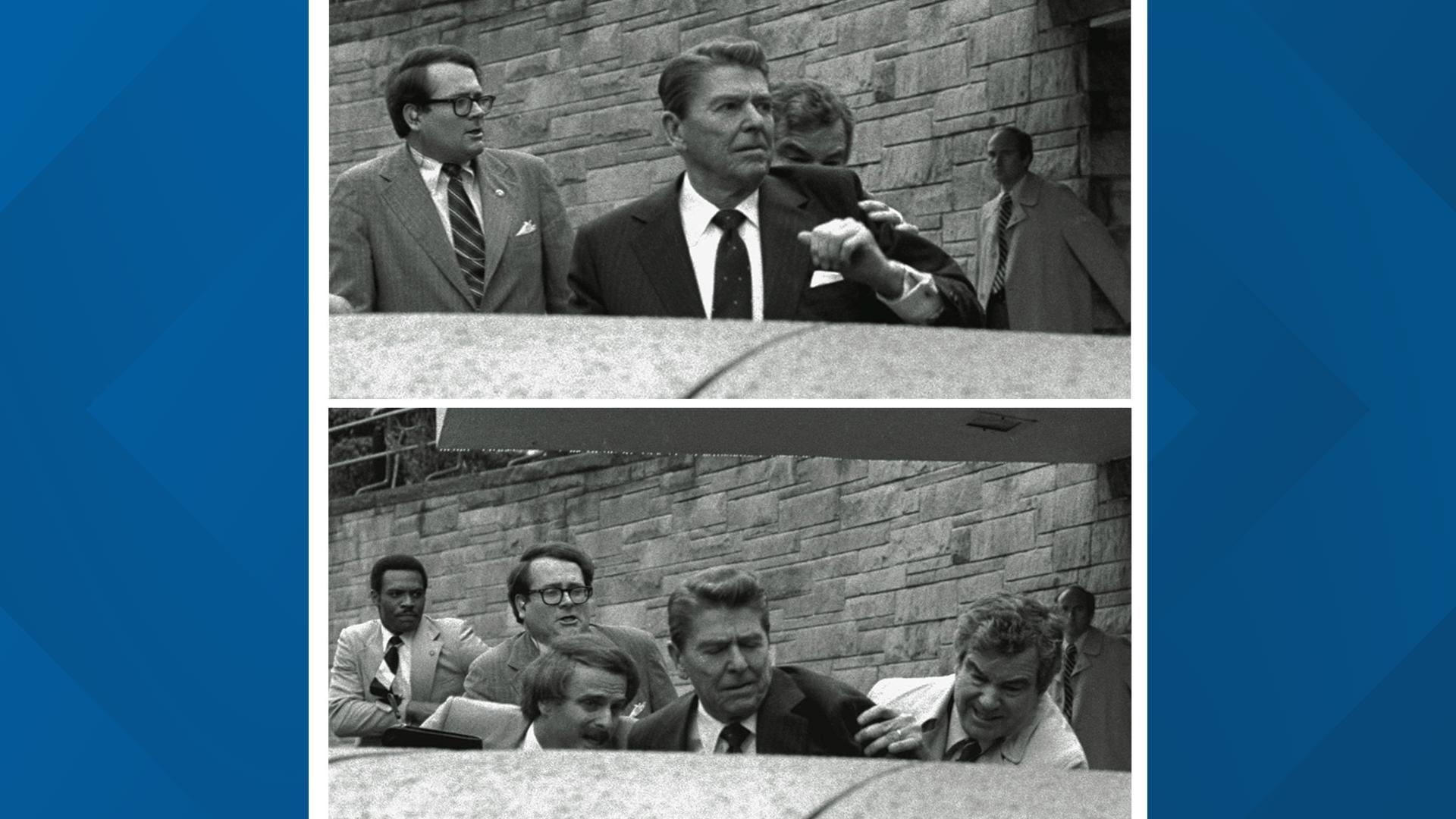
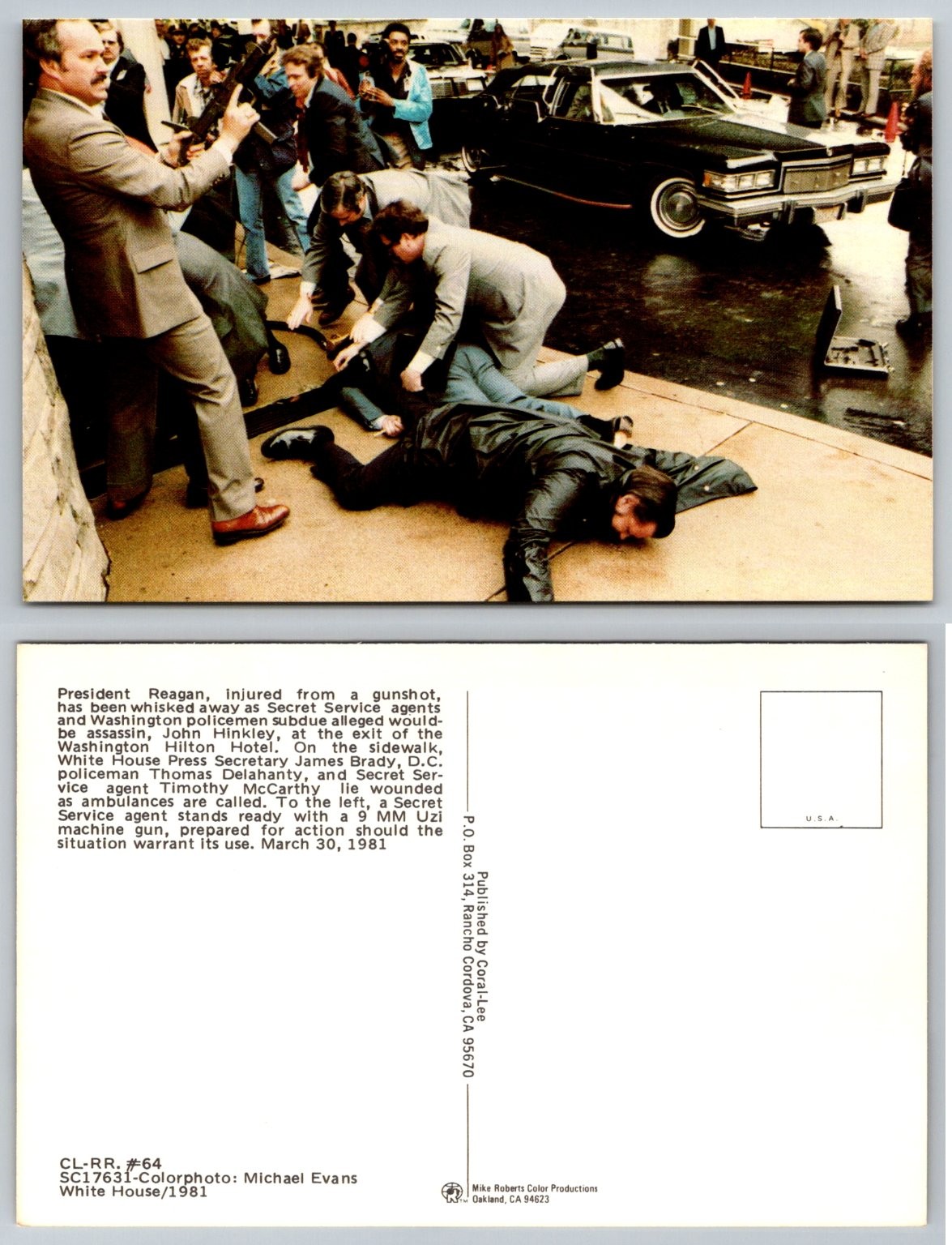
The 1981 assassination attempt on United States President Ronald Reagan occurred on March 30, 1981, outside the Washington Hilton Hotel in Washington, D.C. Shot by John Hinckley Jr. just 69 days into his term, Reagan survived serious injuries, alongside three other wounded individuals, leading to significant changes in presidential security, emergency medical response protocols, and discussions regarding presidential succession and mental health law.
Historical Context and the Perpetrator
To understand the events of March 30, 1981, it is necessary to examine the background of the assailant and the sociopolitical climate of the early United States presidency under Ronald Reagan. John Hinckley Jr., a 25-year-old drifter with a history of severe psychological disturbance, became fixated on the 1976 film Taxi Driver, starring Jodie Foster. Hinckley developed a delusional belief that assassinating a United States president would impress Foster and elevate him to her social standing.
Prior to targeting Reagan, Hinckley stalked President Jimmy Carter across multiple states. When Carter lost the 1980 presidential election, Hinckley shifted his obsession to the newly inaugurated Ronald Reagan. Hinckley traveled to Washington, D.C., in March 1981, writing letters outlining his delusional motivations before purchasing a .22-caliber Röhm RG-14 revolver loaded with "Devastator" explosive bullets designed to detonate upon impact.
The Shooting at the Washington Hilton
On the morning of March 30, 1981, President Reagan delivered an address to AFL-CIO representatives at the Washington Hilton Hotel. As Reagan exited the hotel at approximately 2:27 PM EST, he walked toward his awaiting armored limousine through a crowd of onlookers and reporters.
Hinckley stood within a rope line among journalists. As the President waved to the crowd, Hinckley rapidly fired six shots from his revolver in less than two seconds:
- First Shot: Struck White House Press Secretary James Brady in the head, causing catastrophic and permanent injuries.
- Second Shot: Struck District of Columbia police officer Thomas Delahanty in the neck and spinal cord.
- Third Shot: Passed over Reagan, striking the building behind him.
- Fourth Shot: Struck Secret Service agent Timothy McCarthy in the abdomen as he instinctively threw his body in front of the President.
- Fifth Shot: Struck the bulletproof glass of the presidential limousine door.
- Sixth Shot: Ricocheted off the rear quarter-panel of the limousine and struck Reagan in the left underarm, fracturing a rib, puncturing his lung, and lodging in his left lung.
Secret Service agent Jerry Parr immediately tackled Reagan, pushing him into the floor of the limousine. Realizing the President was coughing up bright red blood indicative of a lung injury, Parr diverted the motorcade to George Washington University Hospital rather than returning to the White House.
| Individual Injured | Role/Position | Nature of Injury | Long-Term Outcome |
|---|---|---|---|
| Ronald Reagan | 40th U.S. President | Gunshot wound to the left lung, fractured rib | Fully recovered; returned to presidential duties. |
| James Brady | White House Press Secretary | Severe head wound, brain damage | Partial paralysis, wheelchair user; lifelong advocate for gun control. |
| Thomas Delahanty | D.C. Police Officer | Neck and spinal cord injury | Forced retirement due to permanent nerve damage. |
| Timothy McCarthy | U.S. Secret Service Agent | Abdominal gunshot wound | Fully recovered; returned to active duty. |
Immediate Medical Response and Treatment
The rapid intervention of the Secret Service and the medical staff at George Washington University Hospital proved decisive in saving President Reagan's life. Upon arrival at the emergency room at 2:30 PM, Reagan walked into the trauma bay under his own power, though his condition deteriorated rapidly as internal bleeding caused his blood pressure to plummet.
Trauma surgeons, led by Dr. Benjamin Aaron, discovered that the bullet had missed the President's heart by less than an inch before coming to rest in his lung. Surgeons performed an emergency thoracotomy to locate and extract the projectile, administering numerous blood transfusions.
Reagan's characteristic humor remained evident during the ordeal. Before entering surgery, he quipped to his wife, Nancy Reagan, "Honey, I forgot to duck," and later told the surgical team, "I hope you're all Republicans." Despite being 70 years old at the time—the oldest president in U.S. history to assume office—Reagan's robust physical constitution facilitated a rapid initial stabilization.
Legal Proceedings and the Insanity Defense
The trial of John Hinckley Jr., United States v. John W. Hinckley Jr., began in 1982 in the U.S. District Court for the District of Columbia. Hinckley was charged with 13 offenses, including the attempted assassination of the President, assault on a federal officer, and various weapons charges.
The defense presented extensive psychiatric testimony establishing that Hinckley suffered from severe psychotic depression and narcissistic personality disorder, rendering him legally insane at the time of the shooting. Under the existing federal legal standard for insanity, the prosecution bore the burden of proving beyond a reasonable doubt that the defendant understood the nature of their actions and could distinguish between right and wrong.
On June 21, 1982, the jury returned a verdict of not guilty by reason of insanity. The verdict provoked widespread public outrage and intense debate across the United States legal and political systems. Critics argued that the verdict allowed a dangerous criminal to escape responsibility. In response to public pressure, Congress and several state legislatures reformed the legal standards regarding the insanity defense, shifting the burden of proof to the defense and, in some jurisdictions, establishing a "guilty but mentally ill" verdict. Following his acquittal, Hinckley was committed indefinitely to St. Elizabeths Hospital, a psychiatric facility in Washington, D.C., where he remained for decades until his unconditional release in 2022.
Impact on Presidential Security and Government Operations
The 1981 assassination attempt fundamentally altered the operational protocols of the United States Secret Service and exposed vulnerabilities in the constitutional framework governing presidential succession.
Secret Service Protocols
The attack prompted an immediate review of public access events for the president. The Secret Service implemented stricter perimeter controls, mandatory metal detector screenings for anyone entering an area near the president, and enhanced armor for both presidential vehicles and motorcade support units. The incident also accelerated the use of Kevlar body armor among executive protection details.
Constitutional Succession and Authority
During the immediate aftermath of the shooting, confusion arose regarding executive authority. While Reagan underwent emergency surgery, Vice President George H.W. Bush was flying back to Washington from a trip to Texas. Cabinet members debated whether to formally invoke Section 3 of the 25th Amendment, which allows the Vice President to assume the powers and duties of the office as Acting President. Ultimately, officials chose not to invoke the amendment, fearing it might project an image of national instability during the Cold War. This ambiguity led to subsequent policy reforms emphasizing clearer lines of temporary power transfer during medical emergencies.
Frequently Asked Questions
Why did John Hinckley Jr. shoot Ronald Reagan?
John Hinckley Jr. shot Ronald Reagan due to a severe mental disturbance and an obsessive, delusional fixation on actress Jodie Foster. Hinckley believed that committing a high-profile historical crime would impress Foster and make her fall in love with him, mirroring the plot of the 1976 film Taxi Driver.
Did anyone die as a direct result of the 1981 assassination attempt?
No one died on the day of the shooting, and all four wounded individuals survived. However, James Brady suffered permanent physical disabilities, utilizing a wheelchair and speech aids for the remainder of his life. His death in 2014 was ultimately ruled a homicide by the coroner, as it resulted from health complications stemming directly from the 1981 gunshot wound.
How did the shooting affect U.S. gun control laws?
The tragedy served as a major catalyst for gun control advocacy led by James and Sarah Brady. Their efforts culminated in the passage of the Brady Handgun Violence Prevention Act of 1993, which mandated federal background checks on firearm purchasers and imposed a five-day waiting period on handgun purchases.
How long was Ronald Reagan hospitalized after the shooting?
President Reagan spent 12 days recovering at George Washington University Hospital before being discharged on April 11, 1981. He continued his convalescence at the White House for several weeks before returning to a full public work schedule.
What happened to John Hinckley Jr. after his psychiatric confinement?
Following decades of psychiatric treatment and monitored gradual release programs that demonstrated he no longer posed a threat to society, a federal judge granted Hinckley unconditional release in July 2022, effectively ending all remaining court oversight and restrictions on his movement.
Next Actions and Further Historical Research
For researchers, students, and historians examining the 1981 assassination attempt, primary documentation is accessible through the Ronald Reagan Presidential Library and Museum in Simi Valley, California, as well as the National Archives and Records Administration. These institutions maintain declassified Secret Service logs, medical reports, and legal filings from the Hinckley trial, providing deeper insight into one of the most critical security crises in modern American history.