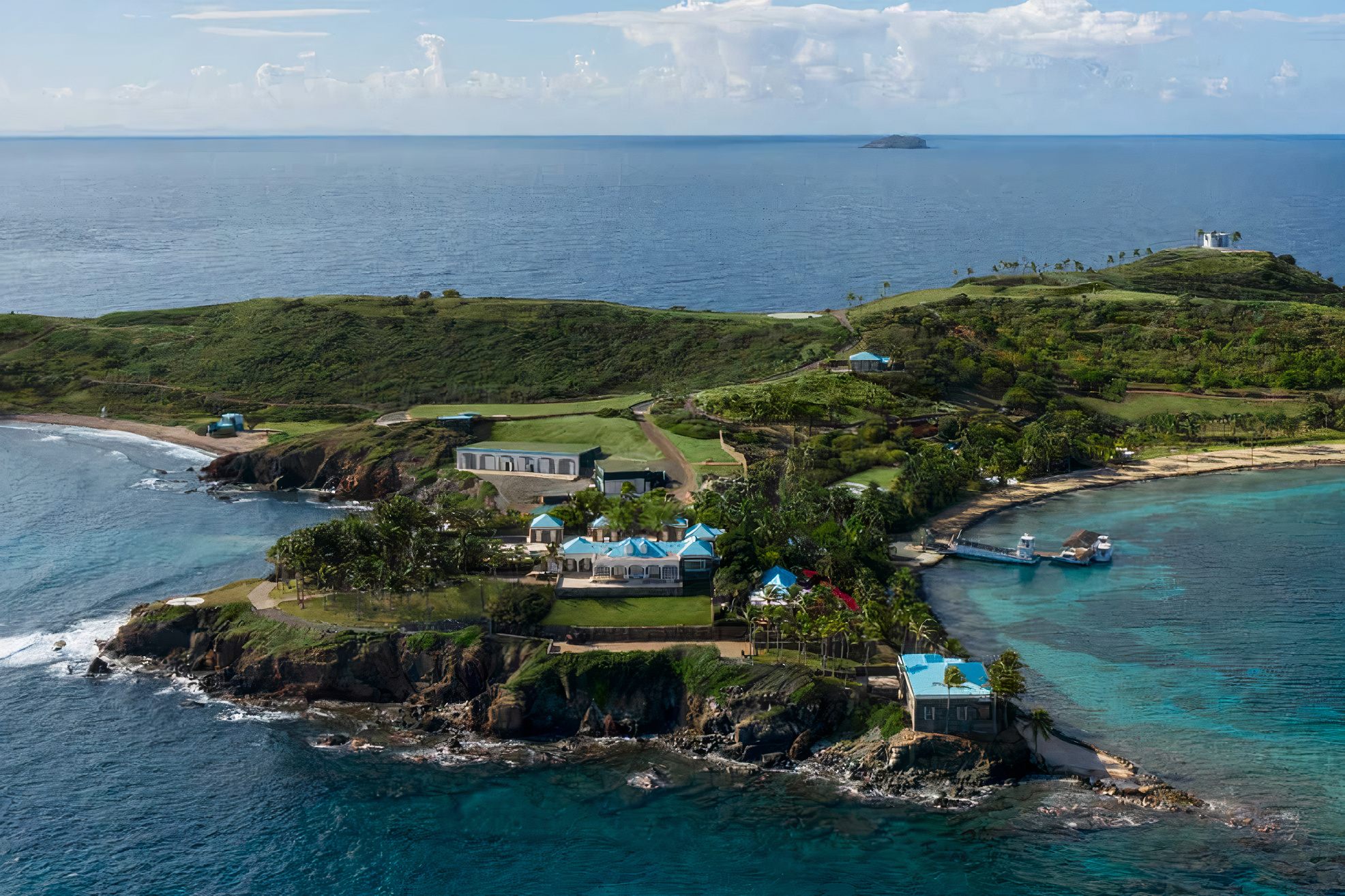
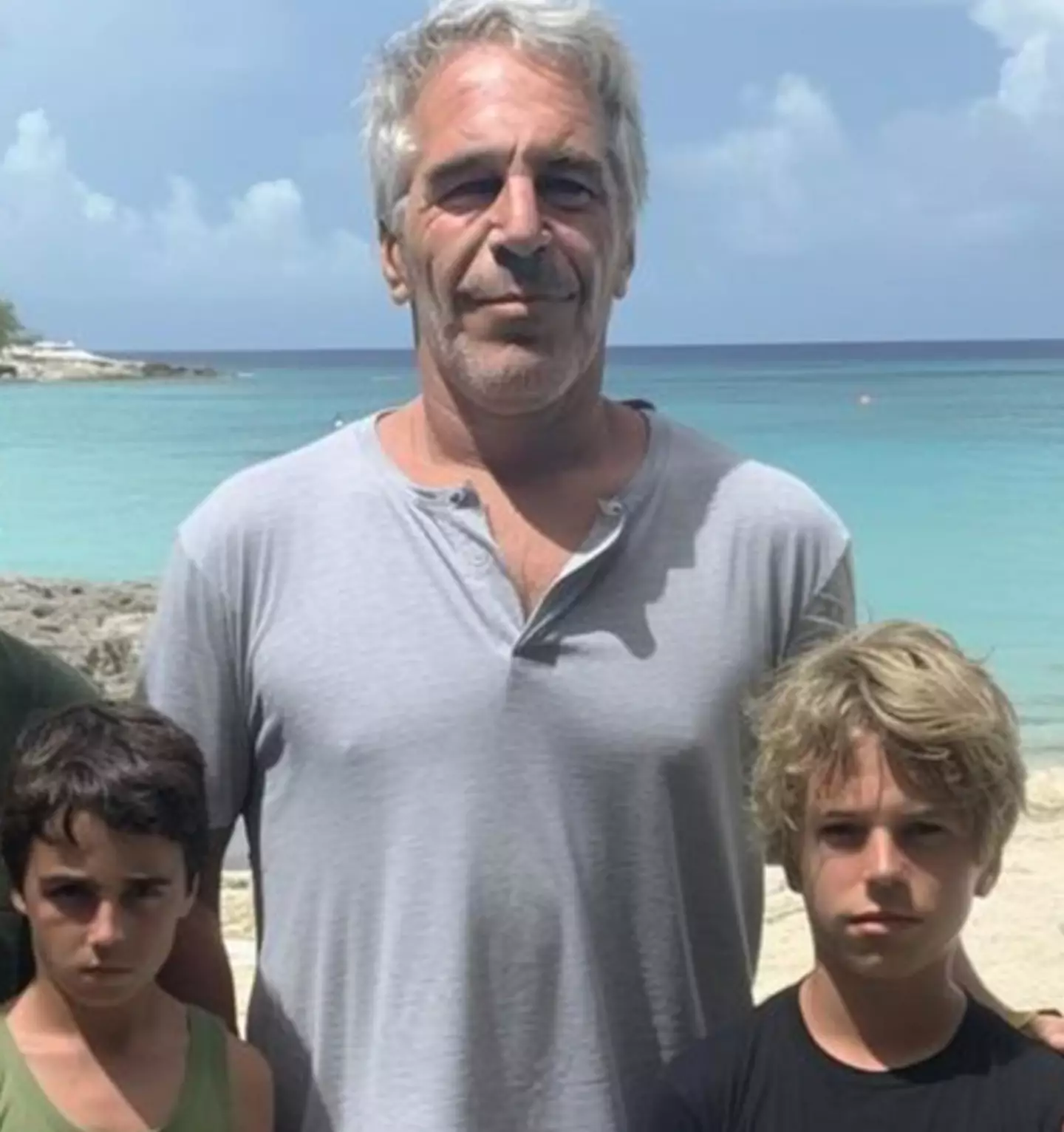
Jeffrey Epstein utilized his private Caribbean property, Little St. James, as the central hub for a widespread sex trafficking operation involving underage girls, alongside hosting prominent public figures, politicians, academics, and celebrities. Located in the U.S. Virgin Islands, the island functioned as a secluded estate where victims were subjected to abuse while associates were entertained under a veneer of philanthropic and intellectual pretenses.
Geographic and Structural Overview of Little St. James
Little St. James is a private island spanning approximately 70 to 74 acres, situated off the coast of St. Thomas in the U.S. Virgin Islands. Purchased by Epstein through his shell company, L.S.J. LLC, in 1998 for a reported $7.95 million, the island became heavily developed over the subsequent two decades. The infrastructure included a sprawling main residential compound, multiple guest villas, a helipad, a private dock, a pool, and unconventional architectural structures that drew intense public and media scrutiny.
The island was designed to be entirely self-contained and isolated from routine public oversight. Epstein maintained strict security protocols, employing private staff, boat captains, and security personnel who controlled access to the property. This geographic isolation served a dual purpose: it protected the privacy of high-profile visitors and restricted the movement of victims, many of whom were brought to the island via private aircraft or yachts without going through standard commercial customs checkpoints that might flag underage travel.
Key Architectural and Operational Features of the Island
- The Main Compound: A multi-building residential complex featuring luxury amenities, offices, and private living quarters where Epstein resided during his visits.
- Guest Villas: Separate housing units designated for visiting guests, associates, and acquaintances whom Epstein routinely hosted.
- The Blue-Striped Building: A striking, highly visible structure featuring bright blue horizontal stripes on its exterior walls, which local rumors and investigative reports linked to various unverified purposes, though its primary function was administrative and storage.
- Private Infrastructure: A desalination plant, power generators, a wastewater treatment system, and heavy landscaping that created a fortified, resort-like compound requiring minimal interaction with the mainland.
The Nature of the Criminal Operations
Federal indictments, civil lawsuits, survivor testimonies, and investigative journalism have established that Little St. James was the primary physical location for the trafficking and sexual abuse of minors. Victims testified that they were transported to the island under false pretenses—often believing they were traveling for modeling opportunities, massage work, or legitimate employment—only to be coerced into performing sexual acts for Epstein and his visiting associates.
The operations on the island were characterized by systematic isolation and psychological control. Because the island was private property controlled entirely by Epstein's network, victims had no independent means of escape, communication with the outside world was heavily monitored or restricted, and passports or identification documents were sometimes withheld. Survivors recounted a cycle of abuse, manipulation, and intimidation, with Epstein leveraging his immense wealth and legal team to silence dissent.
Survivor Testimonies and Legal Findings
According to court documents unsealed in subsequent civil and criminal proceedings, multiple victims detailed specific instances of abuse that occurred on Little St. James. These accounts formed a crucial pillar of the federal investigations conducted by the U.S. Attorney's Office for the Southern District of New York and the FBI.
| Evidence Type | Source / Origin | Key Findings Regarding the Island |
|---|---|---|
| Survivor Depositions | Civil Litigation & Court Filings | Detailed accounts of underage trafficking, coerced sexual acts, and physical isolation on Little St. James. |
| Flight Logs | Investigative Records & Subpoenas | Documented the transportation of numerous high-profile individuals, staff, and victims to and from St. Thomas. |
| Local Witness Reports | Staff, Contractors, & Neighbors | Confirmed the heavy volume of private boat traffic, strict non-disclosure agreements, and restricted access to the island. |
| Regulatory & Tax Filings | U.S. Virgin Islands Government | Revealed property valuations, zoning variances, and legal disputes regarding Epstein's development of the island. |
High-Profile Visitors and Network Operations
Beyond its primary function as a site for criminal activity, Little St. James served as a networking venue. Epstein cultivated relationships with prominent figures across politics, science, academia, business, and entertainment. Visitors to the island included politicians, billionaires, scientists, and cultural icons, many of whom traveled to the estate via Epstein's private aircraft, frequently referred to in media reports as the "Lolita Express."
The presence of these high-profile guests has been a subject of intense public interest and ongoing investigation. While many visitors maintained that they were unaware of any illegal activities taking place on the property, others faced severe reputational damage, professional fallout, and legal scrutiny regarding their associations with Epstein. The island functioned as a social nexus where Epstein attempted to legitimize his status by surrounding himself with intellectual and political elites, utilizing philanthropy and scientific symposiums as a facade for his illicit behavior.
The Role of Non-Disclosure Agreements and Staff
To maintain operational secrecy, Epstein enforced rigorous protocols for everyone who set foot on Little St. James. Domestic staff, boat captains, construction contractors, and visiting guests were routinely required to sign strict non-disclosure agreements (NDAs). These legal instruments threatened severe financial penalties for anyone who discussed the activities occurring on the property.
Furthermore, the island's isolation meant that local authorities rarely conducted unannounced inspections. Epstein maintained cooperative relationships with various local contractors while simultaneously shielding the inner workings of his compound from public view. This tightly managed environment allowed the abuse to continue largely unchecked for years despite circulating rumors among residents of neighboring islands.
Post-Epstein Status and Legal Fallout
Following Jeffrey Epstein's arrest in July 2019 and his subsequent death in a federal detention center in August 2019, the legal and financial apparatus surrounding his estate underwent profound restructuring. Little St. James, along with his neighboring island, Great St. James (purchased later), became subject to asset forfeiture claims, civil settlements, and intensive legal oversight by the U.S. Virgin Islands government.
In 2020, the government of the U.S. Virgin Islands filed a civil lawsuit against Epstein's estate under the territory's Criminally Influenced and Corrupt Organizations (CICO) Act. This lawsuit resulted in a multi-million-dollar settlement that directed funds toward survivor compensation and public safety initiatives. The islands were subsequently put up for sale by the estate's executors, attracting interest from various private developers and investors.
Recent Developments and Current Condition
In early 2023, both Little St. James and Great St. James were purchased by billionaire investor Stephen Deckoff, founder of Black Diamond Capital Management, for a reported $60 million—significantly less than the initial asking price. Deckoff announced plans to redevelop the property into a luxury resort destination, aiming to erase the dark legacy associated with the location and bring economic revitalization and tourism revenue back to the local community.
The redevelopment efforts involve clearing or renovating the existing structures where the crimes took place. For survivors, legal advocates, and the public, the transition of the island represents the physical dismantling of a site associated with systemic abuse, even as legal and historical reckonings regarding Epstein's enablers continue to unfold in courts and public records.
Frequently Asked Questions
Who owned Little St. James after Jeffrey Epstein's death?
Following Epstein's death, the island was managed by his estate's executors to settle outstanding civil claims and victim compensation funds. In 2023, billionaire investor Stephen Deckoff purchased Little St. James and neighboring Great St. James with plans to convert the property into a luxury resort.
Did law enforcement raid the island?
Federal and local law enforcement agencies executed search warrants and conducted investigations on Little St. James following Epstein's 2019 arrest. Investigators searched the residential compounds, seized digital media, and interviewed staff members to gather evidence for the federal sex trafficking case.
Why was Little St. James often called "Pedophile Island"?
The moniker was adopted by media outlets and the public following widespread revelations about the nature of the crimes committed there. Investigative reports, victim testimonies, and civil lawsuits detailed how Epstein systematically used the island to traffic and abuse minors away from public scrutiny.
Were victims only brought to the private island?
No. While Little St. James was a primary hub, Epstein operated a network of properties where similar abuses occurred, including his Manhattan mansion in New York, his estate in Palm Beach, Florida, a ranch in New Mexico, and an apartment in Paris, France.
How did Epstein acquire Little St. James?
Epstein purchased the island in 1998 through a shell company named L.S.J. LLC for approximately $7.95 million. Over the following two decades, he acquired adjacent land parcels and heavily expanded the private infrastructure on the property.
Next Actions and Further Reading
For researchers, journalists, and individuals seeking verified information regarding the Epstein case, consulting primary legal documents is essential. Reliable resources include unsealed court records from the U.S. District Court for the Southern District of New York, civil litigation files from the U.S. Virgin Islands District Court, and investigative reports published by major journalistic institutions that have archived subpoenaed flight logs and grand jury testimonies.